ISE 231: Chapter 2
 Call Kai
 Learn
Learn Practice Test
 Spaced Repetition
 Match
Match Flashcards
 Knowt Play
1/21

Earn XP
Description and Tags
Design Methods
Name | Mastery | Learn | Test | Matching | Spaced | Call with Kai | Chat |
|---|
No analytics yet
Send a link to your students to track their progress
22 Terms
What are the human factor goals?
The goals of a human factor specialist is to make systems successful by enhancing safety, performance, and satisfaction using human factors principles, methods, data and design
What are the “Norman Doors”?
An example of a poorly human centered design that uses pull handles on a door that says push
Technology Centered Designs
Designs that skip the front end analysis risk (human factors) and tend to fail
Front-end analysis
Identify the problem, identify the users, Identify the user characteristics, Identify enviornmental conditions, Define goals, and identify constraints
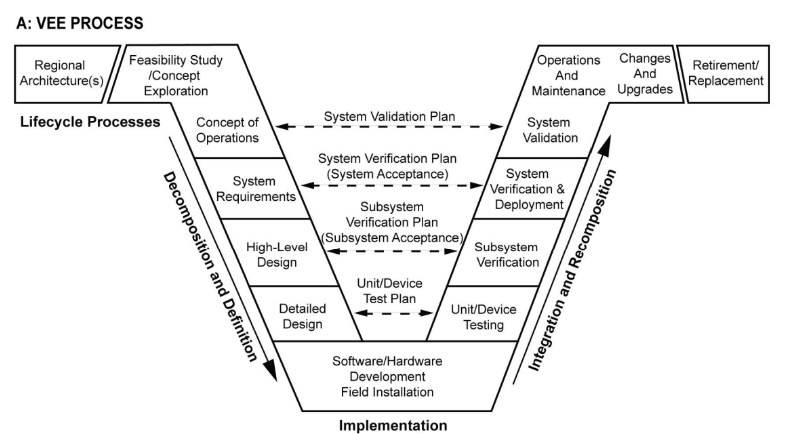
The Vee Process
Is a methodical implementation that focuses on Decomposition and Definition, Implementation, and Integration and Recomposition
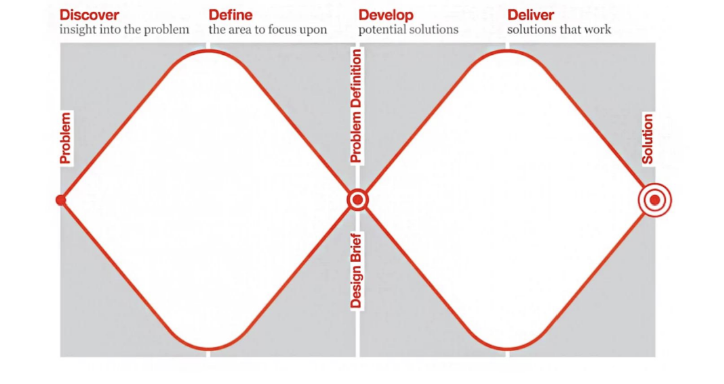
The Double Diamond Design Model
System Design process that focues on collaboration, through Discover, Define, Develop, and Deliver
The PDCA Cycle
System Design process that focues on incremental improvement (The Plan Do Check Act Cycle)

The Scrum Approach to System Design
System Design process that focues on fast iteration, through Product Backlog, Sprint Backlog, Sprint, and Working Increment of the Software

Product Backlog
An ordered list of everything that might be needed in the product
Sprint Backlog
The subset of Product Backlog items selected for a specific Sprint (usually 2 - 4 weeks)
What is the Human-Centered Design?
A design centered around humans and the design process by including the users input through the model: Create, Evaluate, and Understand

Iterative Human-Centered Design
Iterative design is central to understanding and meeting people’s needs. Rule of thumb is 3-5 iterations should be considered. Expect improvements of 25-40% for each iteration.
What is the Five Whys?
The Five Whys help identify the multiple causes of accidents. This can help you identify how to prevent these in the future. Used alot in Root Cause Analysis (RCA)
Task Analysis
a way of systematically describing human interaction with a system to inderstand how to match the demands of the system to human capabilities. Two examples are Tack Hierarchy and an Activity Diagram
What is the Task Analysis Process
Task analysis can visually show when a task is too complicated
1) Define the purpose and identify the required data
2) Collect data
3) Interpret data and make diagrams
(task hierarchy, task flow, task sequence)
4) Innovate
5) User identification and persona development
Task Hierarchy
Focuses on Goal, task, subtask, and decomposition

Task Activity Flow Diagram
shows control and decisions regarding the flow from one task to another

Task Sequence Diagrams
Show task duration and sequence, as well as communication between system components

What are some other analyses?
User Studies, Enviornment and Context Analysis, Workload Analysis, Safety Hazard Analyses, Function Allocation Analysis
Science vs. Design
Science is generalizable, with prescribed, standard methods to reveal the true nature of things.
Design is applied to a specific problem and context.
Applied research brdiges the gap to apply rigorous methods to a specific problem ot improve tools and/or proess nad increase success of designs
What are the different Weighing Alternatives?
Quality Function Deployment - can help prioritize system features. Uses “house of quality”
Cost/benefit analysis - builds on the QFD analysis, which calculates the importance of features that best serve the users needs
Tradeoff analysis - identifies the most promising way to implement a design
What are Iterative Design and Refinement techniques?
Wireframes (communicate and document ideas for the design team), Mockups (make ideas concrete to stakeholders and sponsors), Prototypes (support heuristic evaluation by giving users something to react to and use)