GEOG 200 U6
 Call Kai
 Learn
Learn Practice Test
 Spaced Repetition
 Match
Match Flashcards
 Knowt Play
1/20

There's no tags or description
Looks like no tags are added yet.
Name | Mastery | Learn | Test | Matching | Spaced | Call with Kai | Chat |
|---|
No analytics yet
Send a link to your students to track their progress
21 Terms
1917 Russian Revolution
The Communist Revolution. Caused a lot of colonialism as they over took near areas.

Azerbaijan. Capital is Baku. Mostly Islamic
Belt and Road Initiative
China’s global development strategy, announced in 2013, involving over a hundred infrastructure-investment projects. Some serve to connect China to surrounding countries (e.g., Kazakhstan or Laos), others support infrastructure developments within or between countries around the world. The BRI has significantly increased China’s global presence.
BRIC Countries
Acronym for the four biggest emerging national markets in the world today—Brazil, Russia, India, and China.

Caucasus mountains. a multi-tiered barrier over which Russians have fought with their southern neighbors for centuries.

Chechnya. One of Russia’s 21 Ethnic republics in the remote Caucasus periphery. Muslims here launched a campaign for independence. Refused to sign the Russian Federation Treaty, Russian military intervention followed and triggered a prolonged, violent conflict, producing disastrous consequences for Chechnya’s people and infrastructure. Currently has a pro Russian regime.
Command economy
The tightly controlled economic system of the former Soviet Union, whereby central planners in Moscow assigned the production of particular goods to particular places, often guided more by socialist ideology than the principles of economic geography.
Exclave
A bounded (non-island) piece of territory that is part of a particular state but lies separated from it by the territory of another state, e.g. Kaliningrad.
Irredentism
A policy of cultural extension and potential political expansion by a state aimed at a community of its nationals living in a neighboring state. Create the root of many conflicts in the Russian/Central Asia Realm.
Izhora people
Faced immense repression under Russian leaders over the past century (Harakka-Zaitsev, 2022). In fact, their numbers dwindled from 30,000 people in 1930s to 1,000 today. However, new generations of Izhora peoples continue to flourish, as they work to maintain their music, language, and heritage programs.

Kuzbas. Russia’s primary regions of heavy manufacturing resulting from the communist period’s national planning. Lies some 1500km east of the Urals
Monocentric geographic realm
A world geographic realm dominated—territorially and/or demographically—by a single country. Russia in Russia/Central Asia is a prime example
NATO
Established in 1950 at the height of the Cold War as a U.S.-led supranational defense pact to shield postwar Europe against the Soviet military threat. NATO is now in transition, expanding its membership while modifying its objectives in the post-Soviet era. It has 28 member-states (as of late 2019). Russia feels the military threat of NATO, and reacts aggressively to other states (like Ukraine) because of it.
Nuclear icebreakers
Ships that were first built in Russia in the 1970s that can break through 10ft wide ice, making a path for the ships in the Arctic These allow increased access to the natural resources in the Arctic which Russia is keen on claiming.
Permafrost
Permanently frozen water in the near-surface soil and bedrock of cold environments, producing the effect of completely frozen ground. Surface can thaw during brief warm season. Much of Russia is covered in permafrost, which makes it difficult to inhabit. Global warming is causing more thawing in permafrost, which has been detrimental to the buildings built on it.
Peter the Great
The czar of Russia from 1682-1725. He endeavored to make a modern European state out of Russia. In doing so, he established St. Petersburg as forward capital. He relocated people to Western Russia. He expanded much of the territory in the west. Estonia was added to Russia in 1721.
Russification
Demographic resettlement policies pursued by the central planners of the Soviet Empire (1922–1991), whereby ethnic Russians were encouraged to emigrate from the Russian Republic to the 14 non-Russian republics of the USSR. Backfired Post-Cold war as the drive for independence in many of the republics increased.
Soviet Republic
On of the 14 areas that made up the former Soviet Union.
St. Petersburg
A leading city in the development of modern Russia. Population of about 5 million
Tundra
The treeless plain that lies along the Arctic shore in northernmost Russia and Canada, whose vegetation consists of mosses, lichens, and certain hardy grasses.
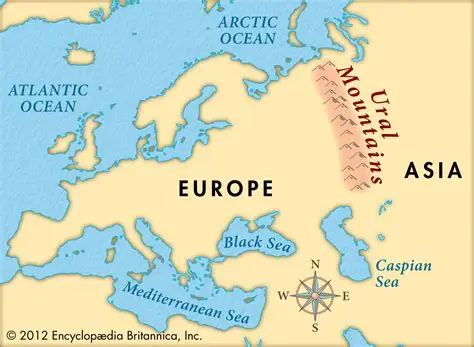
Ural mountains. Are not high enough to impede surface transportation, but they retain their prominence because this range separates two vast lowlands