Archaeology and Human Prehistory Vocabulary
 Call Kai
 Learn
 Practice Test
 Spaced Repetition
 Match
 Flashcards
 Knowt Play
1/59

Earn XP
Description and Tags
Comprehensive vocabulary flashcards covering key archaeological sites, dating techniques, artifacts, and figures from prehistory through the Bronze and Iron Ages.
60 Terms
Altamira
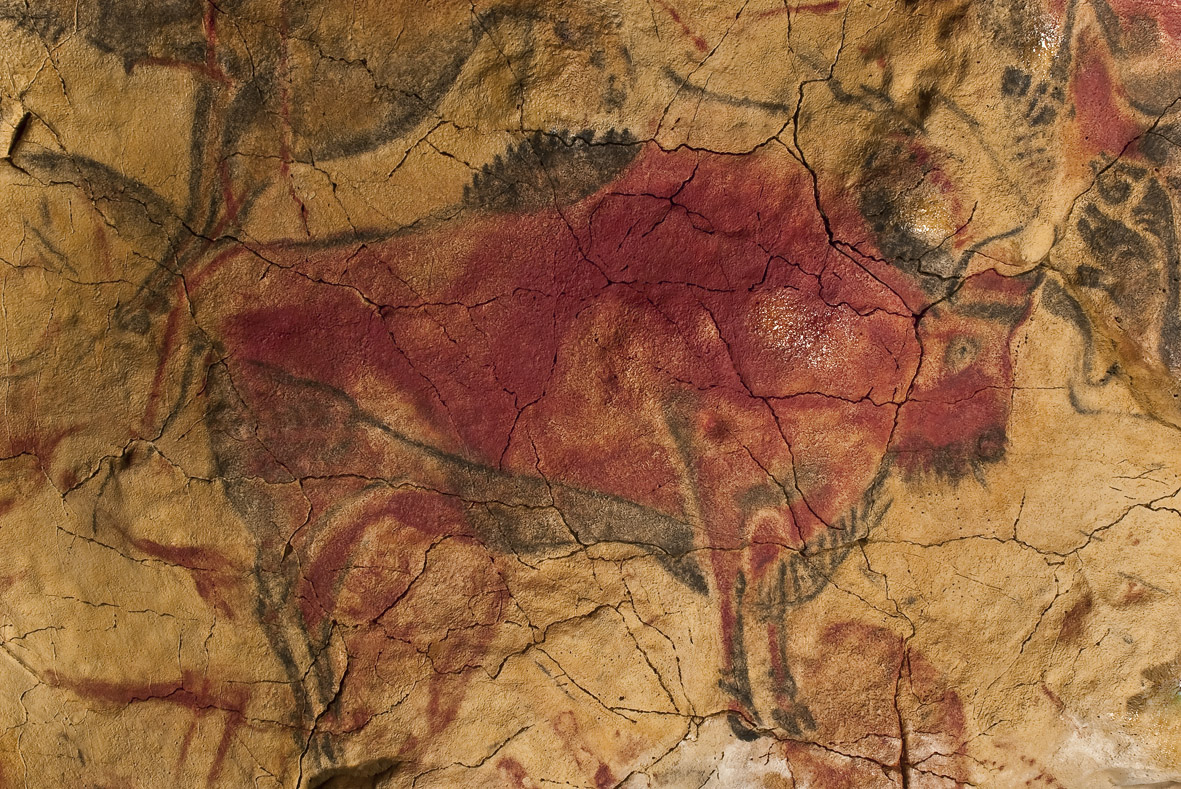
A Paleolithic cave in northern Spain known for prehistoric paintings (notably bison in red, black, and brown) dating primarily to the Upper Paleolithic (approximately 36,000–13,000 years ago) that demonstrate early human symbolic expression and three-dimensional cave art.
Anchor stone
A large stone with holes for ropes used as an anchor for ancient ships, assisting archaeologists in understanding early maritime technology, navigation, and seafaring trade.
Argon-argon dating
A radiometric dating technique that measures the ratio of argon-40 and argon-39 isotopes to establish the age of volcanic rocks and archaeological deposits, especially early hominin sites.
Arthur Evans
British archaeologist who began excavating the palace of Knossos on Crete in 1900, uncovered and interpreted Minoan civilization, and conducted notable, sometimes controversial, reconstructions.
Bull leaping

A ritual or acrobatic activity depicted in Minoan art, particularly at Knossos, showing human figures vaulting over the backs of bulls.
Cape Gelidonya
A Late Bronze Age shipwreck site off the southern coast of Turkey excavated by George Bass in 1960; one of the first shipwrecks excavated using systematic underwater archaeological methods.
Çatalhöyük
A large Neolithic settlement in Turkey occupied approximately 7500–6400 BCE, recognized for densely packed mudbrick houses entered via rooftops, floor burials, and complex symbolic wall art; excavated by James Mellaart and later Ian Hodder.

Charles Dawson
British amateur archaeologist who presented the fraudulent Piltdown Man remains in 1912 as an evolutionary missing link, which was later revealed to be a combination of a modern human skull and an orangutan jaw.
Chauvet Cave
A Paleolithic cave in southern France containing figurative cave paintings dating to approximately 36,000 years ago depicting animals such as lions, rhinoceroses, horses, and bears.

Dendrochronology
Also called tree-ring dating; a technique that matches overlapping annual growth ring patterns in wood to establish precise chronological sequences and calendar dates.
Dolphin Fresco of Knossos
A Minoan fresco uncovered in the Knossos palace complex displaying dolphins swimming among fish, illustrating Minoan naturalistic artistic style and cultural ties to the sea.

Dorothy Garrod
British archaeologist and the first female Oxbridge professor; led excavations at the Mount Carmel caves in the 1920s and 1930s, establishing the significance of the Natufian culture and Levant prehistory.
George Bass
American archaeologist regarded as a pioneer of modern underwater archaeology; excavated the Cape Gelidonya shipwreck in 1960 and contributed to investigations of the Uluburun shipwreck.
Göbekli Tepe
A prehistoric site in southeastern Turkey dating to approximately 9600–8200 BCE, featuring monumental circular structures with T-shaped limestone pillars carved with animals, erected by hunter-gatherers prior to agriculture.

Ian Hodder
British archaeologist associated with post-processual archaeology who initiated modern excavations at Çatalhöyük in 1993, emphasizing reflexive archaeology and the contextual interpretation of artifacts.
Ice Maiden
Also called the Siberian Ice Maiden or Princess of Ukok; an Iron Age female mummy of the Pazyryk culture discovered in 1993 in the Altai Mountains, preserved in permafrost from approximately 2,500 years ago with elaborate tattoos.

Ice Princess
An alternate term for the Siberian Ice Maiden (Princess of Ukok), referring to the tattooed Iron Age Pazyryk woman found preserved in the Altai Mountains.
Ingots
Standardized cast blocks of metal (such as copper, bronze, silver, and gold) produced by ancient societies for storage, transport, and economic exchange across trade routes.
Ishi
A Yahi Native American man who emerged in California in 1911 as the last known surviving member of the Yahi; studied by anthropologists at UC Berkeley, raising modern questions about colonialism, representation, and consent.
James Mellaart
British archaeologist who began excavating Çatalhöyük in 1961, uncovering early agricultural domestic architecture and advancing early, debated interpretations concerning goddess worship.
Jericho
An ancient settlement in the Jordan Valley near the Dead Sea with evidence of occupation dating to approximately 10,000 BCE, recognized for early agricultural activity, permanent architecture, and monumental defense structures.
Jericho Skull
A Pre-Pottery Neolithic human skull found at Jericho that was coated in plaster with shells inserted for eyes to recreate facial features, serving as evidence for ancestor veneration.

Jericho Tower
A stone tower built at Jericho around 8000 BCE, standing approximately 8meters tall with an internal staircase, illustrating early Neolithic communal labor and monumental construction.

Jerusalem Toilet
A stone toilet seat from an elite 7th century BCE First Temple period residence in Jerusalem; analysis of its contents yielded evidence of ancient intestinal parasites.

Knossos
A major Bronze Age Minoan palace complex on Crete excavated by Arthur Evans starting in 1900, characterized by elaborate frescoes, storage magazines, courtyards, and sophisticated architecture.

Koobi Fora Footprints
Fossilized footprints and traces of early hominin presence near Lake Turkana in Kenya, assisting paleoanthropologists in reconstructing hominin locomotion, behaviors, and ancient environments.

Laetoli Footprints
Fossilized footprints discovered in Tanzania in 1978 by Mary Leakey's team, preserved in volcanic ash approximately 3.6 million years ago and attributed to Australopithecus afarensis, demonstrating upright bipedal walking.

Lascaux Cave
A Paleolithic cave in southwestern France discovered in 1940 containing paintings of horses, deer, and cattle dating to roughly 17,000 years ago; closed to visitors in 1963 to prevent environmental deterioration.
Leakeys
A paleoanthropological family (including Louis, Mary, and Richard Leakey) renowned for discoveries of fossil hominins and stone tools in East Africa, particularly at Olduvai Gorge and Laetoli.
Lindow Man
An Iron Age bog body recovered from a Cheshire, England peat bog in 1984; died roughly 2,000 years ago (2 BC) exhibiting signs of fatal violence including head trauma and strangulation.

Lucy
An approximately 3.2-million-year-old partial skeleton (40% recovered) of Australopithecus afarensis found in Ethiopia in 1974 by Donald Johanson, proving that bipedal locomotion preceded major brain expansion.

Mary Leakey
British paleoanthropologist who excavated extensively at Olduvai Gorge and uncovered the 3.6-million-year-old Laetoli footprints in Tanzania in 1978.
Minoan Crete
A Bronze Age Aegean civilization on Crete (flourishing approximately 3000–1450 BCE) centered on palace complexes like Knossos, Phaistos, and Malia, recognized for maritime trade, bull imagery, and snake goddesses.
Mt. Carmel Caves
A group of prehistoric caves in Israel (including Tabun, Skhul, and el-Wad) excavated by Dorothy Garrod in the 1920s and 1930s, revealing co-occurring evidence of Neanderthals and early modern humans.
Mycenaeans
A Late Bronze Age civilization on mainland Greece (approximately 1600–1100 BCE) featuring fortified palace centers (Mycenae, Tiryns, Pylos), warrior culture, and Linear B tablets, collapsing around 1200 BCE.
Neolithic Revolution
The major worldwide transition from hunting and gathering to agriculture and animal domestication beginning around 10,000 BCE, leading to permanent settlements and specialized social organization.
Obsidian Hydration
A dating method that calculates the time elapsed since an obsidian tool was flaked by measuring the thickness of the microscopic hydration layer formed by atmospheric moisture absorption.
Olduvai Gorge
An East African Rift Valley site in Tanzania investigated by Louis and Mary Leakey, famous for yielding early hominin remains (such as Homo habilis and Paranthropus boisei) and Oldowan stone tools.
Ötzi the Iceman
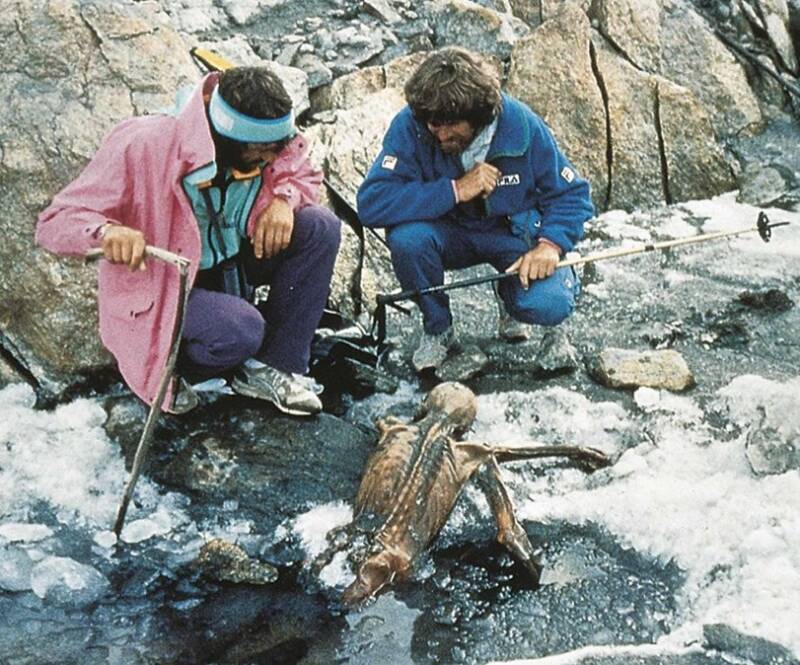
A Copper Age mummy found frozen in the Ötztal Alps in 1991, dating to approximately 5,300 (3000 BC) years ago; died from an arrow wound and was preserved with a copper axe, clothing, tattoos, and hunting gear.
Oxhide Ingots
Standardized, heavy copper ingots shaped like stretched animal hides, commonly transported across Late Bronze Age Mediterranean (1500 BC to 1200 BC) trade routes and found at sites like Uluburun.

Palynology
The scientific analysis of preserved pollen and spores from soil and lake sediments to reconstruct ancient environments, vegetation shifts, climate, and human land use.
Piltdown Man
A deliberate scientific hoax presented by Charles Dawson in 1912 and exposed in 1953, which falsely paired a modern human cranium with an orangutan jaw to fabricate a human ancestor.
Potassium-argon Dating
A radiometric dating method that measures the radioactive decay of potassium-40 into argon-40 in volcanic rocks, commonly used to date ancient hominin fossil layers.
Priest-King Fresco
Also called the Prince of the Lilies; a reconstructed Minoan fresco figure from Knossos assembled by Arthur Evans's team, showing a male wearing a headdress and surrounded by lilies, though its original composition remains debated.
Radiocarbon Dating
A radiometric dating method measuring the decay of radioactive carbon-14 in organic materials (such as bone, charcoal, and wood), effective up to approximately 50,000 years old.
Rehydroxylation
A dating technique for fired-clay ceramics and bricks based on measuring the progressive mass gain that occurs as fired clay absorbs environmental water over time.
Rising Star Cave
A cave system in South Africa where fossil remains of 20 Homo naledi were discovered in 2013, displaying a mosaic of primitive and modern traits and possible intentional body disposal.
Santorini
An Aegean volcanic island (also called Thera) that suffered a massive eruption in the 17th century BCE, burying the settlement of Akrotiri in ash and influencing the wider Bronze Age Aegean.
Snake Goddesses
Minoan figurines from Knossos dating to the Neopalatial period (approximately 1700–1450 BCE), depicting women holding serpents, interpreted as symbols of religious authority, fertility, or household protection.
Spyridon Marinatos
Greek archaeologist who excavated the Bronze Age site of Akrotiri on Santorini, revealing well-preserved multi-story architecture and frescoes buried beneath volcanic ash.
Sutton Hoo Ship
An Anglo-Saxon ship burial discovered in Suffolk, England in 1939 dating to the early 7th century CE, featuring elite grave goods including armor, weapons, and a famous ceremonial helmet, possibly associated with King Rædwald.
Tarim Mummies / Mummies of Urumchi
Naturally mummified human bodies preserved by arid conditions in the Tarim Basin of Xinjiang, China, dating back up to approximately 4,000 years and showing evidence of ancient Central Asian migration and trade.
Terracotta Warriors
Thousands of individualized, life-sized clay soldiers discovered in 1974 in the 3rd century BCE mausoleum complex of China's first emperor, Qin Shi Huang, constructed to guard him in the afterlife.
Thermoluminescence
A dating technique for previously heated materials (pottery, burnt stone, ceramics) that measures the light emitted upon reheating in a laboratory to calculate the time since initial exposure to heat.
Tollund Man
An Iron Age bog body found in Denmark in 1950, preserved in peat conditions from roughly 2,400 (5th century BC) years ago; discovered wearing a leather cap and a noose, suggesting death by hanging as ritual sacrifice.

Tomb of Qin
The 3rd century BCE mausoleum complex of Qin Shi Huang near modern Xi'an, containing the Terracotta Army and an unexcavated central burial chamber.

Tree Ring Dating
Another name for dendrochronology; the process of establishing calendar dates for wooden structures and artifacts by comparing their tree-ring patterns to regional sequences.
Turkana Boy
A nearly complete skeleton of an 8–11 year-old juvenile Homo erectus (or Homo ergaster) found near Lake Turkana, Kenya in 1984, dating to approximately 1.5–1.6 million years ago and displaying modern body proportions adapted for running.

Uluburun Glass
Raw glass ingots in colors such as cobalt blue and turquoise recovered from the Uluburun shipwreck, illustrating Late Bronze Age specialized pyrotechnology and bulk raw material trade.

Uluburun Shipwreck

A Late Bronze Age shipwreck dating to the 14th century BCE discovered off the Turkish coast in 1982 and excavated under George Bass; carried extensive trade goods including metal ingots, glass, ivory, and pottery.