EXAM 1
0.0(0)
Studied by 2 people Call Kai
 Learn
Learn Practice Test
 Spaced Repetition
 Match
Match Flashcards
 Knowt Play
Card Sorting
1/44

Earn XP
Description and Tags
45 Terms
1
New cards
Light year:
The distance light can travel in 1 year
2
New cards
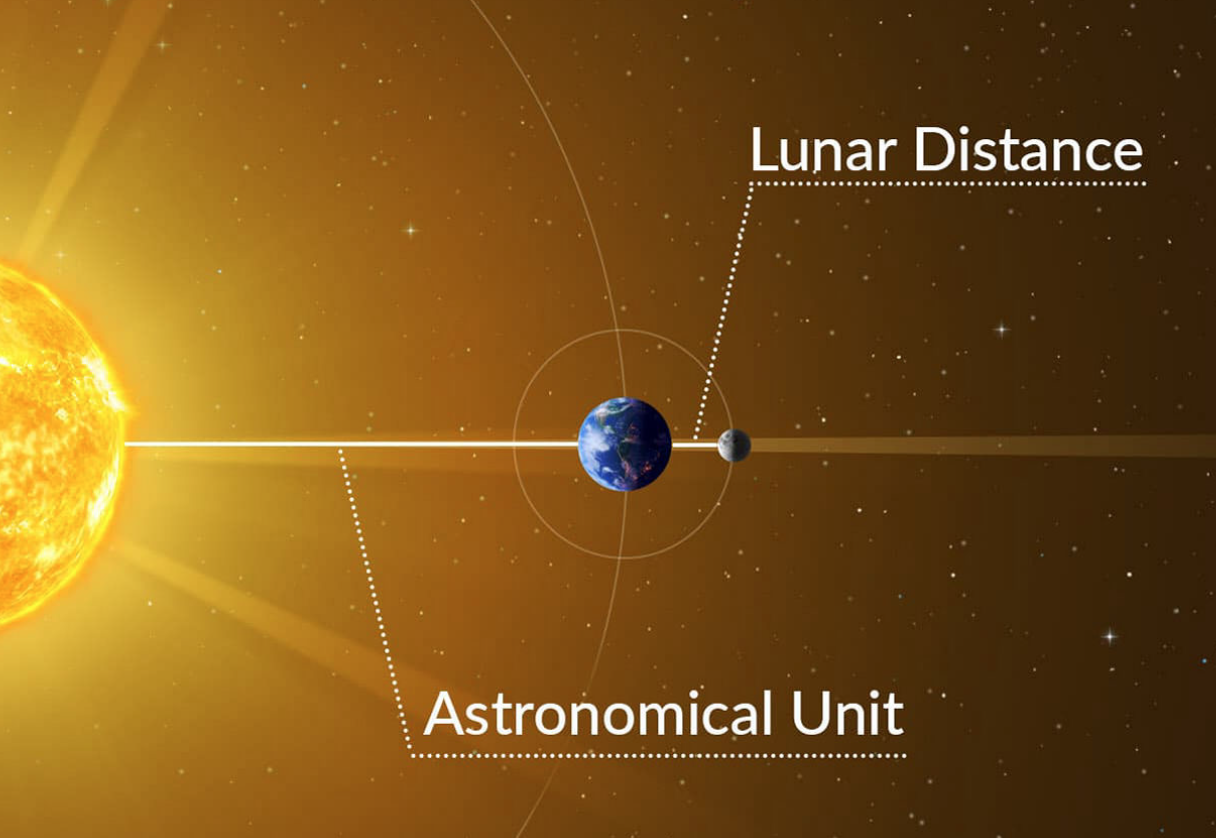
Astronomical Unit:
The unit of length defined as the average distance between Earth and the Sun; this distance is about 1.5 × 10⁸ kilometers
3
New cards
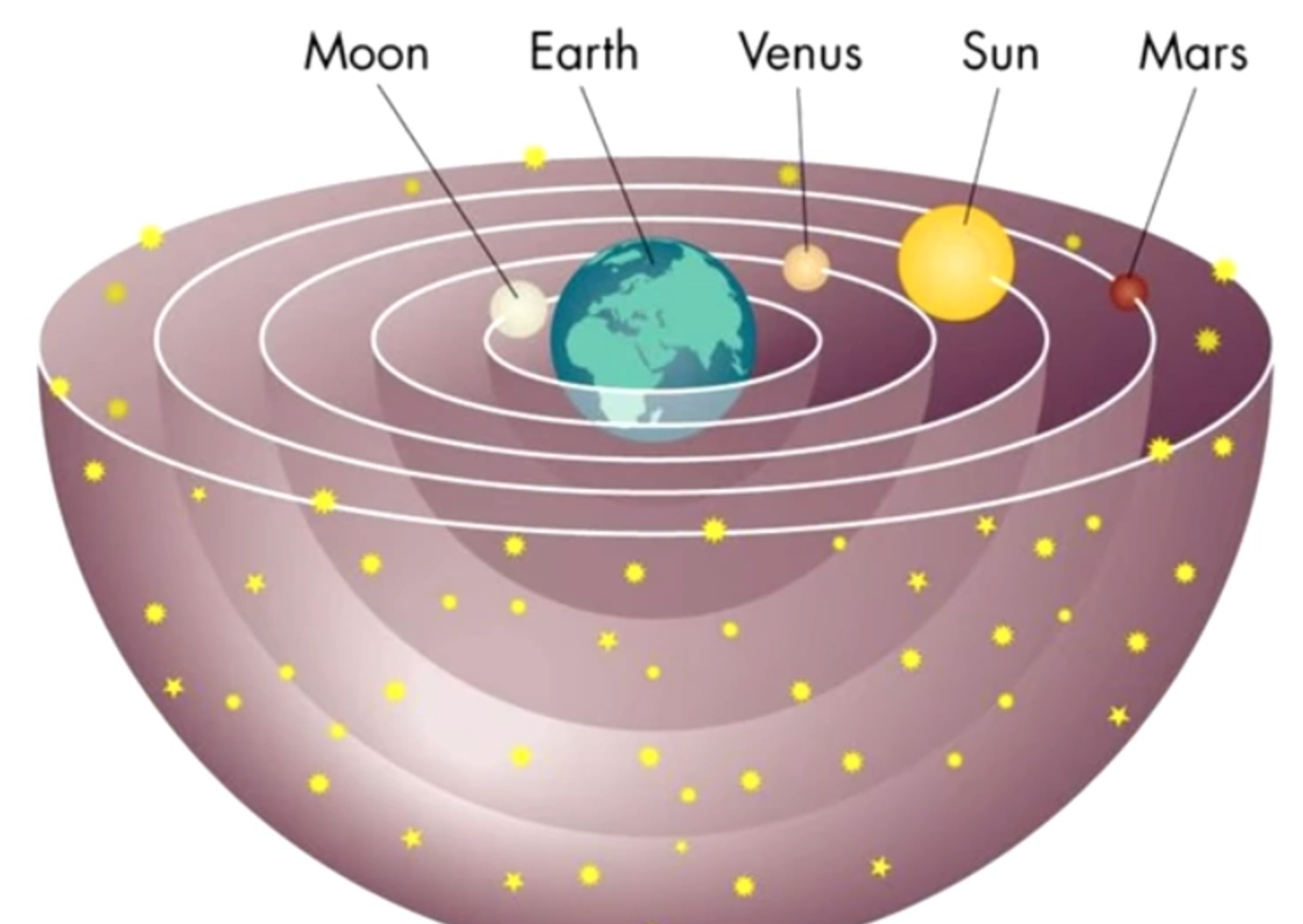
Geocentric:
Solar system centered around the Earth
4
New cards
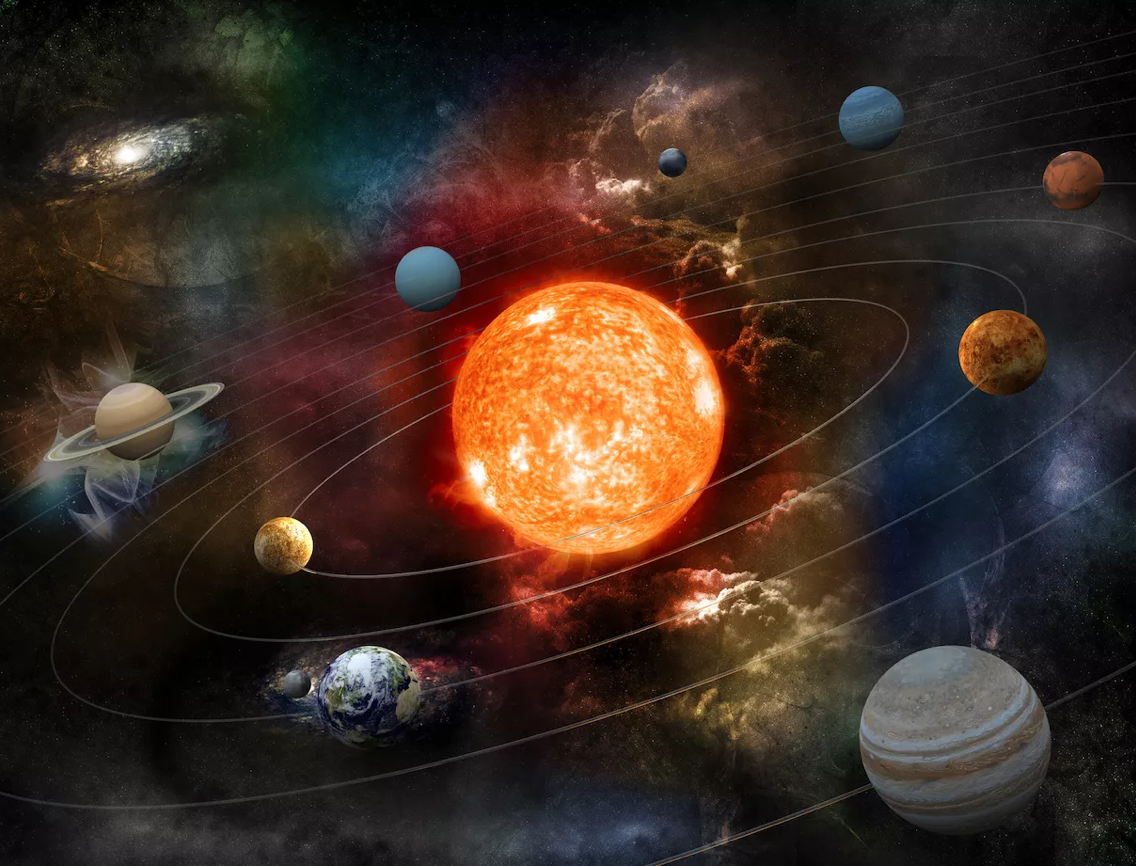
Heliocentric:
Solar system centered around the Sun
5
New cards
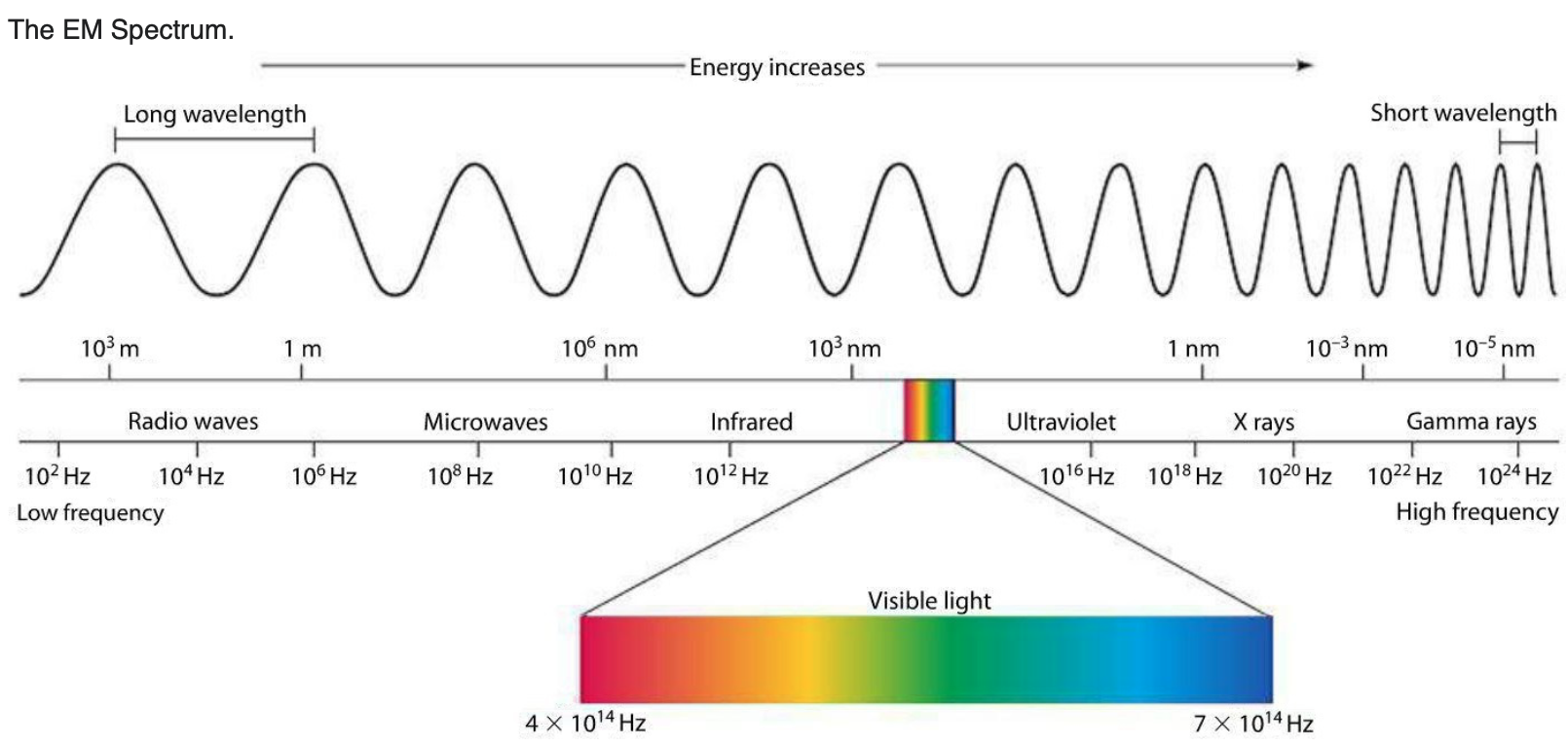
EM spectrum:
The whole array or family of electromagnetic waves, from radio to gamma rays
6
New cards
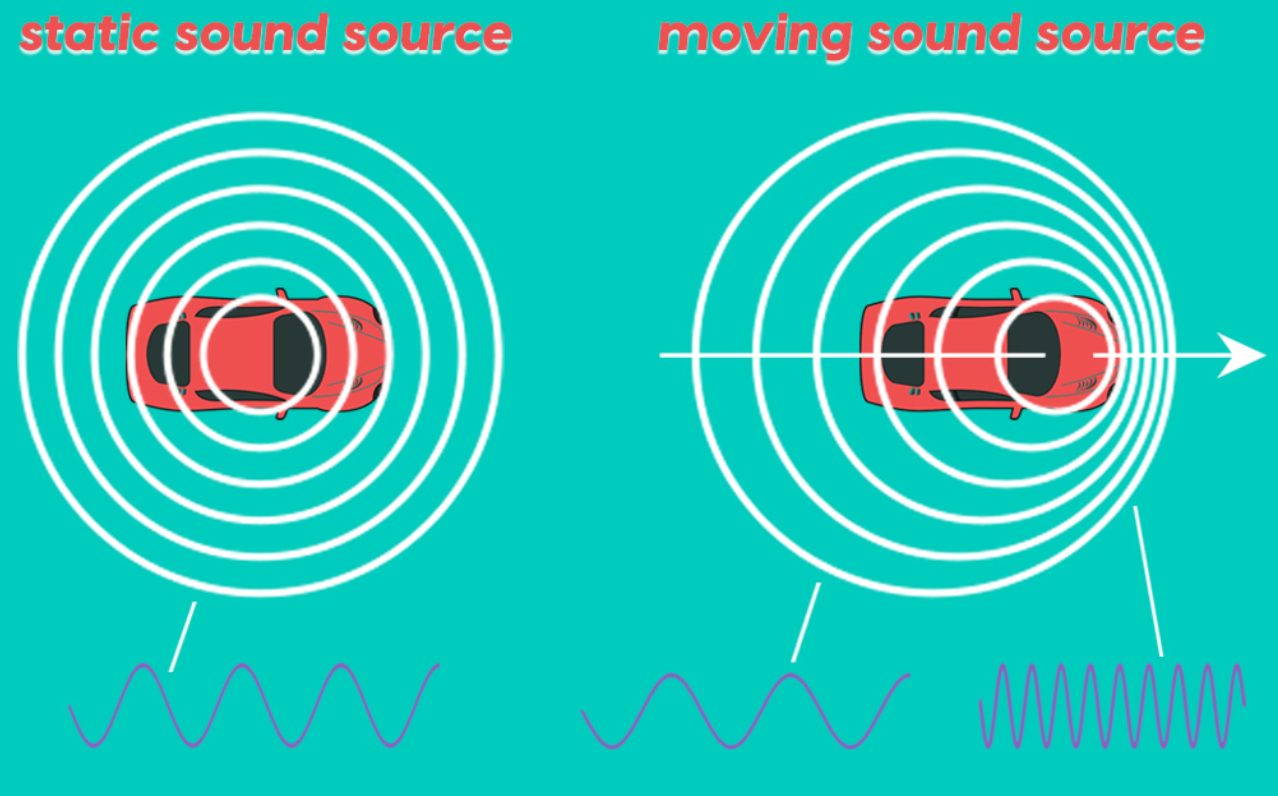
Doppler effect:
The apparent change in wavelength or frequency of the radiation from a source due to its relative motion away from or toward the observer
7
New cards
How do you get the scale size of an object?
Object scale size = object size/scale
8
New cards
How do you get the scale used on a scaled object?
Scale = object size/scale size
9
New cards
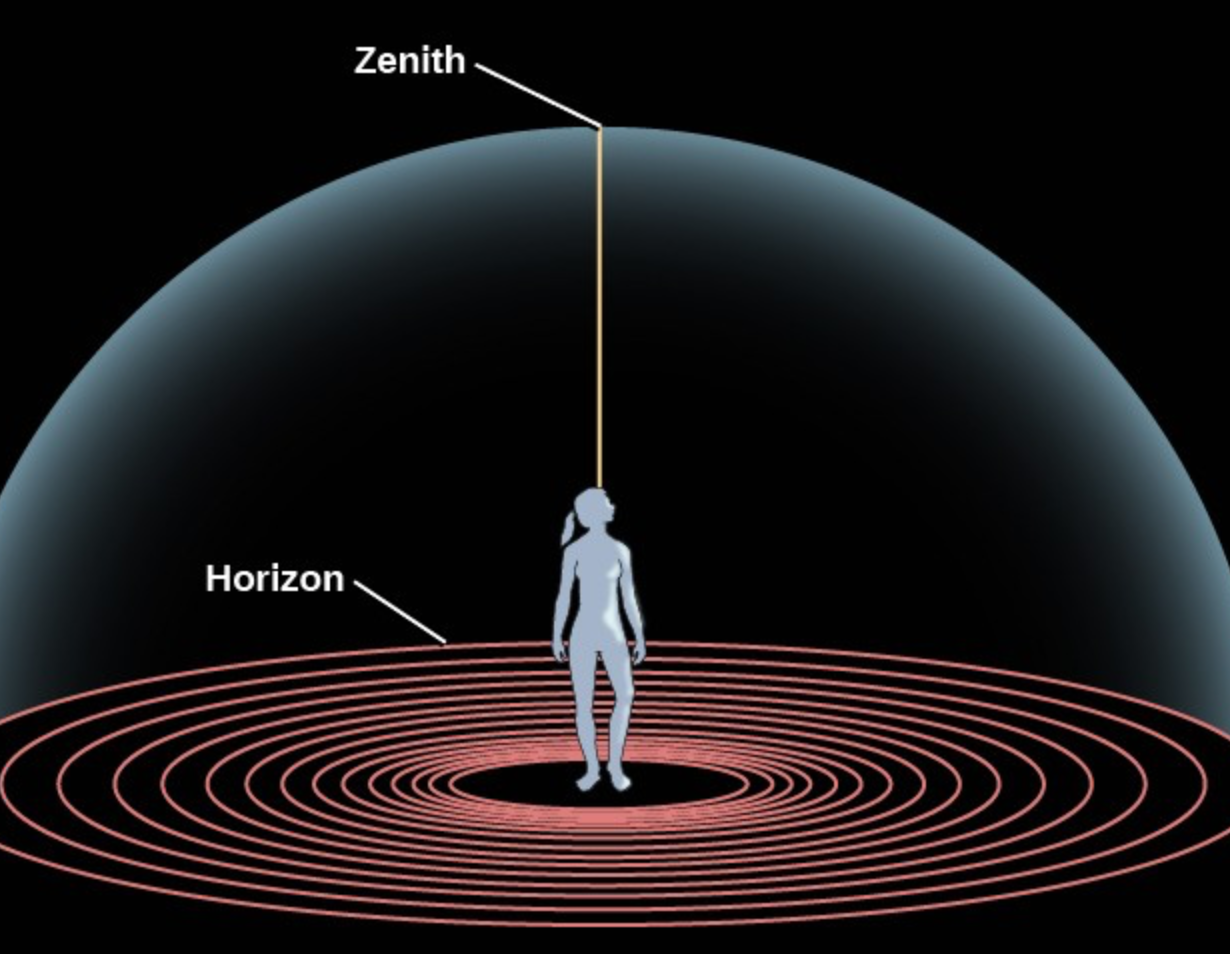
Where is your zenith?
The point on the celestial sphere opposite the direction of gravity; point directly above the observer, your 90°
10
New cards
Where is your horizon?
Where the sky meets the ground, in all directions
11
New cards
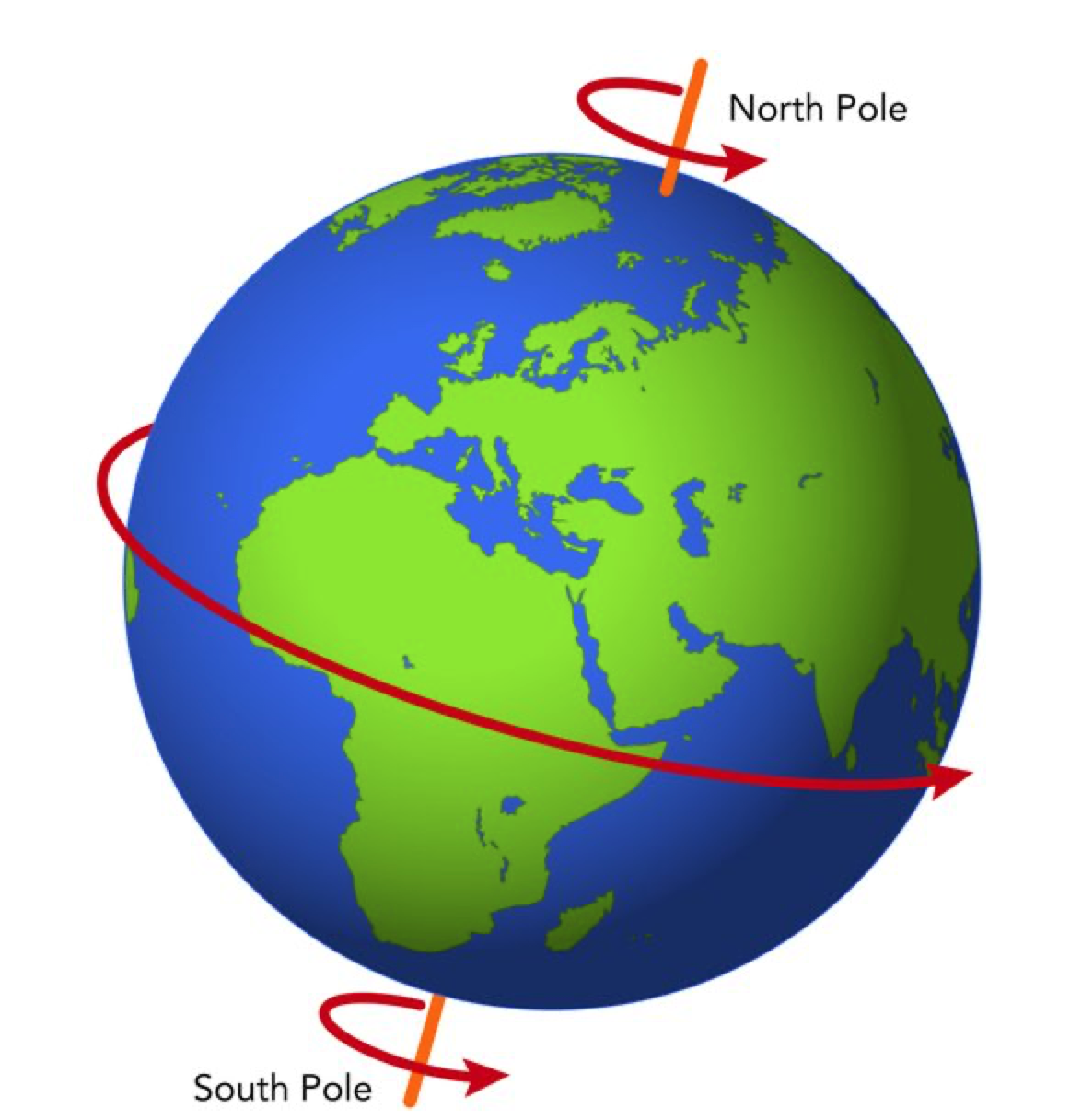
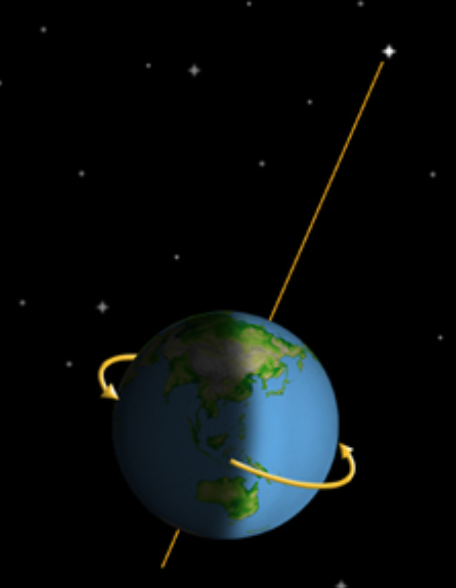
Which 2 points does the Earth rotate around?
North & South pole
12
New cards
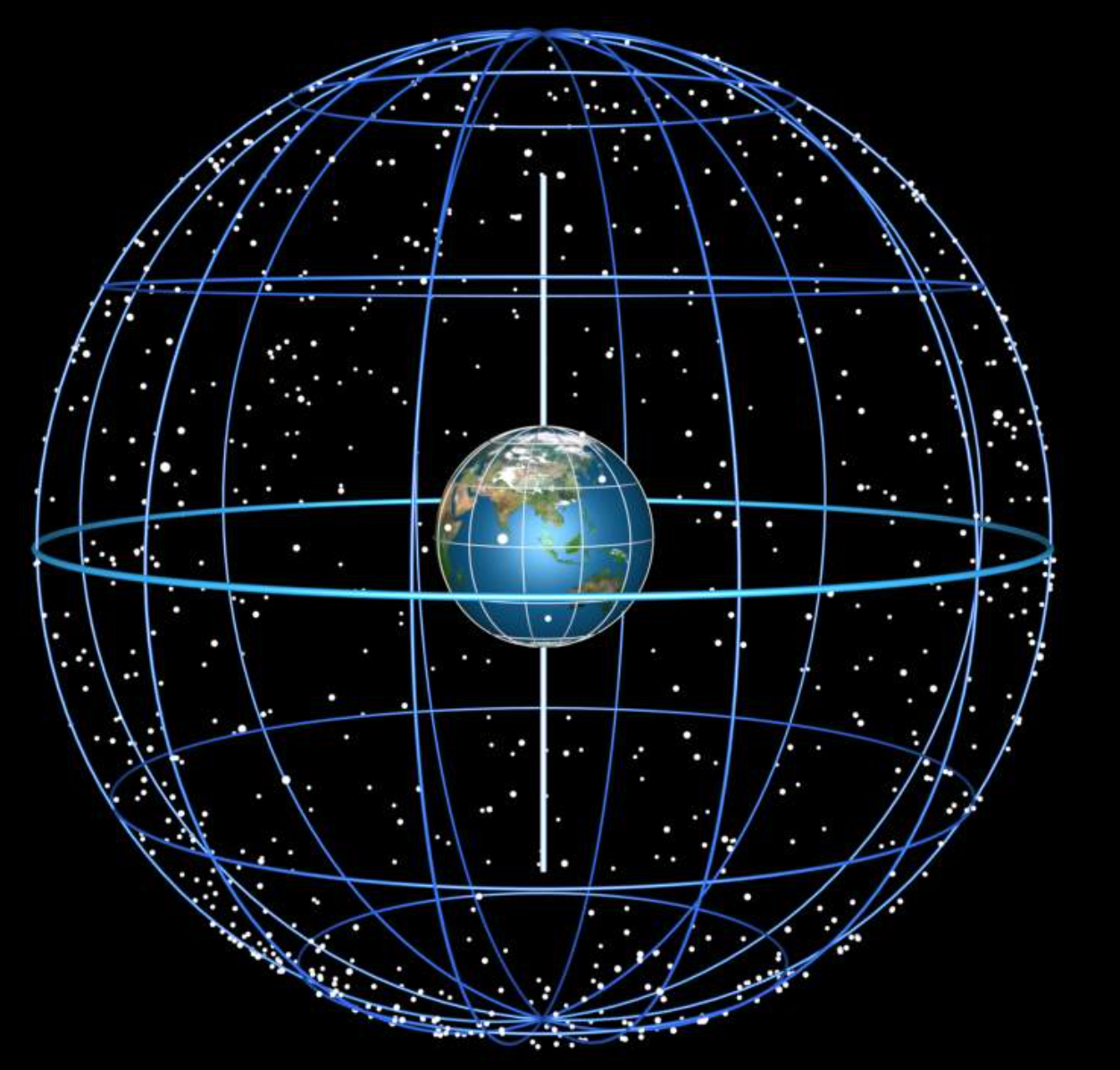
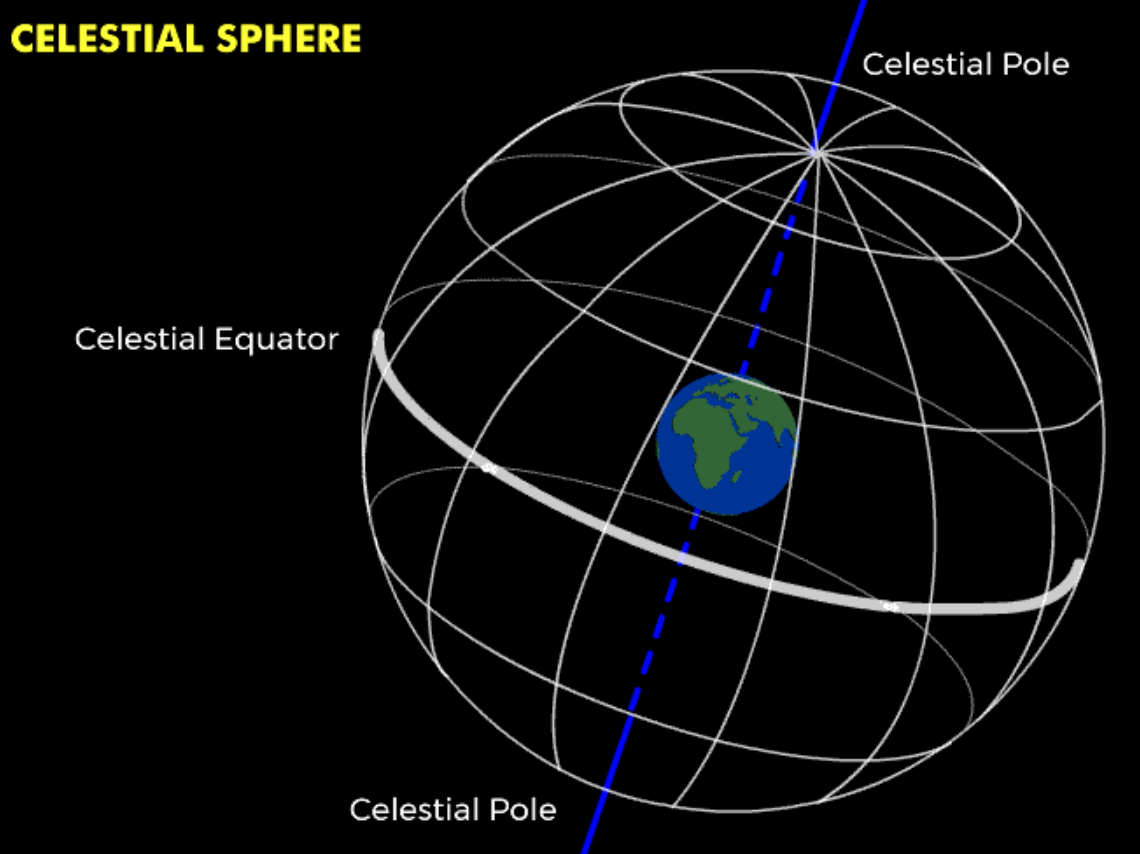
Celestial sphere:
Imaginary dome around the Earth that illustrates the trajectory of objects in our night sky
13
New cards
Celestial poles:
Imaginary lines extending from Earth’s poles, into the celestial sphere
14
New cards
Celestial equator:
Imaginary projection of Earth’s equator onto the celestial sphere, 90° from the celestial poles
15
New cards
What moves the least in the night sky?
Objects closest to the celestial poles, Polaris (north star)
16
New cards
What moves the most in the night sky?
Objects closest to the celestial equator
17
New cards
The apparent motion of the celestial sphere depends on your what?
Latitude
18
New cards
How many degrees does the Sun move each day?
1°
19
New cards
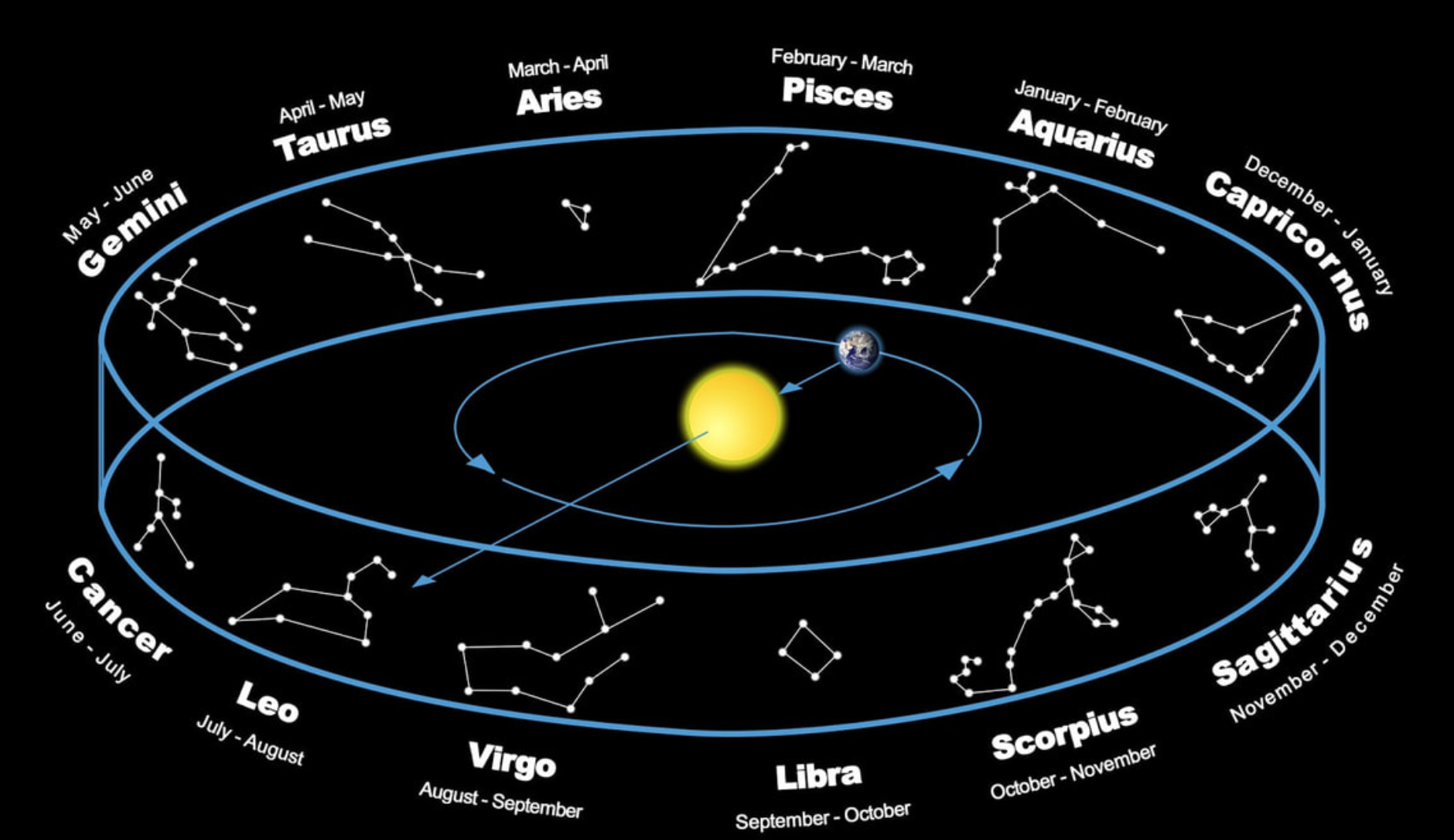
Ecliptic:
The annuel path the Sun appears to take around the celestial sphere
20
New cards
Zodiac Constellations:
The 12 star patterns that follow very close to the ecliptic
21
New cards
Does the ecliptic follow the same path as the celestial equator?
No
22
New cards
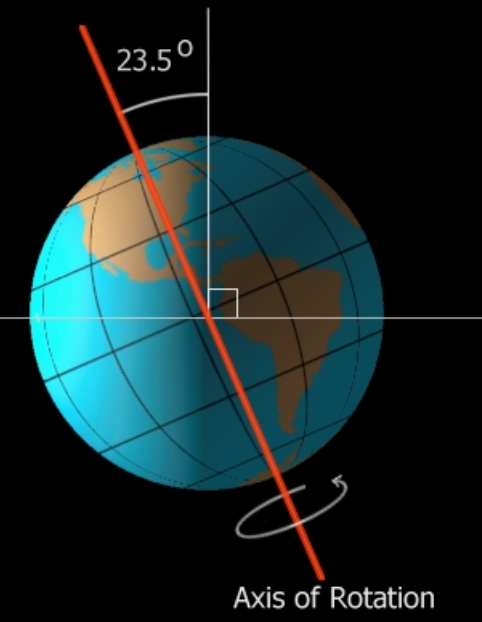
How many degrees is the Earth’s tilt?
23.5°
23
New cards
Can you see stars that are under your horizon?
No
24
New cards
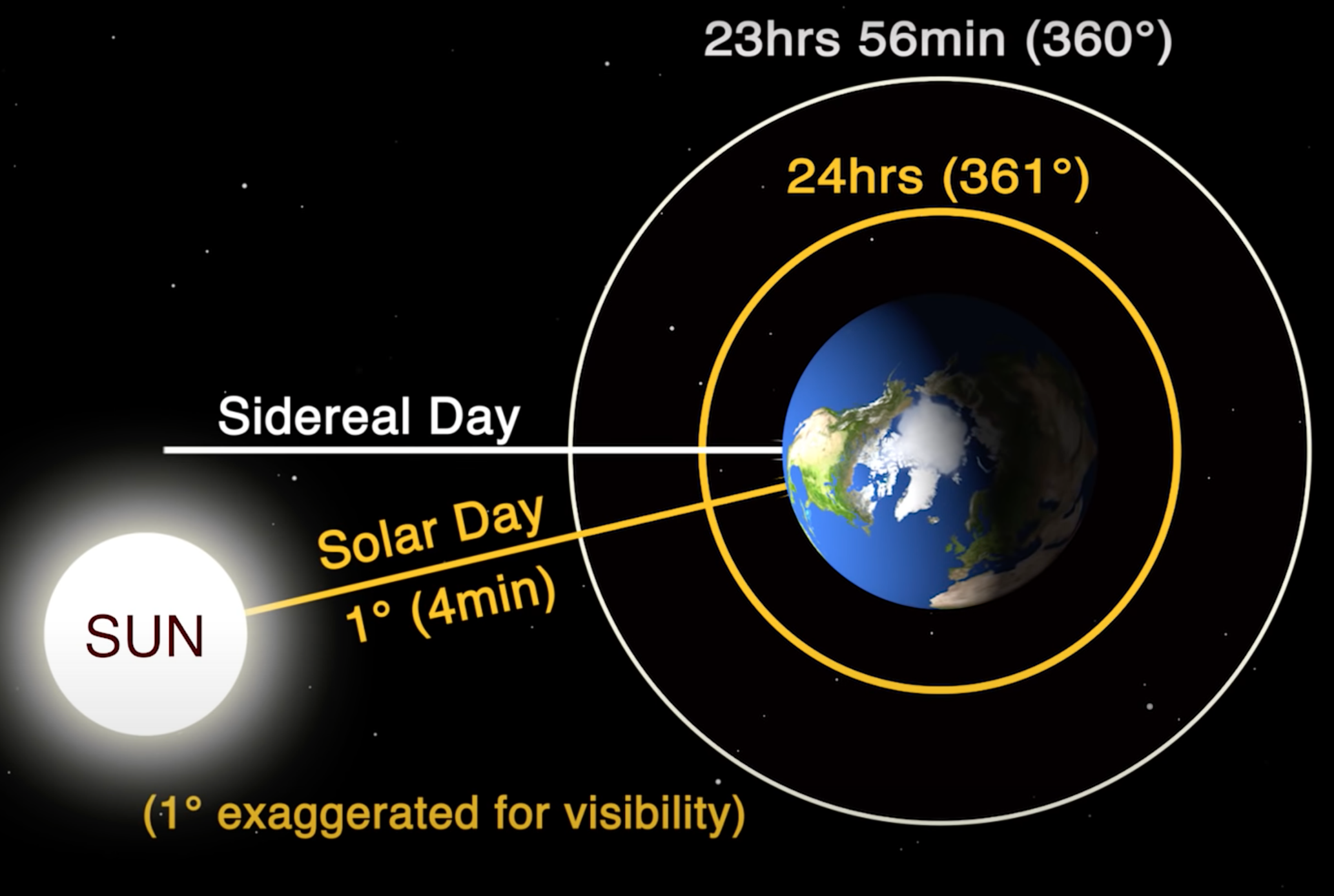
Solar day:
Earth’s rotation period as defined by the position of the Sun in the sky; the time between successive passages of the Sun through the meridian
25
New cards
Sidereal day:
Earth’s rotation period as defined by the positions of the stars in the sky; the time between successive passages of the same star through the meridian
26
New cards
How many degrees does the Earth rotate in a solar day?
359°
27
New cards
How many degrees does the Earth rotate in a sidereal day?
360°
28
New cards
How long does it take the Earth to rotate exactly 360°?
23:56, slightly less than 24 hrs
29
New cards
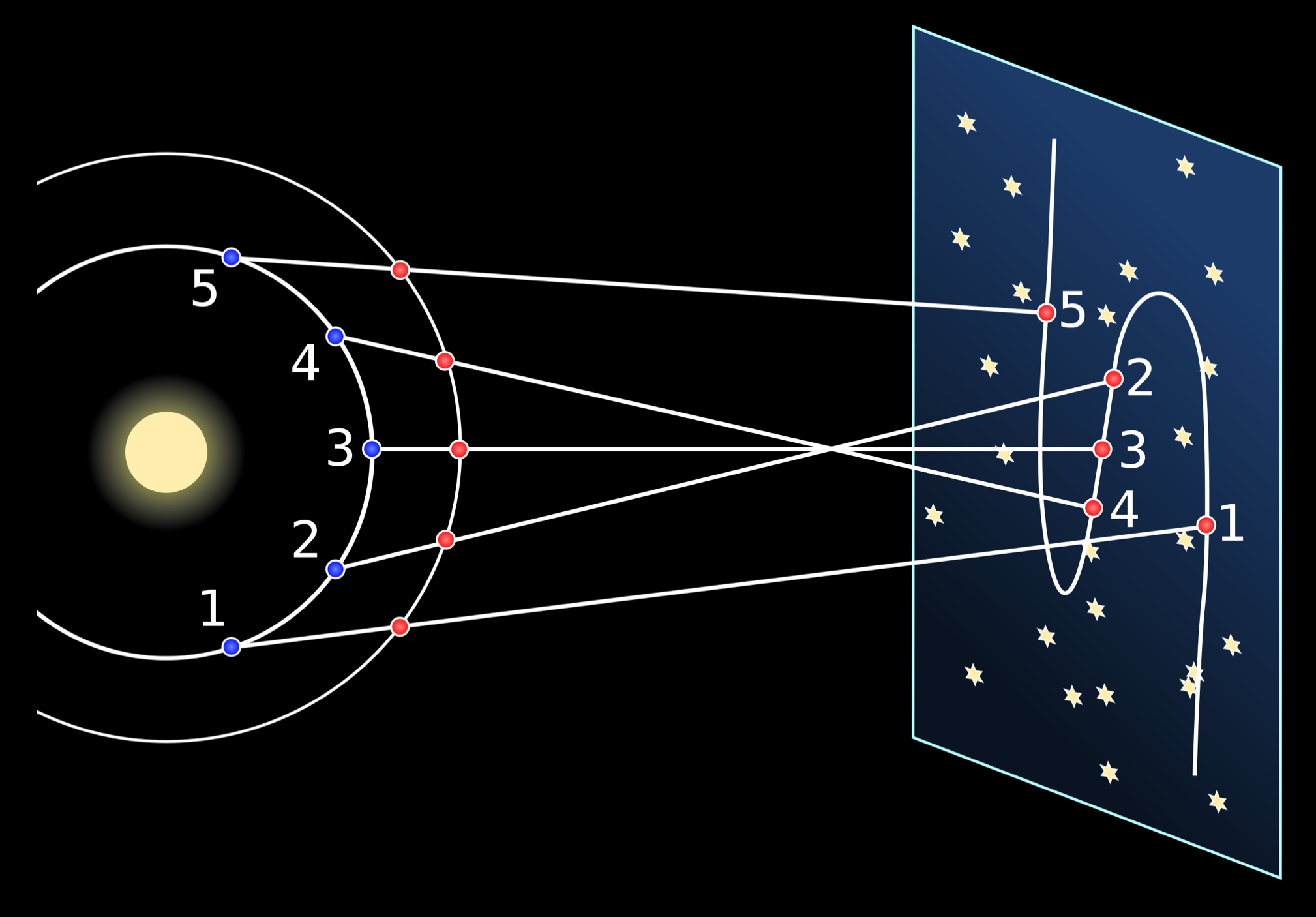
Retrograde:
the apparent westward motion of a planet on the celestial sphere or with respect to the stars
30
New cards
Does the Earth spin in the opposite direction that it orbits?
No, the Earth spins in the same direction that it rotates
31
New cards
Where is the region you could always see a star? (let’s assume the latitude of 30° again)
30° N of your horizon
32
New cards
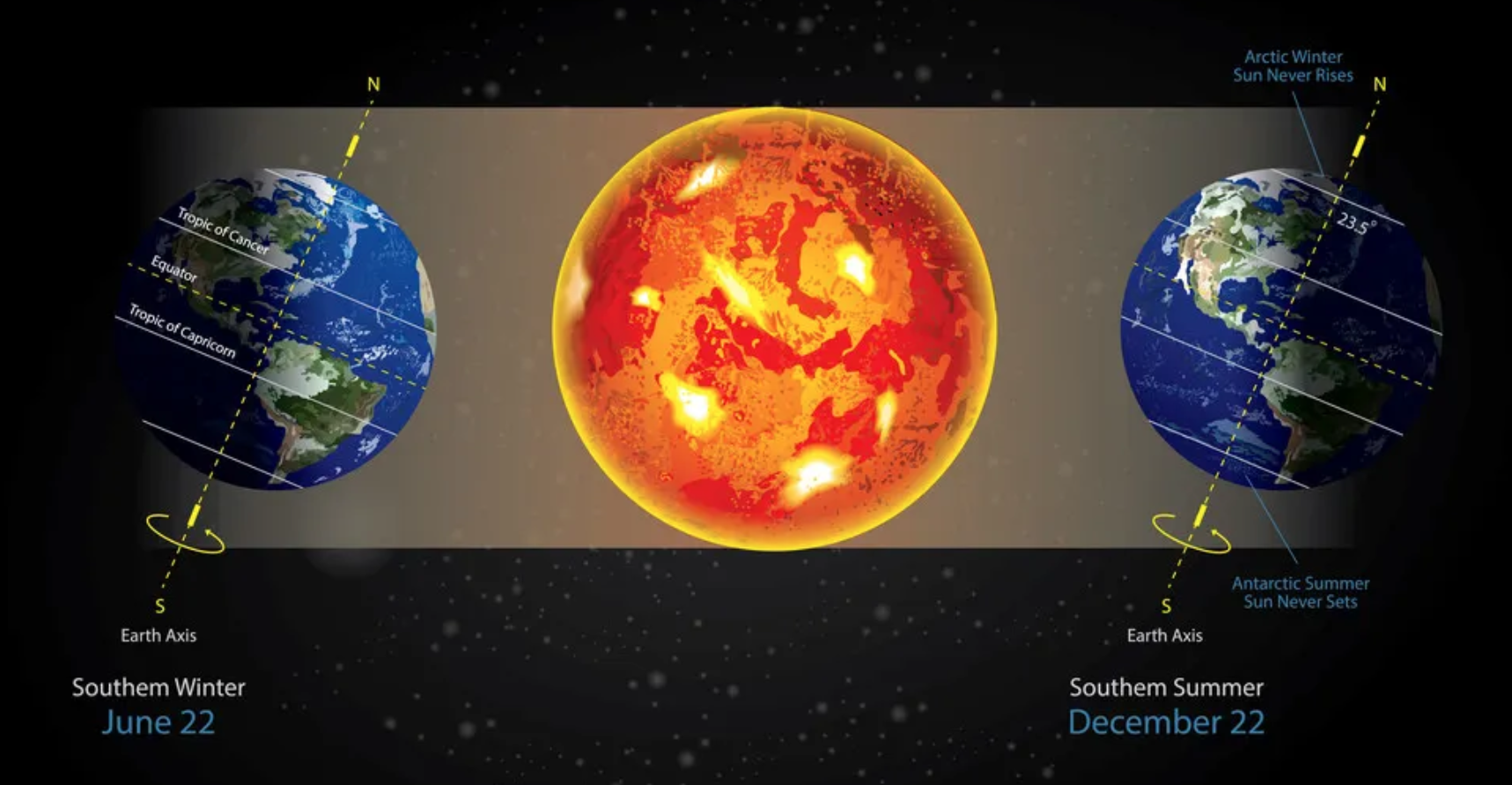
Solstice:
When the pole is either pointed towards or away from the sun, the shortest or longest day of the year
33
New cards
Which pole faces the Sun during the summer solstice?
North
34
New cards
Which pole faces the Sun during the winter solstice?
South
35
New cards
On the summer solstice, the arctic circle has how many hours of sunlight?
24 hrs
36
New cards
On the summer solstice, the antarctic circle has how many hours of sunlight?
0 hrs
37
New cards
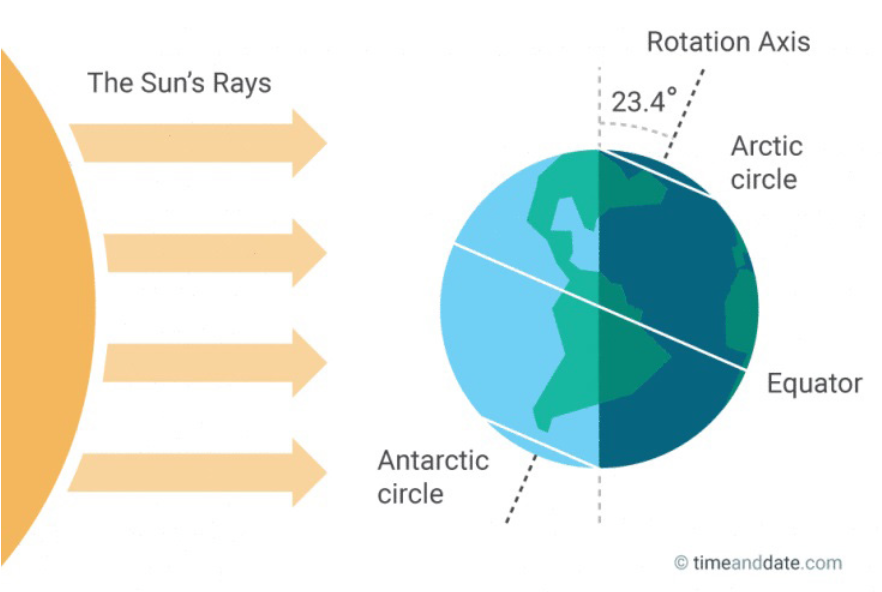
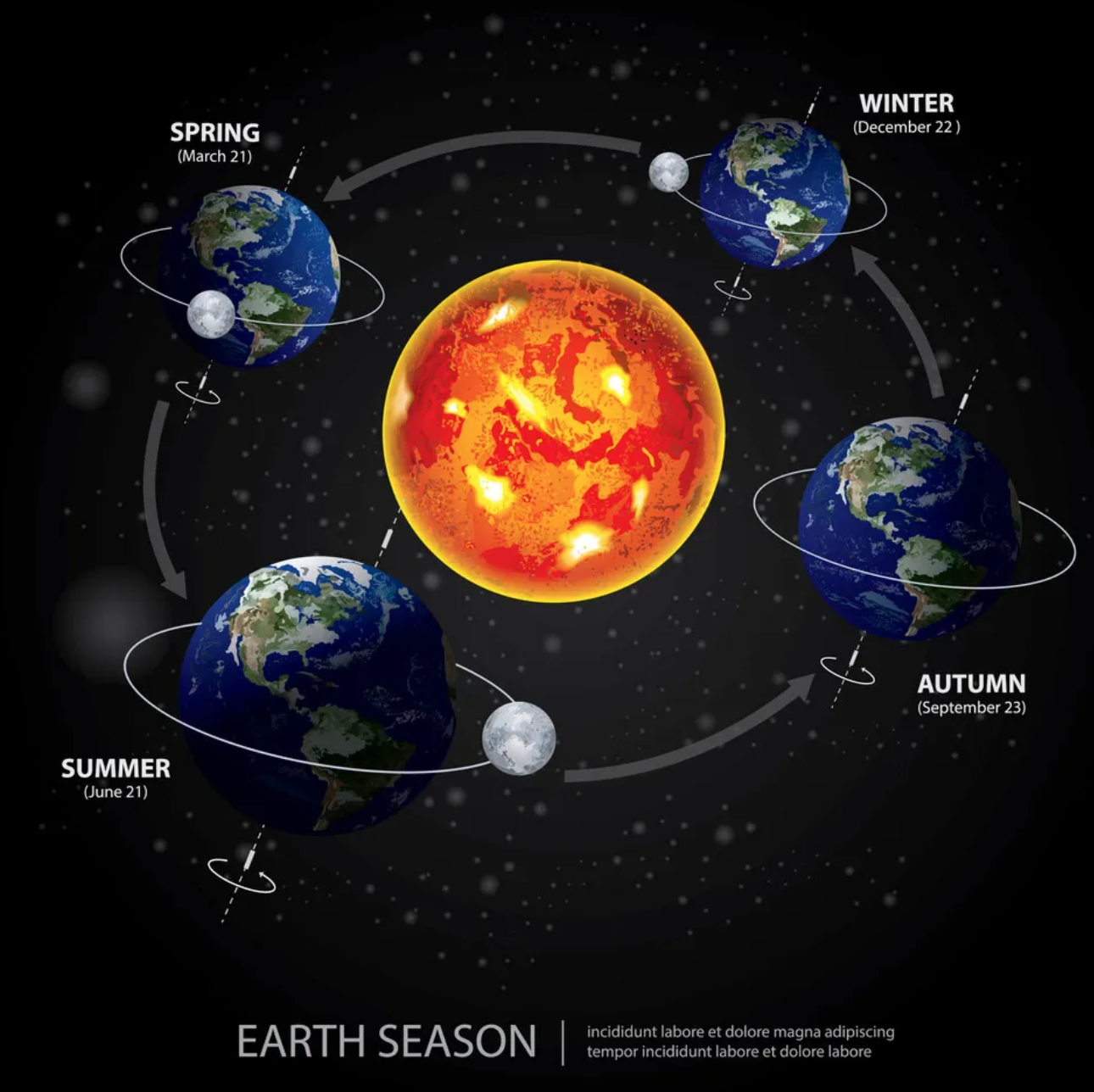
Equinox:
Neither pole is pointed towards or away, day & night are relatively equal in length
38
New cards
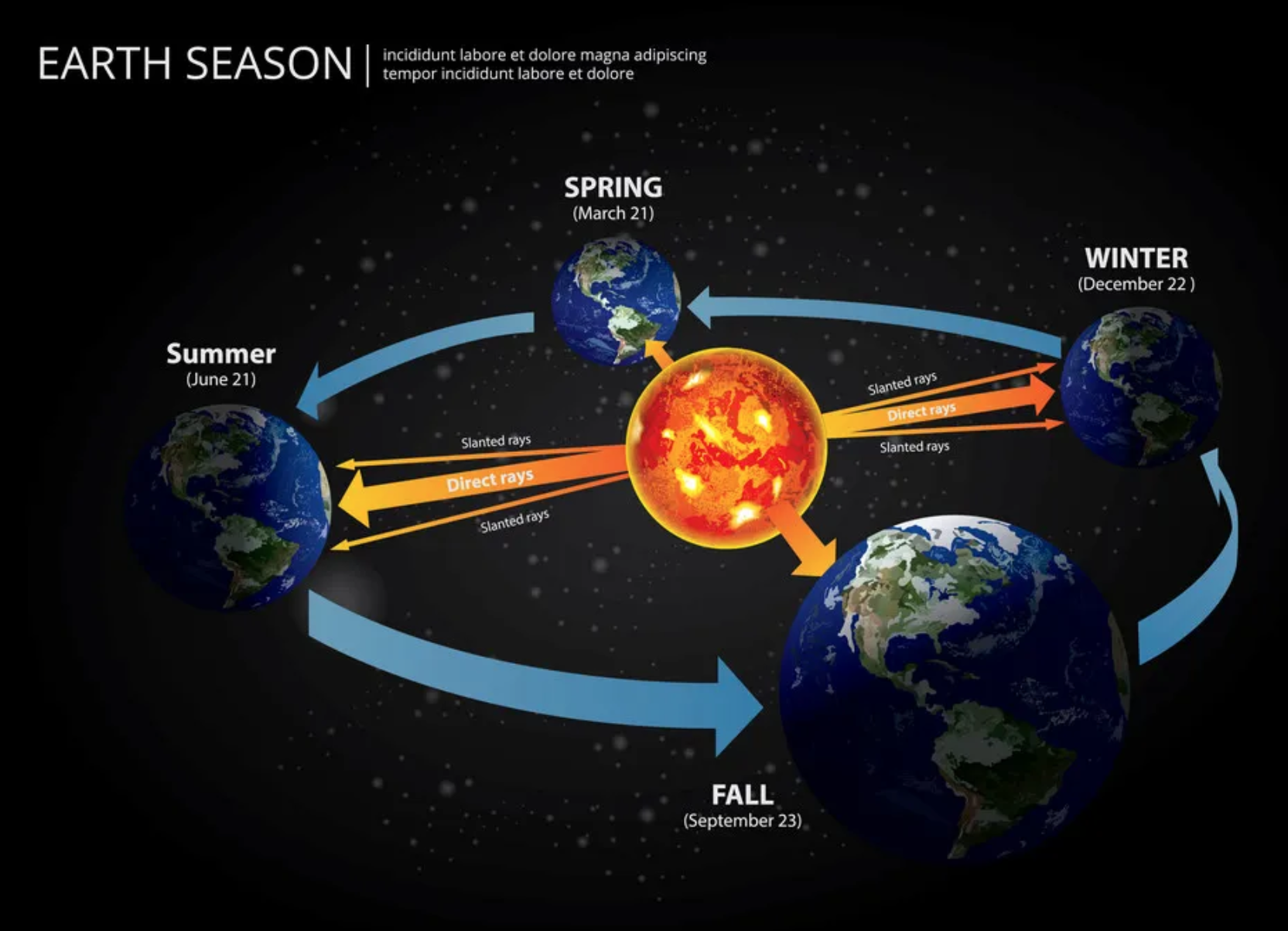
What are the 2 reasons why summer is warmer than winter?
In summer, the days are longer and the ground receives more direct sunlight
39
New cards
Does the distance between the Sun and Earth have anything to do with the seasons?
No
40
New cards
What is the brightest thing in the sky?
Sun
41
New cards
What’s the second brightest thing in the sky?
Moon
42
New cards
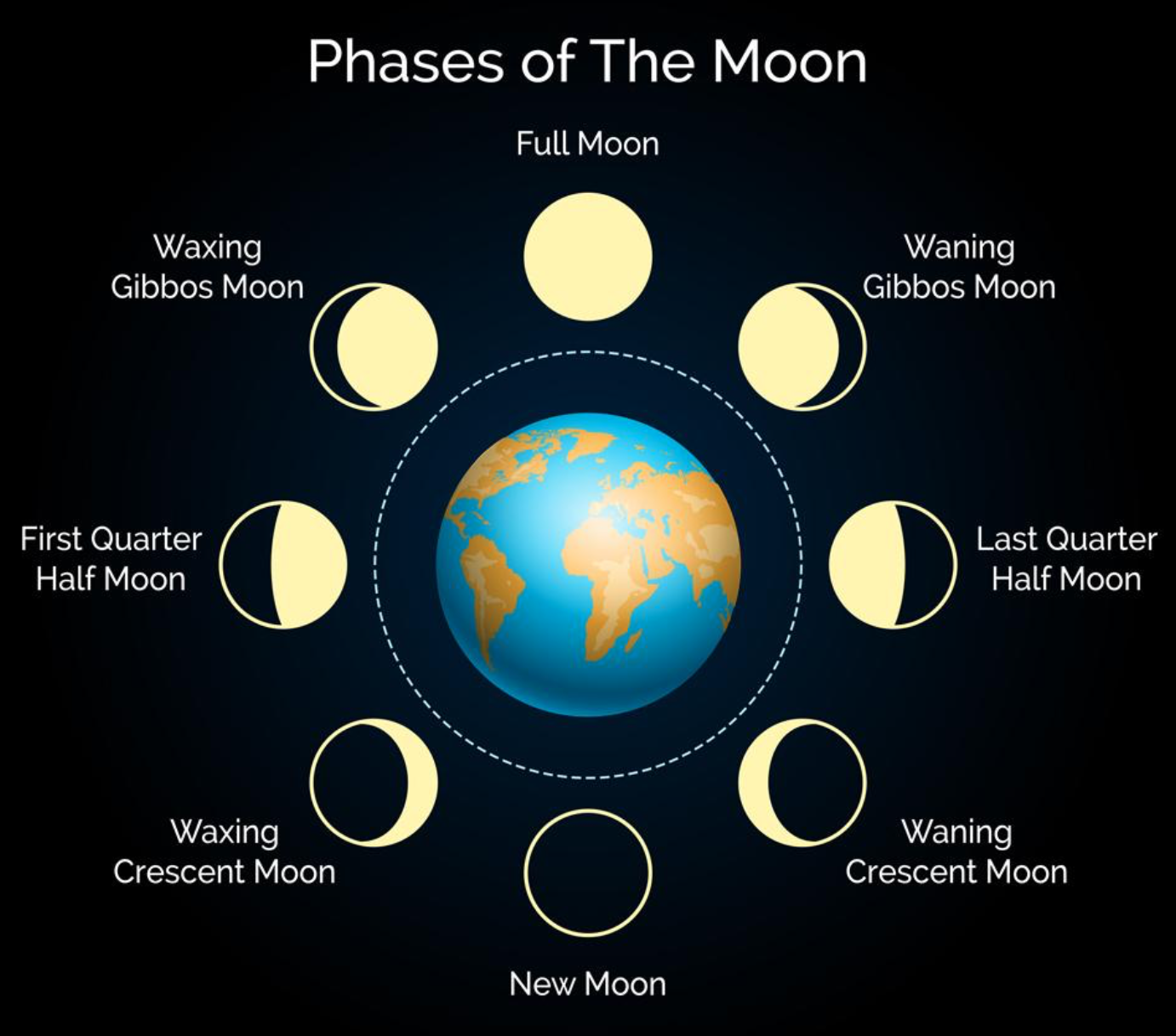
Name the 8 lunar phases:
New, waxing crescent, 1st quarter, waxing gibbous, full, waning gibbous, 3rd quarter, waning crescent
43
New cards
Is there a part of the moon that never sees the sun?
No
44
New cards
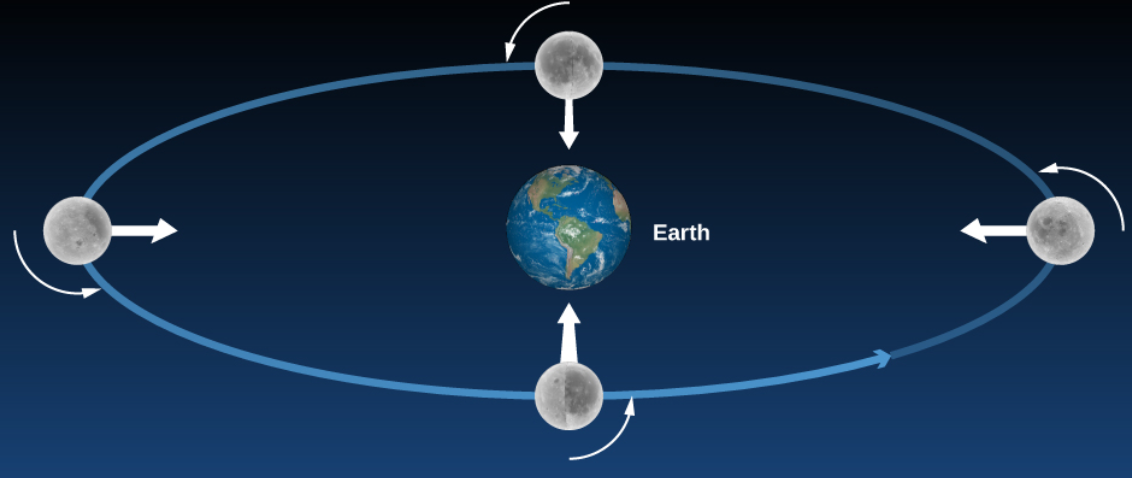
Synchronous rotation:
When a body (for example, the Moon) rotates at the same rate that it revolves around another body
45
New cards
How much of the moon is always in sunlight?
Half