8. Mixed Congenital Heart Defects
 Call Kai
 Learn
Learn Practice Test
 Spaced Repetition
 Match
Match Flashcards
 Knowt Play
1/24

There's no tags or description
Looks like no tags are added yet.
Name | Mastery | Learn | Test | Matching | Spaced | Call with Kai | Chat |
|---|
No analytics yet
Send a link to your students to track their progress
25 Terms
what happens in mixed congenital heart defects?
oxygen-rich and oxygen-poor blood mix before blood reaches the body
how can mixed heart defects affect the body’s circulation?
blood reaching the body has less oxygen
cardiac output is decreasee
heart failure occurs
which defects are classified as mixed heart defects?
transposition of the great vessels (TGV)
truncus arteriosus
hypoplastic left heart syndrome (HLHS)
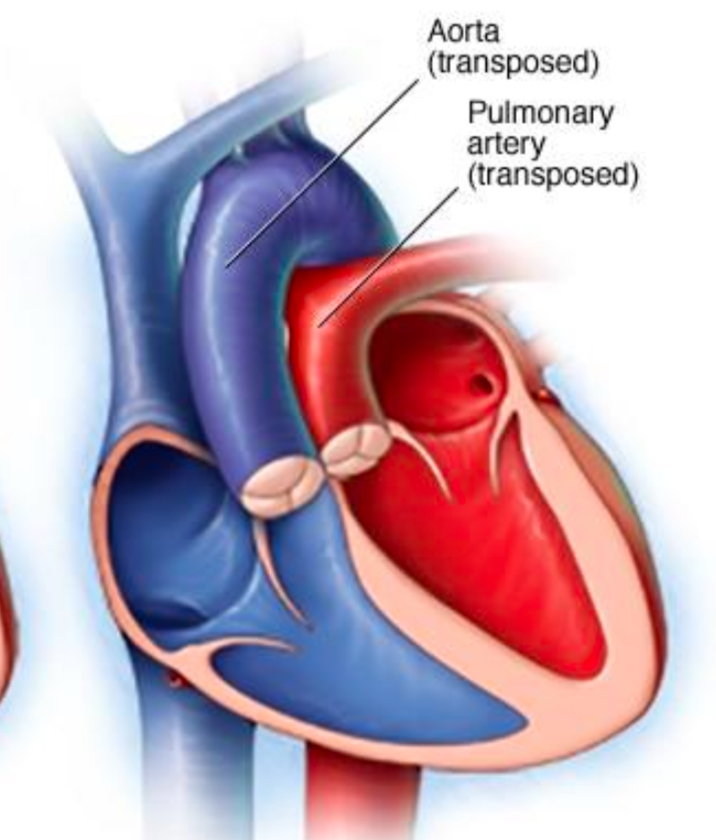
what is transposition of the great vessels?
the aorta and pulmonary artery connect to the wrong ventricles (they’re swapped)
aorta = RV (deoxygenated blood goes to body)
pulmonary artery = LV (oxygenated blood goes to lungs again)
how can a patent ductus arteriosus or ventricular septal defect help in transposition of the great vessels?
these openings connect the separate circuits and allow oxygen-rich and oxygen-poor blood to mix
why can cyanosis worsen when the ductus arteriosus closes in transposition of the great vessels?
closure removes a connection that helped oxygen-rich blood reach the body
PDA and VSD are ideal
when is corrective surgery typically performed for transposition of the great vessels in early infancy?
around 4–7 days of life
what is prostaglandin used for? *
keeping the ductus arteriosus open to preserve an essential route for blood flow
in neonates, _____ can occur within the first hour of a prostaglandin infusion (10-20%) *
apnea
which med keeps the ductus arteriosus open after birth? *
prostaglandin
which med closes the ductus arteriosus? *
indomethacin

what is truncus arteriosus?
pulmonic artery + aorta merge into one major artery leaves the heart and supplies both the lungs and the body

why does blood mix in truncus arteriosus?
blood from both ventricles enters the same shared artery

what additional opening is commonly present with truncus arteriosus?
a ventricular septal defect

in truncus arteriosus, the pressure gradient sends too much blood to the _____, and _____ is decreased
lungs ; systemic blood flow

what feeding and growth findings can occur with truncus arteriosus?
cyanosis that worsens during feeding or activity
tiring easily
difficulty feeding
poor growth

what signs of breathing difficulty can occur with truncus arteriosus?
rapid breathing, nasal flaring, grunting, chest retractions, and restlessness
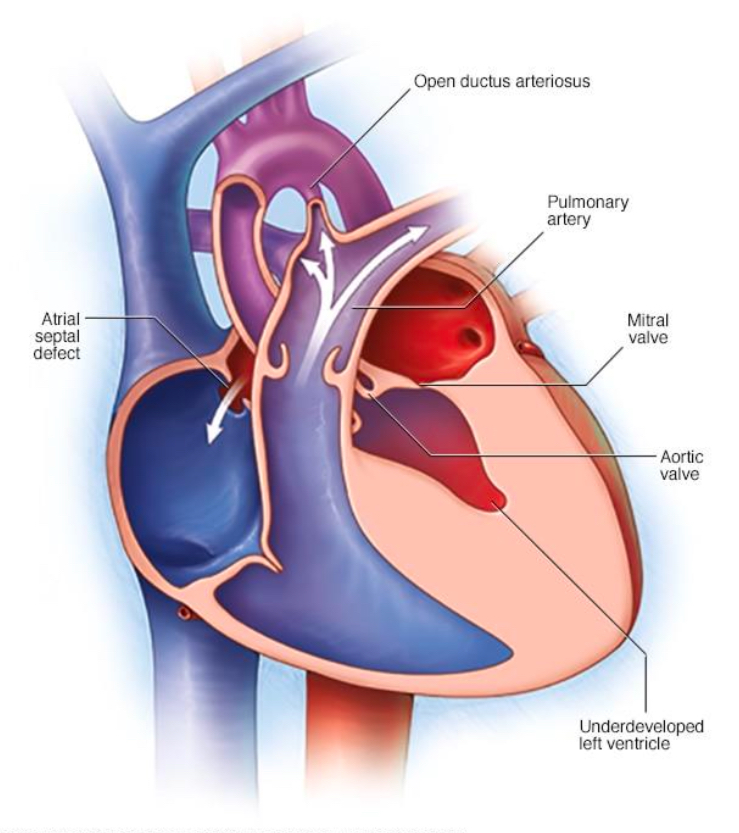
what is hypoplastic left heart syndrome?
severe underdevelopment of the left side of the heart
mitral and aortic valves are closed or very small
left ventricle is NONfunctional
PDA and ASD are needed

what happens to the mitral and aortic valves in hypoplastic left heart syndrome?
they are very small or completely closed

why is an ASD needed in hypoplastic left heart syndrome?
blood returning from the lungs must cross from the left atrium to the right atrium to reach the working right ventricle

why is a PDA needed in hypoplastic left heart syndrome?
the right ventricle pumps blood into the pulmonary artery, and the ductus provides a route from there into the aorta and body

why can ductus arteriosus closure cause circulatory collapse in hypoplastic left heart syndrome?
the body loses its essential blood-flow route, so vital organs no longer receive enough blood
what treatment options are available for hypoplastic left heart syndrome?
comfort-focused palliative care
heart transplantation
three-stage reconstructive surgery beginning shortly after birth

why is lifelong follow-up needed for hypoplastic left heart syndrome?
treatment does not create a normal heart, there will be lifelong complications
what nursing care is needed for a child with congenital heart disease? *
improve oxygenation
support nutrition with short, frequent feeds or tube feeding as needed
help the child and family cope
prevent infection
provide care before and after surgery
teach the child and family about care