General sensory systems
 Call Kai
 Learn
 Practice Test
 Spaced Repetition
 Match
 Flashcards
 Knowt Play
1/38

There's no tags or description
Looks like no tags are added yet.
39 Terms
Sensory receptors
detect information (stimulus) in the internal or external environment
The part of the CNS that process the information

Neural pathways
convey information from the receptors to the CNS
The part of the CNS that processes the information

Sensation
When sensory information reaches an integration center in the CNS it becomes sensation
Sensation may be consciously or unconsciously processed

Perception
conscious interpretation of the sensation (recognition of taste, pain, warmth

Process of sensation
sensory information needs to be transformed into neural information- action potentials

Stimulation
sensory information, stimulus, must be presented to a sensory receptor

Transduction
a sensory receptor converts the stimulus energy into a graded potential

Action potential generation
if a graded potential is large enough, an AP is generated and carries the info to the CNS

Integration
as the sensory information is transferred within the CNS it can be modified, left unchanged or deleted

Interoceptors
respond to internal stimuli(visceral), ANS
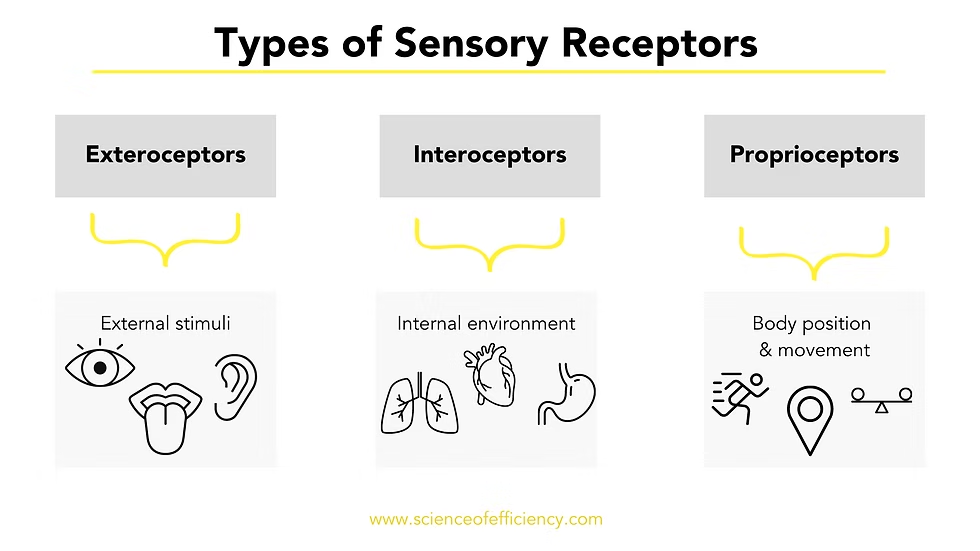
Exteroceptors
respond to external stimuli on the body surface
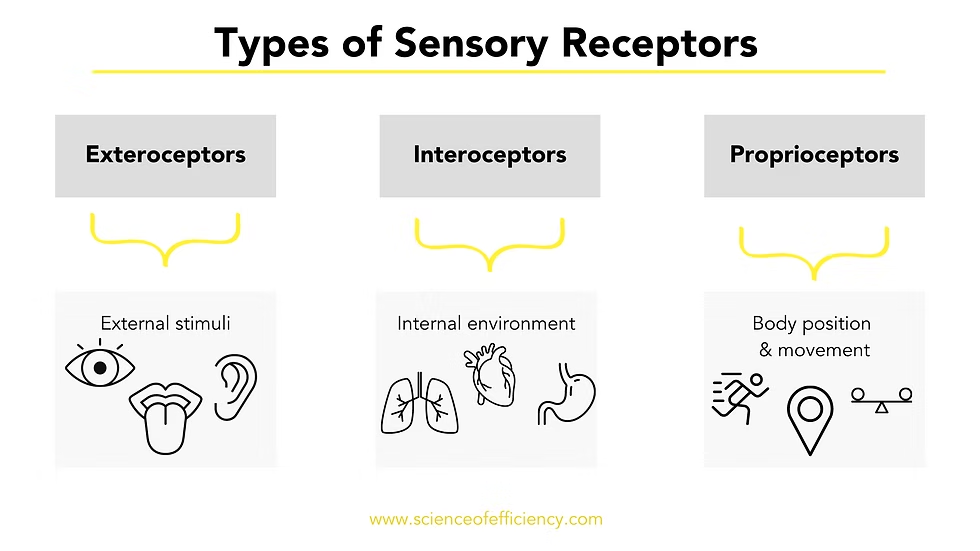
Proprioceptors
body position/movement stimuli; occur in muscle, tendons, joints and inner ear

Types of sensory receptors
sensory receptors are activated by a specific type of stimulus

Thermoreceptor
heat/cold

Photoreceptor
Light

Nociceptors
pain
Chemoreceptors
chemicals
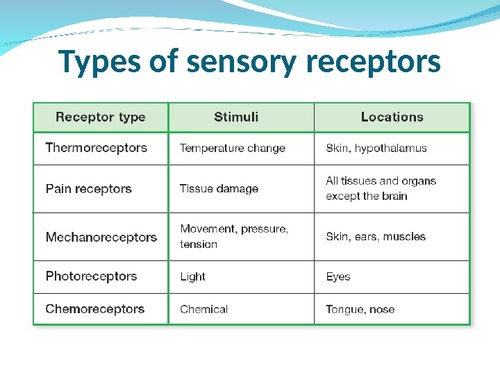
Mechanoreceptors (baroreceptors)
physical deformation

Peripheral endings of a sensory(afferent) neuron
Free endings or encapsulated

Separate cells
synapse onto a sensory neuron

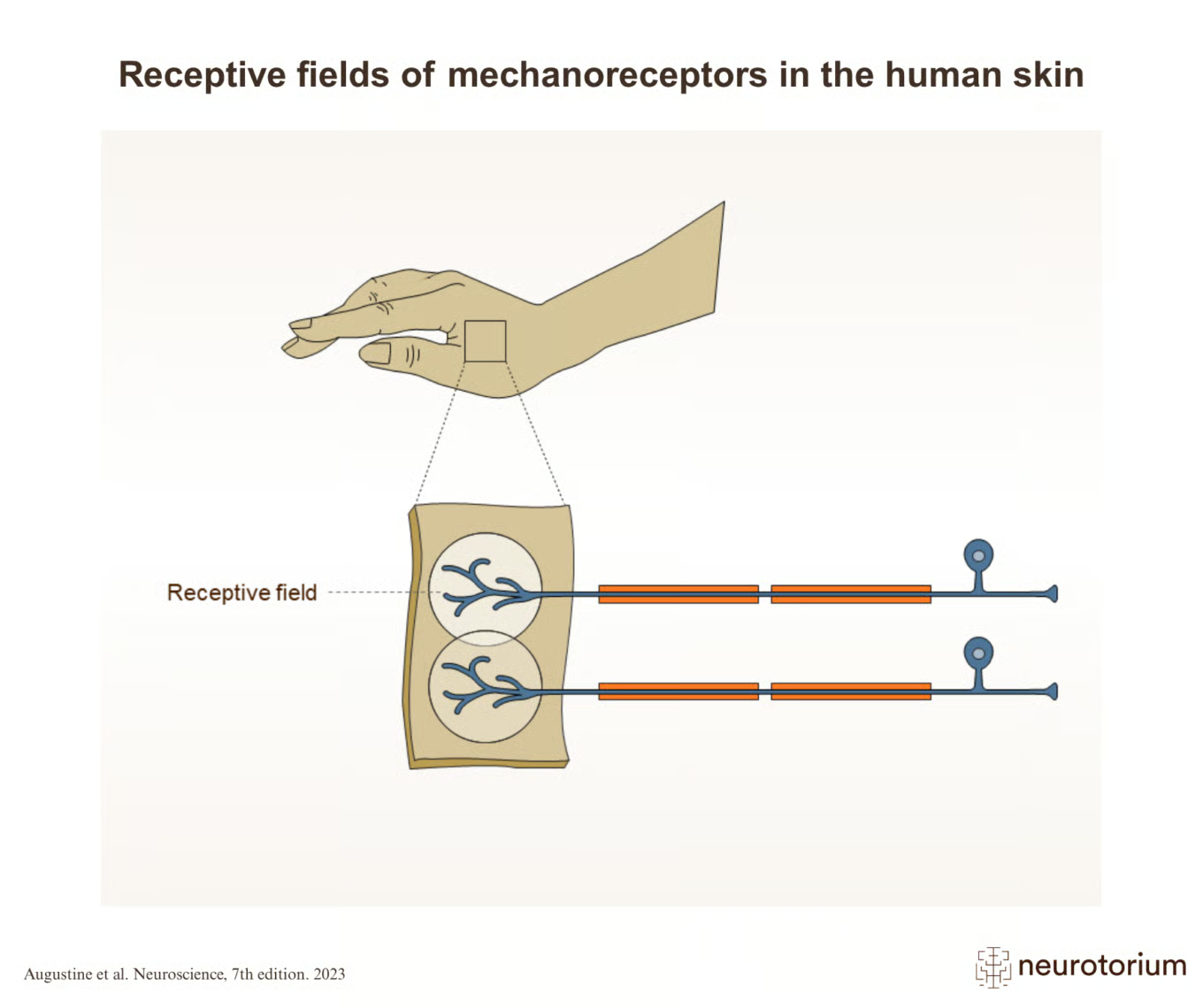
Receptive field
the receptive field of a neuron is the stimulus that best activates a neuron
May be…. Physical area on the body, specific group of chemicals, particular set of sound frequencies
Sensory coding
all sensory information is transmitted as action potentials which are all alike. How do we distinguish between stimuli?- sensory systems encode four attributes of a stimulus

Modality
types of stimulus, pain, vision, touch
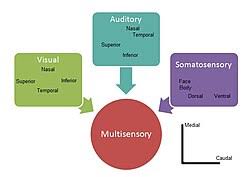
Labeled lines
different stimuli have distinct pathways into the CNS and to specific sites within the CNS

Location
where is the stimulus occurring

Intensity
how strong is the stimulus

Duration
how long does the stimulus last

Topographic map
adjacent areas on the body(retina) project to adjacent areas in the cerebral cortex-homunculus

Receptive field size
different sensory neurons innervate different sized areas of the body, sometimes overlapping- two point discrimination test
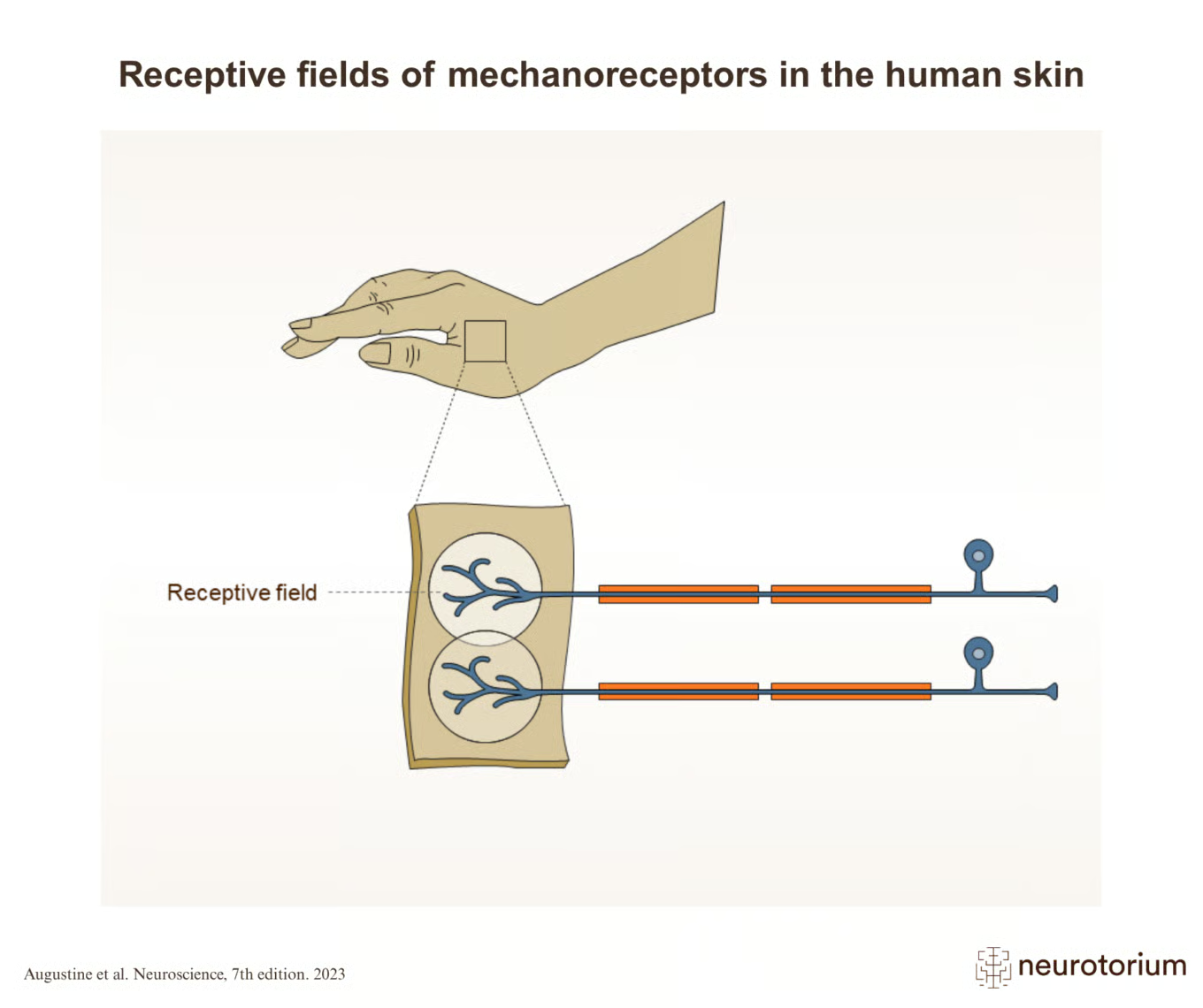
Acuity
ability to discriminate between two stimuli