ALDEHYDES AND KETONES SQ
 Call Kai
 Learn
 Practice Test
 Spaced Repetition
 Match
 Flashcards
 Knowt Play
1/9

There's no tags or description
Looks like no tags are added yet.
10 Terms
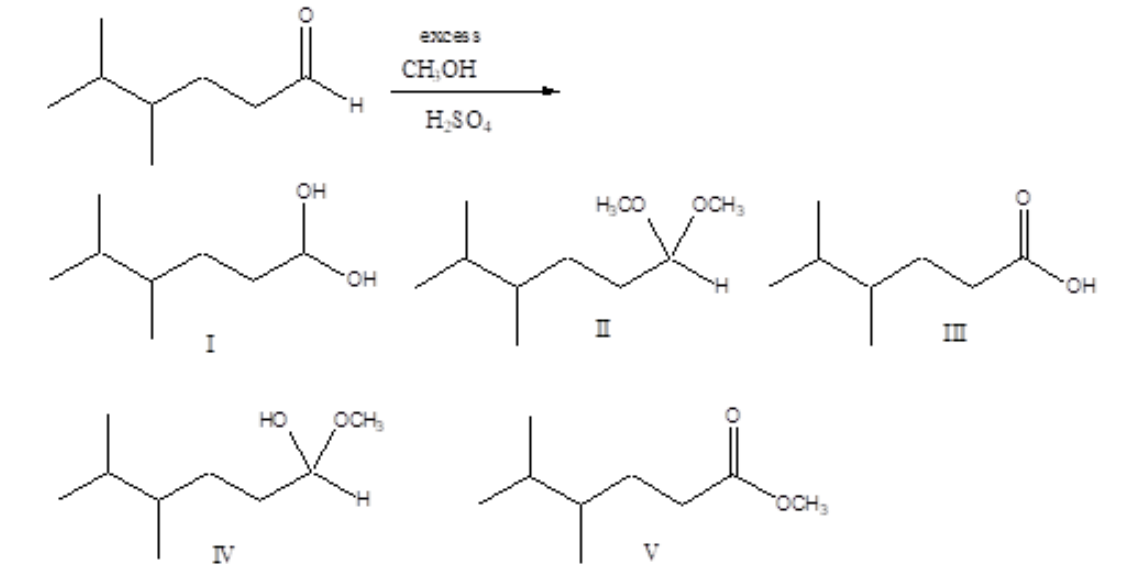
Predict the product for the following reaction.
II
Which of the following statements is true?
Aldehydes are more reactive than ketones because they are less sterically hindered than ketones.
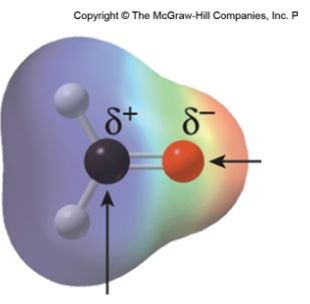
The electrostatic potential map above shows the electron-deficient and electron-rich regions of the carbonyl group. Which of the following is TRUE about the carbonyl group? (Multiple answers is allowed).
The carbonyl group imparts reactivity in nucleophilic addition reactions and resonance stabilization.
The carbon atom in the carbonyl group is electrophilic due to the high electronegativity of oxygen, making it susceptible to nucleophilic attack.
The reactivity of carbonyl compounds is influenced by the nature of substituents attached to the carbonyl carbon, with electron-withdrawing groups enhancing electrophilicity and electron-donating groups decreasing reactivity. Which of the following reagents would you expect to be most attractive to the carbonyl carbon?
hydroxide ion
Carbonyl compounds can undergo reduction reactions, where the carbon-oxygen double bond is reduced to a carbon-oxygen single bond, typically forming alcohols or other reduced products. Which of the following is correct?
1. Reduction of carbonyl compounds always results in the formation of aldehydes.
2. Oxidation of carbonyl compounds leads to the formation of ketones.
3. Reduction of carbonyl compounds involves the addition of a hydrogen atom to the carbonyl carbon.
4. Oxidation of carbonyl compounds involves the removal of oxygen atoms from the carbonyl group.
None of these
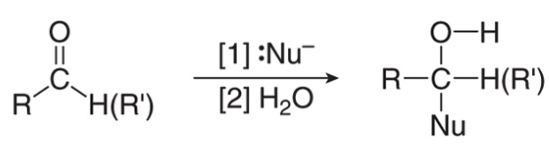
common reaction of carbonyl compounds is generalized below:
Nucleophilic addition reaction
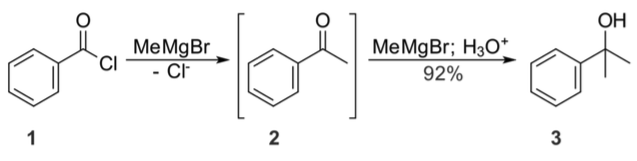
Carbonyl compounds with leaving groups react with nucleophiles to form substitution products. The reaction of 1 below gave 2 and 3.
The nucleophilic in the reaction 1→ 2 is the CH3- anion.
The leaving group in the reaction 1→ 2 is the chloride ion.
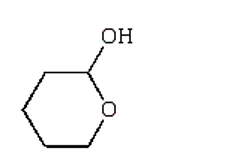
Which of the following compounds is a hemiacetal?
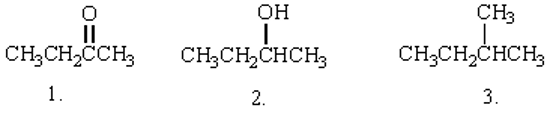
The expected order of boiling points of the following is:
2 > 1 > 3
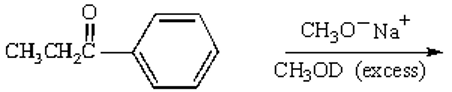
The predominant product from the reaction below is: