the nervous system
 Call Kai
 Learn
 Practice Test
 Spaced Repetition
 Match
 Flashcards
 Knowt Play
1/18

There's no tags or description
Looks like no tags are added yet.
19 Terms
main assumptions of the biological approach
Behaviour is explained in terms of physical causes in our brains and bodies eg Genes biologcal structures and biochemistry
The brain and nervous system have a very important role in controlling our behaviour, including the role of neurotransmitters
The endocrine system also plays an important role in controlling behaviour
we use scientific methods to study these biological processes
nervous system definition
the body's command centre which is a complex network of neurons and tissues that coordinate actions, process sensory information and control functions like thinking moving and regulating internal processes like breathing and heartbeat.
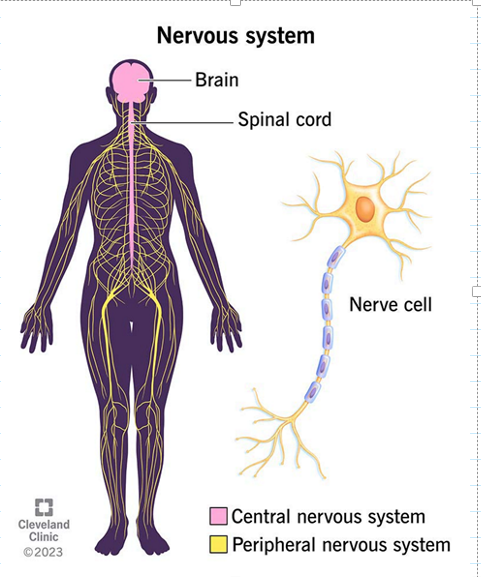
what is the CNS made up from
brain
spinal chord
outline the role of the CNS
made up of the brain and the spinal cord which receives information from sensory receptors
controls behaviour of a person
The brain receives information from the senses and send info to muscles and gland.
Spinal cord connects brain to the body via a bundle of nerve fibres
Theses nerves allow messages to be sent to and from the brain and the body
what does the spinal cord do
relays information between the brain and the rest of the body
Allows the brain to monitor and regulate processes eg breathing
Connected to different parts of the body through spinals nerves which connect with muscles and glands
connects circuits of nerve cells that enables simple reflexes without brain involvement eg pulling hand away from something
what are the 4 main areas of the brain
cerebrum
cerebellum
diencephalon
brain stem
what is the cerebrum
largest part ( divided into 4 lobes which have different functions):
frontal lobe thought and production of speech, occipital lobe (back) processes visual images. parietal lobe is touch and temporal lobe with memory
Split in halves called cerebral hemispheres. Each half has specialised behaviours, though they communicate with each other.
what is the cerebellum
Controls motor skills and balance
Coordinates muscles to allow precise movements
Abnormalities here create speech and motor problems
what is the diencephalon
Includes the thalamus and hypothalamus
Thalamus= relay station for nerve impulses coming from the sense and directing them to the right part of the brain to be processed
Hypothalamus= regulates body temp, hunger and thirst. links the endocrine system and the nervous system- control release of hormones
what is the brain stem
Regulates automatic functions essential for life eg breathing, heartbeat and swallowing
Motor neurones travel through here allowing impulses to pass between brain and spinal cord.
what is the role of the peripheral nervous system
all of the nerves outside the CNS
func is to relay nerve impulses from the CNS to the rets of the body+ body back to CNS
what are the two parts of the peripheral nervous system
somatic
autonomic
what is the somatic nervous system
Voluntary control of skeletal muscles and transmitting sensory info back to the CNS
Have sensory and motor neurones
Sensory relay info to CNS
Motor neurones relay info from CNS to other areas of body.
how much of each type of nerve cell does the somatic nervous system have
12 pairs of cranial nerves
31 pairs of spinal nerves
what is the autonomic nervous system
Controls the brains involuntary actions (eg heartbeat)
Self-regulating system=autonomous
Has two branches which regulate organs and have opposite effects on them (one stimulates while the other inhibits)
what are the two branches of the autonomic nervous system
sympathetic
parasympathetic
what is the sympathetic nervous system
For emergencies eg fight or flight
Neurons from the SNS travel to almost every organ and gland in the body prep it for rapid action when under threat
Eg causes body to release stored energy, pupils dilate for more light, adrenal medulla stimulation releases adrenaline
what is the parasympathetic nervous system
Relaxes
Slows things down eg heartbeat and reduces blood pressure
Digestion begins again once PNS kicks in
functions of parasympathetic NS: SLUDD
Salivation, Lacrimation, Urination, Digestion, and Defecation
Lacrimation= promotes tear production to keep eyes moist
defecation= the discharge of faeces from the body