EXAM 1 - Health Assessment
 Call Kai
 Learn
Learn Practice Test
 Spaced Repetition
 Match
Match Flashcards
 Knowt Play
1/185

There's no tags or description
Looks like no tags are added yet.
Name | Mastery | Learn | Test | Matching | Spaced | Call with Kai | Chat |
|---|
No analytics yet
Send a link to your students to track their progress
186 Terms
Types of Patient data-bases
Complete(Total Health) - Full history + physical exam. Baseline for future comparison. Typical in primary care or on admission.
Focused(Problem-Centered) - Mini-database for one specific problem or body system. Used for short-term or acute issues.
Follow-Up - Re-evaluation of a known problem -- track change, gauge treatment effectiveness.
Emergency - Rapid data collection while life-saving measures are underway. Speed is critical.
Subjective vs. Objective Data
Subjective- What the patient tells you, "Symptoms" -- their experience
Objective- what you detect during exam, Signs -- your findings
The Nursing Process
Assessment - Collect subjective AND objective data
Diagnosis - Cluster cues; identify actual or potential health problems.
Planning - Set goals with the patient; prioritize 1st,2nd, 3rd level problems
Implementation - Carry out the plan of care.
Evaluation - Judge whether interventions worked; revise as needed
Documentation - Record everything accurately, promptly, and objectively.
Patient Problems
1st - EMERGENT / LIFE-THREATENING Airway obstruction - Acute MI - Respiratory arrest - Mental status change
2nd - PROMPT -- PREVENT DETERIORATIONAcute pain - Abnormal lab values - Infection - Severe anxiety
3rd - IMPORTANT -- ADDRESSED LATER Knowledge deficit - Family coping difficulties - Lifestyle education
NCSBN Model (NCJMM)
Clinical Judgment Measurement Mode lA Framework to Measure Clinical Judgment & Decision Making
1. recognize cues - What information stands out? What matters most right now?
2. Analyze Cues - What does this data mean? What conditions could explain it?
3. Prioritize Hypotheses - Which explanations are most likely and most dangerous?
4. Generate Solutions - What interventions are available? What isbest for this patient?
5. Take Action - Implement the most appropriate intervention
6. Evaluate Outcomes - Did it work? Do we need to change course?
OARS
OARS guides the interview toward patient-centered engagement.
Open-ended questions
Affirmations
Reflective listening
Summaries & teach back
Phases of the interview
pre-interview, introduction, working, termination
SBAR
(interperfessional communication)
Situation
Background
Assessment
Recommendation
The Four Assessment Techniques (standard and expection)
Standard order for most body systems: Inspection → Palpation → Percussion → Auscultation
EXCEPTION: Abdomen -- Inspect → Auscultate → Percuss → Palpate (auscultation first to avoid altering bowel sounds)
Palpation
Touch to assess texture, temp, moisture, organ size, swelling, masses, tenderness, and vibration. Light → then deep.
Fingertips
Fine tactile discrimination Skin texture - swelling - pulsation - lumps
Fingers & Thumb (grasping)
Position, shape, and consistency Of an organ or mass
Dorsa -- Back of Hand
Temperature (skin here is thinner than palms)
Base of Fingers / Ulnar Surface
Vibration (low-frequency sensations)
Percussion
Sound Characteristics:
Amplitude (Intensity)Loud or soft -- determined by density
Pitch (Frequency)Vibrations per second -- low to high
Quality (Timbre)Subjective character; distinguishes sources
Duration How long the sound lingers after the tap
Auscultation
Diaphragm (Flat Edge)High-pitched sounds:• Breath sounds• Normal heart sounds• Bowel sounds
Bell (Hollow Cup)Low-pitched sounds:• Extra heart sounds (S3, S4)• Bruits• Abnormal murmurs
Transmission-Based Precautions
Contact: MRSA, VRE, C. diff -- Gown + gloves for all contact. Private room.
Droplet: Flu, COVID, meningitis -- Surgical mask within 3 ft.
Airborne: TB, measles, varicella -- N95 respirator. Negative pressure room.
General Survey
a study of the WHOLE PERSON — not just a body part. - Physical Appearance, Body Structure, Mobility, Behavior
Vital signs - components
Temperature - Mean 37°C (98.6°F)
Pulse (HR) - 60-100 bpm adult
Respirations - 12-20 breaths/min
Blood Pressure -
Temperature Sites:
Oral - Most convenient. Wait 15 min after hot/cold drinks, smoking. NOT forLOC, O2 mask, tachypnea.
Rectal - Most accurate. Used in critically ill. Contraindicated: rectal surgery,hemorrhoids, immunocompromised.
Axillary - Least accurate. Use only when others not possible.
Tympanic - Quick, noninvasive.
Temporal - Scan forehead to behind ear. Quick (~6 sec). Questionable reliability.
Hyperthermia vs Hypothermia
Hyperthermia: extreme heat >37.8°C (100.04°F)
Hypothermia: extreme cold <36.0°C (<96.8°F)
Pulse: Rate, Rhythm & Force
Rate: Count 30sec and multiply by 2 (if regular) full 60 secs if irregular
Rhythm: even tempo between beats,
Force:
3+ Full, bounding (hyperdynamic)
• 2+ Normal (easily palpable)
• 1+ Weak, thready (↓ stroke volume, shock)
• 0 Absent — immediate assessment!
Pulse Sites
Radial (most common — wrist)
Brachial (antecubital — infant BP)
Carotid (neck — NEVER both simultaneously)
Temporal (temple)
Femoral (inguinal)
Popliteal (behind knee)
Posterior tibial
Dorsalis pedis (top of foot)
Apical assessment
• Location: 5th intercostal space, midclavicular line (MCL)
• Use DIAPHRAGM of stethoscope
• Count for 1 full minute
• Correlates with S1 and S2 heart sounds (lub-DUB)
• Use when: irregular pulse, medications that affect HR,comparison with radial
• NEVER press both carotids simultaneously (causes vagaldrop in BP!)
Bradycardia & Tachycardia
________ is to slow heart rate (<50-60 bpm)
________ is to fast heart rate. (>95-100 bpm)
Pulse Oximetry
measures arterial oxygen saturation via infrared light through fingertip, anything over 95% is normal,
document 98% on RA (room air) or 96% on 2L NC (nasal cannula)
limitations: Nail polish (dark), cold extremities, anemia, CO poisoning
anything under 90% is a clinical emergency
5 factors that determine blood pressure
1. Cardiac output - if the heart pumps MORE blood into the vessels the pressure on the vessels increases (flowrate)
2. Peripheral vascular resistance - when the vessels become smaller the pressure needed to push the blood becomes greater. If the container becomes larger (e.g., vasodilation), less pressure is needed.
3. Volume - Volume of circulating blood refers to how tightly the blood is packed into the arteries, more blood, increased pressure
4. Viscosity - The "thickness" of blood is determined by its formed elements, the blood cells. When the contents are thicker, the pressure increases.
5. Elasticity of vessel walls - When the container walls are stiff and rigid, the pressure needed to push the contents increases.
BP Classification
Normal (<120 / <80)
Elevated (120-129 / <80)
Stage I HTN (130-139 / 80-89)
Stage II HTN ( >/= 140/ >/= 90)
Hypertensive Crisis (>180 / >120)
Hypotension (<90/60)
Korotkoff Sounds
series of sounds that correspond to changes in blood flow through an artery as pressure is released
Cuff Inflated (Silence) Cuff exceeds systolic pressure — brachial artery occluded
Phase I (Tapping )🔑 SYSTOLIC — first blood squirts through; turbulent flow = audible
Auscultatory Gap (Silence) Sounds disappear 30-40 mmHg then return. Miss this = FALSE LOW systolic.Common in HTN.
Phase II (Swooshing) Softer murmur — partially occluded artery
Phase III (Knocking) Crisp, high-pitched — longer duration of flow
Phase IV (Muffling) Abrupt change in quality — used in children/pregnant
Phase V (Silence) 🔑 DIASTOLIC in adults — blood flows smoothly (no turbulence)
Pain
Nociceptive Pain -
• Somatic: sharp, throbbing, localized(skin, muscle, bone)
• Visceral: dull, cramping, poorly localized (organ pain)
• Associated: N/V, diaphoresis, pallor(ANS response)
Neuropathic Pain -
Originates in internal organs such as the intestines, stomach, or heart. It is often described as a dull, deep, cramping
Referred Pain
Felt in a different location from its origin.Both sites share the same spinal nerve. Examples: MI → left arm; liver → right shoulder; kidney → back/groin
Acute vs Chronic Pain
Acute- less than 6 months
Chronic- more than 6 months
PQRST
Your Pain Assessment Framework
provocative/palliative,
quality,
region/radiation,
severity,
timing
PAINAD Scale
used for pain assessment in advanced dementia
breathing
Vocalization
Facial Expression
Body Language
Consolability
Temp. Conversions
Fahrenheit to Celcius =
Subtract 32 from your Fahrenheit temperature.
Multiply the result by 5.
Divide that number by 9
Celcius to Fahrenheit =
Multiply by 9
divide by 5
add 32
Height and Weight conversions
kg → lbs: kg × 2.2 = lbs
lbs → kg: lbs ÷ 2.2 = kg
cm → inches: cm ÷ 2.54 = in
inches → cm: in × 2.54 = cm
Abrasion
a superficial wound or scrape where friction rubs off the outermost layer of skin

Alopecia
any form of hair loss or lack of hair on the scalp or body

Angioma
small (1 to 5 mm), smooth, slightly raised bright red dots that commonly appear on the trunk in all adults older than 30 years

Annular
circular, begins in center and spreads to periphery (e.g., tinea corporis or ringworm, tinea versicolor, pityriasis rosea).

Atrophy
partial or complete wasting away or decrease in size of a body part, organ, tissue, or cell

Bulla
Larger than 1 cm diameter; usually single chambered (unilocular); superficial in epidermis; thin-walled and ruptures easily. Examples: friction blister, pemphigus, burns, contact dermatitis.

Capillary Refill
quick bedside test that measures how long it takes for color to return to a tissue after it has been pressed and turned white

Clubbing
a physical condition where the tips of the fingers widen, bulge, and the nails curve downward to look like an upside-down spoon

Confluent
lesions run together (e.g., urticaria [hives]).
![<p>lesions run together (e.g., urticaria [hives]).</p>](https://assets.knowt.com/user-attachments/6522d179-b8b6-498f-a3c3-c25311fa2b20.jpg)
Crust
The thickened, dried-out exudate left when vesicles/pustules burst or dry up. Color can be red-brown, honey, or yellow, depending on fluid ingredients (blood, serum, pus)

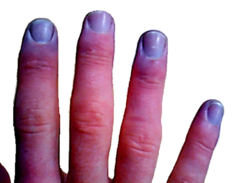
Cyanosis
a bluish or purplish tint to the skin, lips, tongue, or nail beds caused by a lack of oxygen in the blood
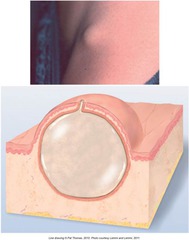
Cyst
a closed, sac-like pocket of tissue anywhere in the body that can be filled with fluid, pus, air, or other materials
Dermis
the thick, supportive middle layer of skin located between the outer epidermis and the inner hypodermis

Dermatitis
inflammation of the skin that causes red, itchy, and irritated patches

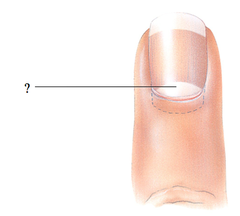
Lunula
visible, pale, crescent-shaped half-moon area at the base of a fingernail or toenail
Diaphoresis
excessive, abnormal sweating that is not caused by high external temperatures or physical exercise

Ecchymosis
A purplish patch resulting from extravasation of blood into the skin, >3 mm in diameter. (medical term for bruise)

Edema
swelling caused by excess fluid trapped in the body's tissues

Epidermis
the thin, outermost layer of the skin that acts as the body's primary protective barrier against environmental damage, pathogens, and water loss

Erythema
redness of the skin or mucous membranes caused by increased blood flow in superficial capillaries

Fissure
a small tear, crack, or split in the lining of tissue or skin

hemangioma
a non-cancerous (benign) tumor made of an abnormal buildup of extra blood vessels

hematoma
a localized collection of clotted or partially clotted blood trapped outside of the blood vessels

hirsutism
a medical condition that causes excess, coarse, and dark hair to grow in a male-like pattern on a woman's face, chest, back, and other areas

Jaundice
a condition that causes the skin and the whites of the eyes to turn yellow due to a buildup of bilirubin

Keloid
a thick, raised overgrowth of scar tissue that continues to grow well beyond the edges of the original skin injury

Keratosis
a noncancerous or precancerous skin growth characterized by thickened, rough, or scaly areas

Actinic
changes, damage, or chemical effects produced in the skin or other materials by radiant energy, especially ultraviolet (UV) or sunlight

Seborrheic
a chronic, non-contagious inflammatory skin condition that causes scaly, greasy patches and flaking in areas rich in oil glands, like the scalp, face, and chest

Laceration
a jagged tear or cut in the body's soft tissue or skin caused by blunt force trauma or sharp objects

Lichenification
a skin condition where the skin becomes thick, rough, and leathery with deep, exaggerated lines due to repeated scratching or rubbing

macule
a flat, distinct, discolored area of skin that is less than 1 centimeter (0.39 inches) wide and does not change the skin's texture or thickness

melanin
a natural biological pigment produced by specialized cells called melanocytes

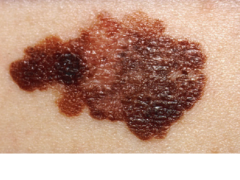
Malignant Melanoma
a serious type of cancer that starts in the pigment-producing cells of the skin
Nevus
a benign, or noncancerous, growth on the skin or mucosa more commonly known as a mole or birthmark

Nodule
a small, solid, abnormal growth or lump that can form beneath the skin, in deep tissues, or inside organs

Pallor
an unusual loss of color in the skin and mucous membranes caused by reduced blood flow, oxygen, or red blood cells (paleness)

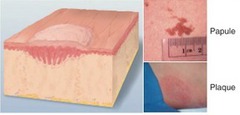
Papule
a small, solid, raised skin bump that measures less than one centimeter wide
Patch
Macules that are larger than 1 cm. Examples: mongolian spot, vitiligo, café au lait spot, chloasma, measles rash.

Petechiae
tiny, flat, non-blanching red, brown, or purple spots on the skin caused by minor bleeding from broken capillaries

Plaque
raised, thickened patches of skin larger than 1 centimeter

Pruritus
itchy skin that triggers an irritating sensation and a strong desire to scratch

Pressure Ulcer
damaged skin and tissue caused by long-term pressure that cuts off blood flow, usually over bony parts of the body like heels, hips, and tailbones

Purpura
flat red, purple, or brown spots measuring 4 to 10 mm that occur when small blood vessels leak blood under the skin or mucous membranes and do not turn white when pressed

Pustule
a small, inflamed, raised skin lesion or blister filled with yellowish or whitish pus (specific type of pimple)

Scales
flakes or dry patches made up of excess dead epidermal cells

Sebum
an oily, waxy substance produced by the body's sebaceous glands that coats, moisturizes, and protects the skin and hair

solar lentigines
harmless, flat, darkened patches of skin caused by cumulative ultraviolet (UV) light exposure

Striae
jagged linear "stretch marks" of silver-to-pink color that appear during the 2nd trimester on the abdomen, breasts, and sometimes thighs

Sweat glands
small, tubular structures in the skin that produce and release sweat to help regulate body temperature, Eccrine gland and Apocrine glands

Telangiectasis
a condition featuring small, widened blood vessels (capillaries, arterioles, or venules) that sit close to the surface of the skin, mucous membranes, or internal organs, appearing as tiny red, blue, or purple lines or web-like clusters

Tumor
an abnormal mass of tissue that forms when cells divide more than they should or do not die when they are supposed to
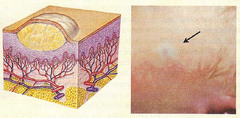
Turgor
ability of the skin to return to place promptly when released

Ulcer
a painful open sore that forms on the inner lining of the stomach or the upper part of the small intestine

Urticaria
a skin condition that causes itchy, raised red or skin-colored welts (hives)

Vesicle
small, fluid-filled blisters measuring less than 5 millimeters in width

Vitiligo
a long-term skin condition that causes patches of skin to lose their color and turn white

Wheal
a raised, swollen, and often itchy skin lesion

The Health History Sequence
1. Biographic data
2. Reason for seeking care
3. Present health or history of present illness
4. Past history
5. Medication reconciliation
6. Family history
7. Review of systems
8. Functional assessment or activities of daily living (ADLs)
Biographic Data & Source of History
name, address, phone number, age, birthday, birthplace, gender, preferred pronouns, relationship status, race/ethnic, Occupation, primary language
record who is giving you the information (patient or family member), judge their reliability, and note if the patient look ill or well
Reason for Seeking Care
A brief, spontaneous statement in the patient's OWN WORDS describing why they're seeking care — documented in quotes. This isNOT a diagnostic statement
History of Present Illness ( 8 Critical characteristics)
1. Location - Be specific and precise
2. Character/Quality - Descriptive terms
3. Quantity/Severity - Use scales to identify intensity
4. Timing - Onset, duration, frequency
5. Setting - Location and/or associated activity
6. Aggravating/Relieving Factors - What makes it worse or better?
7. Associated Factors - Related to any other symptom?
8. Patient's Perception - How does it affect you?
PQRSTU Mnemonic
P = Provocative or palliative - What brings it on? What were you doing when you first noticed it? What makes it better? Worse?
Q = Quality or quantity - How does it look, feel, sound? How intense/severe is it?
R = Region or radiation - Where is it? Does it spread anywhere?
S = Severity scale: 1 to 10 - Getting better, worse, staying the same?
T = Timing or onset - Onset — exactly when? Duration — how long? Frequency — how often?
U = Understand patient's perception of problem -
Past History
Childhood illnesses , Accidents or injuries , Serious or chronic illnesses, Hospitalizations , Operations, Obstetric history, Immunizations, Last exam date , Allergies (allergen + reaction), Current medications, Family history
Family History & Review of Systems (ROS)
A genogram or family tree is the standardized tool used to organize this data.
ROS - A head-to-toe symptom inventory across every body system —SUBJECTIVE data only
Functional Assessment (ADLs)
measures a person’s self-care ability in the areas of general physical health;
Self-esteem, self-concept
Activity/exercise
Sleep/rest
Nutrition/elimination
Interpersonal relationships/resources
Spiritual resources
Coping and stress management
Tobacco/alcohol/marijuana/illicit drugs
Environment/hazards
Intimate partner violence
Occupational health
Skin Color
melanin (brown pigment), carotene (yellow-orange pigment), vascular bed (red-purple undertones)
Functions of the skin
Protection, prevents penetration, perception, fluid balance, temp. regulation, identification, communication, wound repair, absorption/ excretion, vitamin D production
Skin Across the Lifespan
Newborn - Lanugo, vernix caseosa, milia
Adolescent - Increased apocrine sweat gland secretion, acne
Pregnancy - Increased hormone-driven skin color changes, increased sweat/sebaceous secretion
Aging Adult - Decreased elasticity, senile purpura, dry skin, gray fine hair