chemistry reaction summary
 Call Kai
 Learn
Learn Practice Test
 Spaced Repetition
 Match
Match Flashcards
 Knowt Play
1/48

There's no tags or description
Looks like no tags are added yet.
Name | Mastery | Learn | Test | Matching | Spaced | Call with Kai | Chat |
|---|
No analytics yet
Send a link to your students to track their progress
49 Terms
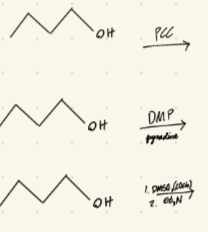
what do these reagents due to a primary alcohol
turn it into an aldehyde


what do these reagents do to a secondary alcohol
turn it into a ketone


what does ozonolysis do
breaks the double bond to form 2 separate carbonyl compounds


what does friedel’s craft do
adds the carbonyl part of an acyl chloride to a compound

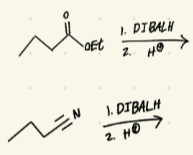
what does DIBALH do to an ester or nitrile
reduce them to an aldehyde
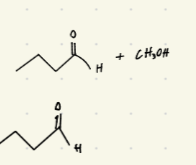

what does LiALH(t-BuO)3 do to an acyl chloride
reduces it to an aldehyde


what does LiALH4, DIBALH, and NaBH4 do to a ketone
reduce them into secondary alcohols


what does LiALH4, DIBALH, and NaBH4 do to an aldehyde
reduce them into primary alcohols


what does wolf kishner and clemmenson do (Zn/Hg /HCL)
completely reduces ketones and aldehydes to alkanes

what does a grignard reaction do
turn the carbonyl into an alcohol and attach an R group

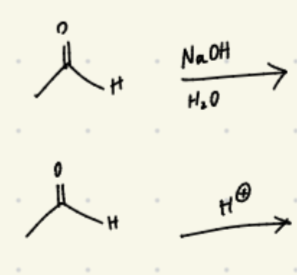
what does adding NaOH or a strong acid do to an aldehyde
makes a hydrate


what does adding HCN to an aldehyde do
create a cyanohydride


what does acid plus heat do to a nitrile
create a carboxylic acid


what does LiAlH4 and water do so a nitrile
turn it into an amine (the nitrile carbon remains. can be used to lengthen chains for carbonyls)


what does RNH2 do to ketones and aldehydes
turn them into imines

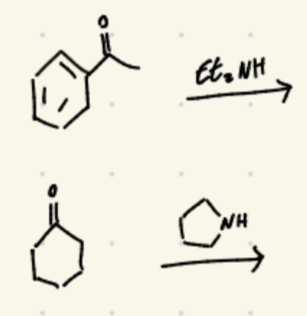
what does RNH do to aldehydes and ketones
turn them into enamines


what does adding ROH and cat. HCl do to a ketone or aldehyde
turn them into ketals/acetals

how do you turn an acetal and ketal back into a ketone or aldehyde
cat. HCL and water


which is the hemiacetal and which is the hemiketal
the top is the hemiacetal and the bottom is the hemiketal

what does the witting reaction end in
an alkene with addition of an R group


what do these reagents do to aldehydes
turn them into a carboxylic acid


what does bayer villiger oxidation do
turn ketones into esters and aldehydes into carboxylic acids


what does hot KMnO4 do
create carboxylic acid and split alkenes into 2 carboxylic acids


what does chromic acid do to primary alcohols and aldehydes
turn them into carboxylic acids


what does these reagents do to a nitrile
turn it into a carboxylic acid
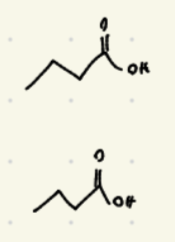

what do these reagents do
create carboxylic acid and HCl
create a salt and NaCl
create an ester and pyradine salt
create an amine
create a secondary amine
create a tertiary amine
create an aldehyde
create a primary alcohol
create a ketone
add 2 methyls and reduce carbonyl to alcohol
create an anhydride
create an anhydride


what is the results of these reagents
an acyl chloride


what is the result of this plus PBr3
bromine replaces OH


what do these regents do to a carboxylic acid
change the OH to the halogen
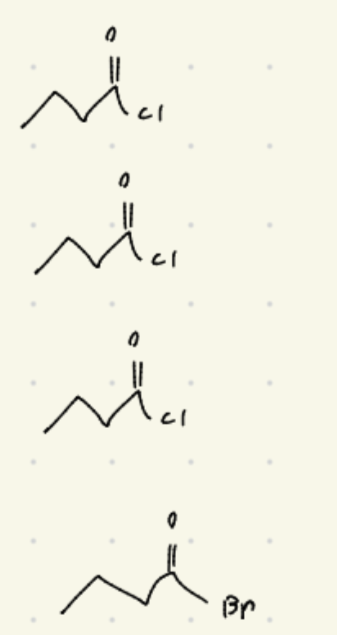

what do these reagents do
a salt
reduction to primary alcohol
ester and water
salt that can be turned into an amine with heat
an amine
anhydride with HCl


what do these reagents do to a lactome
open into 2 alchols on both ends
salt on both ends
reduction to primary alcohol on both ends
alcohol on both ends with R group added to the old carbonyl position
alcohol on one end and hydrogen on the other

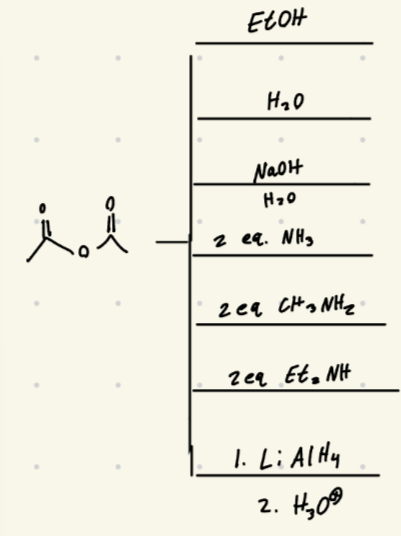
what do these reagents do to an anhydride
one side becomes an ester the other a carboxylic acid
2 carboxylic acids
2 salts
a primary amine and NH4 salt
a secondary amine and NH3-R salt
a tertiary amine and R-NH3 salt
2 primary alcohols


what do these reagents do to an ester
carboxylic acid and EtOH
salt and NaOEt
reduction to a primary alcohol and EtOH
OH and R groups added/ changed into
aldehyde and EtOH


what happens in each reaction
makes an anhydride plus water
ring closure
lactone plus water

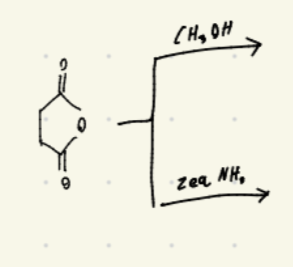
what happens in each reaction
one side becomes an ester and the other an alcohol
one side becomes an amine and the other a negatively charged O


what does this reaction end in
an imide


what is the result of this reaction
ring closes to make cyclic amide plus water

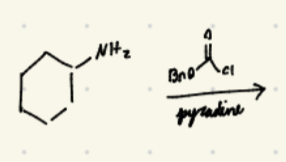
what does this reaction do. How can this reaction be reversed
protect the amine, Pd/C and H2

what reagents can make polymers


what is the result of all these reactions
a nitrile

what is the result of each reaction
an amine
an aldehyde
a ketone


which is the keto tautomer and enol tautomer
left is keto, right is enol

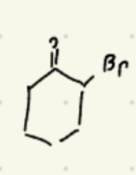
what is the end of this reaction
adds bromine to the alpha carbon

what is the product of this reaction
a carboxylic acid and R-X


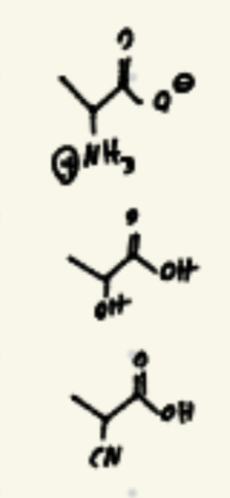
what is the product of each reaction
NH3 in place of bromine and negative O
OH in place of Br
CN in place of Br

what is the product of this reaction and what can you do after the initial addition
a H gets replaced with an R group. After you can use tuBuOK to add another R group

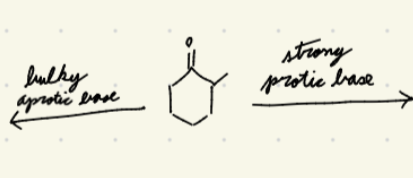
which side creates which product
left= kinetic, right=thermodynamic


what is the product of this reaction
carboxylation then decarboxylation of a single side
