Early Italian Reniassance Art History Midterm 2026
 Call Kai
 Learn
Learn Practice Test
 Spaced Repetition
 Match
Match Flashcards
 Knowt Play
1/25

There's no tags or description
Looks like no tags are added yet.
Name | Mastery | Learn | Test | Matching | Spaced | Call with Kai | Chat |
|---|
No analytics yet
Send a link to your students to track their progress
26 Terms

Cimabue
Madonna Enthroned
c. 1285, Tempura on panel
Mary and Christ, angels surrounding, 4 prophets holding texts under the thrown
Prophets literally supporting Mary+Christ in this piece
Cimabue work in a Byzantine style; creates distance between humans and the divine; but he is also looking forward
the line work that flattens out this piece is called Chrysography
Positioning is used in this piece

Pietro Cavallini
Last Judgement
C. 1290, fresco
Santa Cecilia in Trastevere, Rome
Interested in a move towards naturalism sooner than Giotto
more interested in contrast, has depth, 3D
uses a sense of light to model form and tone
experimenting, doing something fresh, not necessarily an improvement
taste plays a factor here; responding to whats happening and patrons see that
taste is changing during this period

Giotto
Arena Chapel, Padua
C. 1305
Was at one point sitting within the wall of an Arena
Fresco program was “the salvation of human kind through Christ
was important to Scrovegni family, place of worship and burial, Enrico hoped it would save his father Reginaldo from damnation (Usurer=giver of money with high interest rates)
Challenges
Many surfaces to paint
Clearly narrating this Christian story
decorating the space
Giotto would have received a list of scenes from the chapels Confessor to paint
Giotto brings Drama into these scenes (Florentine School of Painting)
Workshops were a necessary part of these works
Made of Fresco

Giotto
Expulsion of Joachim from the Temple
C. 1305
Arena Chapel, Padua
Uses positioning and gesture to make drama
Joachim being physically pushed off the platform
Story comes from the Apocrypha

Giotto
Meeting at the Golden Gate
C. 1305
Arena Chapel, Padua
Lots of emotion, bringing humanity to the divine
Mary’s mom is first divine pregnancy

Duccio
Maesta (Virgin & Christ Enthroned with Saints)
1308-11, tempera on panel
Most powerful contemporary alternative to fresco
Naturalism, humanize the divine
focuses on pattern and flowing line (gothic style) rather than volume
strong link to older christian art, the Byzantine tradition (sacred)
closer look
4 kneeling saints (minor saints of Siena, intercessors)
Naturalistic wings
using tone to suggest form
unified through gesture and faces
textiles!!!
commissioned by city, installed in cathedral
one of the few signed pieces out there

Duccio
Last Supper (back of Maesta)
1308-12, tempura on panel
Bright deep greens
celebration of everyday life
relatable table setting
before the more common depiction of The Last Supper
Disciples on both sides of the table

Simone Martini
Maesta
1315, fresco
Palazzo Pubblico, Siena
religious piece for the magistrates of Siena
Square frame that resembles a textile/tapestry(expensive looking)
Ceremonial fabric to symbolize honor
naturalism, not perfectly lined up, space recedes back
International Gothic Style→ applies to wealthy and royal patrons
pooling of fabric at feet, thrown design, fabric detail, surface detail

Simone Martini
Annunciation with Two Saints
C. 1330
tempera and gold leaf on panel
International Gothic Style
First Annunciation altarpiece
Mary disturbed by Gabriel’s news and angelic altarpiece
Details
copious amounts of gold leaf, starburst halos
covered in amazingly detailed textiles, plaid painted in motion
took creative liberties for Gabe’s wings
White Lilly= symbol of the virgin
Mary: pulling away, detailed headband, pooling fabric

Ambrogio Lorenzetti
Allegory of Good and Bad Government
1338, fresco
Sala di Pace, Palazzo Pubblico, Siena
Personification of Common Good
Scene is meant to evoke ruler-ship, elevate ideas like you do royalty
Two Babies at Common Goods feet sucking on She-Wolf
Siena’s founding myth is connected to Romes
the two sons of Remus rode into Siena on one white and black horse and founded Siena
Mural insists that violence be entrusted to the collective state rather than individuals, enforcing necessary self defense
Justice controls two scales representing distributive and communicative justice
“Flanking the male personification are the virtues under which the Sienese governors were expected to literally unite”
Ambrogio Lorenzetti
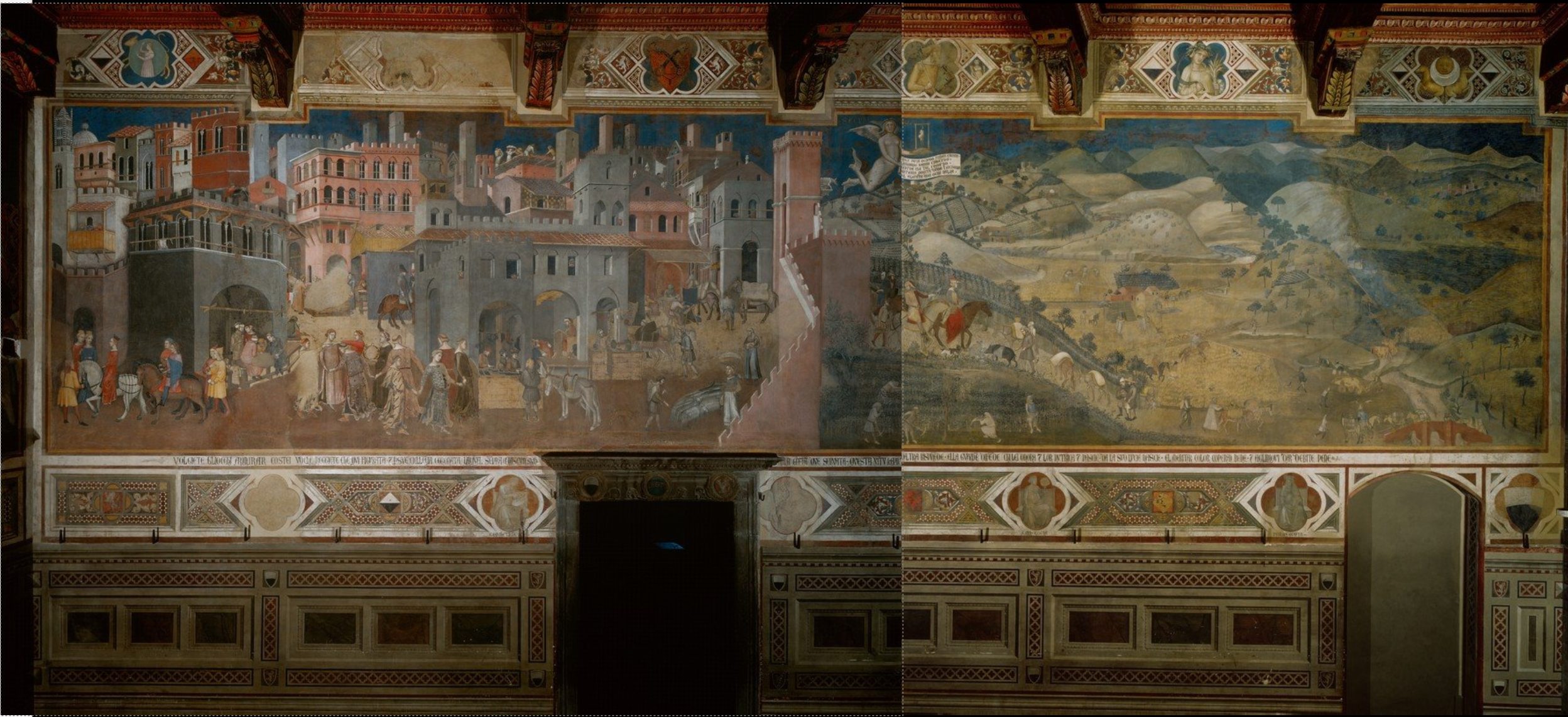
Effects of Good Government on the City and the Countryside
1338, fresco
Sala di Pace
elaborates visually on the benefits of proper government
love of textiles, Sienese school of art influence
new architecture, trade, safety of women and children
protected countryside, ensuring it was safe outside city walls
safe, farms with animals and tilling their fields
contemporary clothing, brings landscape down to essentials, impression of lush landscape (ahead of his time)
stripped cathedral tower and dome identified the setting as Siena

Pietro Lorenzetti
The Birth of the Virgin
1342, tempera on panel, 6’ 1.5’’ x 5’ 11’’
Treated the frame as if it wasn’t there or that its architecture
creating space beyond the frame, making it look like windows into a room
(NO ARTIST HAS DONE THIS BEFORE THIS PIECE(that we know of…))
typical Sienese domestic interior, relatable to viewer
textiles
Narrative focuses on most dramatic moment
Polytych, triptych, Predella
Unknown Artist
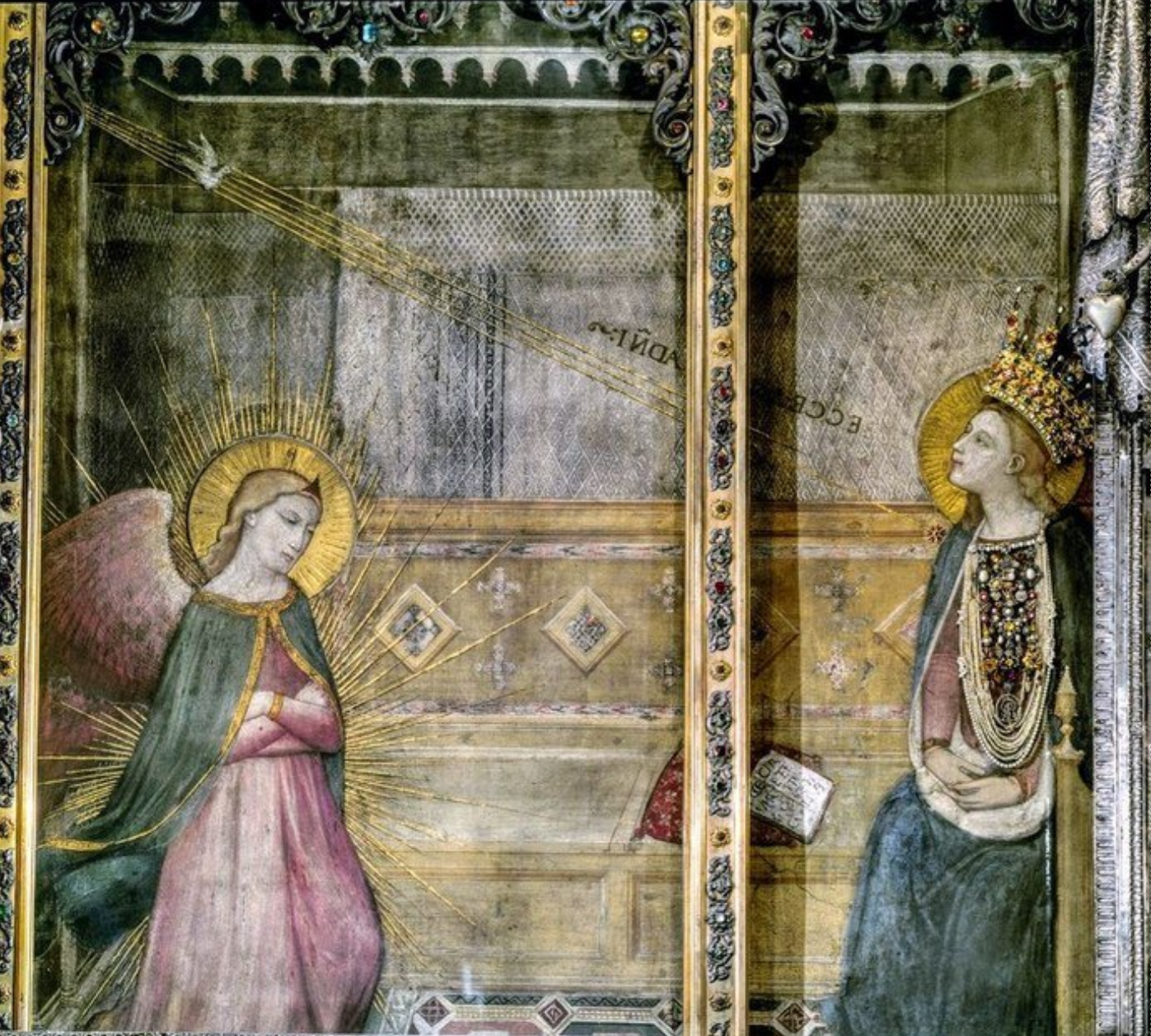
Annunciation
early 14th C., fresco
Santissima Annunziata, Florence
Legend: started in 1252 by Fra Bartolomeo who fell asleep after struggling to paint Virgins face, when he woke up the painting was finished by angelic hands
Data analysis shows otherwise ha ha
Details:
words going backwards towards the lord instead of Gabe speaking to Virgin
gold leaf Pastiglia
Marys huge crown and necklaces
detailed gold frame + jewels sitting atop glass covering
Mary more receptive to news
dove making b-line to Mary
ornateness in backsplash and floor rather than textiles
Importance to Florence
Lorenzo ignores it completely because they value attribution more
imported holy painting during 14th C., if prayer answered, people would leave ex-votos at the painting
women often prayed to the Virgin for children
Incredibly relevant to day-to-day Florentine life+important leaders foreign would come visit the painting first before meeting with Florence Leaders

Michelozzo and Portigiani
Tabernacle for the Annunciation
1448-52
Santissima Annunziata, Florence
commissioned by Piero de’ Medici (son of Cosimo)
draws attention to painting and to Medici wealth
they don’t leave their coat of arms or signature, it was just a known fact

Orcagna
Strozzi Altarpiece
1354-57, tempera on panel
Sta. Maria Novella
Assumed this style is due to the Black Plague
Mary is on one side giving St. Thomas the law and Authority to St. Peter
Dominican are teaching monks, and in charge of inquisition
behind St. Thomas is Virgin Mary with arm on his shoulder, gesturing to Christ
Christ looks like he’s levitating
Polyptych, but treats it like its all the same piece, not limited by the divided panels
Giotto’s influence on Orcagna is the bodies volumetric and pose wise
no spacial recession, not using hieretic scale, 2d
Icon quality, is he staring at or through us?
we aren’t welcome in this piece
All painters in this style are for Dominican churches
they were interested in this style, it wasn’t really about the Black Plague

Taddeo Gaddi
Life of the Virgin
c.1328-30, fresco
Baroncelli Chapel, Santa Croce
tie to the human in the divine was an appeal to this chapel
payed for by Baroncelli family
pallet different, more pastel, informed by Sienese paintings (Duccio)
Cangiante modeling
Taddeo Gaddi
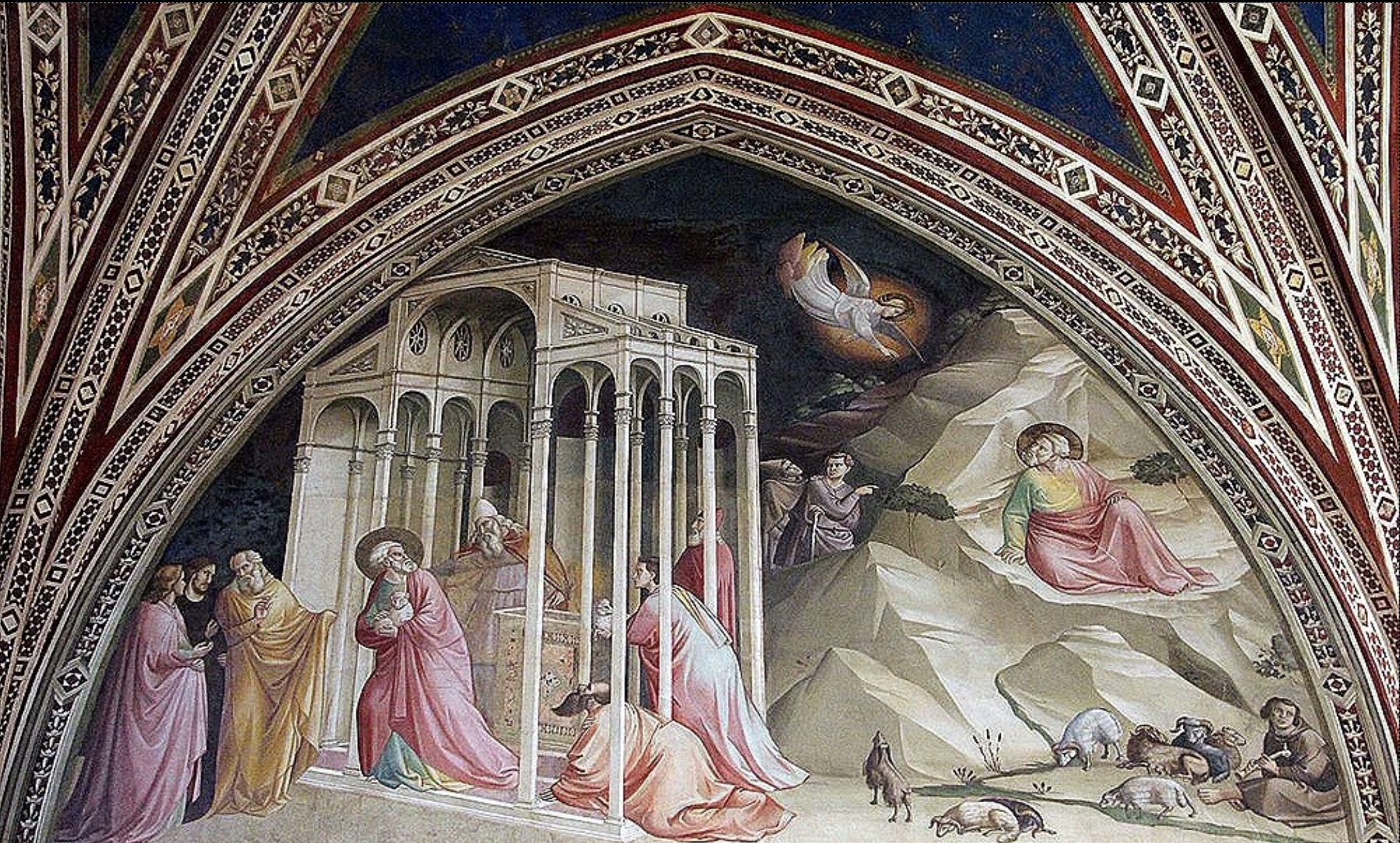
Expulsion of Joachim from the Temple (at left)
1328-30, fresco
Baroncelli Chapel, Santa Croce, Florence
two scenes in one panel

Lorenzo Ghiberti
North Doors
1403-24 bronze w/gilding
Baptistry, Florence
Scenes from the new testament
kept pisono’s design in mind
top 20 panels life of Christ
4 evangelists 4 panels 2nd to last
Last 4 fathers of the church
includes Ghiberti self portrait
oxidation from car pollution

Lorenzo Ghiberti
Annunciation, from North Doors
1403-24
Baptistry, Florence
distills down to just key elements
architecture
Gabriel flying in
uses opposites
What he’s learned from ancient statues + relief carving (Contrapposto/Hip-Shot-Pose)
Donatello
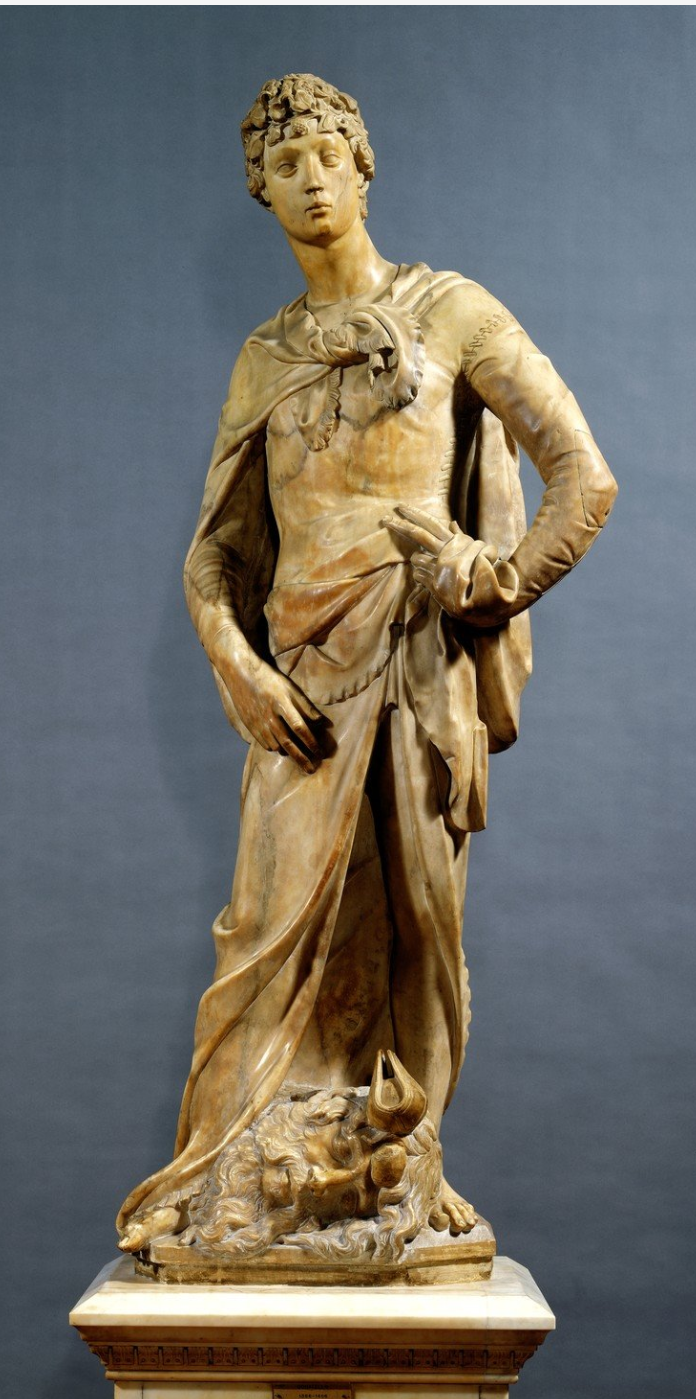
David
1408-9, marble
Florence
old testament king, prophet writer of the Psalms
David and Goliath story
Type for Christ
David slew Goliath to save the nation of isreal just as Christ sacrificed himself to save humankind
David defeated Goliath just as Christ defeated Satan
David was king, Christ=King of Heaven
David was Shepard (OT) and in NT Christ describes himself as the Good Shepard who lays down his life for his flock (Christian Faith)
Why David so Popular in Florence?
Equated w/ civic republican value of self-sacrifice for Common Good and the righteous triumph of one over ones enemies
as a result, he became seen as the protector of Florentine Republic
David was gonna go on North of the Cathedral roof but statue was too small; ended up inside the Gov. Building (Palazzo Vecchio)
Visual Details
youthful, tight leather clothing
standing in confident manner, hand on hip (Arm Akimbo)
Aware of us looking at him (unusual, FIRST OF ITS KIND)
used to hold a lyre
long neck, graceful, tilted head on an angle
idealization of the face

Lorenzo Ghiberti
St. John the Baptist
c. 1410, bronze
Originally on Orsanmichele, Florence
Commisioned by the Calimala
ONLY OVER LIFE-SIZED BRONZE STATUE IN FLORENCE
John depicted wearing his hair shirt, woolen garment over that (luxurious)
carrying reed cross, holding scroll unfurled
eyes inn layered silver, details on cloaks boarder, lower on garment signed Opus Lorentii
Contrapposto/Hip-Shot-Pose

Donatello
St. Mark
1411-13, marble
(Originally Orsanmichele) Florence
commissioned by the Linen Merchants Guild (Limaiuoli)
St. Mark, one of the writers of the first four books of the gospel
Guild couldn’t afford the bronze
Sculpture was thin, but sculpted well to give volume in the nitche
Facial details are low relief
Contrapposto/Hip-Shot-Pose
1ST EXAMPLE IN FREE STANDING ITALIAN SCULPTURE SINCE ANTIQUITY
distinct quality to him, individual nature to his sculpture
possible he was looking at Republican portrait in Roman portrait in Roman period
extreme naturalism
lengthened the torso of the figure so that the figure looked proportional from the lower ground view people were at when it was in the nitche
pillow st. mark is standing on is signifier it was for the Linen Guild
they made many linen covers for pillows
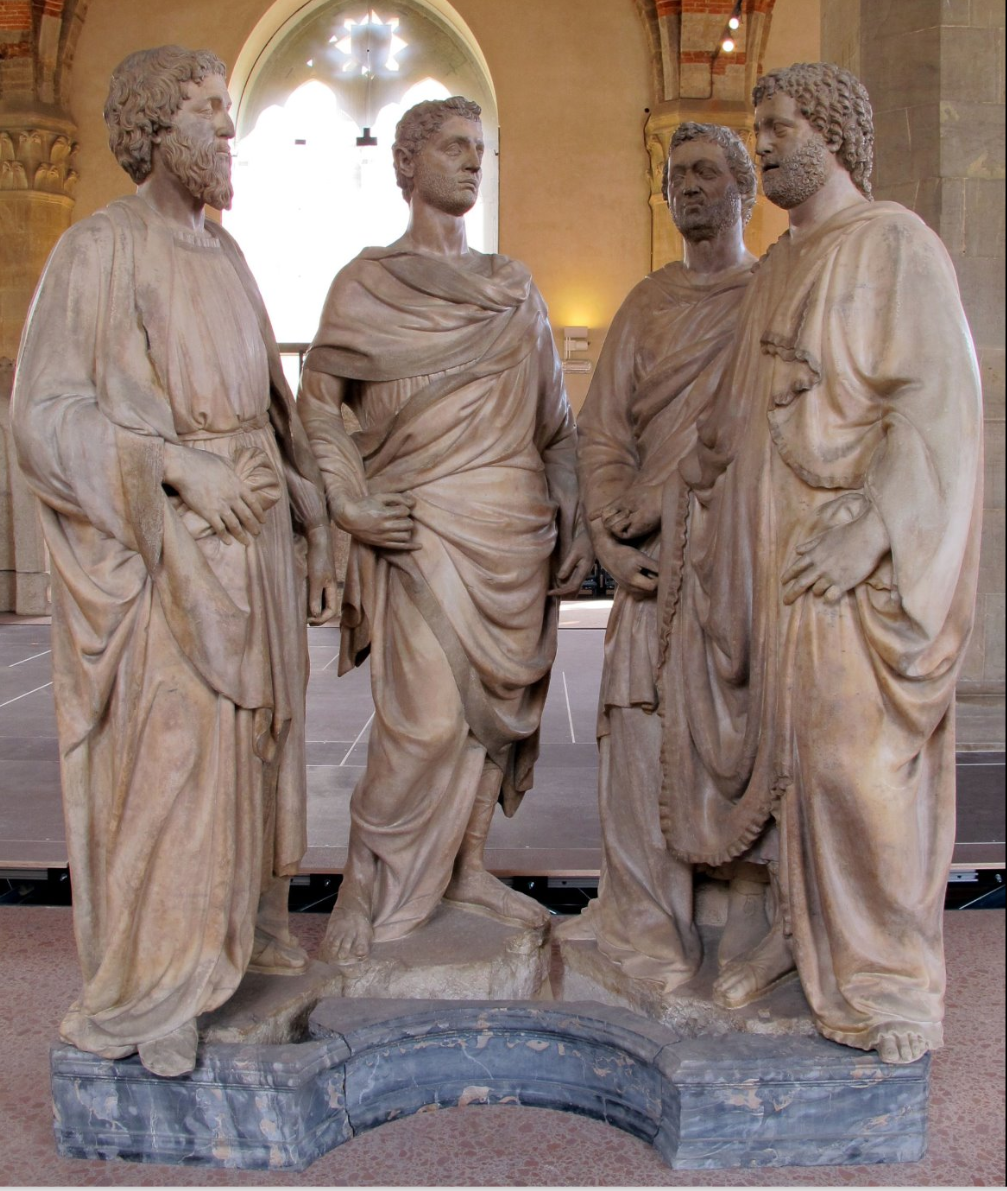
Nanni di Banco
Four Crowned Saints
1413-14, marble
(Originally Orsanmichele) Florence
Stone and Timber Masters Guild
Nanni probably was honored to represent his guild, but also a lot of pressure
HUGE CHALLENGE
four figures in one nitche
they are sculptures who were put to death for refusing to sculpt a Roman god
center figure sculpted in the round, rest are thin/flat/unsculpted in the back
How did he do this?
Places figures in semi circle, helps with composition, void activates space outside the nitche, invites us in
puts them on grey marble base to call attention to the guild
carved drapery inside the nitche, goes behind all of them, uniifies group
Influences from Roman Sculpture
trying to make individual faces
in direct competition with ancient sculptures, showing off

Donatello
St. George
1415-18, Marble
(Originally Orsanmichele) Florence
Lots of shadow in this nitche
Legend: 1st century soldier, in elite guard, emperor commanded him to convert his faith, soldier refused, executed
Metal Workers Guild, Armors Guild
Piece is in marble but Armors Guild had Metal pieces to show off their wears (All Lost)
Armor
redifining architectural sculpture of figure on a building
tense young man, getting ready for something
Looks like he’s thinking, looking off in distance, probably dragon (shielf has obvious wear and tear)
Oblivious compared to David
Stance comes from Cadottiere
Marble needs to be supported, cant support itself
drapes george in cloak to create enough extra support

Donatello
St. George and the Dragon
1415-18, Marble
(Originally Orsanmichele) Florence
George saving princess from dragon
Shallow relief, almost has painter quality
Rilievo Schiacciato = ”mashed” or “squashed” relief
1ST TIME ANYONE EVER MADE A RELIEF LIKE THIS