Chapter 10: Gene Action: From DNA to RNA to Protein
 Call Kai
 Learn
 Practice Test
 Spaced Repetition
 Match
 Flashcards
 Knowt Play
1/28

There's no tags or description
Looks like no tags are added yet.
29 Terms
protein building block consisting of an amino group, an acid group, a hydrogen, and an R group.
amino acid

gene and protein connection
Genes are the instructions that tell cells which types of amino acids to attach in a specific sequence to form a particular protein.
how protein shape forms
shape arises as amino acids attract or repel one another
functions of proteins in human body
forms blood clots
forms antibodies n cytokines
forms muscle
are enzymes
forms hair and skin
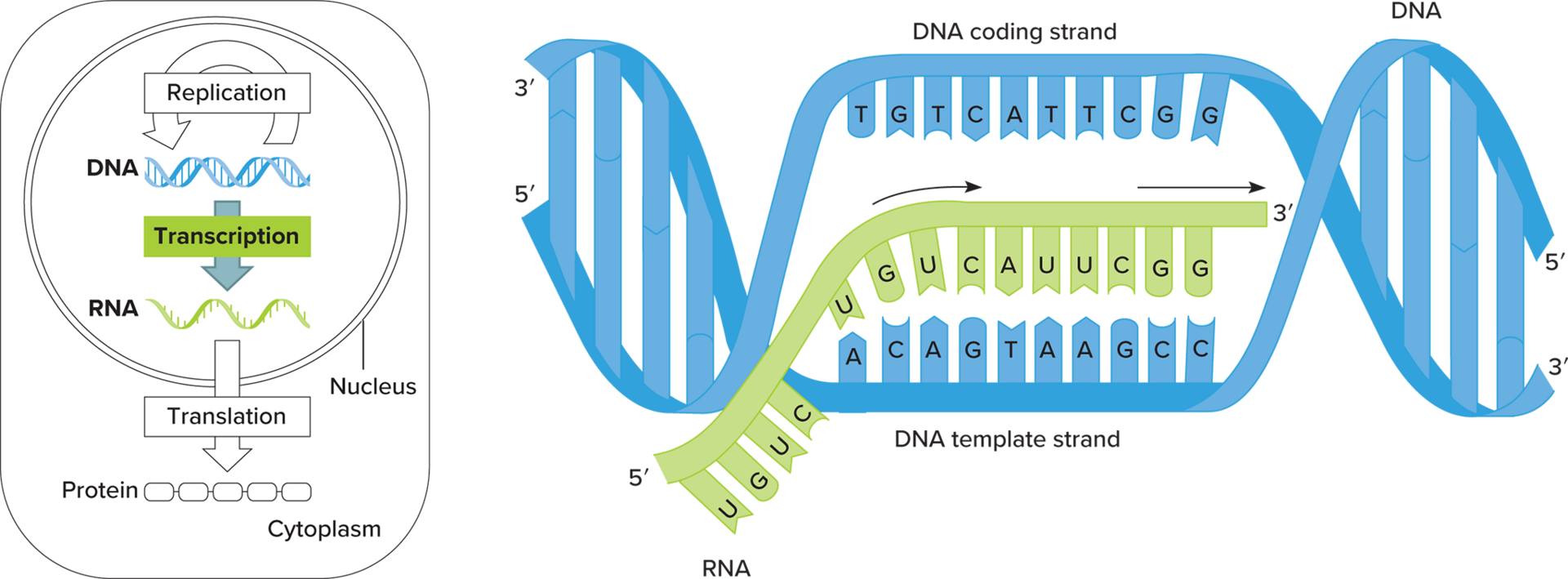
Template strand
The DNA strand carrying the information to be transcribed.
An enzyme that adds nucleotides to a growing RNA chain.
RNA Polymerase

The strand of the DNA double helix for a gene from which RNA is not transcribed.
Coding strand
RNA that, with proteins, comprises ribosomes.
Ribosmal RNA

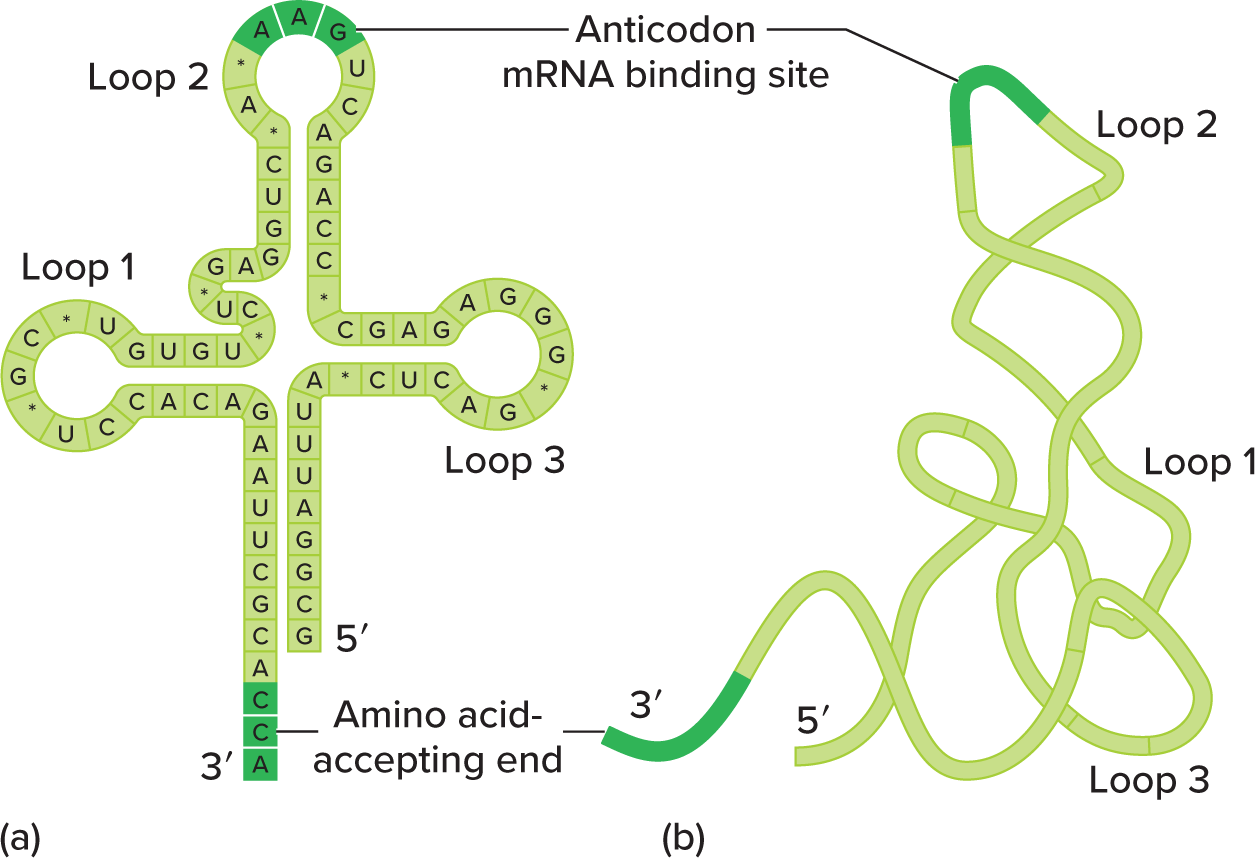
Transfer RNA
A type of RNA that connects mRNA to an amino acid during protein synthesis.
anticodon
triplet of bases complementary to a codon
transcription factor
Proteins that form a structure that binds DNA at certain sequences, initiating transcription at specific sites on chromosomes
Promoter
A control DNA sequence that signals the start of a gene.
Intron
Part of a gene that is transcribed but is excised from the mRNA before translation into protein
Exon
parts of mRNA that remains and is translated into protein
An alternate version of a protein that arises from a certain combination of translated exons.
Isoform
The mechanism of combining exons of a gene in different ways
alternative splicing
genetic code
The correspondence between specific mRNA triplets and amino acids.
reading frame
The point in a DNA sequence from which contiguous triplets encode amino acids of a protein. A DNA sequence has three reading frames.

frameshift mutation
A mutation that alters the reading frame of the sequence used to produce a protein

RNA vs DNA
RNA is single-stranded
RNA has uracil instead of thymine
uses ribose sugar

how mRNA transmits protein-building instructions
Each contiguous three bases of an mRNA encode an amino acid.

steps of transcription
Transcription factors bind to the promoter sequence DNA, which attracts RNA polymerase
the polymerase unwinds the DNA and attaches complementary RNA bases to the template strand
termination sequence in DNA stops the process

alternative splicing
combines the exons of a gene in different ways, forming instructions for slightly different variants of a protein
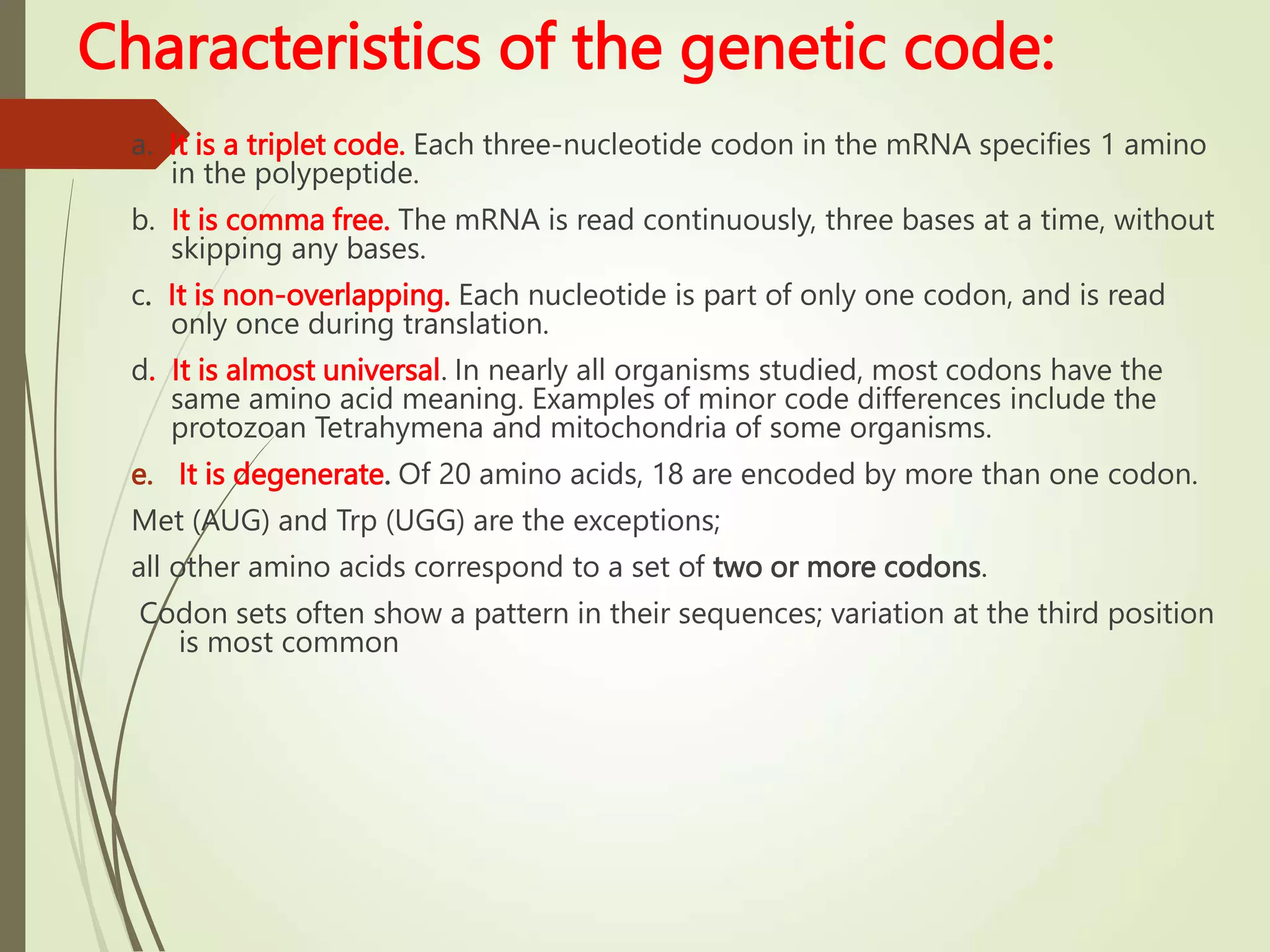
genetic code characteristics
triplet
nonoverlapping
universal
degenerate
how is translation efficient
RNA, ribosomes, enzymes, and key proteins are recycled.
Transcription produces many copies of an mRNA.
Each mRNA can bind several ribosomes.
steps of translation
In translation initiation, the mRNA leader sequence binds to rRNA in the small ribosomal subunit and the first codon attracts a tRNA.
Then the large ribosomal subunit attaches and tRNAs bring in amino acids, with the tRNA anticodons binding their codons in the mRNA.
Peptide bonds form between the amino acids attached to the aligned tRNAs, building a polypeptide.
Protein synthesis halts at a stop codon.
