Early Christian and Byzantine Art: Key Works and Monuments
 Call Kai
 Learn
 Practice Test
 Spaced Repetition
 Match
 Flashcards
 Knowt Play
1/28

There's no tags or description
Looks like no tags are added yet.
29 Terms

Title: The Good Shepherd, Orants, and the Story of Jonah
Location: Painted ceiling of the Catacomb of SS. Peter and Marcellinus, Rome.
What is Depicted: Jesus as the apollo like figure, the story of jonah as well
Period: Early Christian
Date: Fourth and Fifth Century (c. 300-400 CE)
Material: Fresco

Title: Colossus of Constantine
Location: Rome (312-315 CE)
Subject: Emperor Constantine
Period: Early Christian
Date: Fourth and Fifth Century (c. 300-400 CE)
Matieral: Acrolithic, marble, wood, stone
Context: Was created after Constantine became the sole ruler of the Western Roman Empire

Title: Arch of Constantine
Location: Rome (312-315 CE)
Period: Early Christian
Date: Fourth and Fifth Century (c. 300-400 CE)
Material: Spolia (uses old art)
Context: Arch of Triumph for Constantine after he reunited Western Rome he defeated Maxentius
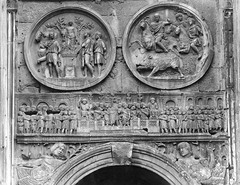
The middle portion specifically
Title: Constantine's Distribution of Largesse
Location: Arch of Constantine (c. 315)
What is Depicted: Constantine as the Emperor
Period: Early Christian
Date: Fourth and Fifth Century (c. 300-400 CE)
Material: Spolia (uses old art)
Context: Depicts Constantine as the ruler shows that the people who live there are below him with the proportions of the people

Title: Old Saint-Peter's Basilica
Location: Rome
What is Depicted: Plan and Reconstruction with isometric view Period: Early Christian
Date: Fourth and Fifth Century (c. 300-400 CE)
Context: Built outside of the city on the spot where Saint Peter was crucified

imagine if you could see inside, like it is cut in half
Title: Old Saint Peters
Location: Rome
What is Depicted: transverse section Period: Early Christian
Date: Fourth and Fifth Century (c. 300 -400 CE)
Context: Built outside of the city on the spot where Saint Peter was crucified

The upper section near the windows
Title: Old Testament Mosaics
Where: Santa Maria Maggiore, Rome
Depicted: Stories from the Old Testament
Period: Early Christian
Date: Fourth and Fifth Century (c. 300-400 CE)

Upper Left section
Title: Triumphal Arch: Nativity and Infancy of Christ
Where: Santa Maria Maggiore, Rome
Depicted: The nativity of Christ
Period: Early Christian
Date: Fourth and Fifth Century (c. 300-400 CE)
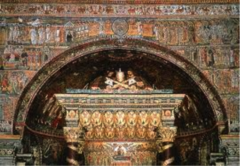
The middle section on the top
Title: Patrons of Rome, Four Beasts/Evangelists* and Etimasia: Throne for the Second Coming of Christ
Where: Santa Maria Maggiore, Rome
Depicted: The Four Evangelists in their Beast form and a throne for Christ which is called a etimasia
Period: Early Christian
Date: Fourth and Fifth Century (c. 300-400 CE)

Just in general what is it?
Title: Santa Maria Maggiore
Where: Rome (c. 422-432)
Period: Early Christian
Date: Fourth and Fifth Century (c. 300-400 CE)
Context: This church was built to honor Mary, Jesus' mother it signifies her as being holy as well

Title: Apse Conch of Santa Costanza
Where: Rome
Depicts: Traditio Legis, Christ handing the law to someone
Period: Early Christian
Date: Fourth and Fifth Century (c. 300-400 CE)

Title: Hagia Sophia
Where: Constantinople. (532-7) Period: Byzantine
Date: Sixth to Mid-Seventh Century (500-650 CE)
Patron: Justinian
Architects: Anthemius of Tralles and Isidore of Miletus
Context: Highest church in Constantinople, Theadora, gave a speech after all of the riots, where she told the people to not overthrow them because they are there to help them and protect them, it is very politically charged, has been changed many times as to what it is sometimes a mosque sometimes a museum

Title: PLAN OF THE CHURCH OF HAGIA SOPHIA
Period: Byzantine
Date: Sixth to Mid-Seventh Century (500-650 CE)
Where: Constantinople/Istanbul

Title: Hagia Sophia
Where: Constantinople/Istanbul Period: Byzantine
Date: Sixth to Mid-Seventh Century (500-650 CE)

Title: Icon of Christ Pantocrator Where: Monastery of St. Catherine, Mount Sinai
Period: Byzantine
Material: Encaustic on wood
Date: Sixth to Mid-Seventh Century (500-650 CE)
Context: One of his eyes is different, one looking straight out at the viewer and the other is looking the other way this is thought to represent the dual nature of christ
In this painting Christ is inspired by Zeus unlike the Apollo like version of Christ

Title: CHRIST ENTHRONED, FLANKED BY ANGELS, ST. VITALIS, AND BISHOP ECCLESIUS
Where: Church of San Vitale, Ravenna. Material: Tesserae (Mosaic)
Period: Byzantine
Date: Sixth to Mid-Seventh Century (500-650 CE)
Context: Christ is depicted young, and Apollo-like; this basilica was conquered by Justinian's general, and the basilica was finished

Title: Justinian and his Retinue
Where: Church of San Vitale, Ravenna
Depicts: Justinian and his advisors Material: Tesserae (Mosaic)
Period: Byzantine
Date: Sixth to Mid-Seventh Century (500-650 CE)
Isocephely
Context: People were put in this painting after the fact, is very abstract the way they are standing whereas their faces are more nateralistic

Title: EMPRESS THEODORA AND HER ATTENDANTS
Material: Tesserae
Depicts: Empress Theodora and her attendants
Where: Church of San Vitale, Ravenna. Period: Byzantine
Date: Sixth to Mid-Seventh Century (500-650 CE)

Title: Sant' Apollinare Nuovo
Where: Ravenna
Period: Byzantine, Ostrogothic
Date: Sixth to Mid-Seventh Century (500-650 CE)
Context: A lot of the things in the building are reused and are using local artists rather than bringing their own, the walls were redone after Justinian took over

Title: Miracle of the Loaves and Fishes
Where: Sant' Apollinare Nuovo, Ravenna
Depicts: Christ performing the miracle of loaves and fish
Period: Byzantine, Ostrogothic
Date: Sixth to Mid-Seventh Century (500-650 CE)
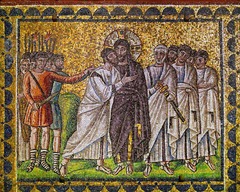
Title: The Betrayal of Christ
Where: Sant' Apollinare Nuovo, Ravenna
Period: Byzantine, Ostrogothic
Date: Sixth to Mid-Seventh Century (500-650 CE)

Title: Procession of the Martyrs and Palace of Theoderic
Where: Sant' Apollinare Nuovo, Ravenna
Period: Byzantine, Ostrogothic
Date: Sixth to Mid-Seventh Century (500-650 CE)
Context: was redone after it was taken over by Theoderic and you can see that people were there before the palace because there are hands in the pillars

Title: Merovingian Necropolis
Where: Saint-Denis, Paris Dagobert's church
Period: Byzantine, Merovingian
Date: Sixth to Mid-Seventh Century (500-650 CE)
Context: built on Saint Denis' resting place, he was beheaded picked up his head and moved it to his final resting place right outside of Paris

Title: Tomb of Queen Arnegonde
Where: Saint-Denis, Paris
Period: Byzantine, Merovingian.
Date: Sixth to Mid-Seventh Century (500-650 CE)

Title: Fibula of Rosmeer
Period: Sixth to Mid-Seventh Century (500-650 CE)
Period: Byzantine, Merovingian
6.4 cm

Title: San Pedro de la Nave
Where: Zamora, Spain
Period: Byzantine, Visigothic
Date: Sixth to Mid-Seventh Century (500-650 CE)
Context: One of the only visogothic churches left

Title: Horseshoe Arch
Where: San Pedro de la Nave, Zamora, Spain
Period: Byzantine, Visigothic
Date: Sixth to Mid-Seventh Century (500-650 CE)
Context: Visigothic churches are very famous for these

Title: Abraham's Sacrifice of Isaac
Where: San Pedro de la Nave, Zamora, Spain
Material:
Period: Byzantine, Visigothic
Date: Sixth to Mid-Seventh Century (500-650 CE)
Context: This is Historiated Capital which is architectural column tops carved with human, animal, or mythical figures that tell a story or display symbolic meaning

Title: Crown of Recceswinth
Period: Byzantine, Visigothic
What: Treasure of Guarrazar
Date: Sixth to Mid-Seventh Century (500-650 CE)
Context: "King Recesswinth offered this", crowns show that you are special and higher than others