Dendrology
0.0(0)
Studied by 2 people Call Kai
 Learn
 Practice Test
 Spaced Repetition
 Match
 Flashcards
 Knowt Play
Card Sorting
1/56

Earn XP
Description and Tags
57 Terms
1
New cards
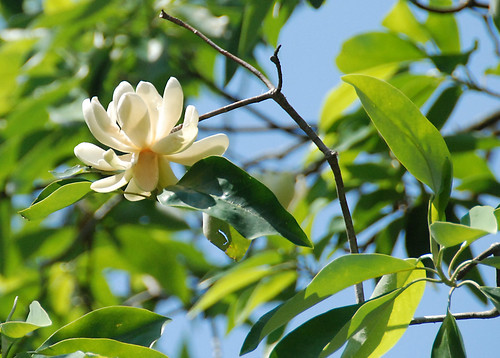
Magnolia virginiana
Family: Magnoliaceae
Common Name: sweetbay
Range: Texas-> FL, up to NY.
Habitat: Hydric Soils
Bark: Thin, Tan/Grey, Shallow Fissures
Leaves: Simple & Alternate (arrangement), elliptic (shape), entire (margin).
Evergreen (in Southern range), Entire, Dark Green w/ Glabrous topside and Glaucous Underside (abaxial)
Other Info: Shade Tolerant, Not Fire Tolerant, Flood tolerant. Slow growing. Used in landscaping up North. Sweet smelling leaves, has stipular scars (go around the twig), Height: 80-120.'
Fruits: Aggregate follicles with red seeds.
Uses: Low Commercial Value, Ornamental, used in Pulp Wood
2
New cards
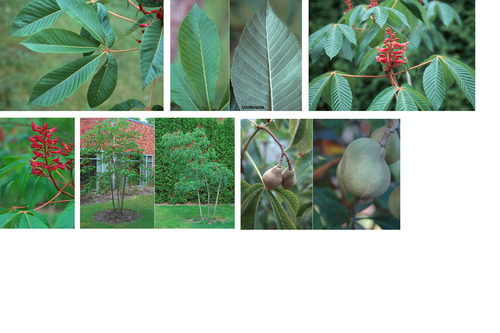
Aesculus pavia
Family: Hippocastanaceae
Common Names: red Buckeye or Firecracker
Range: Mid-Atlantic to Central FL, to Texas, up to the lower Piedmont in NC.
Habitat: Mesic Soils. Rich, moist soils.
Bark: Thin, tan-grey. Has lenticels.
Leaves: Compound palmate leaves, oppositely arranged with 5 leaflets. Serrated edges, Green, elliptic, distinctly pinnate venation. Glabrous topside (adaxial).
Deciduous. Dichotomous branching due to opposite leaf arrangement.
Other: Not Fire Tolerant, Shade Tolerant, Height: up to 30', Not Commercially Valuable. Native to the Southeastern US. Shrubby, small shade tolerant tree. Doesn't grow "naturally" in dry areas. Monoecious (produces both male and female reproductive parts).
Fruit: Capsule Form, Roundish Nuts. Up to 3 seeds in capsule.
Flowers: Tubular panicle.
3
New cards
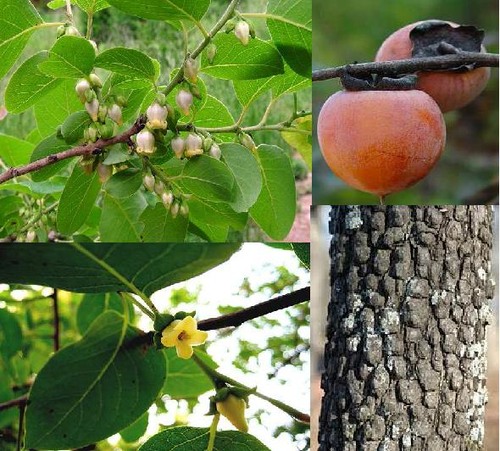
Diospyros virginiana
Family: Ebenaceae
Common name: "Common Persimmon"
Native, pioneer species. Likes disturbed sites. Early successional speices.
Range: Native to East of the Rockies to FL, down the gulf coast, and throughout the East coast.
~Most of the continental US minus Northern states and a few Western states minus Utah and California.
Soil: Wide range of soil types
Height: Up to 80ft tall. Usually grow in colonies and is usually small in FL.
Leaf persistence: Deciduous.
Bark: Square, blocky, corky, dark. Reddish, brown inner bark.
Leaves: simple, alternate, elliptic-->ovate (variable in shape). Acuminate apex. Entire (leaf margin). Pinnate, arcuate venation. The branching of the leaf veins makes it look like "broken glass."
Other: Due to a fungal pathogen, persimmon often has splotchy leaves. The
Fruit: botanical berries, astringent when unripe
Uses: Dense wood used to be used for golf clubs.
Tolerance: Low salt tolerance, low flood tolerance, medium drought tolerance. Fast to resprout.
4
New cards
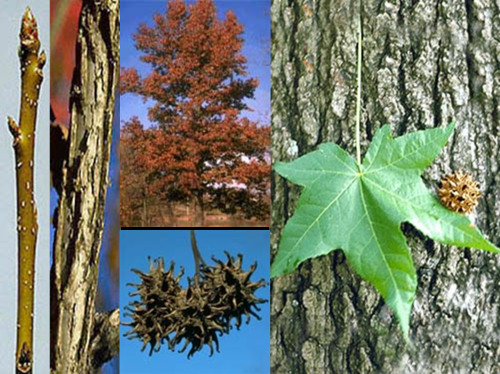
Liquidambar styraciflua
Family: Hamamelidaceae
Common Name: sweetgum
Range: East of Mississippi (CT-FL) (TX-IL)
Habitat: Hydric Soils
Bark: Thick, furrowed, corky. Sometimes features corky winged appendages. Trunk typically does not divide.
Leaves: Simple and Alternate, palmate venation. Deciduous. Serrated edges. Chemical, green apple smell when crushed.
Flowers & Seeds: Flowers nondescript but seeds have capsules for seeds. Spiky aggregate, ecologically important for small animals.
Other: Shade intolerant, R-selection: Colonizer, will sucker sprout. Low fire tolerance, but readily resprouts. Tolerates flooding. Grows in bottomland areas.
Height: 75' (large spread up to 50 ft.)
Uses: Ornamental, pallet wood, sometimes pulp.
5
New cards
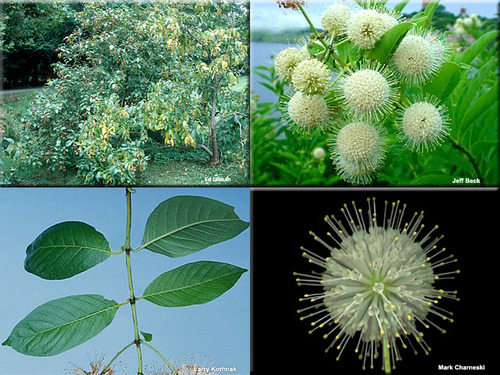
Cephalanthus occidentalis
Family: Rubiaceae
Common name: buttonbush
Range: Eastern and midwestern NA up to Canada, west to Texas plus California and Arizona.
Habitat: hydric, fresh water
Bark: brown/tan, medium fissures, rope-like as it matures. Bark has raised, corky lenticels.
Multi-stemmed, bent shrub
Leaf persistence: deciduous
Leaf arrangement/composition: simple, whorled or opposite
*Look at leaf scars for leaf arrangement when leaf off
Leaf shape: elliptic to ovate
Leaf apex: acute/acuminate
Leaf margin: entire
Leaves: dark green above with some pubescence on the underside, mostly glabrous on the upper surface
Flower: globous (globe shaped) ball. Nutlets!
Tolerance: High flood tolerance, no fire tolerance, drought tolerance is intermediate, intermediate shade tolerance
Wildlife value: hummingbirds, pollinators, nesting, shelter, fish nesting (where stems and roots go into the water)
Sometimes planted ornamentally or for restoration purposes
6
New cards
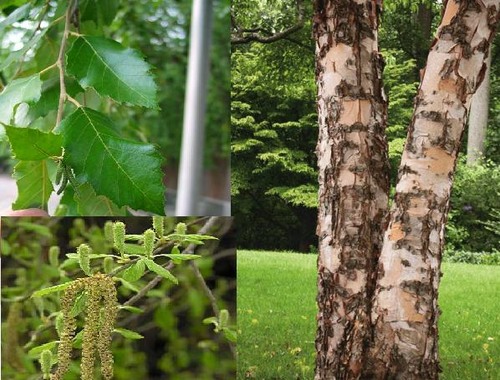
Betula nigra
Birch family, Betulaceae
Common name: River birch
Native to most of the Eastern U.S.
Habitat: Mesic-> Hydric (mostly hydric), growing in/near rivers, streams, bottomlands
Deciduous, medium sized tree. Can grow up to 35 meters tall. Rarely straight, often found leaning over water.
Bark: reddish, brown to salmon pink papery, peely bark with horizontal lenticels.
Leaf: simple, alternate, rhomboid to triangular ovate, up to 3in long.
Leaf apex: obtuse to acute
Leaf base: truncate, sometimes angled
Leaf margin: doubly serrate
Venation: angled & ascending parallel
Leaf color: upper side is bright green and glabrous. Under side is pale green and sometimes pubescent
Petioles somewhat flat and densely pubescent
Stipules are hairy and deciduous
Twigs are slightly zig-zaging w psuedo-terminal buds.
Two-ranked
Flowers: Male-catkins. Female-strobile (cone-like).
Monoecious!
Fruit: two-winged nutlets
Wildlife: small mammals and birds use
Commercial: furniture, cabinets, ornamental
Tolerance: No shade tolerance, no salt tolerance, no fire tolerance, low drought tolerance, medium flood tolerance.
7
New cards
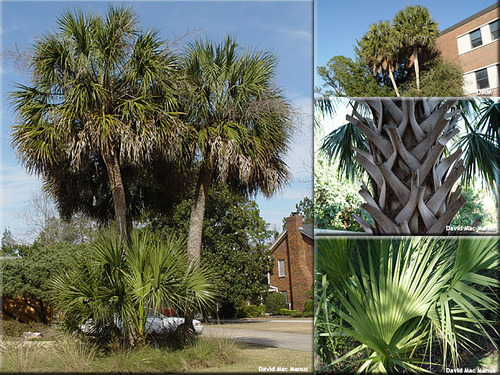
Sabal palmetto
Angiosperm & monocot
Family: Arecaceae
Common name: cabbage palm, sabal palm
Distribution: Native to FL, found throughout the coastal plain from South Carolina through FL out to Texas.
Habitat: Found in coastal communities. From wet to dry (xeric->hydric).
Forms a single stem (monocot).
Evergreen
Can get up to 90ft tall, but slow growing
Bark: Boots (bases of petioles). Lattice-like pattern. Boots can fall or burn off. If they fall off they leave rings.
Leaves: simple, alternate, costa palmate. The petiole extends into the base of the leaf blade (hastula/spear). Parallel venation. Smooth petiole.
Flowers/fruits: Doesn't flower until mature. Monoecious. Fruits are drupes. Bluish-purple. 1/2in in diameter and fall off the tree.
Well adapted to disturbances esp. the ones typical of FL.
*Susceptible to Lethal bronzing
Native Americans ate the interior below the terminal bud
Commercially important for horticulture
Wildlife: bears, birds, pollinators, etc.
8
New cards
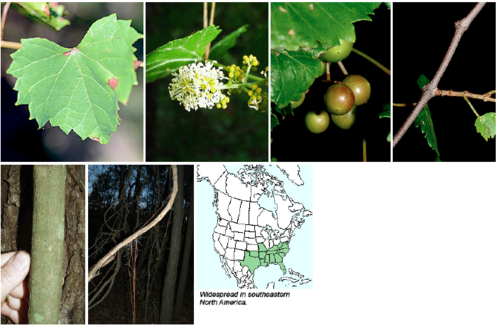
Vitis rotundifolia
Angiosperm, dicot, vine
Family: Vitaceae
Common Name: muscadine grape
Range: SE U.S. Virginia -> FL -> West to Texas up to Oklahoma
Habitat: Mixed Hardwood, not extremely site specific. Wetter areas to xeric hammocks. Wide range of site conditions.
Bark: Thick woody vines, peels off in plates (large strips), has tendrils for climbing
Leaves: Deciduous, Simple & Alternate, Green & Glabrous (without hair, above and below), Orbcircular shape, Dentate Margins, Acute Apex, Cordate Base, Palmate Venation.
Flowers/fruits: white, non-descript flowers. Fruit is a botanical berry (grape). Round purple or green.
Other: Moderate Shade Tolerance, low fire tolerant but will resprout quickly, little salt tolerance. Medium flood and drought tolerance.
Uses: Chowing down for humans and animals.
9
New cards
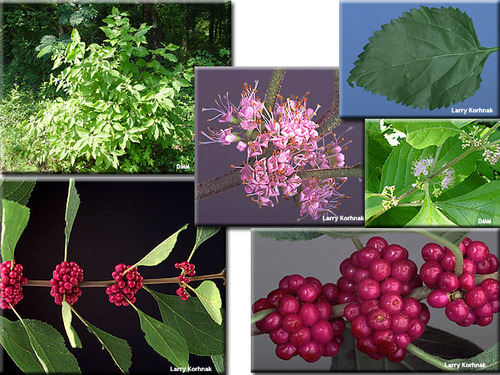
Callicarpa americana
Angiopsperm, dicot
Family: Verbenaceae
Range: Southeastern US (from Midatlantic to FL, west to Texas, up to Missouri)
Habitats: Wide range of habitats. Pinelands, sandhills, disturbed areas, mesic hammocks. Typically a pioneer species (early succession).
Usually less than 15ft tall. Multi-stemmed shrub. Woody and deciduous.
Bark: light tan colored but gets gray with time, smooth and tight, has lenticels sometimes (vertical).
Leaves: simple, opposite, 4-ranked (decussate). Elliptical in shape (can vary due to environment). Acuminate apex. Cuneate base. Leaves are pubescent on both sides. Arcuate venation. Crenate margin. Leaves are pungent smelling.
Twigs: sticky pubescence. Opposite/dichotomous branching.
Flowers/fruits: cymes, clustered fruits. Drupes. In the axils of the leaves.
Uses: songbirds and wildlife love, humans can eat, insecticide, ornamental native.
Tolerances: not extremely shade tolerance, low salt tolerance, can resprout after fire, low drought tolerance, low to intermediate flood tolerance.
10
New cards
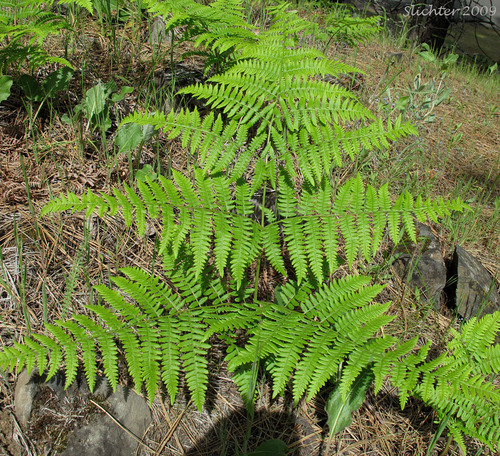
Pteridium aquilinum
Family: Dennstaedtiaceae
Common Name: bracken fern
Range: Global
Habitat: Wide range of sites. Hydric to Xeric Soils (FL: Sandhill & Flatwoods)
Deciduous, perennial. Underground rhizomous distribution.
Bark: Stiff Stem extending from ground
Leaves: Triangular fronds. Has leaflets called pinna. The subleaflets are called pinules. Branched. Has a stalk and rachis.
Other: Rhizome, Toxic to Livestock, Reproduces with Spores, wildlife use for habitat. Intermediate fire tolerance. Natives would eat the rhizomes.
Height: 4-5ft
11
New cards
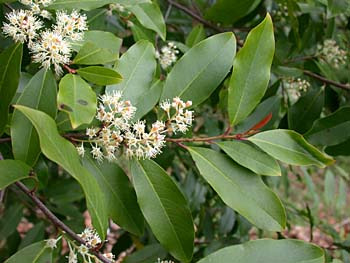
Prunus caroliniana
Angiosperm, dicot
Family: Rosaceae
Common name(s): Carolina laurel cherry or cherry laurel
Range: Native to the Southeast, found along the SE coastal plain
Habitat: Xeric -> hydric. Found in disturbed areas.
Height: Smaller tree that gets up to 40' tall.
Root sprout distribution.
Leaf persistence: Evergreen
Bark: thin > smooth w/ lenticels.
Leaves: simple, alternate, elliptic. Entire or serrated (varied). Not consistently serrated. There are two glands at the base of the leaf. Glabrous leaf darker on top and lighter on bottom.
Tolerances: tolerates shade and fire but not salt.
Leaves smell like maraschino cherries!
12
New cards
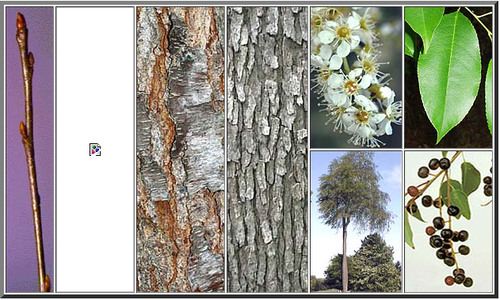
Prunus serotina
Family: Rosaceae
Common Name: black cherry
Range: Most of the U.S., east of the plains. Grows down into Mexico and Central America.
Habitat: Xeric to Mesic Soils, Broad ecological amplitude, often found near powerlines and along fence lines. Likes rich, moist soils. Pioneer species in most of its range. Needs full sun!
Height: 80'-150' tall. Medium->large tree. Has a drooping look.
Bark: Smooth, thin, light grey to dark bark. Horizontal lenticels, older trees flaky and darker.
Leaves: Deciduous, Simple & Alternate, glossy dark green on top, lighter on bottom. Glands on petiole. Leaves ovate to oblong, consistently serrate margin (finely serrated), acuminate apex, obtuse base, pinnate venation.
Other: leaves taste bitter (Cyanide), fast growers, toxic to livestock, not shade tolerant, moderate drought tolerance, medium salt tolerance, produces a gummy sap
Used for Niche Woodworking
Flower: raceme
Fruit: drupe (black cherry)
13
New cards
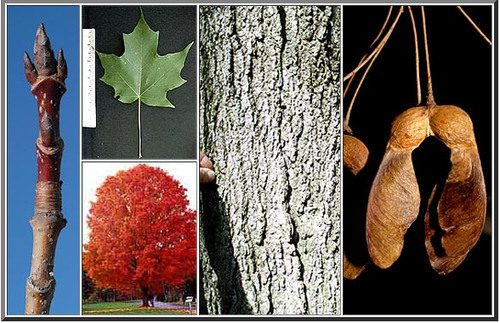
Acer rubrum
Family: Aceraceae
Common name: Red maple
Range: As far north as Newfoundland in Canada, as far south as FL, and all throughout Eastern North America.
Habitat: Hydric sites in FL but can grow in many conditions other places.
Height: Can grow up to 100ft tall.
Leaf persistence: Deciduous
Bark: thin, grayish, gets a lil flaky as it matures.
Leaves: opposite, simple, 3-5 palmately lobed (mostly 3-lobed). Serrate to dentate margin w/ squareish central lobe.
Dull dark green upside, silvery glacous underside.
Petiole is variable but can often be red.
Seeds are samaras: 45-90 angle
red flowers in spring, red leaves in fall
Other:
Used for roosting and for hardwood in the North. Shade tolerant, low salt tolerance, low fire tolerance, moderate flood tolerance. Used in urban planning bc it's usually disease free. Used in horticulture.
14
New cards
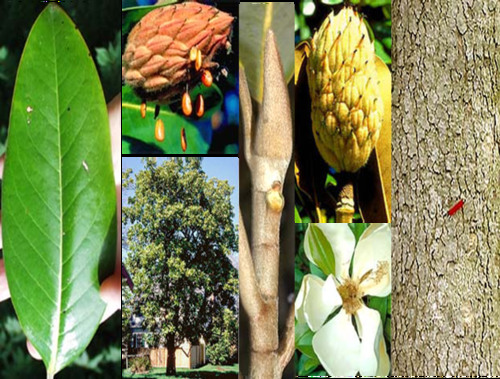
Magnolia grandiflora
Family: Magnoliaceae
Common name: Southern magnolia
Leaf persistence: deciduous
Bark: thin, gray to tan in color
Leaves: simple, alternate, elliptic-oblong, entire (margin), glabrous, rusty pubescence (sometimes).
Diaphragm pith.
Flower: Big white flower
Fruit: aggregate of follicles with red seeds.
Tolerates shade and is slow growing.
15
New cards
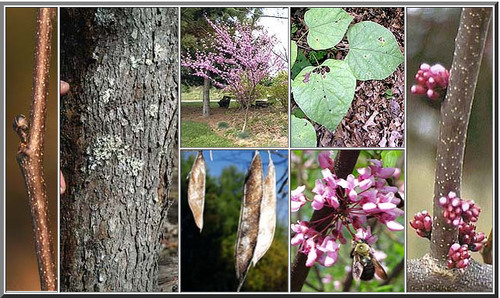
Cercis canadensis
Family: Fabaceae (legume)
Common: eastern redbud
Plant size: small tree, shrub-like stature
Persistence: deciduous
Twigs: pseudo-terminal buds (zig zag), brown smooth bark, scattered lenticels
Leaf: simple, alternate, 2-ranked, ovate-reniform shape (cordate base), petioles dilated w/pulvini (swollen), palmately-veined, short-acuminate to rounded apex, margins entire, dark green glabrous above, pale green pubescent below
Flowers: flowers in spring, pink/purple
Fruit: legume, flat w/ brown seed pods
Uses: legumes serve as wildlife food,widely used in the horticulture industry
Tolerance: Shade tol, low salt, resprouts from fire, low flood, high drought
Nitrogen fixer
16
New cards
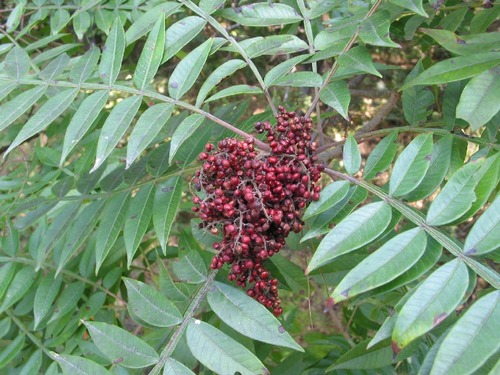
Rhus copallinum
Family: Anacardiaceae
Common name: winged sumac
Range: Native to eastern NA. East Texas to Southern New England.
Habitat: Early successional, well drained soils, edges of disturbed sites, open areas. Edges of flatwoods. Not too wet.
Height: up to 15-20ft
multi-stemmed in stature
Forms colonies from rhizomes.
Bark: thin tan to grayish bark. Has lenticels.
Leaves: Pinnately (odd) compound. Ovate leaflets. Dark green upper, lighter green under. Rachis has a winged appendage. Alternate.
Persistence: deciduous
Dioecious
Flowers/fruits: Terminal flower producing a clustered drupe, bright red when ripe.
Tolerances: moderately drought and fire tolerant. Low salt tolerance and shade.
Other: Nice reddish orange color in fall. Valued by wildlife such as birds. Sometimes used ornamentally.
17
New cards
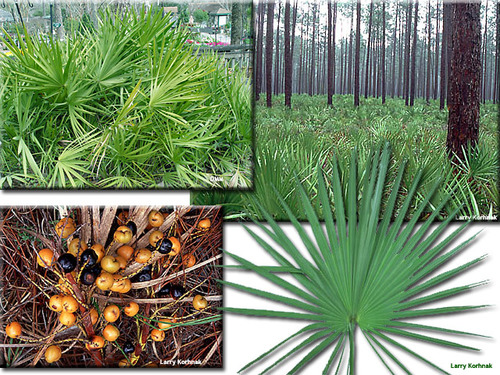
Serenoa repens
Family: Arecaceae (palm)
Common: saw palmetto
Habitat: wet areas, flatwoods. sometimes scrubs and hammocks but prefers well drained soils.
Persistence: evergreen
Bark: "gator backs", dark to black stem, more or less horizontal. leaf bases stay attached.
Leaf: saw teeth on petioles, palmate without a costa, green or yellowish green. Simple, glabrous.
Flowers: calyx tubular below, 3 minute lobes distally, 3 petals nearly separate
Fruit: drupelike, usually oblong-ellipsoid, black or blueish black when ripe
***Monocot, extremely slow grower
Other: decumbent (growing along the ground/crawling). Can grow taller w/o fire. Important for wildlife including black bears and diamondback rattlesnakes. Especially important for pollinators. Medicinally valuable especially for prostate issues. Used as an ornamental.
Tolerances: high drought, moderate flood, shade, salt, fire.
18
New cards
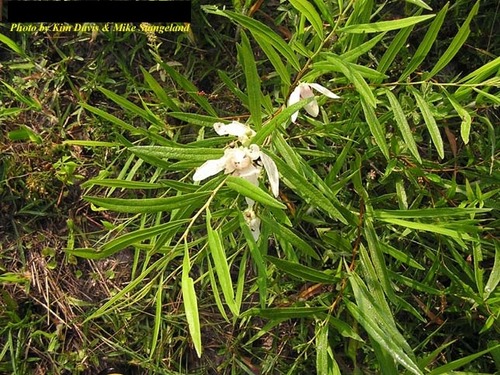
Asimina angustifolia
Family: Annonaceae
Common name: slimleaf pawpaw
Native range: North central FL, GA, some parts of South Carolina, flatwoods, some hammocks, prefer open areas
Size: Small woody shrub up to 4-5ft tall
Persistence: late deciduous
Bark: thin, tan
Leaf: linear leaf shape w an entire margin. dark on top, lighter on bottom.
Flower: bell shaped whitish yellow flower
Fruit: large "berries" tasting of tart banana pudding
Tolerance: moderately fire tolerant, low flood tolerance
Other: highly sought after by wildlife and humans.
19
New cards
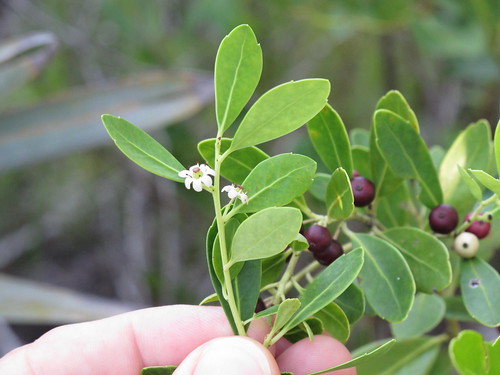
Ilex glabra
Family: Aquafoliaceae (holly)
Common: gallberry or inkberry
Plant size: shrub up to 6 ft
Persistence: evergreen
Twigs: green of season, very finely pubescent, older twigs glabrous, grayish brown, round lenticels with vertical slits
Leaf: simple, alternate, elliptic to ovate, powdery-pubescent petioles, blades leathery glabrous, dark green upper, pale dull green lower, crenation near leaf apex. Glands near base.
Flowers: functionally staminate and pistillate flowers, corolla 5-8 lobed
Fruit: Drupe black
Uses: #1 deer food, galberry honey, used to produce ink long ago
Tolerance: mod shade, mod salt, highly flammable, high flood, low drought
Other: dioecious
20
New cards
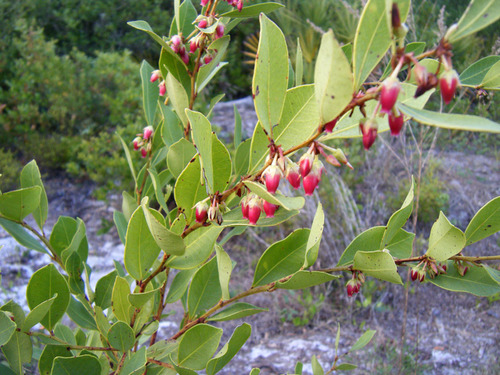
Lyonia lucida
Family: Ericaceae (heath)
Common: fetterbush
Plant size: shrub up to 8 ft, 4m
Persistence: evergreen shrub
Range: SE US
Habitat: wet sites, swamps, floodplains
Bark: reddish, shreddy/peely
Twigs: young twigs strongly angled (crowns as broad as height of the plant), green flecked with dark, loose narrow scales, pseudo terminal bud (zig zag)
Leaf: simple, alternate, elliptic, cuneate bases, short-acuminate apices, leathery, glabrous, dark glossy green above, somewhat paler beneath, minute punctate dots distributed among leaves, raised intramarginal ridge (vein). Translucent margin. No glands, just glabrous
Flowers: showy and handsome when in flower, fascicle of cylindrical (bell-shaped) flowers.
Fruit: woody capsule, ovoid in shape, strongly thickened sutures, amber brown
Uses: poisonous to livestock
Tolerance: shade tol moderate, no salt, sucker sprouts following fire, flood tolerant
***OTHER: similar in growth form to gallberry but the stem is not round
21
New cards
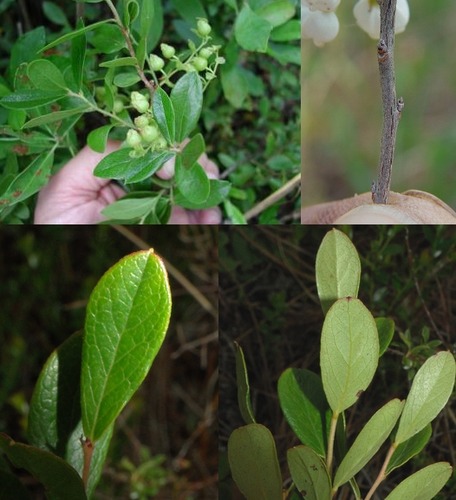
Gaylussacia dumosa
Family: Ericaceae
Common: dwarf huckleberry
Persistence: deciduous
Spreads by rhizome
Range: Up to Newfoundland down to FL (Eastern NA)
Size: Small, smaller than G. formosa
Leaves: Oval, thick, leathery. Bases strongly cuneate. Apex rounded or acute. Can have sharp mucrow (leaf tips). Glandular leaves (gold glands).
Fruit: lil drupe
~Important for wildlife
22
New cards
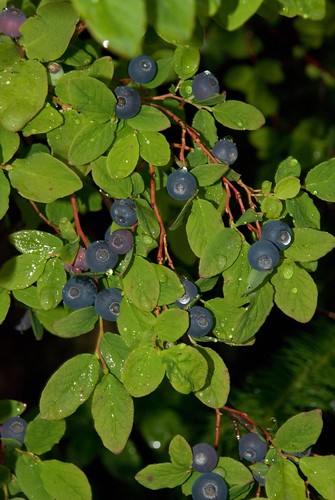
Gaylussacia frondosa
Family: Ericaceae
Common: dangleberry
Range: Native to Eastern NA. North FL up to the Northeast.
Habitat: Flatwoods, rocky outcroppings up North.
Plant size: shrub to 2m tall
Persistence: deciduous
Twigs: young often glabrous or short pubescent
Leaf: simple, alternate, elliptic or oblanceolate, cuneate base, rounded to obtuse apex, entire margins, glabrous upper, glaucous and gold glands under. Prominent veins. Rubs off gold (gays love gold).
Flowers: Racemes loosely 5-12 flowered. Corolla greenish white, dull and inconspicuous, tube cuplike, small lobes. Bell shaped flower.
Fruit: glaucous-blue/black drupe. Sweet and delicious.
Tolerance: moderate fire and shade, some salt tolerance.
23
New cards
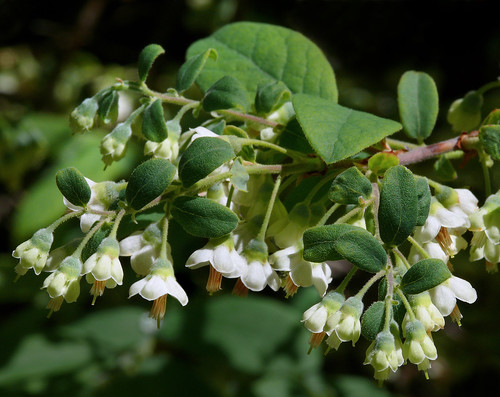
Vaccinium stamineum
Family: Ericaceae (heath)
Common: deerberry
Range: Missouri to Texas to FL.
Habitat: well-drained places, upland mixed, pine flatwoods, hammocks.
Size: Shrub to about waist high. Up to 4ft tall. Small, woody shrub.
Persistence: deciduous
Bark: flakey texture, brownish grey scaley
Leaf: simple, alternate, elliptic to oblong, leathery, acute to rounded basally, apices acute to short-acuminate with occasional small mucros, glaucous pale lower (patchy, waxy underside), papery, entire margins
Flowers: little, non-showy white
Fruits: mostly a little broader than long, oblate to globose, juicy, somewhat bitter and sourish
Tolerance: mod. shade, no salt, resprouts following fire, no flood, mod. drought
24
New cards
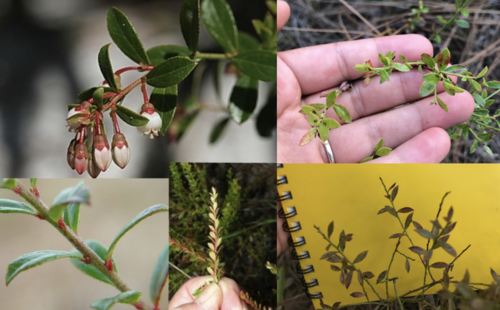
Vaccinium myrsinites
Family: Ericaceae (heath)
Common: shiny blueberry
Size: low lying, branching shrub. forms colonies from rhizomes. Up to 3ft tall.
Persistence: evergreen
Habitat: coastal plains, flatwoods, drier sites among flats
Bark: herbaceous (green stem), young twigs glabrous or shortly pubescent
Leaf: simple, alternate, sessile, glossy smooth green, oblanceolate or elliptic, slightly crenate margins, consistently formed. thick and leathery.
Flowers: Urceolate (bell-shaped), 2-8 in axillary fascicles
Fruit: Drupes (flavored sand), blue-black
Uses: ground birds
Tolerance: Fire tolerance due to underground roots and high tolerance for drought.
25
New cards
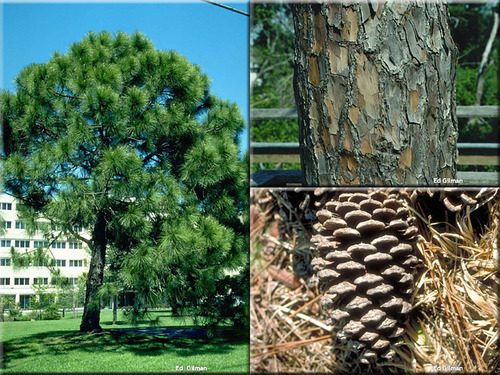
Pinus elliottii
Family: Pinaceae
C: slash pine, variety elliottii
Range: Coastal S Carolina to FL keys to Eastern Louisiana
Persistence: Evergreen, gymnosperm
Habitat: Found in wet flatwoods. Well drained. Sometimes around lakes and streams. Not usually in scrubs or hammocks.
Bark: reddish, grayish, brown peely plates. Exfoliates.
Needles: clusters of 2s and 3s. 8 to 10in long needles. Only keeps cones one year then drops so it has a more rounded crown.
Cones: Less sharp than others. Orangeish-brown. ~Valued by wildlife and timber: pulp, turpentine, primary commercial pine
Mature trees are very fire tolerant. Can tolerate moderate drought and flood. Low salt.
26
New cards
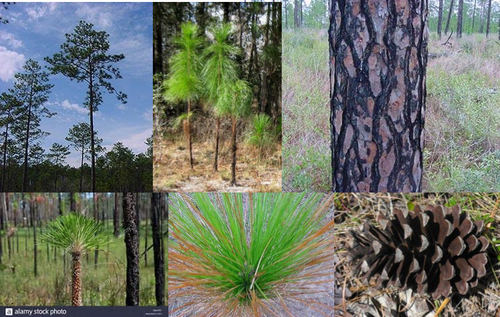
Pinus palustris
Family: Pinaceae (pine)
Common: longleaf
Range: SE Virginia to Central FL to East Texas
Plant size: 80-100 ft, up to 500 yrs
Persistence: evergreen
Habitat: occurring on sandy ridges and hills with wiregrass/scrub oaks, also in seasonally wet flatwoods or savannas where oaks are absent
Bark: greyish brown, for the first several years stem of the seedling elongates very little (grass stage)
Leaf: needles 3 per fascicle, 15-30 cm long length of needles follows length of cones, really thick bud (fire adaptation)
Uses: Slower to grow, high quality timber
***NOTE: thickness of branches, BIG CONES, 3 per fascicle key to I.D.
27
New cards
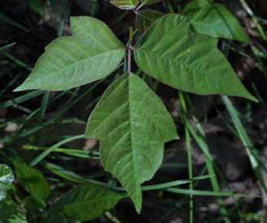
Toxicodendron radicans
Family: Anacardiaceae (sumac/cashew)
Common: poison-ivy
Range: Native throughout eastern North America, west to Texas, up to Canada
Habitat: essentially ubiquitous in terrestrial, moist to wet, open and wooded
Persistence: Deciduous
Size: a trailing, low shrub or climbing (aerial roots)
Twigs: young twigs ashy or rusty pubescent, previous season twigs glabrous, leaf scars crescent-shaped, buds densely pubescent. When climbing, the twigs are covered in aerial rootlets as they attach to the tree.
Leaf: tri-foliately compound, petiolate, slender petioles, leaflets of 3, lateral pair sessile and mitten shaped while the terminal leaf stalked and equilateral, rounded basally, acute to acuminate apically
Fruit: single seeded, translucent drupe eaten by birds and mammals
~can cause rash or irritation in humans
28
New cards
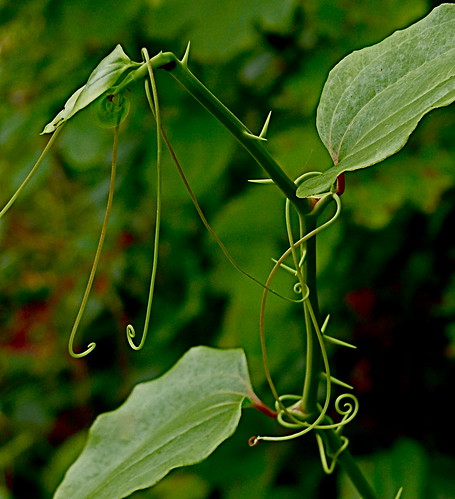
Smilax spp.
Family: Smilacaceae
Common name: greenbrier, sarsaparilla, catbrier
Persistence: Evergreen to semi-evergreen
Leaves: simple, alternate, typically have 3 or 5 major veins from base to apex.
Flowers: Small clustered green, yellow, or brown
Fruit: small berry, 5-10mm in diameter. Each fruit contains 1-4 reddish seeds.
Common name: greenbrier, sarsaparilla, catbrier
Persistence: Evergreen to semi-evergreen
Leaves: simple, alternate, typically have 3 or 5 major veins from base to apex.
Flowers: Small clustered green, yellow, or brown
Fruit: small berry, 5-10mm in diameter. Each fruit contains 1-4 reddish seeds.
29
New cards
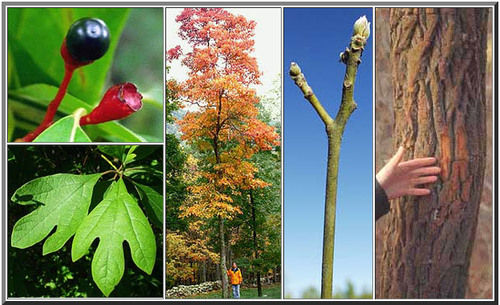
Sassafras albidum
Family: Lauraceae, Laurel fam
Common name: Sassafras
Native range: Found from Central FL, East Texas, Michigan, North Eastern US
Height: Up to 80-90ft tall, larger in northern parts of the range, small in FL.
Growth habit: Thickets, colonies, rhizomatous roots
Leaf persistence: Deciduous
~new growth: very green twigs
Bark: Scattered lenticels, has a cinnamon/orange bark as it ages and thick ridges.
Leaves: simple, alternate. Variably lobed. Lobed & unlobed. Polymorphic. Three leaf shapes: simple lobed, unlobed or ovate. Dark green glabrous on top, a little pubescence underneath.
Margin: Entire
~Turns autumn colors
Flower: cluster, yellowish green
Fruit: drupe (like mini avocado) dark purple with red stem
*Laurel wilt
Tolerances: early successional (open & disturbed). Well-drained soils preferred. Seeds spread by birds. High drought tolerance, sprouts back after fire. Moderate salt tolerance.
30
New cards
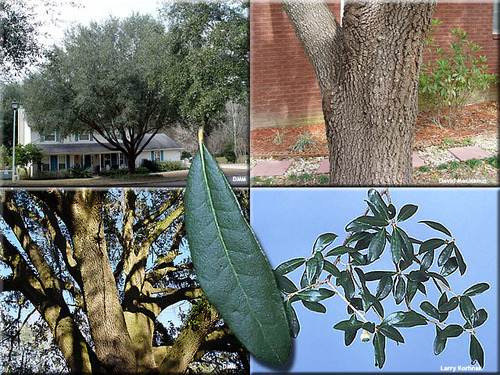
Quercus virginiana
Family: Fagaceae
Common name: live oak
Type of oak: White
Native range: VA, FL, West to Texas. Coastal Plain. Habitat: Hammocks. Wet to Dry.
Height: Long lived 300-500 yrs.
Leaf persistence: Evergreen
Bark: Dark, deeply furrowed thick bark.
Leaves: Simple, alternate. Elliptic->ovate. Some lobing when young. Dark green shiny above, grayish color underneath. Appressed (hairs on underside of leaf) entire revolute margin.
Flowers: Catkins, diff female/male flowers
~cluster of terminal buds
Fruits: acorns
Timber: worthless now bc too hard and dense. U.S. Navy live oak plantations.
Very sought after for horticulture.
Tolerances: Intermediate shade, moderate flood, drought, salt.
31
New cards
Red oaks
No tylosis, used for barrels. Acorns~ 2yrs to maturity. Higher tannin concentration; more regular production of fruits, fats & carbs, sharp mucros, darker bark that is thinner and tight to the tree. Scrub jay prefer red oaks bc of tannins.
32
New cards
White oaks
Executes tylosis (clogged vascular tissue, holds water). Acorns mature in 1 yr. Less tannic, sweeter acorns. Eaten more readily by wildlife. Has masting years and low production years. High carb acorns. Lobed or rounded apices. Lighter colored bark that is more shreddy/platy. Denser, more expensive wood. Rot resistant. Closes its wounds.
33
New cards
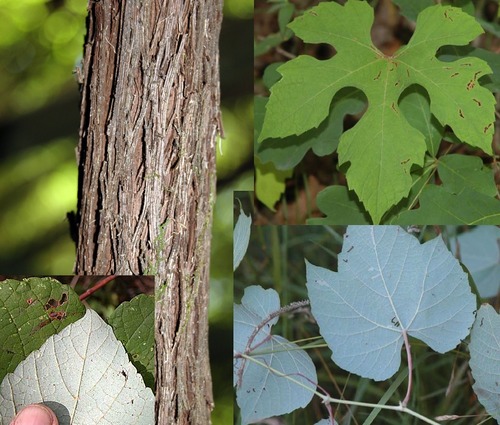
Vitis aestivalis
Family: Vitaceae
C: summer grape
Native Range: Native eastern US
Habitat: well-drained sites, dunes to fields and forests.
Leaf persistence: Deciduous
Twigs: Weedy vine with branched tendrils (biforcated "Y" shaped)
Height: Can get up to 80ft
Bark: dark brown shreddy bark like a cat scratched it. Reddish brown.
Leaf: simple, alternate, variously lobed, 3-7 lobes, serrated margin, dark dull green above, glaucous below with pubescence. Has a "broken glass" type veining pattern.
Flowers: yellow-green
Fruit: berry, dark purple.
Tol: mod drought, mod shade, low flood, mod salt, low fire.
34
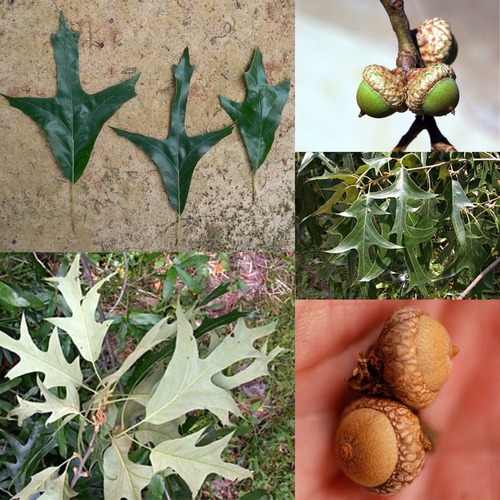
New cards
Quercus falcata
C: Southern Red Oak
Family: Fagaceae
Native: SE US
Height: 120 ft tall
~Can be 150-200 yrs old
Habitat: Mostly upland areas with well-drained soils.
Bark: Thick, furrowed, grayish-brown.
Leaves: variable lobing (sickle-shaped). base- rounded, bell-shape. Dark green upper surface, golden-brown pubescence. Pinnate venation.
~multiple terminal buds.
Fruits: small, hemispherical acorns.
Wildlife love <333
Tol: moderately shade intolerant, intolerant of salt and flood.
35
New cards
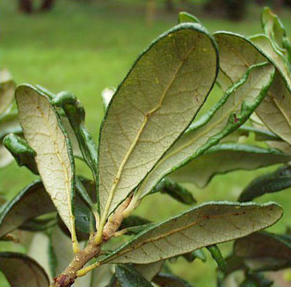
Quercus geminata
sand live oak
Fagaceae
WHITE OAK
Native range: SE Coastal Plain, West to Louisiana & Alabama.
Habitat: Scrub, sandy soils, sandhills, coastal areas. Well-drained. High and dry.
Height: Small tree up to 40 ft tall
Twigs: Umbrella crown (drooping) with decumbent branches.
Bark: Fissured bark up to crown and branches.
Leaves: Simple, alternate, cuneate base with revolute margins ("makes a boat, sand live oak"). Can have sharp mucro. Pubescent (fuzzy) underside. Has drought prone features.
Acorns: in pairs (geminata), elongated. Black at maturity.
Uses: Valued by wildlife.
~Forms thickets/colonies.
Tol: high drought, mod salt, low flood, mod fire, low shade
KEY FEATURES: hairs on underside, revolute margin, impressed veins
36
New cards
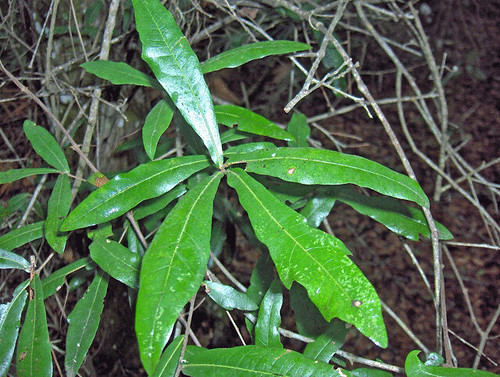
Quercus hemisphaerica
"sand" laurel oak
Fagaceae
RED OAK
Native range: SE US
Habitat: Most everywhere except extremes. Weedy & prolific tree colonizer.
Lifespan: short-lived only 100-120yrs naturally, shorter in urban sites. Susceptible to decay.
Leaf persistence: Tardily deciduous (here it will keep it leaves until new leaves, north of here loses leaves)
Bark: tight, dark grey when young, fissures shallowly as it ages
Leaves: simple, alternate, shallow lobes, juvy leaves have mucro tip, as trees mature they produce fewer lobes, narrowly elliptic, almost no lobing in mature growth, darker on top, lighter bottom, margin entire, flat leaf. Glabrous.
Fruit: Produces small, hemispherical acorns that turn dark brown when mature
Uses: sometimes used as pulp and biomass.
Tol: mod shade but grows slow in understory, mod drought, low flood, low fire, low salt. Mature trees more resistant to fire.
37
New cards
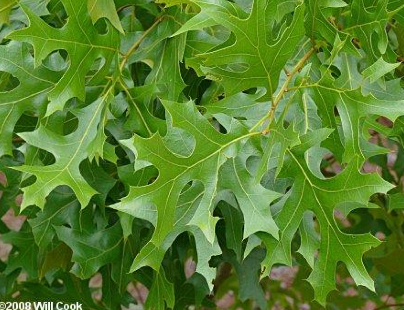
Quercus laevis
turkey oak
Fagaceae
RED OAK
Habitat: North to Eastern NC, South to Central FL, West to Eastern Louisiana
Habitat: Dry, upland sandy areas in Coastal Plain.
Height: Up tp 50-60ft tall
Deciduous
Relatively slow growing, short lived.
Bark: Blocky, tight, fissured bark almost black (really stand out in winter), tend to be sparsely branched
Leaf: simple alternate, 5-7 lobes with mucro tip, glossy glabrous green on both sides, short petiole, kinda twisted no pubescence, cuneate (v shaped) base.
Acorn: bigger than other red oaks.
Uses: Loved by wildlife, wood for BBQ, not much for timber.
Tol: high drought, high fire, low shade and salt and flood
38
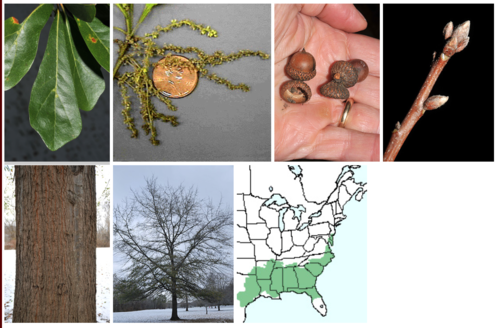
New cards
Quercus nigra
water oak
Fagaceae
RED OAK
Native range: TX, OK, South to Central FL
Habitat: Where fires lack.
Life span: Short-lived
Up to 125ft tall
Persistence: tardily deciduous
Bark: Tight, smooth, blackish/greyish
Leaves: lobed when juvenile. Spatulate shaped w/ mucronate tip when mature. Pinnately veined with "hairy armpits" (pubescence in axils of veins).
Acorns: squatty, 1/2in x 1/2 in
Uses: firewood, flooring, pulp wood.
Tol: mod shade, low fire, low-mod drought, low flood and salt
39
New cards
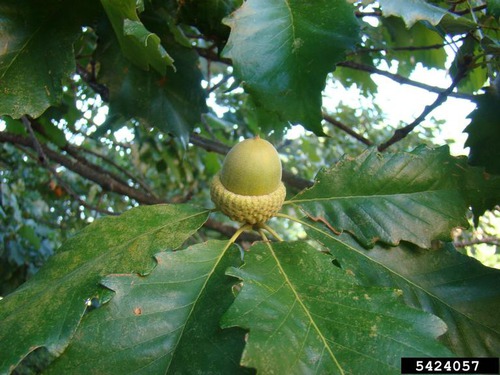
Quercus michauxii
swamp chestnut oak
Fagaceae
WHITE OAK
Native: E TExas, down to Central FL
Habitat: Mesic hardwoods, moist, well-drained rich soils. Likes the organic layer.
Persistence: large, deciduous tree
Bark: Light, grayish in color. Thin, peely, exfoliating bark.
Leaves: LARGE, Simple, alternate, obovate, dentate margin, veins end in teeth; lower surface has a pale, silvery pubescence, almost looks glaucous but not
Acorns: BIG 1 1/2in, bowl shaped cup for a cap.
Uses: GOOD food source. Highly valued timber. Basket weaving.
Tol: low-mod shade, low drought, low-mod flood, low fire
40
New cards
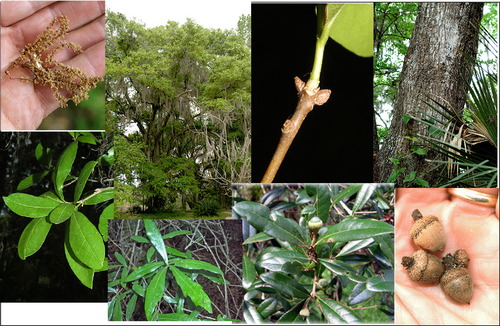
Quercus laurifolia
swamp laurel oak
Fagaceae
RED OAK
Native range: VA, TX, FL, Coastal Plain
Habitat: Coastal/lowland areas.
Life span: longer lived, fast growing, gets big.
Persistence: tardily deciduous
Bark: sometimes buttressed
Leaves: simple, alternate, diamond shape (rhombic) with ripple along edge makes it looks like bacon, juvy leaves super ripple. Highly variable leaf shape. Dark green with axil hairs on underside (not as distinct as Q. nigra).
Acorn: saucer shaped cup.
Uses: Used for timber bc it's big and sturdy.
Tol: some flood, low drought low fire low salt low to mod shade
41
New cards
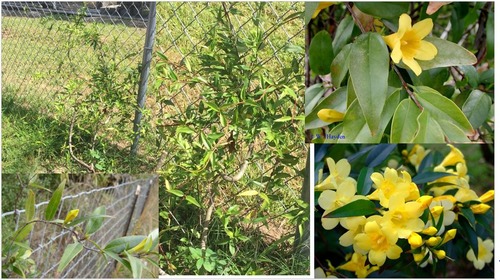
Gelsemium sempervirens
Carolina Jessamine
Loganiaceae
Native range: SE US
Habitat: well drained soils, pinewoods, hammocks
Size: not HUGE but can climb high.
~twining or trailing woody vine with no tendrils.
Persistence: evergreen
Leaf: PAIRED simple, opp, lanceolate-> ovate->elliptic shape, glabrous and dark green. Entire margin.
Flowers: yellow tubular
Uses: mostly toxic but can be used medicinally, attractive to pollinators.
Tol: mod shade, low everything else, maybe mod drought
42
New cards
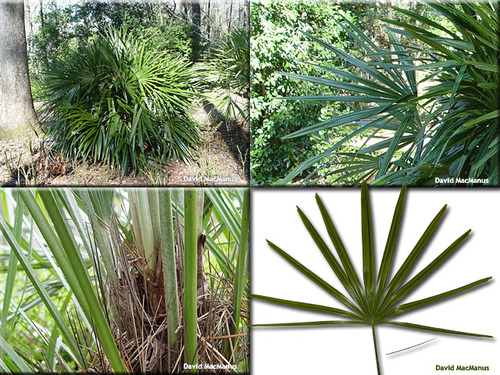
Rhapidophyllum hystrix
needle palm
Arecaceae
Native range: native to FL, GA, Carolinas, Mississippi
Habitat: river bluffs, flood plains, ravine slopes. Hydric -> mesic sites. Often found in sandy soils.
Persistence: Evergreen
~Slow growing monocot.
Height: typically 1 ft, can grow up to 5ft.
No trunk. Base composed of old leaves and fibers.
Leaves: Simple palmate. 16-20 segments per leaf. 3-4 teeth on apex of each segment, giving it a jagged appearance. Base is truncate. Parallel venation. Upper surface is dark green and glabrous. Lower surface is silvery green and pubescent. Petiole is smooth and unarmed.
Fruit: brown to reddish purple
Used in horticulture.
Tol: low drought, some cold
43
New cards
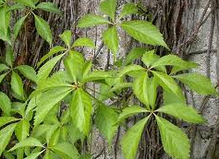
Parthenocissus quinquefolia
Virginia creeper
Vitaceae
Native range: Most of E NA E of Rockies
Woody, climbing or trailing vine
Persistence: Deciduous, turns red in fall.
Stem: thin bark when young, thicker browner when mature w/ aerial rootlets
Leaves: Palmately compound. 5 leaflets. Vary in size. Alternate. Serrate to dentate margins.
Flower: reddish
Fruit: Berry, purple in color
Key: palmately compound leaves with alternate arrangement maybe trailing maybe climbing. Tendrils!
Tol: high drought tolerance, low flood tolerance, cannot tolerate fires
Uses: No edible fruits (for humans)
44
New cards
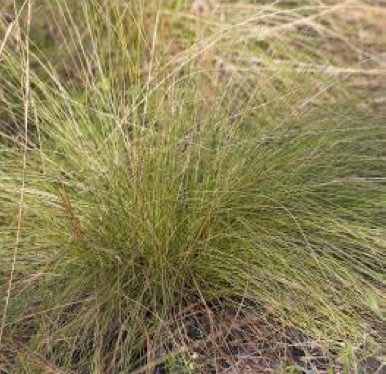
Aristida beyrichiana
common: wiregrass
family: Poaceae
Range: NC, FL, MS, Coastal Plain
Habitat: Sandhills, well-drained sites
Persistence: Perennial
Leaves: simple, linear, thin, wire-like
Seeds/fruit: spike-like seed-head with awns (seeds)
Tolerances: low shade and salt, high fire and drought, mod flood
Other: They typically grow tall and flop over which promotes fire.
45
New cards
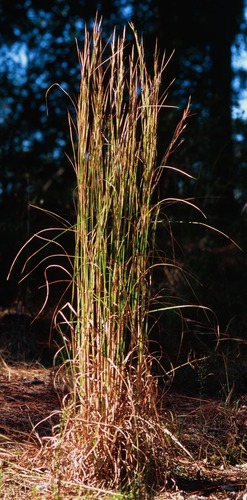
Andropogon sp.
common: broomsedge, bluestem
family: Poaceae
Range: native throughout SE US
Habitat: Xeric --> hydric
Persistence: perennial
Leaves: (monocot) simple, folded leaves
Seeds/Fruits/Flowers: Flowering raceme, branched, airborne seeds
Other: Low forage value, NOT a sedge (despite misleading common name), carries fire, burns hot, can fall over fire-line, not the greatest fuel. Easily reproduces.
46
New cards
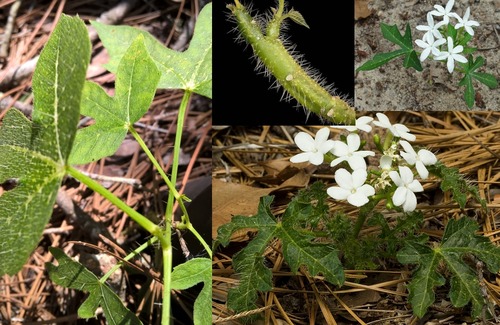
Cnidoscolus urens
Family: Euphorbiaceae
Common: stinging nettle
Range: Native
Habitat: Sandhill
Bark: Herbaceous
Persistence:
Perennial
Leaves: Simple & alternate, lobed, upper is dark green with stiff hairs
Other: If touched can cause a stinging sensation
Common: stinging nettle
Range: Native
Habitat: Sandhill
Bark: Herbaceous
Persistence:
Perennial
Leaves: Simple & alternate, lobed, upper is dark green with stiff hairs
Other: If touched can cause a stinging sensation
47
New cards
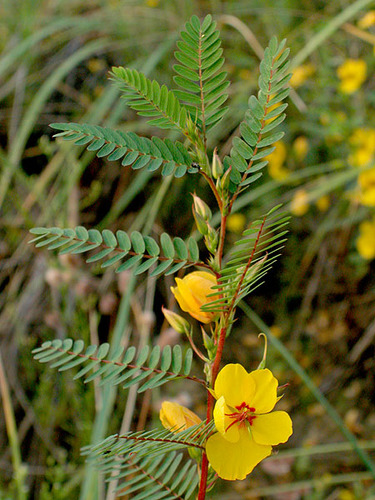
Chamaecrista fasciculata
common: partridge pea
family: Fabaceae
Range: Great Plains --> East
Habitat: Upland, drier sites, disturbed areas, well-drained
Bark: Herbaceous
Persistence: Annual
Leaves: Pinnately compound with 10-16 leaflets. Alternate, entire margin (of leaflets).
Flowers/fruit: yellow, showy flowers that produce legumes (flattened seedpods)
Tolerances: mod shade and salt, low flood, high drought
Other: pollinator plant, nitrogen fixer, browsed, used as a native ornamental and as erosion control. Doesn't sprout after fire, but seeds often remain in seedbank.
48
New cards
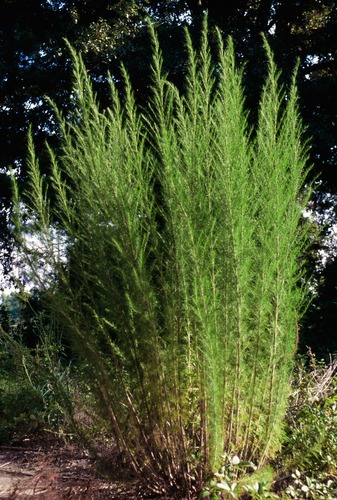
Eupatorium sp.
Family: Asteraceae
Common: Dog-fennel
Range: Native
Habitat: Sandhill
Bark: Herbaceous stem
Persistence: Perennial
Leaves: Simple & alternate
Other: When crushed strong fennel herb smell can be smelled, also is sticky after being crushed
Common: Dog-fennel
Range: Native
Habitat: Sandhill
Bark: Herbaceous stem
Persistence: Perennial
Leaves: Simple & alternate
Other: When crushed strong fennel herb smell can be smelled, also is sticky after being crushed
49
New cards
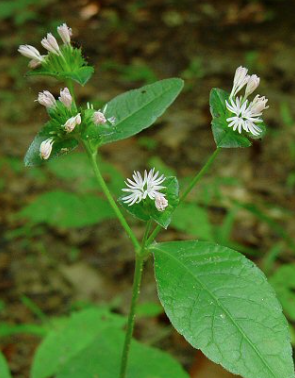
Elephantopus sp.
Family: Asteraceae
Common: elephant foot
Range: Native
Habitat: Sandhill
Bark: Herbaceous
Leaves: Simple & basal rosettes, often have pubescence
Common: elephant foot
Range: Native
Habitat: Sandhill
Bark: Herbaceous
Leaves: Simple & basal rosettes, often have pubescence
50
New cards
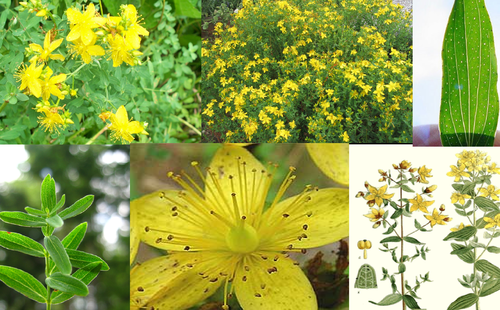
Hypericum sp.
Common: St. John's Wort
Angiosperm & Dicot
Family: Clusiaceae
Range: Throughout NA
Habitat: Xeric to mesic, well-drained, flatwoods, sandhills, scrubs
Bark: Can be woody or herbaceous.
Persistence: Perennial (mostly), some annuals. Some evergreen and some deciduous.
Leaves: Simple, opposite leaves. Sometimes leafy stipules at each node. Small, elliptic, entire.
Flowers: 4-5 petaled yellow flowers.
Fruits: Capsules.
Other: Don't want around livestock because it increases photosensitivity. Sunburned sheep. Used as an ornamental. Medicinal.
Tolerances: mod shade, prefers well-drained soils, mod fire tolerance.
51
New cards
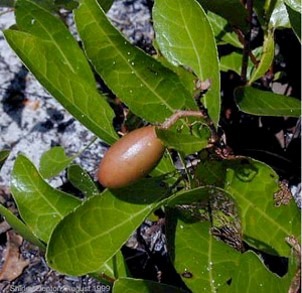
Licania michauxii
Family: Chrysobalanaceae
Common: gopher apple
Range:
Habitat:
Bark:
Persistence:
Leaves:
Other:
Common: gopher apple
Range:
Habitat:
Bark:
Persistence:
Leaves:
Other:
52
New cards
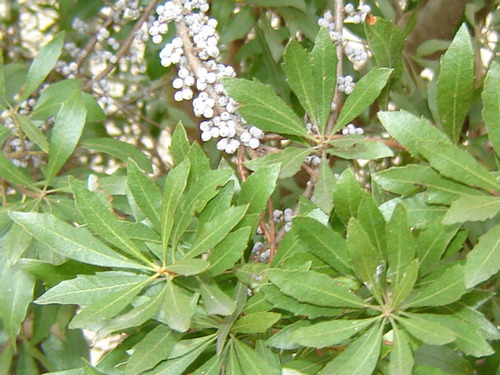
Morella cerifera
Common: wax myrtle
Family: Myricaceae
Family: Myricaceae
53
New cards
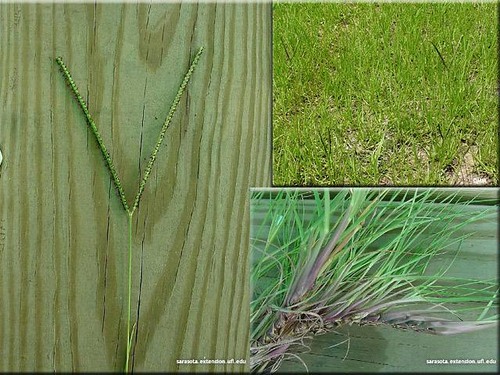
Paspalum notatum
Family: Poaceae
Common: beahiagrass
Range: Non-native
Habitat: Variety of places
Bark: Grass stem
Leaves: Simple & alternate at nodes
Other: purple color at base of plant
Common: beahiagrass
Range: Non-native
Habitat: Variety of places
Bark: Grass stem
Leaves: Simple & alternate at nodes
Other: purple color at base of plant
54
New cards
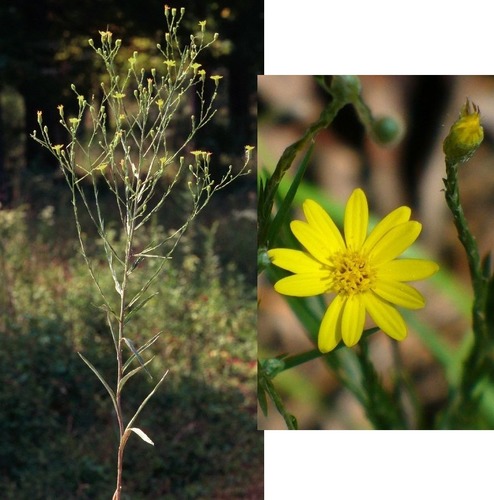
Pityopsis graminifolia
Common: silkgrass
Family: Asteraceae
Family: Asteraceae
55
New cards
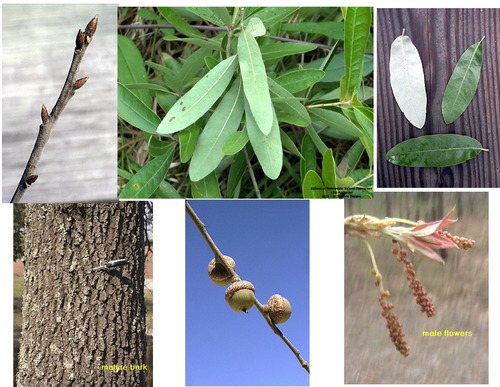
Quercus incana
Family: Fagaceae
Common: bluejack oak
Range: Native
Habitat: Mesic sites
Bark: Blocky
Persistence: Deciduous
Leaves: Simple & alternate, glabrous upper, glaucous (blueish grey) under, entire margins, elliptical-lanceolet shaped
Other: May or may not have mucronate tips
Common: bluejack oak
Range: Native
Habitat: Mesic sites
Bark: Blocky
Persistence: Deciduous
Leaves: Simple & alternate, glabrous upper, glaucous (blueish grey) under, entire margins, elliptical-lanceolet shaped
Other: May or may not have mucronate tips
56
New cards
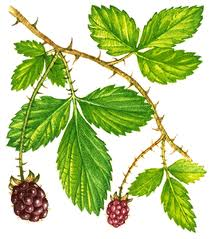
Rubus sp.
Family: Rosaceae
Common: blackberry
Range: Native
Habitat: Hydric to mesic sites
Bark: Herbaceous with thorns
Persistence: Perennial
Leaves: Palmately compound & alternate, serrated margins
Common: blackberry
Range: Native
Habitat: Hydric to mesic sites
Bark: Herbaceous with thorns
Persistence: Perennial
Leaves: Palmately compound & alternate, serrated margins
57
New cards
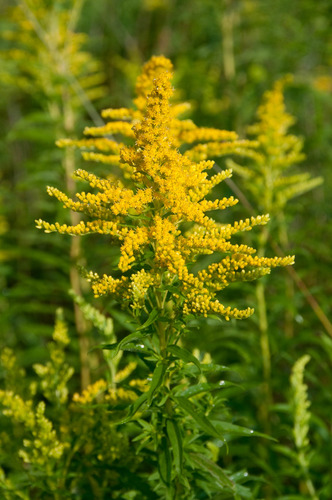
Solidago sp.
Common: goldenrod
Family: Asteraceae
Family: Asteraceae