L11- adrenal gland disorders
 Call Kai
 Learn
 Practice Test
 Spaced Repetition
 Match
 Flashcards
 Knowt Play
1/20

There's no tags or description
Looks like no tags are added yet.
21 Terms
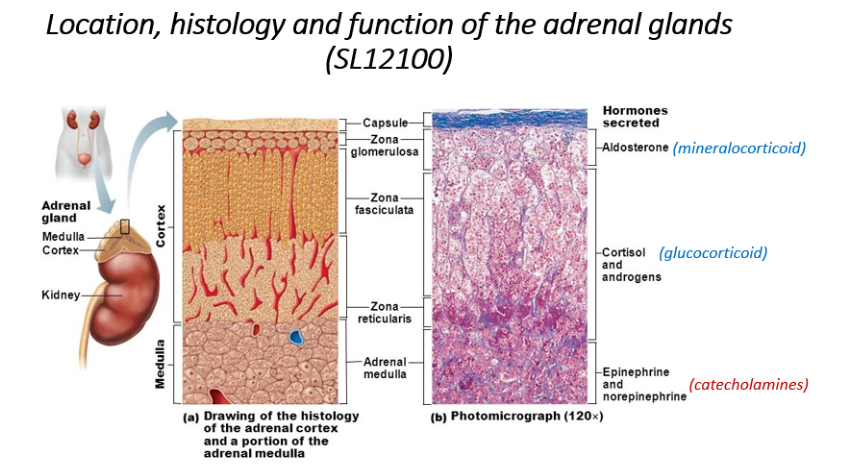
where are the adrenal glands located and what is their function
they are located on top of the kidneys and they produce many important hormones
what are the different specific enzyme that produces aldosterone
aldosterone sythase
what is the specific enzyme that finally produces cortisol
11-beta hydroxylases
what is the final enzyme responsible for the production of androgen
aromatase
describe aldersterone
its produced in the zona glomerulosa- adrenal cortex
its the bodies main mineralocorticoid
it promotes the reuptake of sodium and also water by the kidney
it regulates extracellular fluid volume and blood pressure
it does this by affecting the nuclear mineralcorticoid receptor ( MR) located in the kidney, colon and bladder
its synthesis and secretion is regulated by the renin- angiotensin system
what are the three things that trigger the renin angiotensin system

explain the regulation of aldersterone by the renin- angiotensisn system
when the system is tiggered renin is secreted
it converts the angiotensin gene which is produced by the liver into angiotensin one
this gets converted into angiotensin 2
this has a role of causing vasoconstriction in the blood vessels and also it stimulates the adrenal gland cortex specifically the zona gomerulosa to produce aldosterone
the aldosterone then travels to the kidneys where it increase the uptake of sodium ions hence water and increases the fluid volume
what is the clinical use of mineralocorticoids/ antagonists

what is conns syndrome/ primary hyperaldosteronism + how it can be treated
its a condition where the adrenal glands produce too much aldosterone

describe cortisol
its the bodies main glucocorticoid
the nuclear receptor it binds to ( GR/NR3C1) are found in a lot of different cells so it has a wide range of functions
it influences many cardiovscular,metabolic, immuologic and homeostatic functions
its main function is the regulation of stress
its synthesised and secreted by ACTH from the pituatory gland
what can increased and decreased levels of ACTH lead to

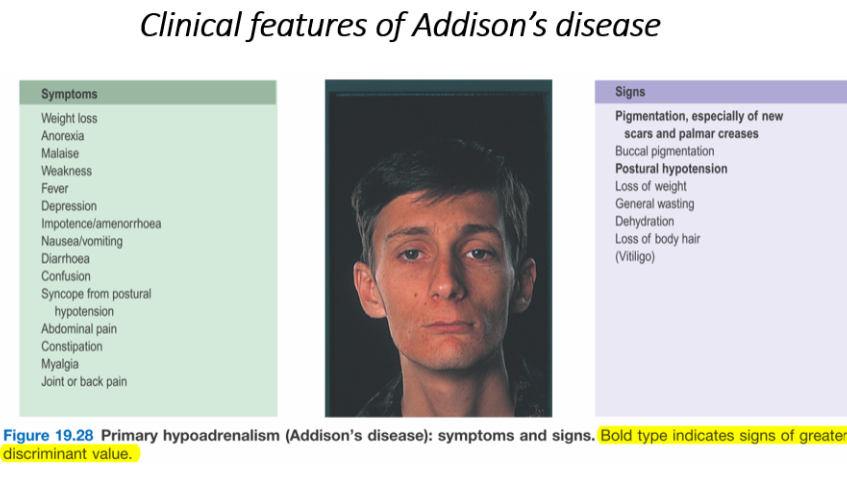
explain what happens during primary adrenal insufficiency-addison’s disease
a rare life threataning disease where the adrenal glands fail to produce enough cortisol and aldersterone
it is characterised by increased production of ACTH
its caused by autoimmine disease often
early signs include chronic worsening fatigue, genaralised weakness and loss of appetite
most of the patients with it have autoantibodies against their 21 hydroxylase enzyme which is responsible for the production of aldersterone and cortisol
it also causes hyperpigmentation of the skin
explain what happens during secodnary adrenal insufficiency
there is adrenal hypofunction due to impaired ACTH relases
this is due to long term corticoisteroid medication for non-endocrine relase diseases- so typically patients with chronic inflammatory dieases like asthma, rheumatoid arthiritis
the use of these drugs can often inhibit the hypothalamus and the pituatory gland from releasing ACTH so these drugs need gradual withdrawal
it reduced the natural cortisol in those patients
thr adrenal gland isnt producing enough cortisol as a result
less common causes include pituatory tumors and infections
what is the acute management for adrenal insufficiency
urgent treatment is required to correct:
hypotension
hyperkalemia- too much potassium
hypoglycaemia
dehydration
what is the long term management for hypoadrenalism
replacement therapy with synthetic glucocorticoid and mineralocorticoid
describe adrenal insufficiency in childhood

what is hypercortisolism ( crushing syndrome )

what is latrogenic cushings syndrome
its a condition caused by long-term or high dose of glucocorticoid medication e.g prednisone prescribed for inflammatory,autoimmune or allergic reactions
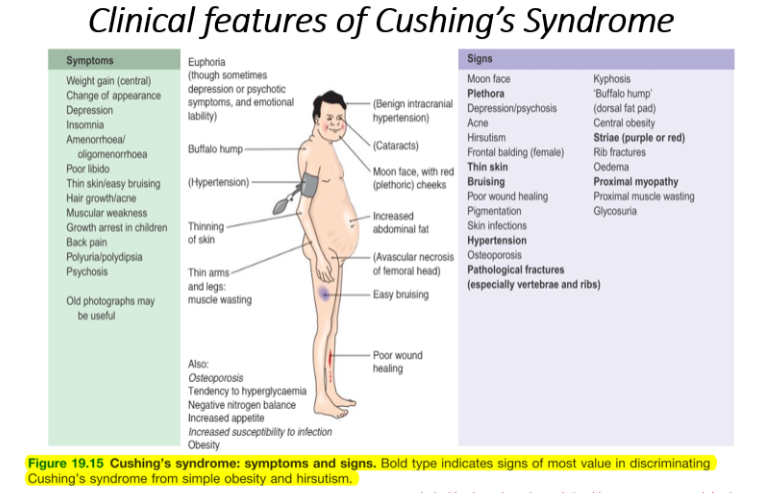
what are the signs and symptoms for cushings syndrome
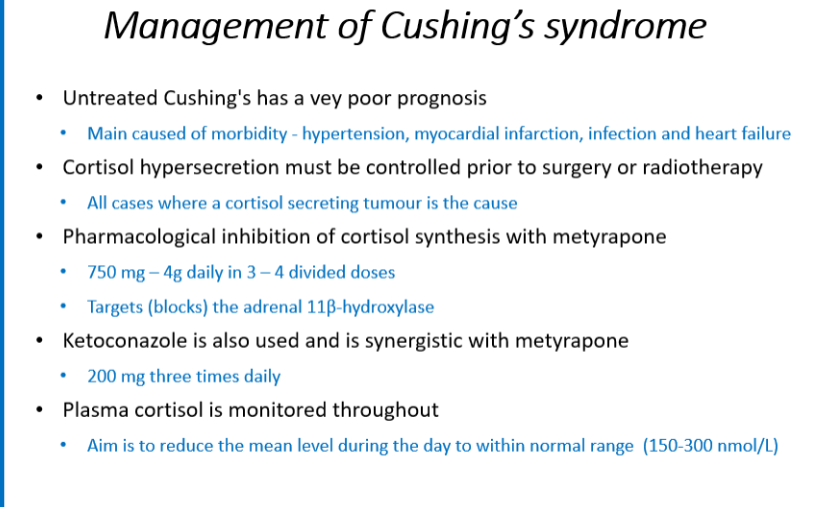
describe the management for cushings disease