Anatomy Unit One Review
 Call Kai
 Learn
 Practice Test
 Spaced Repetition
 Match
 Flashcards
 Knowt Play
1/168

There's no tags or description
Looks like no tags are added yet.
169 Terms

1
Otic
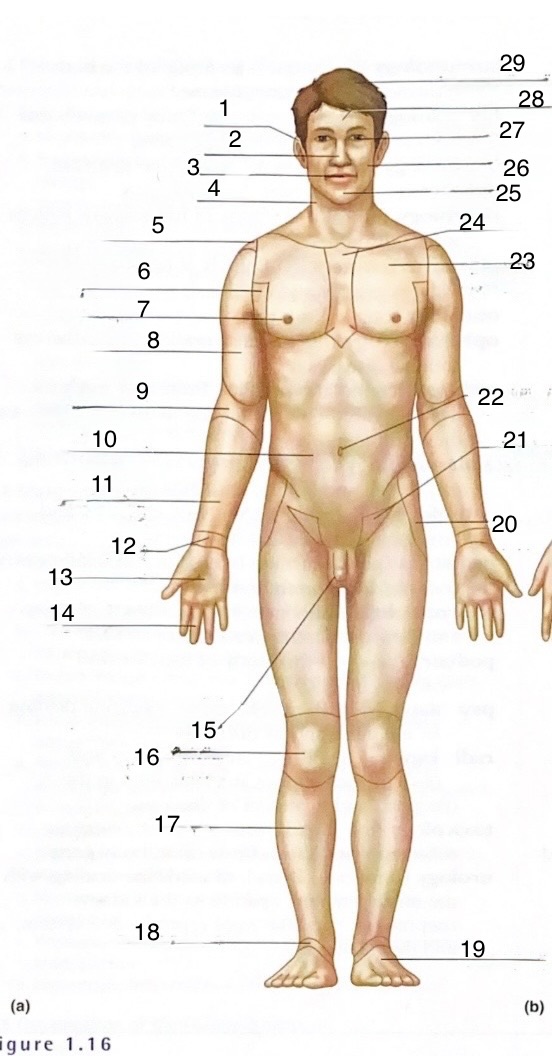

2
Nasal

3
Oral

4
Cervical

5
Acromial

6
Axillary

7
Mammary

8
Brachial

9
Antecubital

10
Abdominal

11
Antebrachial

12
Carpal

13
Palmar

14
Digital

15
Genital

16
Patellar

17
Crural

18
Tarsal

19
Pedal

20
Coxal

21
Inguinal

22
Umbilical

23
Pectoral

24
Sternal

25
Mental

26
Buccal

27
Orbital

28
Frontal

29
Cephalic

30
Occipital

31
Acromial

32
Vertebral

33
Brachial

34
Dorsum

35
Cubital

36
Lumbar

37
Sacral

38
Gluteal

39
Perineal

40
Femoral

41
Popliteal

42
Crural

43
Plantar

1
Cranial Cavity

2
Dorsal Body Cavity

3
Vertebral Cavity

4
Thoracic Cavity

5
Diaphragm

6
Abdominal Cavity

7
Pelvic Cavity

8
Superior Mediastinum

9
Pleural Cavity

10
Pericardial Cavity Within the Mediastinum

11
Abdominal Pelvic Cavity

12
Vertebral Cavity

13
Cranial Cavity

14
Ventral body Cavity (both thoracic and abdominal pelvic cavities)
What languages form the basis of the language of Anatomy and Physiology
Latin and Greek
The branch of science that deals with the structure of body parts.
Anatomy
The branch of science that studies how body parts function
Physiology
Does knowledge of physiology continue to develop
Yes
Does knowledge of anatomy continue to change
Yes
9 Biological Structures (least complex-most complex)
Atoms, Molecules, Macromolecules, Organelles, Cells, Tissues, Organs, Organ Systems, Organism
Most abundant chemical compound in the human body (by mass)
Water
6 characteristics of life that humans share with other organisms
organization, responsiveness, development, metabolism, growth, reproduction
Homeostasis Means
Maintenance of a stable Internal Environment
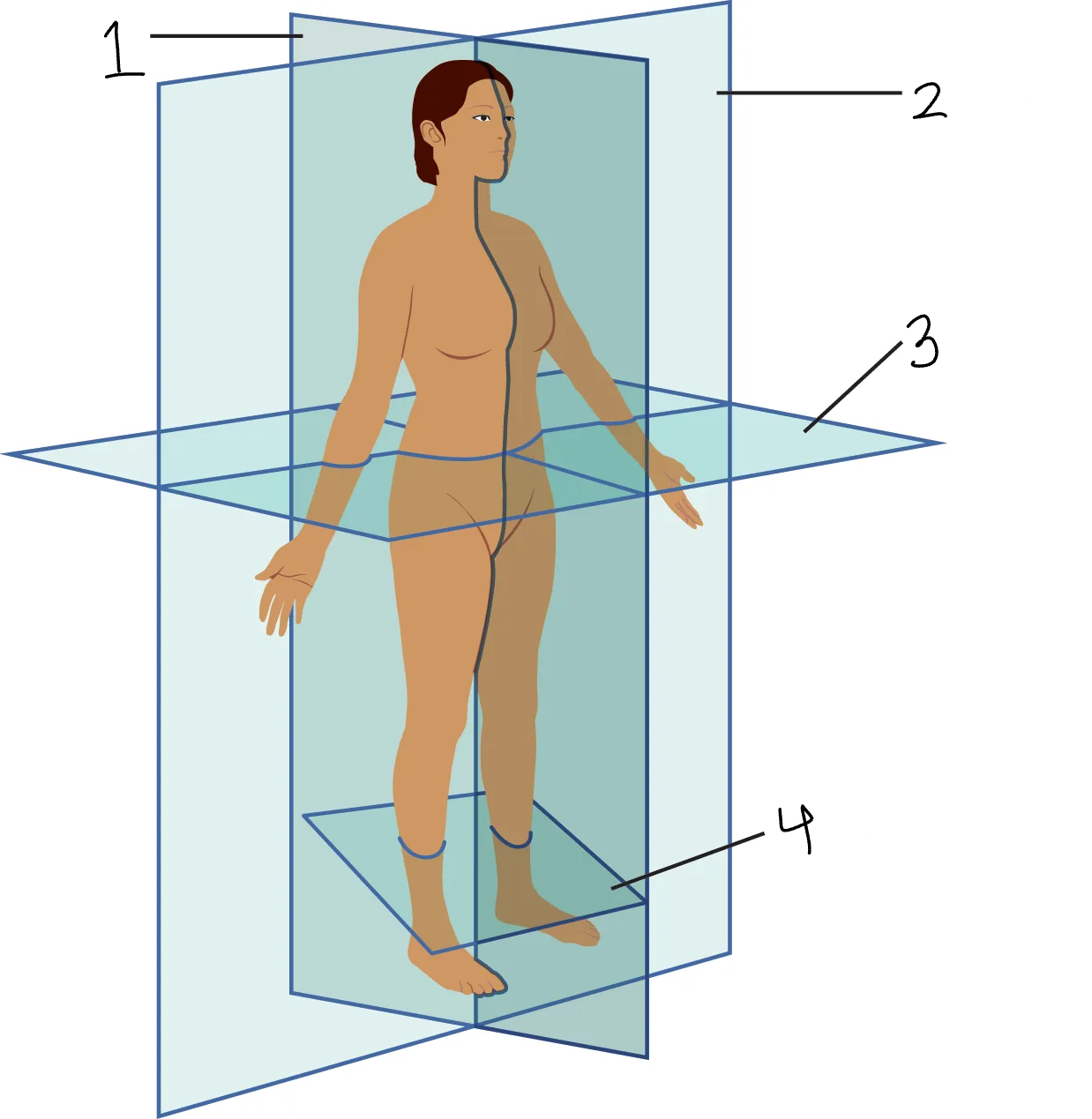
1
Sagittal Plane-more specifically midsagital plane because it equally divides the body into right and left halves.
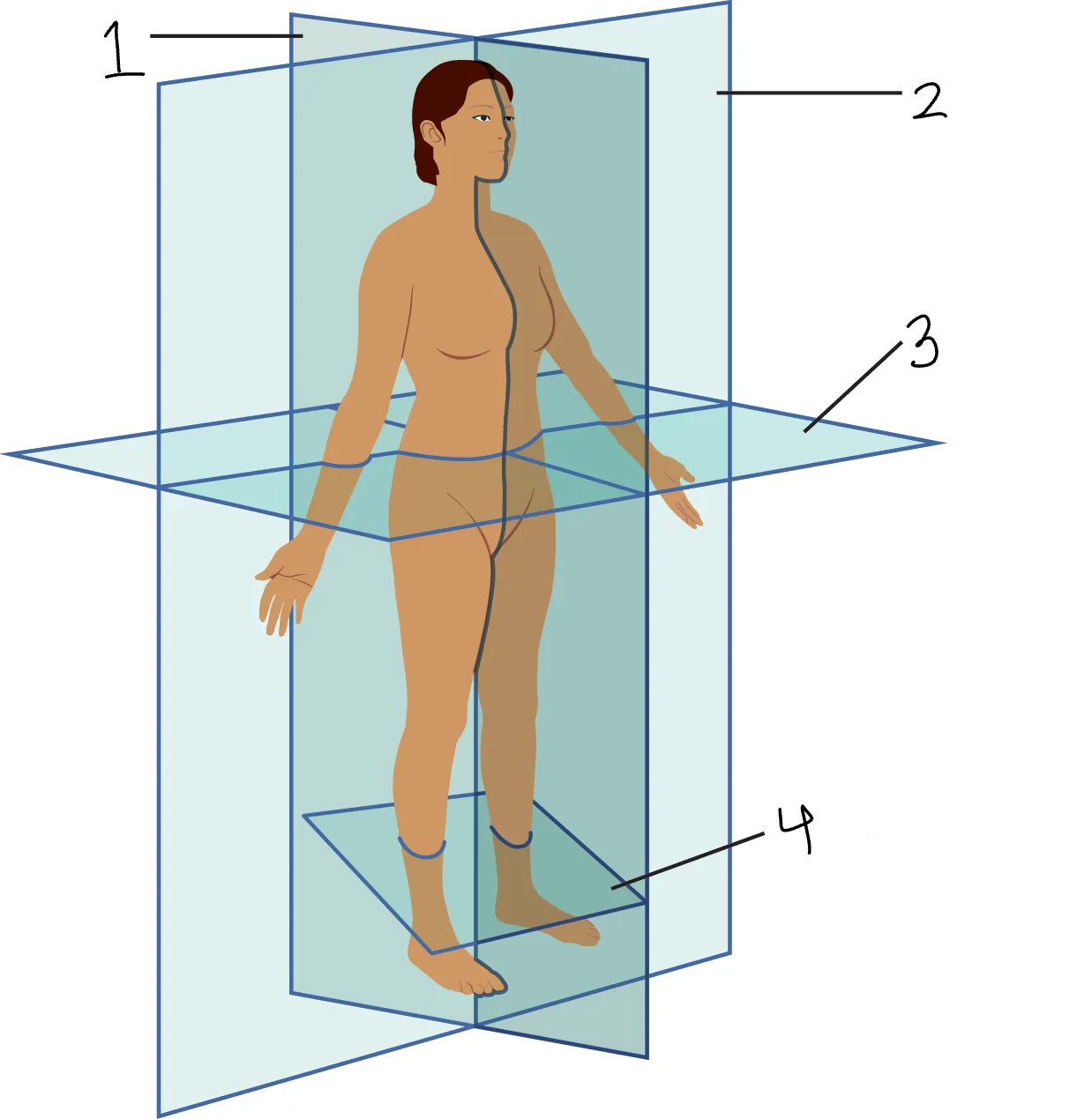
2
Frontal (coronal) plane- divides the body or an organ into anterior and posterior portions.
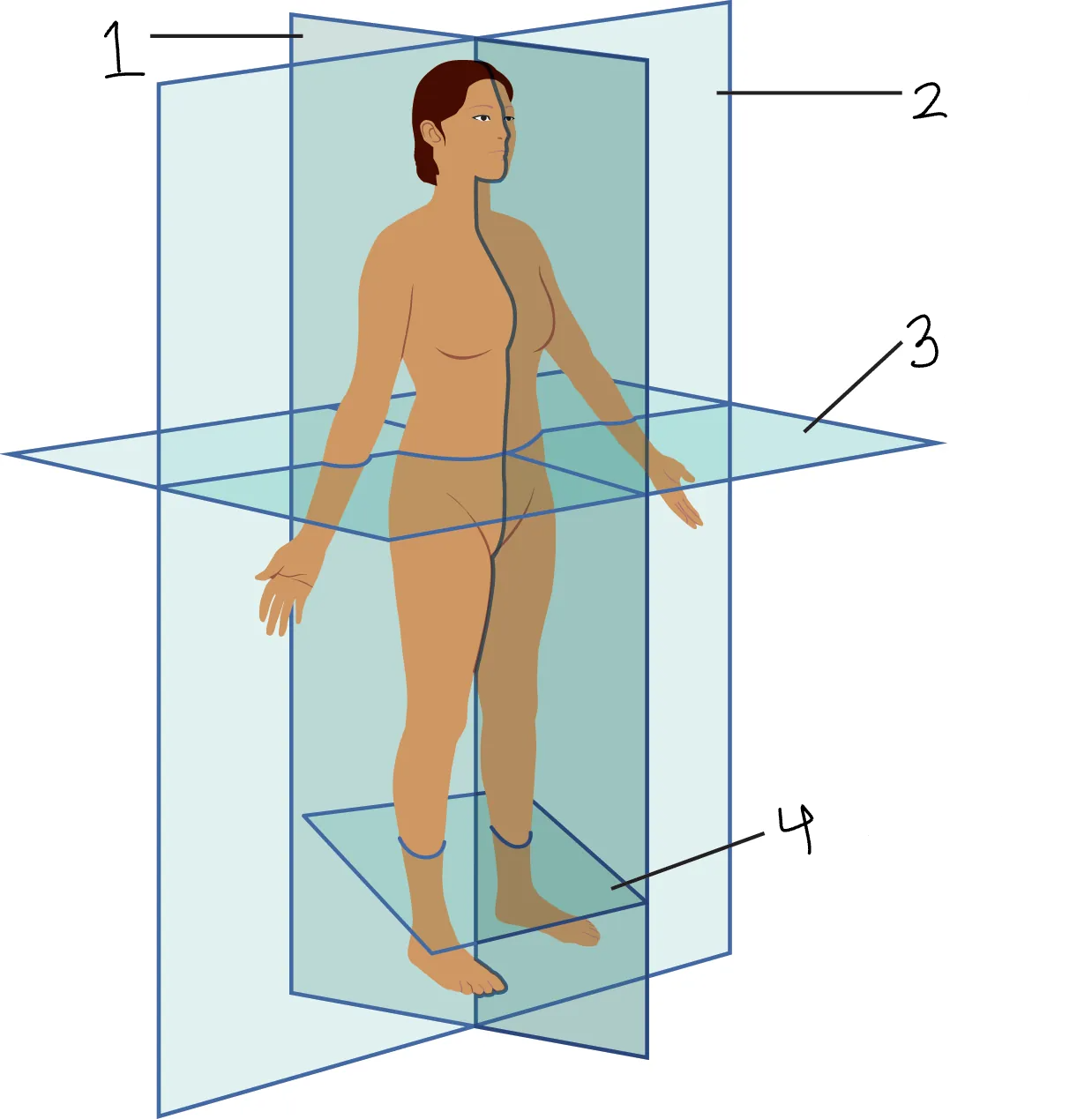
3
Transverse Plane- divides the body or organ horizontally into upper and lower parts (create images called cross sections)
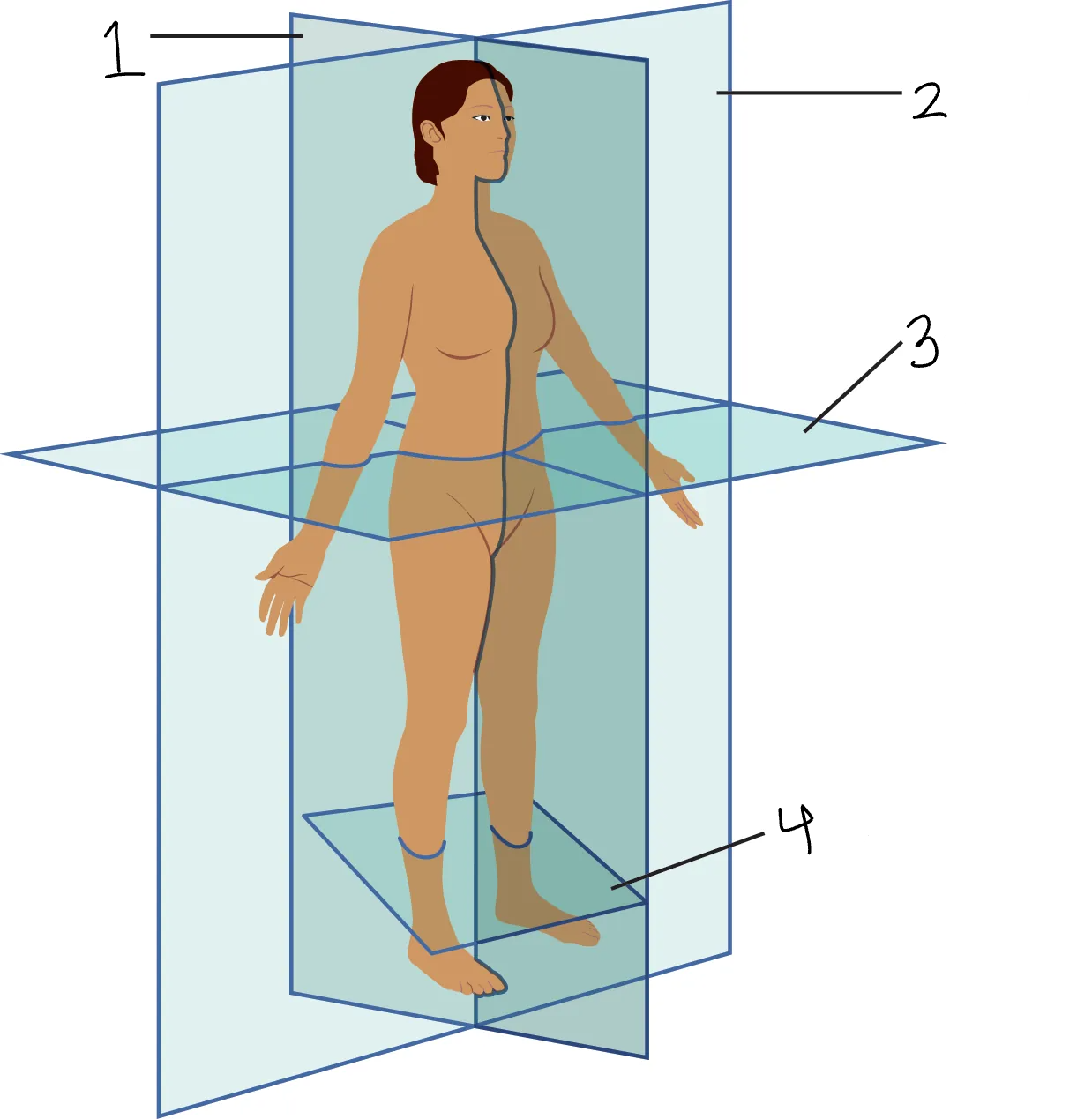
4
Oblique Plane- intersects the body at an angle and is not parallel or perpendicular to any of the other three commonly used planes.
Parasagittal plane
Divides the body into unequal right and left sides.
A point that tells what a particular body internal value should be
set point
Provides information about specific conditions in the internal body environment
Receptors
Cause responses that alter conditions in the internal body environment
Effectors
Homeostatic Mechanism for the body’s set point for body temperature
A negative feedback loop coordinated by the hypothalamus in the brain.
The arms and legs are called the
Appendicular porition
The portion of them body that contains the head, neck, and trunk
axial portion
Cranial Cavity Main Structure
Brain
Vertebral Cavity Main Structure
Spinal Cord
Another Term for body organs
Viscera
Three organs in the thoracic cavity
heart, lungs, trachea
Five organs in the abdominalpelvic cavity
Colon/large intestine, small intestine, liver, esophagus, stomach
The inferior boundary of the thoracic system
diaphragm
Characteristics of the anatomical position
stands upright, feet at shoulder width and parallel, toes forward, upper limbs held out to each side, toes forward, body erect
Purpose of the anatomical position
Provides a common frame of reference to avoid confusion
Anterior/Ventral
Describes the front or direction toward the front of the body. The toes are anterior to the foot.
Posterior/Dorsal
Describes the back or direction toward the back of the body. The popliteus is posterior to the patella.
Superior
describes a position above or higher than another part of the body proper. The orbits are superior to the oris.
Cranial/Cephlo
Means toward the head or skull
Caudal
Refers to the tail or toward the lower part of the body
Pedal
Towards the feet.
Inferior
describes a position below or lower than another part of the body proper; near or toward the tail (in humans, the coccyx, or lowest part of the spinal column). The pelvis is inferior to the abdomen.
Lateral
describes the side or direction toward the side of the body. The thumb (pollex) is lateral to the digits.
Medial
describes the middle or direction toward the middle of the body. The hallux is the medial toe.
Proximal
describes a position in a limb that is nearer to the point of attachment or the trunk of the body. The brachium is proximal to the antebrachium.
Distal
describes a position in a limb that is farther from the point of attachment or the trunk of the body. The crus is distal to the femur.
Superficial
describes a position closer to the surface of the body. The skin is superficial to the bones.
Deep
describes a position farther from the surface of the body. The brain is deep to the skull.
Top right abdominal region (patient perspective)
Right hypochondriac region
Top middle abdominal region (patient perspective)
Epigastric Region