metabolism and nutrition
 Call Kai
 Learn
 Practice Test
 Spaced Repetition
 Match
 Flashcards
 Knowt Play
1/72

There's no tags or description
Looks like no tags are added yet.
73 Terms
metabolism
all of the chemical reactions in the body
catabolic
reactions what break down larger molecules into smaller ones, decomposition
anabolic
reactions that build larger molecules from smaller ones, synthesis
metabolism results from
the balance of anabolic and catabolic reactions
ATP
(adenosine triphosphate) main energy source that cells use for most of their work, couples anabolic and catabolic reactions
metabolic reaction process
1. simple molecules (glucose, amino acids, gycerol, and fatty acids)
2. anabolic reactions transfer energy from ATP to complex molecules -> heat is released
3. complex molecules such as glycogen, proteins, and triglycerides
4. catabolic reactions transfer energy from complex molecules to ATP -> heat is released
energy transfer ReDox reactions
when a substance is oxidized, the liberated hydrogen atoms are transferred by 2 coenzymes to another compound
NAD and FAD
- coenzymes that carry the hydrogen atoms (electrons) removed when a substance is oxidized
- NAD+ becomes NADH + H+ when it is reduced, and FAD becomes FADH2. Both reactions are reversible
- NADH and FADH2 deliver those hydrogens and electrons to the electron transport chain, which is how they connect to ATP production

carbohydrate metabolism is
mostly glucose metabolism
cell requires glucose for
- ATP production
- amino acid synthesis
- glycogen synthesis
- triglyceride synthesis
in order for glucose to be used by a cell
it must pass through the plasma membrane via facilitated diffusion
facilitated diffusion
movement of specific molecules across cell membranes through protein channels
GLUT (glucose transporter) molecules
perform facilitated diffusion of glucose across cell membranes
insulin
increases GLUT4 transporter insertion into plasma membrane before increasing rate of facilitated diffusion
carbohydrate metabolism
changes glucose to glycogen, breaks glycogen down into glucose
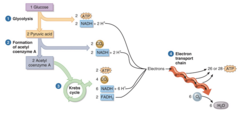
pyruvic acid
a yellowish organic acid that occurs as an intermediate in many metabolic processes, especially glycolysis.
what happens to pyruvic acid depends on
oxygen availablility
if oxygen is scarce (anaerobic conditions)
pyruvic acid is reduced by the addition of 2 hydrogen atoms to form lactic acid
if oxygen is plentiful (aerobic conditions)
most cells convert pyruvic acid to acetyl coenzyme A
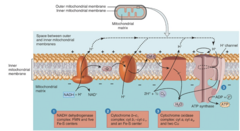
inside inner mitochondrial membrane
the carriers are clustered into three complexes, each acting as a proton pump that expels H+
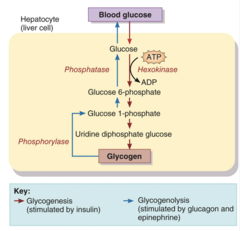
glycogen
stored form of glucose
glycogenesis
the process that stores glucose

glycogenolysis
when ATP is needed for body activities, stored glycogen is broken down
gluconeogenesis
glucose may form from proteins as well as the glycerol portion of triglycerides, lactic acid, and certain amino acids
what stimulates gluconeogenesis
cortisol, glucagon, thyroid hormones
lipid metabolism
- do not dissolve in water because they are nonpolar and hydrophobic
- blood plasma is over 90% water so lipids must be transported combined with proteins produced by the liver and intestines
lipoproteins
lipids combined with proteins
chylomicrons
transports dietary lipids to adipose tissue
VLDL very low density lipids
transports triglycerides from hepatocytes to adipocytes
LDLs low density lipids
transports 75% of total cholesterol in blood to deliver to cells
HDLs high density lipids
removes excess cholesterol from body cells and the blood and transports it to the liver for elimination
to produce ATP
lipids must be oxidized
if the body does not need lipids at any given time
- they are stored in adipose tissue
- or used as structure molecules to synthesize other essential substances
adipose tissue
used to remove triglycerides from chylomicrons and VLDLs
VLDLs constitutes
98% of all body energy reserves
lipid catabolism (lipolysis)
the process of splitting triglycerides into fatty acids and glycerol
lipid anabolism (lipogenesis)
- process of synthesizing lipids from glucose or amino acids
- occurs when individuals consume more calories than needed
digested proteins
broken down into amino acids which are not stored, but oxidized to produce new ATP or synthesize new proteins
many proteins function as enzymes, involved in
transportation, serving as antibodies, clotting blood, being hormones or helping muscle fibers
protein catabolism
(breaking down) produces amino acids which are converted to other amino acids, fatty acids, ketone bodies, or glucose
cells oxidize amino acids to
generate ATP via Krebs
protein anabolism
creates new proteins by bonding together amino acids on ribosomes
fasting
going without food for a period of time
starvation
going without food or inadequate food intake for weeks or months
most dramatic metabolic change
a increase in production of ketone bodies as catabolism of fatty acids increase
ketone bodies
may be used as energy for all cells
rate of metabolic reaction controls
the amount of heat produced by the body
rate of heat loss must equal
the overall rate at which metabolic reactions using energy
basal metabolic rate
the body's resting rate of energy expenditure
factors that affect metabolic rate (heat production) include:
- excercise
- hormones like leptin
- nervous system hypothalamus
- body temperature
- ingestion of food like neuropeptide Y and melanocortin
- age
- gender, climate, sleeping, malnutrition
energy intake is entirely dependent on
amount of food consumed
total energy expenditure is based on:
- basal metabolic rate 60%
- physical activity 30-35%
- food induced thermogenesis 5-10%
nutrient vs energy content
- carbohydrate: 4 kcal/g
- protein: 4 kcal/g
- fat: 9 kcal/g
- alcohol: 7 kcal/g
counting calories formula
(g carb × 4) + (g protein × 4) + (g fat × 9) + (g alcohol × 7)
nutrition
chemicals in food that cells use for growth, maintenance, and repair
nutrients
- water
- carbohydrates 50-60%
- lipids
calories burned in an activity
kcal/hr × hours
activity needed to burn off a food formula
food kcal ÷ activity kcal/hr = hours
intake greater than expenditure
energy stored, weight gain
intake less than expenditure
stores used, weight loss
intake equal
stable weight
6 nutrient categories
- water
- carbohydrates
- lipids
- proteins
- minerals
- vitamins
macro (large amounts)
water, carbohydrates, lipids, proteins
micro (small amounts)
minerals and vitamins
inorganic minerals
calcium, phosphorus, potassium, sodium, sulfur, chloride, magnesium
organic minerals
A, B complex, B12, C, D, E, K
reading labels and tables
convert grams to kcal for each nutrient, add them for total energy, then find each nutrient's share
anorexia nervosa
chronic self-induced weight loss
bulimia nervosa
overeating followed by purging
obesity
body weight more than 20% above a desirable standard, from excess adipose tissue
fever
hypothalamic thermostat (set point) is reset to a higher temperature
prolonged inadequate intake
glycogen runs out; fat and ketone use rise; protein breakdown affects muscle, immunity, and repair
insulin problems
glucose stays in blood