astonomy midterm 1
 Call Kai
 Learn
 Practice Test
 Spaced Repetition
 Match
 Flashcards
 Knowt Play
1/147

There's no tags or description
Looks like no tags are added yet.
148 Terms
cosmic address
our physical place in the universe
star
a large, glowing ball of gas that generates heat and light through nuclear fusion
planet
a moderately large object which orbits a star; it shines by reflected light. May be rocky, icy, or gaseous in composition.
solar system planet
an object that orbits the sun and is large enough to have become round due to the force of its own gravity; also dominates the neighborhood around its orbit.
moon (satelite)
an object that orbits a planet
Ganymede
a moon that orbits jupiter
asteroid
a relatively small and rocky object that orbits a star
comet
a relatively small and icy object that orbits a star
solar system
a star and all the material which orbits it, including its planets and moons
nebula
an interstellar cloud of gas and/or dust
galaxy
a great island of stars in space, all held together by gravity and orbiting a common center
universe
the sum total of all matter and energy; that is, everything within and between all galaxies
atom
microscopic “building blocks” of all chemical elements
cosmic origin
within a few years of the big bang, gravity caused localized concentrations of matter to collapse into galaxies.
speed of light
light travels at a finite speed of 300,000 km/s
how we see objects
the farther away we look in distance, the further back we look in time
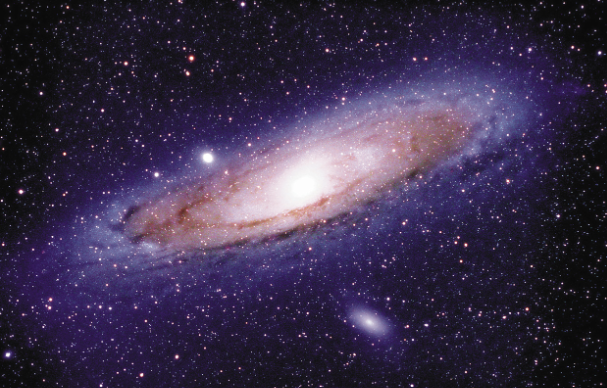
Andromeda galaxy
about 2 ½ million years ago
light year
the distance a light can travel in one year
10 trillion km
distance of a light year
13.8 billion years
how old is the earth? (how many years since the big bang?)
where we are in the universe
planet earth, solar system, milky way galaxy, local group, local supercluster, universe
milky way
the name of our galaxy, shaped like a disc
local group
the milky way is part of a group of 40 galaxies called…
local supercluster
contains the local group
superclusters
appear as elongated strandswhere different soap bubbles come together
soap bubbles
3-dimensional distribution of luminous matter has this appearance
100 kms
the thickness of the layer of air we look through wen we look at the stars
2000+
the amount of stars we can see, as well as the milky way
constellation
a region of the sky, often recognizable by a pattern or grouping of stars.
astrisms
recognizable patterns or grouping of stars in the sky
the sun
which of the following two stars are brighter? Alpha Centauri or The Sun
apparent brightness
depends on its intrinsic brightness luminosity and its distance from us
star names
most are originally derived from ancient Arabic, Greek, or Latin
brightest stars
stars that may actually be quite far away from each other
the celestial sphere
ancient astronomers thought the sky was this “thing” to which all the stars were attached. It describes the location of starts in the sky (not distance)
ecliptic
the sun’s apparent path through the celestial sphere
angular size
the measure of how large an object appears from a specific point of view.
angular distance
the measure of the angle between two lines of sight, vectors, or points as seen from a central reference point.
arcminute
1º = 60’ (?)
arcsecond
1’ = 60” (?)
the poles
if you are standing here, nothing rises or sets
the equator
if you are standing here, everything rises and sets 90º to the horizon
west to east
the direction in which the earth rotates
east to west
the direction the stars seem to be rotating in
polaris
a star you see when facing north (the north star)
southern cross
a constellation you see when facing south
circumpolar
stars near the north celestial pole that never set
latitude
position north or south of equator
longitude
position east or west of the prime meridian
variation of the sky
the night sky varies with latitude but not longitude. This is because your position on earth determines which constellations are “hidden” below the horizon
latitude 50ºN
if the North Star (Polaris) is 50º above your horizon, due north, where are you?
brian cox clockwork sky

annual motion
as the earth orbits the sun, the sun appears to move eastward with respect to the stars. The sun circles the celestial sphere once every year.
equinox
where the ecliptic intersects the celestial equator
solstice
where the ecliptic is farthest from the celestial equator
zodiac
the constellations which lie among the ecliptic through which the sun passes through.
12
the number of zodiac constellations
23.5
the degree of which the ecliptic is inclined at.
revolution
the orbit of the earth around the sun
seasons
depend on the revolution and the tilt of the earth’s axis which changes the directness of sunlight
summer solstice
sunlight falls more directly on the northern hemisphere, making the sun’s path longer and higher throughout the day
winter solstice
sunlight falls more directly on the southern hemisphere, making the sun’s path shorter
spring equinox
the sun shines equally on both hemispheres, following winter
fall equinox
the sun shines equally on both hemispheres, following summer
orientation
the tilt of the earths rotation axis relative to the orbit remains constant. This is the only change relative to the sun, causing seasons
june 21
the start of summer solstice; the day when the northern hemisphere is maximally tilted towards the sun.
december 21
the start of winter solstice; the day when the southern hemisphere is maximally tilted towards the sun.
march 21
the start of spring (vernal) equinox; marks the transition from southern to northern hemisphere tilting towards the sun
september 22
the start of fall (autumnal) equinox; marks the transition from the northern to southern hemisphere tilting towards the sun
tropic of cancer
the zodiac associated with the start of the summer solstice
tropic of capricorn
the zodiac associated with the start of the winter solstice
high noon
the exact moment the sun crosses your local celestial meridian and reaches its highest point in the sky for the day
highest
in the summer solstice, the sun travels its ___ path
lowest
in the winter solstice, the sun travels its ___ path
due east and west
during the equinoxes, the sun rises and sets _____
2
the ecliptic crosses the celestial equator how many times in a year?
3%
what percentage is used to represent the small variation of earth-sun distance that affects the seasons
mars and pluto
which two planets have a greater distance variation, thus affecting the extremity of their seasons
circle of animals
the meaning of the name “zodiac”
venus and mercury
which two planets are in earth’s orbit, meaning we can see them along the ecliptic.
venus
the brighter of the two planets in earth’s orbit
mercury
the planet near the horizon in earth’s orbit (harder to see)
evening star
any planet in sunset sky
morning star
any planet in the dawn sky
venus
planet that seasonally switches from morning to evening star
26,000 years
after how many years the earth’s axis changes
pices
the zodiac associated with the spring equinox
libra
the zodiac associated with the fall equinox
the moon
the object closest to earth (380,000km), orbits it once every 27.32 days
moon phases
caused by the moon reflecting light from the sun, some parts light, and some dark.
new moon
occurs when the moon lies in the same direction as the sun (sun is directly behind the moon on the opposite side from the earth)
full moon
occurs when the moon is opposite the sun (the earth is in between the moon and the sun)
synchronous rotation
the moon rotates exactly once with each orbit, thus making only one face visible from earth
29.5 days
the length of the moon cycle (in days)
eclipses
caused when the earth and moon pass through the other’s shadow
2
the number of eclipse seasons we have each year
lunar eclipse
happens during a full moon (earth in between sun and moon), can be partial or total
solar eclipse
happens during a new moon (moon is between earth and sun), can be partial, total, or annular
400x
the sun is ___ larger than our moon
total lunar eclipse
an eclipse when the orbit of the moon carries through the umbra of earth’s shadow