MICROM 410 Exam 2
 Call Kai
 Learn
 Practice Test
 Spaced Repetition
 Match
 Flashcards
 Knowt Play
1/123

There's no tags or description
Looks like no tags are added yet.
124 Terms
Exergonic/Catabolic Processes:
Energy is being released
Endergonic/Anabolic Processes:
Energy is being put in
Redox Reactions
Oxidation: Loss of Electrons. electron donor is oxidized
Reduction: Gain of electrons, electron acceptor is reduced
Energy output is dictated by electronegativity of atoms in a molecule
Central Carbon Pathways
Glycolysis
Pentose Phosphate Pathway (PPP)
TCA Cycle
Central Metabolites
Glycolysis
Glucose → 2 pyruvate
Consumes 2 ATP
Produces 4 ATP and 2 NADH
2 NET ATP

Pentose Phosphate Pathway
Central pathway supplying reducing power and biosynthetic precursors
TCA Cycle
Oxidizes acetyl-CoA
generates reduced electron carriers and precursor metabolites
Central Metabolites
Central pathways provide precursor molecules needed for biosynthesis, including phototrophs and lithotrophs
What’s necessary for growth?
Catabolism and Anabolism
Energy source: electron donors and acceptors
Catalysts: enzymes
Electron carriers for electron transfer
Biochemical energy: ATP
Electrochemical energy: Proton motive force
Precursor Molecules: Building blocks of biological polymers
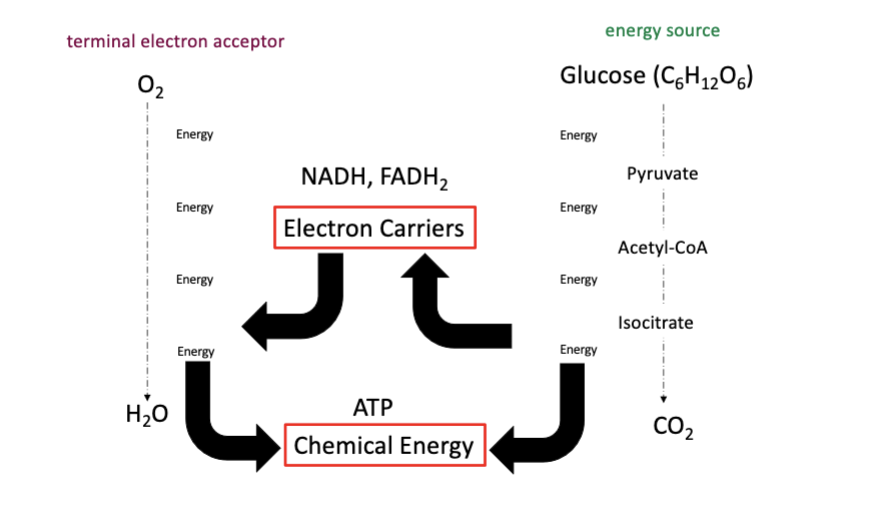
Biological Energy Production
Oxidation of glucose happens in a distinct process from reduction of oxygen
Do not use combustion, an uncontrolled process that releases heat as energy
Energy of chemical transformations is stored in high energy molecules
ATP
Adenosine Triphosphate (ATP) contains adenine, ribose, and three phosphates
Ancient component of cells, found in all living organisms
Enzymes
Catalysts that speed up biological reactions
Highly specific
Bind to substrate and speed up reaction rate
Chemoorganotrophy
energy produced by breaking down organic chemicals (ex. glucose)
Glycolysis, Pentose Phosphate Pathway, TCA Cycle
Diverse array of organic biochemicals can be used as energy sources
Ex. humans
Chemolithotrophy
energy produced by oxidizing inorganic compounds (ex. H2, H2S, etc)
Glycolysis, Pentose Phosphate Pathway, TCA Cycle → use in reverse
Ex. chlorobium ferroxidans
Phototrophy
energy produced by harvesting light
Glycolysis, Pentose Phosphate Pathway, TCA Cycle → use in reverse
ex. Cyanobacteria
Respirators - Energy Generators
Energy generated through electron transport chain (ETC)
Electrons transferred to terminal electron acceptor to make a proton motive force (PMF)
Can be performed aerobically (O2) or anaerobically (NO3, SO4, etc.)
Fermenters - Energy Generators
Oxidation of organic compounds directly coupled to energy production
Electron Transport Chain
Electrons on electron carriers transferred onto membrane protein carriers and onto oxygen
Coupled to proton export from cell to generate a PMF
Proton Motive Force (PMF)
Electrical potential: separation of charge between cytoplasm and solution outside the cell membrane
pH difference: log ratio of external to internal chemical H+ concentration
Functions:
ATP Production
Flagellar Rotation
Uptake of molecules against concentration gradient
Efflux of molecules against concentration gradient

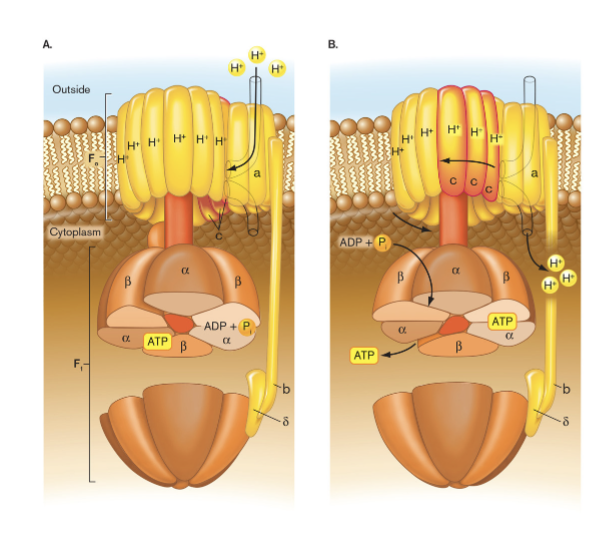
F1F0 ATP Synthase
highly conserved protein complex made of two parts
F0: embedded in the membrane
Proton flow through subunit causes its rotation in the membrane
F1: protrudes in the cytoplasm
rotation of F0 subunit causes F1 subunit to turn, changing conformation and catalyzing ATP synthesis
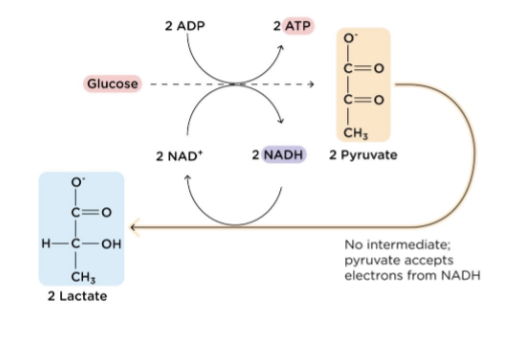
Fermentation
When no oxygen is present
ETC required?: No
Terminal Electron Acceptor: Internal organic metabolite
How ATP is made: Substrate-level phosphorylation
Redox Balance: Regenerates NAD+ by reducing metabolites
2 ATP/glucose
Anaerobic Respiration
Unique to prokaryotes
ETC required? Yes
Terminal electron acceptor: Non O2 acceptor (ex. nitrate)
How ATP is made: Substrate-level + oxidative phosphorylation
Redox Balance: ETC reoxidizes reduced carriers
3-30 ATP/glucose

Aerobic Respiration
Aerobes/microaerophiles
Must deal with reactive oxygen species
ETC required?: Yes
Terminal Electron Acceptor: O2
How ATP is made: substrate-level + oxidative phosphorylation
Redox balance: ETC reoxidizes reduced carriers
Up to 38 ATP/glucose
Biological Oxygen Demand (BOD)
the amount of O2 required for the microbial decomposition of organic matter in a given sample
H2O: 5-10 mg/liter dissolved O2
High BOD can contribute to oxygen-depleted aquatic dead-zones
Dead Zone (Gulf of Mexico)
area of low oxygen that can kill fish and marine life near the bottom of the sea
result of nitrogen, phosphorus, and biological waste flowing into gulf
Electron Conducting Pilus
function as a wire that conducts electricity
rich in aromatic amino acids that can transfer electrons along the protein
can occur over long distances to reach a suitable terminal electron acceptor
Bioremediation - Geobacter
Capitalize on metabolism of microbes to clean up pollution
Some bacteria can use metals as terminal electron acceptors
Turns soluble medal insoluble - able to remove from water

Factors that Influence Microbial Growth
Thermotolerance
Salt, desiccation
Atmospheric Conditions
pH
Nutritional Requirements
Microbial Growth - Temperature
At freezing temperatures, water crystallizes and becomes inaccessible stopping microbial growth
Microbes multiply slowly or not at all under refridgeration
Psychophiles or Mesophiles, such as Pseudomonas and Listeria survive at low temperatures
Cook food to destroy bacteria
Clostridium botulinum spores survive cooking and can contaminate food
Microbial Growth - O2 presence
Removal of oxygen limits many organisms
Heat used to pasturize/sterilize sealed foods
Microbial Growth - Salt, Desiccation
Presence of solutes in aqueous solution impacts osmotic pressure in microbial cells
Solutes include sugar and salt
High solute concentration causes dehydration of microbial cytosol
Halotolerant organisms can withstand the stress

Microbial Growth - Water Activity
measurement of the free water available for biochemical activity

Staphylococcus Aureus: Foodborne Intoxication
Halotolerant and desiccation resistant organisms can survive dry environments
Dry sausage": 0.85-0.93 aw
Staphylococcus aureus: Growth >0.83 aw
20% of healthy individuals have S. aureus as part of skin microbiome
30% asymtomatically carry S. aureus in their nostirls
Deadly pathogen due to invasive disease and toxin production
Some strains produce heat-stable enterotoxin
Causes 8 million cases of food-borne illness each year
Microbial Growth: Acid Tolerance
Acid tolerance among food borne bacteria is limited
Acidic foods (fruits, tomatoes, pickes) made shelf stable without need for extreme heat
Higher pH foods (meats, vegetables) processed under high pressure
C. botulinium spores heat stable but acid sensitive below pH 4.6
Lactic Acid Bacteria
Gram Positive
Aerotolerant anaerobes
Obligate fermenters
Halotolerant (<8%)
Seawater (3.5%)
Homofermentative: Only 1 product (lactic acid)
Heterofermentative: 2 different products (lactic acid + something else)

Saurkraut Fermentation
cabbage carries lactic acid bacteria →
add salt (>3% by weight in the lecture) →
keep submerged in water to create low-oxygen conditions →
fermentation acidifies the food over 5–14 days
Foodborne Infection
Ingest live microbes
grow in intestinal tract, cause disease
Foodborne intoxication
Ingest toxin produced by microbes
Toxin causes disease
Listeria Monocytogenes
Gram + Rod
Haloresistant, Psychotroph, Facultative anaerobe
Ubiquitous in the environment → found in GI tract of livestock
Heat sensitive → cooked foods are safe
Contaminates food processing facilities, outbreaks in fresh fruits/vegetables, soft cheese, etc
Listeria: Foodborne Infection
Ingest live microbes → cause disease
Gastroenteritis in healthy people
Invasive disease in immunocompromised

Clostridium botulinum
Gram + rod
obligate anaerobe → will not grow in oxygen
Associated with improperly canned foods
Acid sensitive (cannot grow below pH 4.5)
Endospores
Endospores
unique type of dormant cell
Bacillus and Clostridium
found virtually everywhere, HIGHLY stable
Sporulation
Process triggered by carbon, nitrogen limitation
NOT a method of reproduction
Extremely resistant to heat, desiccation, chemicals, ultraviolet light, boiling water

Botulism: Foodborne Intoxication
Ingest toxin produced by microbes → toxin causes disease
Botulinum toxin
1g enough to kill 106 people
blocks nerve transmission to muscles
flaccid paralysis
blurred vision, respiratory and cardiac arrest
18-96 hr incubation period
Toxin is HEAT LABILE
Bacteriophage
Virus that infects bacteria
consists of genome (ssDNA or dsDNA) contained within a protein capsid
replication of phage requires host cell machinery for:
energy production and nutrient acquisition
particle building blocks (nucleotides, amino acids)
protein synthesis
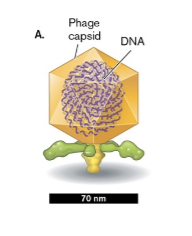
Virus
noncellular particle that infects a host cell and directs it to produce progeny particles
Lytic Phage Replication Cycle
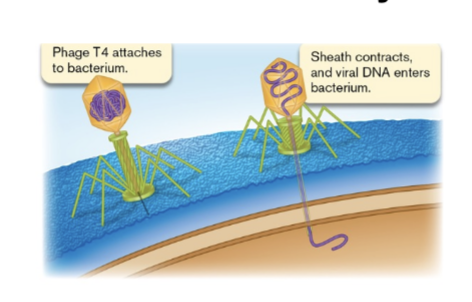
Bacteriophage attaches to a host bacterium (receptor attaches to bacterial surface molecules)
Phage delivers its genome into host linearly
Phage genome circularizes
Host cell machinery translates phage genome to make phage proteins
Host DNA degraded (to prevent host response) and cell replicates phage genome
Phage proteins assemble into phage particles
Phage genome packaged into the particles
Host cell lysed to release phage progeny

Hydrolytic enzymes
Enzymes that allow bacteriophage to chew through capsule layers to bind to receptors

Bacteriophage Genome Delivery
Engagement of host cell receptors triggers structural rearrangement of phage tail sheath (irreversible, hard to remove)
Tail penetrates host cell envelope, phage genome is delivered
Phage genome under 50 atm of pressure within capsid, pressure drives translocation of DNA into host cell cytosol (overcome concentration gradient of delivering DNA to cell w lots of DNA already)
Bacteriophage Replication and Particle Assembly
Phage genes expressed by host cell RNA polymerase and ribosomes in stages
Early genes
DNAse: degrades host genomic DNA
DNA replication machinery
Late genes
Capsid proteins: self-assemble to form empty particles
DNA packaging machine: loads particle with replicated genome
Holins and lysins
Bacteriophage Holins and Lysins
Holins: create pore that allows lysin out of inner membrane to degrade peptidoglycan
Lysins: lytic enzyme that ruptures the host cell to release infectious bacteriophage

Temperate (Lysogenic) Phage Cycle
Integrate into host genome
Vertically transmitted to bacterial progeny
Prophage
Integrate at specific DNA sequence in bacterial chromosome
Environmental factors can switch to lysogen/lytic conversion
Phage wants to escape host cell when no longer safe
Prophage
Phage DNA integrated into bacterial chromosome in temperate phage cycle
Transduction
process in which bacteriophages carry host DNA from one cell to another
occurs accidentally as a result of phage life cycle
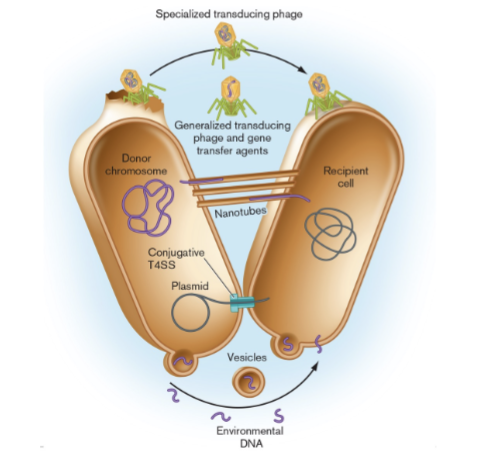
generalized transduction
specialized transduction
Generalized Transduction
Host DNA that is not completely degraded can be inadvertantly packaged into the capsid
Phage containing host DNA is called transducing particle
Each transducing particle can contain any single region of host chromosome
DNA from transducing particle does not cause infection but can cause a change in genotype of the recipient (through homologous recombination)
Specialized Transduction
Unique to lysogenic/temperate phages bc it requires lytic reactivation
Lytic activation leads to phage excision
Errors in excision result in host chromosome incorporation and packaging into phage particle
Infection of a new host and lysogenic conversion results in gene transfer
DNA from transducing particle may cause infection and can cause a change in genotype of recipient, depending on what genes are received

Phage-mediated Virulence
Accessory genes: not essential for phage replication
Occurs through lysogenic conversion → phage DNA integrated into host cell
Host cell now has genes that causes virulence
Ex: Corynebacterium diptheriae, vibrio cholerae
Mutations
Heritable genetic changes
Most mutations are detrimental or neutral
On occasion mutations confer a selective advantage
Occurs at a very low frequency
All changes alter genotype of organism
Silent Mutation
Single nucleotide change that results in same amino acid w different codon
No phenotypic change TYPICALLY
can impact tRNA codons
Missense Mutation
Single nucleotide change results in change of amino acid
Can be neutral or detrimental depending on the location of the changed amino acid
Nonsense Mutation
Single nucleotide change results in premature stop codon
Can be neutral but more often detrimental depending on location
Frameshift Mutation (Insertions and Deletions)
Changes reading frame of RNA
Often very detrimental
Spontaneous Mutations
Result of normal cellular processes
Cellular replication machinery, fundamental chemistry
Takes 2 rounds of division before mutation is fixed in daughter cell
Abnormal Base Pairing - Thymine Enol
Rare enol form of Thymine pairs with Guanine rather than Adenine
Replication with T* on templant strand misincorporates a G on synthesized strand

Mutation by Reactive Oxygen Species
Reactive oxygen species can modify nucleotide residues
Modifications can interfere with polymerase to stop replication or transcription

Mobile Genetic Elements
Jumping genes/transposable elements
All contain a gene for transposase, come contain other genes
Insertions can occur at a DNA site that contains a specific recognition sequence
Insertion in genes often results in their disruption

Induced Mutations
Result of environmental mutagens
UV light, reactive oxygen species, ionizing radiation
high energy molecules cause ds breaks in DNA backbone
Deinococcus Radiodurans
one of the most radioresistant organisms known
Tin of meat exposed to radiation, meat subsequently spoiled
Found to survive for three years in outer space
Uses homologous recombination
Homologous Recombination
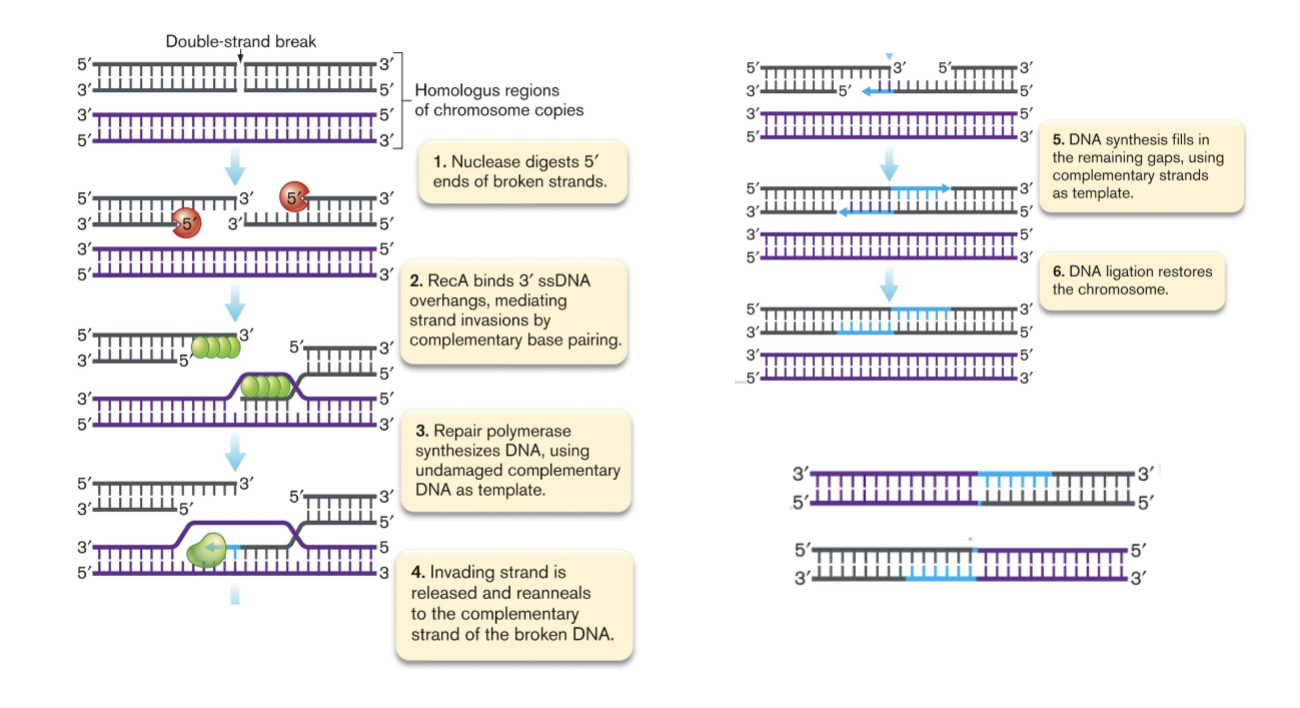
Nuclease digests 5’ ends of broken strands
RecA binds 3’ ssDNA overhangs, mediating strand invasions by complementary base pairing
Repair polymerase synthesizes DNA, using undamaged complementary DNA as template
Invading strand is released and reanneals to complementary strand of the broken DNA as template
DNA synthesis fills in the remaining gaps, using complementary strands as template
DNA ligation restores the chromosome
Introduction of DNA with two regions of homology into an organism can result in double cross-over → Natural process of DNA repair can result in genetic change (if outside DNA is introduced)
Horizontal Gene Transfer
DNA transfer between two organisms
Transformation
Uptake of naked DNA
Ex: streptococcus pyogenes, streptococcus pneumoniae, yersinia pestis, bacillus anthracis, neisseria meningitidis
Griffith’s experiment → dead virulent bacteria transformed harmless bacteria into killers
Foundation for discovering DNA as the genetic material of cells
Natural process in some bacteria
DNA bound by cell, transferred across the membrane(s)/cell wall
Imported DNA can undergo homologous recombination and incorporate into the genome of bacteria

Plasmids
Extrachromosomal heritable DNA
Must have origin of replication and terminator
Can be single or multicopy
Containing no essential genes
Often carry important genes responsible for survival in specific environments → toxins, antibiotic resistance
Some encode for transfer between bacteria
Conjugation
Plasmid mediated vertical transmission by F-factor
Plasmid encodes two origins of replication
oriV: vertical inheritance of plasmid
oriT: transmission between bacteria
Plasmid encodes type IV secretion system that transfers DNA between donor (F+) and recipient cells (F-) cells
Can transfer DNA to cells of same species, different species, or even different domains

High Frequency Recombinant Cell (Hfr)
F-factor integrated into chromosome rather than plasmid
T4SS transfers one strand of donor chromosome, second strand synthesized in recipient cell
Double cross-over event exchanges alleles between donor DNA and recipient cell

Agrobacterium tumefaciens
Plant pathogen
Contains Ti plasmid with T-pilus
Transfers DNA into plant cells, bacterial DNA incorporated into plant cell genome
Bacterial genes encode hormones that cause uncontrolled plant cell growth and amino acid biosynthesis to feed bacteria
Harnessed for genetic manipulation of plants by humans

Positive Gene Regulation
Activators turn genes ON
interact with a-subunits of RNA polymerase to stabilize interaction with promoter
Activators bind to an inducer (Ligand), allows them to bind an activator site on DNA
Bound activator recruits RNA polymerase to promoter, turning gene on
In absence of inducer, activator can’t bind → RNA polymerase doesn’t bind promoter

Negative Gene Regulation
Negative regulators (repressors) turn genes OFF
blocking access to promotor or impeding the progress of RNA polymerase
Repressors require ligands to either bind DNA or release DNA
Inducers: Bind repressors to release DNA
Corepressors: Bind repressor to allow binding to the operator
Bind at operator sites in DNA, turning gene expression off

Induction
Addition of inducer releases repressor from operator → gene turns ON
De-repression
Absence of co-repressor
Repressor can’t bind operator → gene turns ON
Activator Site Location
Upstream of promoters
Recruit RNA polymerase to promoter
Operator Site Location
Downstream of or overlapping with promoters
Block RNA polymerase
Lactose Utilization
Disaccharide of glucose and galactose
Require two specialized functions to be utilized
Permease (LacY): Transport
B-galactosidase (LacZ): Cleavage to monosaccharides
Genes present as lac operon (w lacA)
Lac operon
Allows utilization of Lactose
Under negative regulation by repressor protein (LacI)
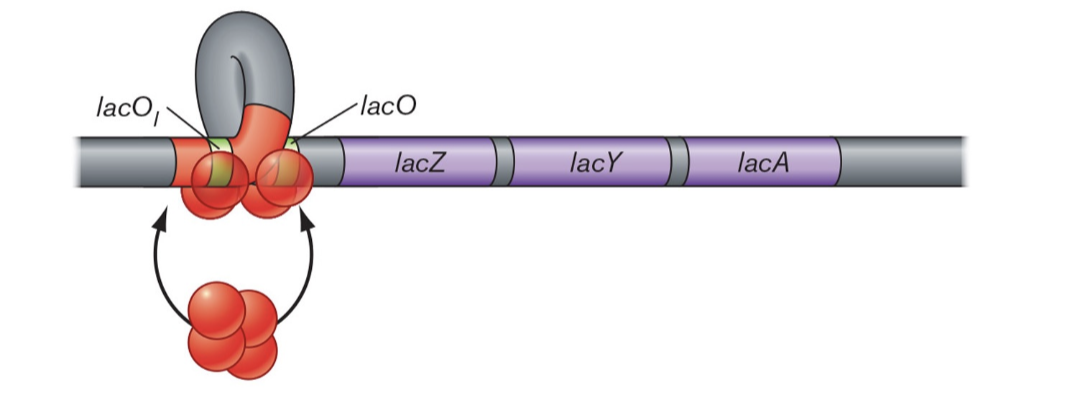
LacI recognizes 2 operator regions (LacO and lacOi)
Allolactose acts as inducer, releasing LacI from operator sites
RNA polymerase requires an activator protein → CRP

LacI
forms tetramer that binds both operator sequences, forming a loop in the DNA
Represses lac operon expression and autoregulates its own expression (lacI gene blocked)
Allolactose
acts as inducer for Lac operon
cAMP Receptor Protein (CRP)
transcriptional activator that binds an activator site immediately upstream of lac promoter
DNA binding by CRP requires presence of cAMP, produced by adenylate cyclase
Diauxic
bacteria able to use multiple growth resources but prefers one over the other
use glucose first → lactose present when glucose runs out → have to produce enzymes necessary to utilize lactose
Catabolite Repression
presence of preferred catabolite (glucose) represses the expression of genes involved in catabolism of other ccarbohydrates (lactose)
inducer exclusion
adenylate cyclase inhibition
rely on phosphotransferase (PTS) system
Lac Operon PTS utilization
Phosphate group sequentially transferred to common enzymes before transfer to substrate-specific enzymes
When glucose is abundant, EIIAGlc pool will be almost entirely unphosphorylated
When glucose is absent, EIIAGlc will be fully phosphorylated
Lac Operon - High Glucose
Unphosphorylated EIIAGlc directly binds carbohydrate permeases (LacY) blocking function → Inducer Exclusion
Fails to activate adenylate cyclase activity, causing a drop in cAMP
Induction of alternative catabolic systems is depressed (inducer exclusion)
Activation of same systems diminished (lowered cAMP levels)

Lac Operon - Low Glucose
Phosphorylated EIIAGlc does not bind carbohydrate permeases, allowing less-preferred substrates to enter and activate catabolic functions
EIIAGlc activates adenylate cyclase activity, causing an increase in cAMP levels
Induction of alternative catabolic systems is permitted
Activation of same systems is enhanced


Lac gene expression? Glucose high, lactose low
Infrequent transcription
LacI binding operator
Adenylate cyclase activity low
CRP can’t activate without cAMP

Lac gene expression? Glucose high, lactose high
Infrequent transcription
LacI binding operator
Adenylate cyclase activity low
CRP can’t activate without cAMP

Lac gene expression? Glucose low, lactose high
Frequent transcription
LacI induced to release operator
Adenylate cyclase activity high
CRP-cAMP activates transcription
Catabolic Regulation
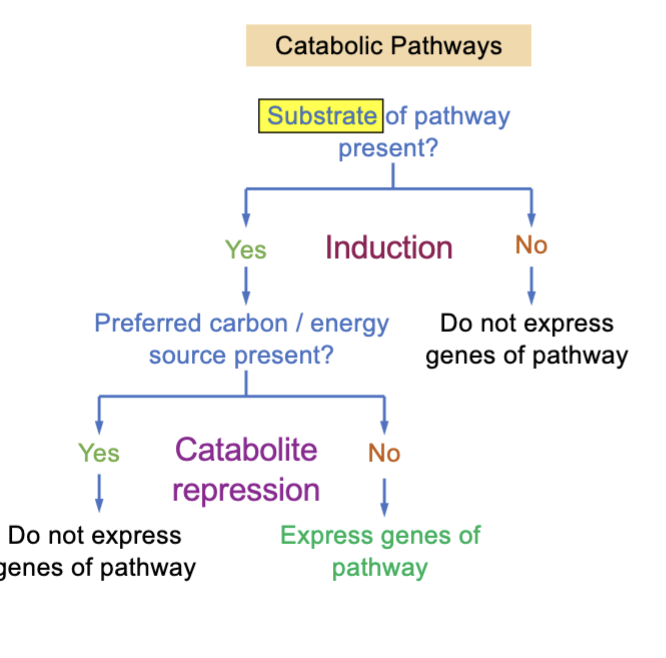
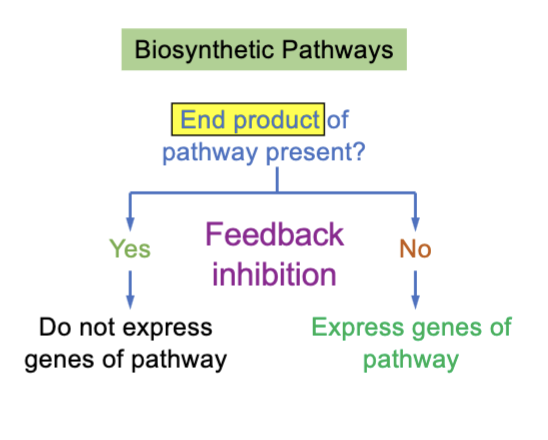
Biosynthetic Pathways
Many amino acid biosynthesis pathways are controlled by repressor proteins that require a co-repressor
typically an example of feedback inhibition
Tryptophan Operon
Under negative regulation
Trp repressor uses tryptophan as a co-repressor
Gene expression subject to transcriptional attenuation
trpL Leader Sequence
Encodes 14-aa peptide
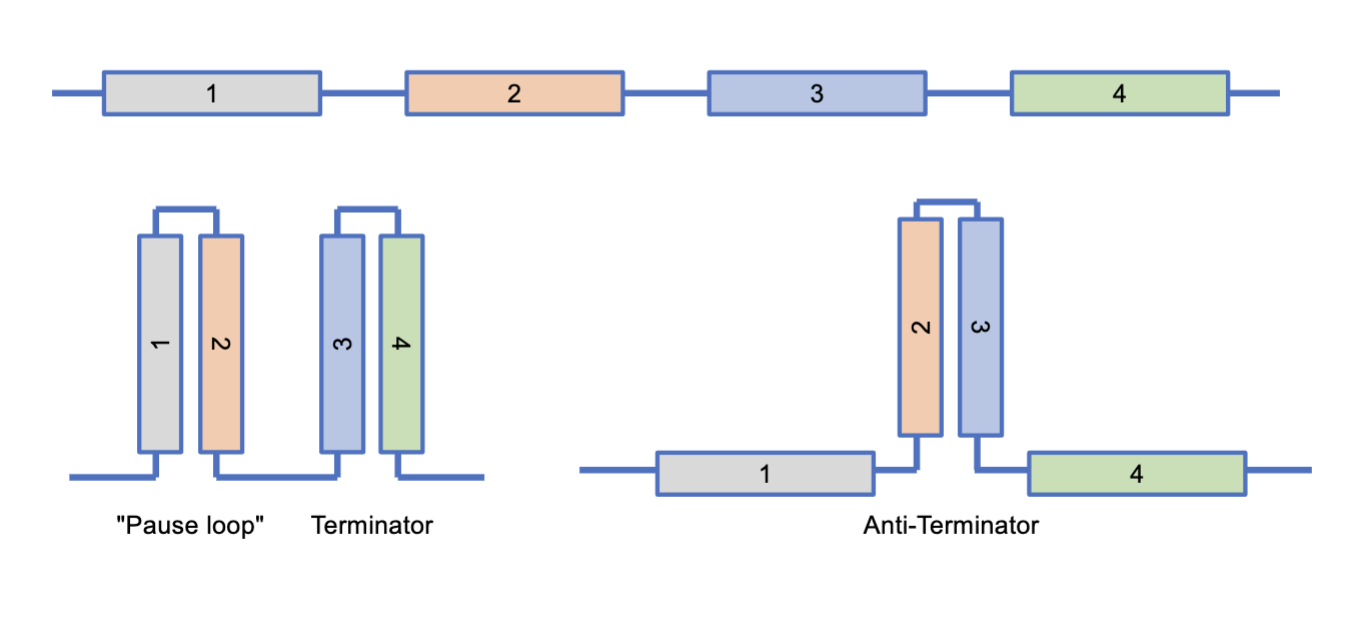
Four complemetary regions → form three stem and loop structures
pair of Trp codons in the short ORF within region 1
stop codon between regions 1 and 2
long stretch of U’s after region 4
trpL Stem and Loop structures
Regions 1-2: Pause loop stalls RNA polymerase without causing it to dissociate from template DNA
allow ribosome to initiate translation of the Region 1 ORF
Translation disrupts pause loop and allows RNA polymerase to proceed
Regions 3-4: Form terminator loop, causes RNA polymerase and ribosome to dissociate
Regions 2-3: forms anti-terminator loop, allows RNA polymerase to continue transcription of trp operon
trp operon: Adequate Trp
Ribosome successfully translates the two Trp codons and stalls at the stop codon
Presence of ribosome prevents pairing of mRNA with region 1 or region 3
RNA polymerase trascribes regions 3-4, which form a terminator loop
transcription terminates before any structural trp genes reached