Derivatives and Risk Management
 Call Kai
 Learn
 Practice Test
 Spaced Repetition
 Match
 Flashcards
 Knowt Play
1/34

There's no tags or description
Looks like no tags are added yet.
35 Terms
Put-Call Parity
Stock + Put = Call + Present Value of Strike Price (Long Bond)

Put-Call-Forward Parity
Forward = Spot Price * rate, therefore you can replace S0 with the equivalent formula

Delta
change in option’s price for a change in the underlying
positive for calls, negative for puts
Δ > 0 → bullish → benefit from price increase
Δ < 0 → bearish → benefit from price decrease
ATM options have a Δ of ~0.5
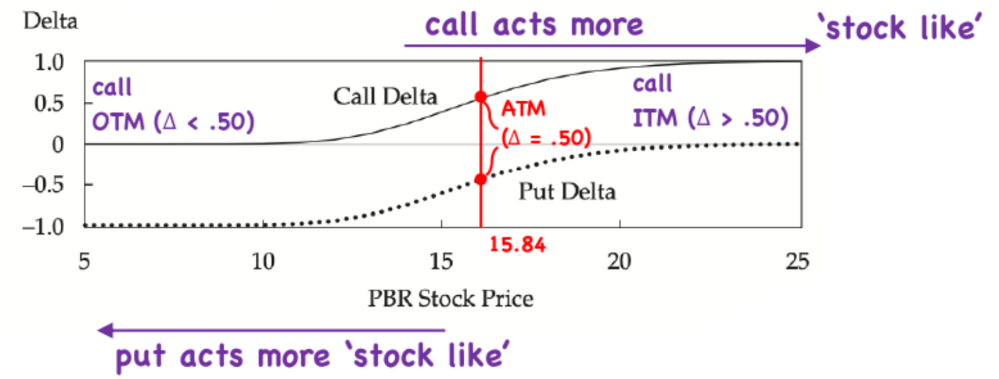
Gamma
change in option’s delta for a change in the underlying
Always positive for long options
Vega
Change in option’s price for a change in volatility
Always positive for long options
Theta
change in option’s price as time passes (time decay)
Negative for long options
Value at Expiration (Call and Put)

Profit at Expiration (Call and Put)
Value = profit minus initial net cost (or plus initial net proceeds)
Bull spread
increases in value as the underlying stock price rises
Bull Call Spread: Buy a lower-strike call and sell a higher-strike call. You pay a net premium (debit).
Bull Put Spread: Sell a higher-strike put and buy a lower-strike put. You receive a net premium (credit).
Purpose: Profit from an increase in the underlying stock price while limiting risk.
Bear Spread
bearish options strategy that increases in value as the underlying stock price falls. It involves buying one option and selling another of the same type and expiration, but with different strike prices
Bear Put Spread: Buy a higher-strike put and sell a lower-strike put. You pay a net premium (debit).
Bear Call Spread: Sell a lower-strike call and buy a higher-strike call. You receive a net premium (credit).
Purpose: Profit from a decline in the underlying stock price while limiting risk.
Straddle
Buy a call and a put (long straddle) at the same strike (typically as close to ATM as possible)
The idea is you know there is a new event coming up but do not know if it is good or bad.
You want the buy the straddle as close to the news event as possible and try to profit of movements to either side
Straddles rarely make money, and the potential movement is likely priced in

Collar
Long stock + long protective put + short covered call, typically with the same expiration date
Long put: Protects against downside losses (sets a minimum selling price).
Short call: Generates premium to offset the put's cost but caps upside gains.
A collar limits both potential losses and potential gains
You could have bought the stock awhile ago at a cheaper price and lock in the collar later

Calendar Spreads
Buy and sell the same type of options (same strike, same underlying) but with different expiration dates
sell near-term, buy long-dated = long calendar spread
buy near-term, sell long-dated = short calendar spread
Both can be done with calls or puts
theta play = near term option TV decays faster
Historical Volatility
Derived from past return data of the underlying
Historical Volatility Formula

Implied Volatility
Derived from the option pricing model
option price vs. strike, exp date, rf, S0 ← all observable
therefore, you can get the implied volatility
Formula is to get from monthly to annual implied volatility. Will not need to calculate implied volatility.

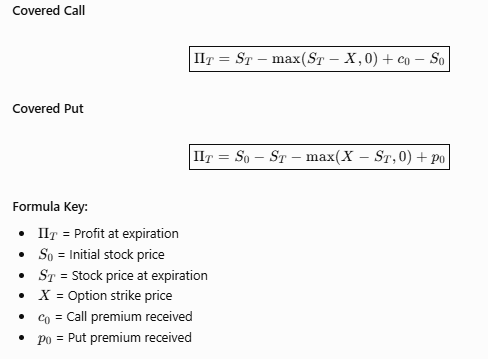
Covered call
Own the shares sell the call
Covered put
Short the stock and sell a put option (short put)
profits from a declining stock price, but the short put caps your gains below the strike price, while losses remain unlimited if the stock rises
Protective Put
Protective put = long stock + long put
Protective Call
Protective call = short stock + long call
Adjusting Portfolio Duration Formula

Interest Rate Forwards (FRAs) and Futures — Payoff Formula

Forwards (FRAs)
OTC
Customizable
Counter part risk
Futures
Market-to-market
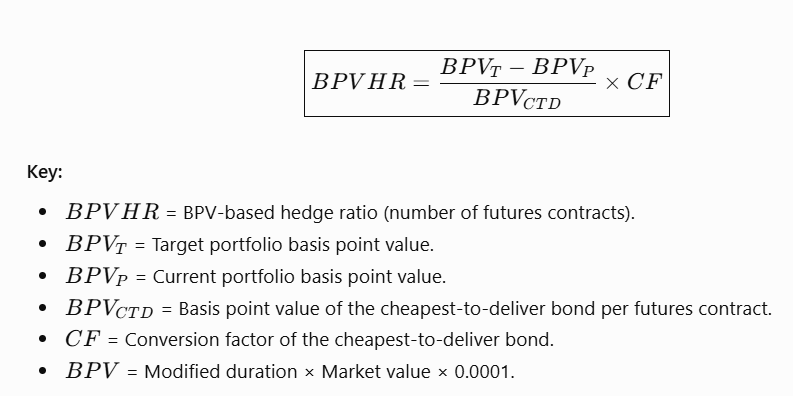
Fixed-Income-Futures
Preferred way to hedge bond positions
BPV-Based Hedge Ratio (BPVHR)
Currency Swap
At initiation and expiration, notionals are exchanged at a fixed fx-rate
Periodic interest payments are exchange
Cross-currency basis swap
allows two parties to exchange principal and floating interest payments in different currencies
Equity Swaps
Can be for a single stock, basket of stocks or stock index
Total Return vs Price Return
Total return includes dividends
Cash vs Physical Settlement
Cash Settlement: At expiration, the parties exchange cash equal to the contract's gain or loss, rather than delivering the underlying asset.
Physical Settlement: At expiration, the underlying asset is delivered in exchange for the agreed payment.
Changing the Beta of a Portfolio
BT - BS < 0 = short position
BT - BS > 0 = long position

Cash Equitization
Using equity index futures to give a portfolio's cash holdings exposure to the equity market without immediately purchasing stocks.
Formula simplifies can cash has a beta of 0

Variance Swaps
Directional bets on implied versus actual volatility

Probability of Change in the Federal Funds Rate
