LECTURE #4 - Criminal Justice System in Practice
 Call Kai
 Learn
 Practice Test
 Spaced Repetition
 Match
 Flashcards
 Knowt Play
1/40

There's no tags or description
Looks like no tags are added yet.
41 Terms
four alternatives to incarceration
absolute or conditional discharge
restitution
fines/community service
conditional sentence
federal incarceration pathways
serve sentence in federal prison
most offenders get released on the same day or full parole or statutory release
more severe pathways of federal incarceration
dangerous offender
indeterminate prison sentence
long-term offender
regular sentence
long-term community watch
approaches to managing criminal behaviour (3r’s)
retribution
rehabilitation
restoration
RNR
risk
needs
responsivity
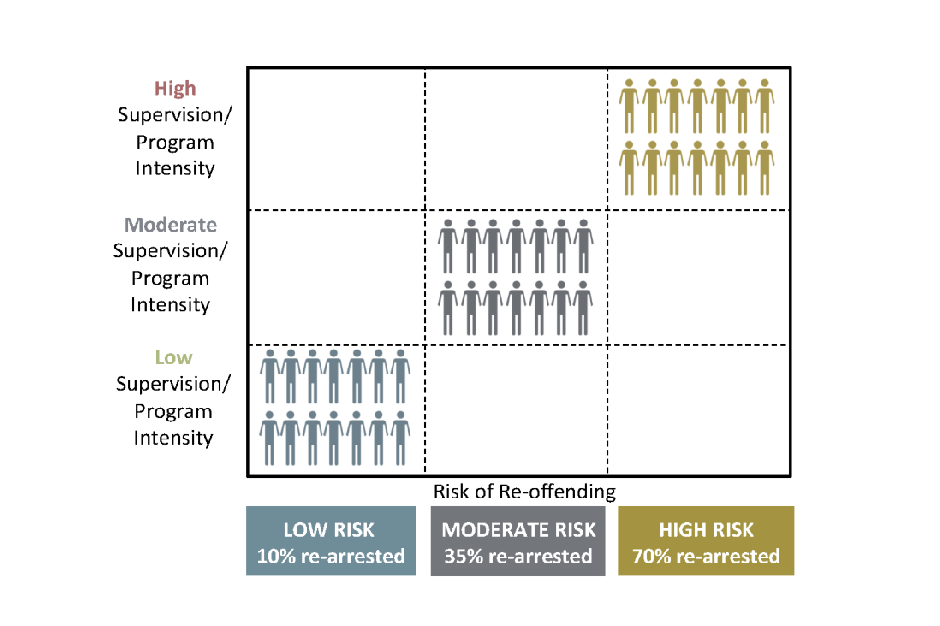
RNR: risk
higher intensity security for those who are higher risk
higher intensity programming
determine risk through risk assessment
static factors
unchangeable
demographic variables
sex
age
criminal history
dynamic factors
changeable factors
social and psychological
“criminogenic needs”
RNR: needs
treatment should target psychological factors that predict crime
RNR: responsivity
style of treatment should match learning abilities of offender
general & specific responsivity
general responsivity
cbt is grounded in learning models
focus on developing skills
specific responsivity
individual differences in motivation and willingness to change
match mental health and identity uniqueness
structured assessment of protective factors (SAPROF) includes three domains;
internal to the person
motivation
external to the person
internal to person
intelligence
empathy
self-control
coping
childhood secure attachment
motivation
prosoicial leisure
work
financial management
treatment motivation
positive attitudes toward authority
life goals
medication
external to person
prosocial support network
intimate relationships
living accommodations
professional care
external control
when is risk not considered
verdict (guilty or not)
involves identifying truth
when risk considered
sentencing
security classification
treatment needs and intensity
parole decisions
level of supervision
risk assessment includes:
risk prediction
risk management
risk prediction
assessing the risk that people will commit violence (or another crime) in the future
risk management
developing effective intervention strategies to manage that risk
what is risk assessment
a diagnosis
prognosis
diagnosis
detecting presence/absence of a condition
dichotomous decision often made
true state of affairs exist
prognosis
predicting likelihood of future event
probabilistic decision needs to be made
no true state of affairs
risk factor
a variable
related to recidivism
can be static or dynamic
two main types of dynamic risk factors:
stable dynamic
acute dynamic
stable dynamic
persistent and change slowly
personality features
poor cognitive problem-solving skills
acute dynamic
rapidly fluctuating
access to victims
sudden stressful experience
unique risk factors
domestic violence
sexual offending
domestic violence
jealousy
number of step-children
hostility towards women
sexual offending
sexual preoccupations
deviant sexual interests
stranger victims
static-99r
position offenders in terms of their relative degree of risk for sexual recidivism
based on commonly available demographic and criminal history info that has been found to correlate with sexual recidivism in adult males
four approaches to risk assessment
unstructured
actuarial
structured professional judgement
mechanical
actuarial tools
collect empirically determined pre-specified risk factors
enter them into statistical model
risk score calculated from items and a probability of recidivism associated with each score
unstructured clinical judgement
subkectively select, aalyze and interpret risk factors
guided by:
professional training
clinical experience
gut instinct
structured professional judgement
collect pre-specified risk factors
assess and combine any case specific details deemed important
final risk assessment is a clinical judgement based on combo risk factors
advantages and disadvantages: unstructured professional judgement
advantages
convenient
idiographic (aligned with law)
disadvantages
subjective
unreliability
advantages and disadvantages: actuarial
advantages
objective
probability estimates of risk
disadvantages":
too nomothetic
static factors
advantages and disadvantages: structured professional judgement
advantages:
flexible
less nomothetic
disadvantages:
no probability estimate of risk
less accurate
idographic
case specific
focus on each individual independently
nomothetic
group based
focus on individuals within a specific population