Physiology 2.7: Hearing Taste and smell
 Call Kai
 Learn
Learn Practice Test
 Spaced Repetition
 Match
Match Flashcards
 Knowt Play
1/78

There's no tags or description
Looks like no tags are added yet.
Name | Mastery | Learn | Test | Matching | Spaced | Call with Kai | Chat |
|---|
No analytics yet
Send a link to your students to track their progress
79 Terms
define sound
variations of pressure in a medium such as air
vibration of an object causes air surrounding it to vibrate
eardrum vibrates
interpret it as sound
describe sound waves
consists of alternating zones of…
compression
molecules are compressed, pressure higher
refraction
molecules further apart, pressure lower
if there is no elastic medium… there is…
no sound
ex: outer space
define sound amplitude
maximum pressure difference between zones of compression and refraction

loudness of sound is directly related to…
amplitude of sound wave

how is sound loudness measured
reflected by Sound Pressure Level (SPL)
decibel units
what is the threshold of sound
0 dB
what sound level causes damage
greater or equal to 100
what sound level causes pain
greater or equal to 120
what is frequency and how is it measured
number of cycles per second
measured as cycles per second or Hz
what is the sound frequency range for human ear
20 hz to 20,000 hz
what is infrasound
frequency below human audible range
under 20 hz
what is ultrasound
frequency greater than human audible range
greater than 20,000 hz
frequency is also known as…
pitch
describe dolphin hearing
can hear 75 — 150,000 Hz
can hear at much higher frequency
8x higher than human hearing range
describe the external ear
external auditory canal
sound waves enter
tympanic membrane
sound waves causes it to vibrate
auricle
cartilagenous area that guides sound into canal

describe the middle ear
space between outer ear (tympanic membrane) and inner ear (cochlea)
3 bones
malleus
incus
stapes
eustachian tube

what is the function of eustachian tube?
connects middle ear to upper part of throat and back of nose
pressure equalization
fluid and mucus drainage


identify this
eustachian tube

what are the 3 bones (ossicles) of the middle ear
malleus
incus
stapes

how do ossicles transmit sound energy
stapes hits oval window at entrance to cohlea
sound is amplified 15 -20 times
because vibration is transmitted through smaller stapes
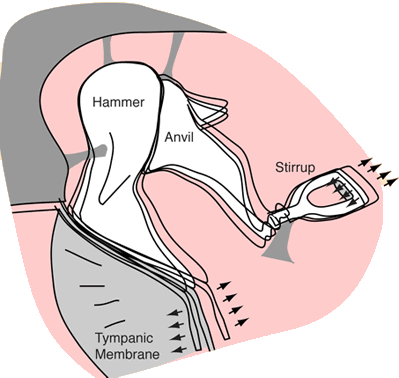
how much is sound amplified in middle ear
15-20 times
why is amplification of sound necessary in middle ear
fluid is harder to move than air
describe the parts of the cochlea
3 fluid filled chambers parallel to one another
scala vestibuli (top)
scala media (middle)
aka cochlear duct
scala tympani (bottom)
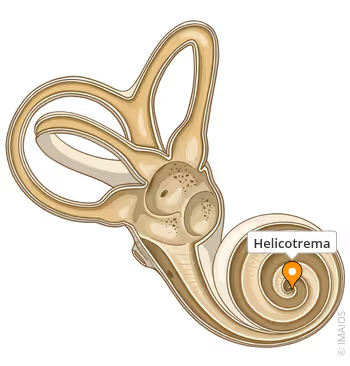
tip is called helicotrema


what is this
tip of cochlea
helicotrema
describe sound transmission in cochlea
sound vibration moves fluid through the membrane
down scala vestibuli but mostly across cochlear duct
basilar membrane also moves travelling down wave according to frequency
describe the organ of corti
sensory organ with deveral different hair cells
cells with stereocilia
where is the organ of corti
inside the scala media (cochlear duct)
rests on top of basilar membrane

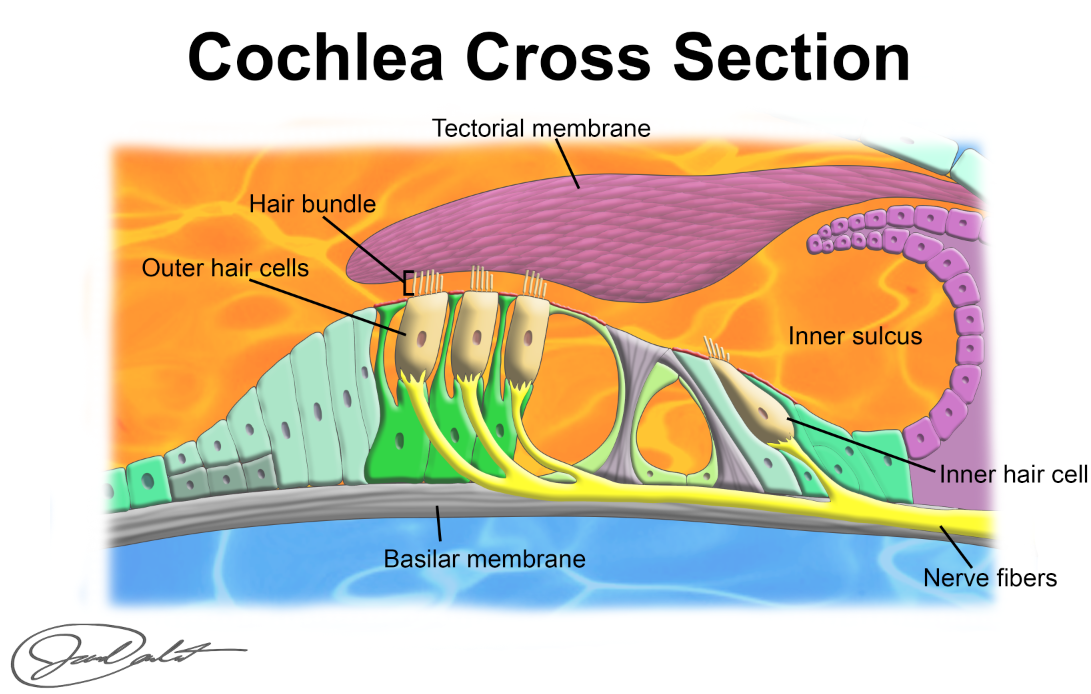
what is tectorial membrane
membrane that sits directly above organ of corti
stereocilia of outer hair cells are directly embedded here


describe tectorial membrane and its role in signal transduction
movement of basilar movement moves tectorial membrane in windshield wiper fashion
outer hair cells are attached to overhanging tectorial membrane
cilia bends
signal is sent to brain

describe endolymph
has high K+ and low Na+
describe what happens during mechanical movement of outer hair cells (depolarization)
stereocilia bundle bends when basilar membrane vibrates due to pressure waves
bends in direction of tallest stereocilium
K+ enters
cell depolarizes
opens Ca2+ channels
glutamate released

describe what happens during mechanical movement of outer hair cells (repolarization)
bends in direction away from tallest stereocilium
K+ channels close
cell hyperpolarizes
glutamate stops release


what is this
pinna


what is this
tympanic membrane
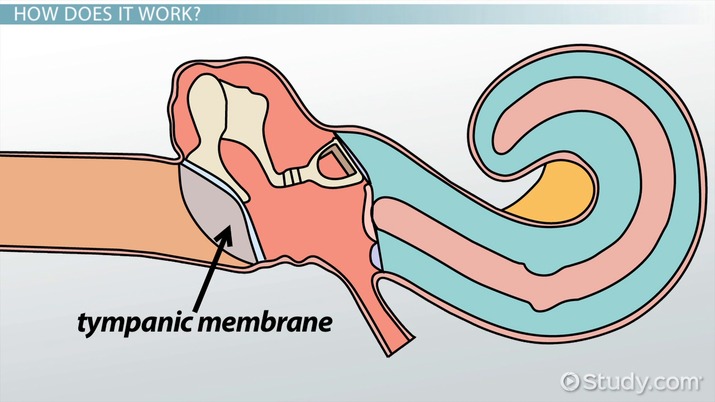

what is this
oval window


what is this
round window
pressure relief
fluid inside cochlea is relieved here


what is this
scala vestibuli


what is this
scala tympani

what is this
scala media
aka cochlear duct

what is the end of the cochlea called
helicotrema


what is this
basilar membran


describe this
organ of corti
has mechanically response cell
Describe the effect of a sound wave on the tympanic membrane
vibrates in sync with incoming air pressure changes
Describe the function of the ossicles.
amplify sound from first ear to third ear
describe the vestibular apparatus
endolymph filled chamber in temporal bone
connected to cochlea by cochlear duct
descrube the function of the vestibular apparatus
sense organs
balance, motion, and spatial orientation
describe conductive hearing loss
hearing loss caused by problem with transmission of sound information across the middle ear to the cochlea
describe senorineural hearing loss
hearing loss because of damage to cranial nerve
deafness
describe presbycusis
age related hearing loss
especially at higher frequencies
describe tinnitus
ringing in ears accompanied by hearing loss
Which regions of the membrane are most sensitive to higher frequencies? To lower frequencies?
Higher frequencies
Most sensitive at the base of the cochlea (near the oval and round windows). This region is narrow and stiff.
Lower frequencies
Most sensitive at the apex (the top or far end) of the cochlea. This region is wider and floppier/more flexible.

what are chemoreceptors
receptors sensitive to specific chemicals
some respond to internal environment
O2 and H+ ion concentration in blood
some respond when they come in contact with external environment
taste and smell
what are the four basic sensations
sweet
sour
salty
bitter
which structures contain taste buds
upper esophagus
palate
lingual papillae on tongue

how many taste buds do humans have
about 10,000
describe chemoreceptors for taste
taste receptors reacts chemical to substance in mouth
located on taste buds in oral cavity
mostly on tongue
why are the senses of taste considered a chemical sense
stimuli for taste are chemical substances dissolved in water or other fluids
what are olfactory receptors
receptors stimulated by volatile chemical suspended in air
located in upper portions of nasal passages
describe how receptor cells are structured
cellular seal
cells joined together by tight junctions, prevent saliva and chemicals from leaking down into deeper layers
apical membranes
membranes are ciliates that extend into a small opening (taste pore)
saliva makes direct contact with receptors
basal membrane
the basal ends of taste receptor cells
makes contact with primary afferents
chemical signal is sent outside the bottom of nerves and carries information directly to brain

describe the taste receptor cycle
turned over and replaced over every 10 days
reduced sense of taste in older adults due to lower rate of turnover of taste receptor cells
What are the taste papillae and where are they found?
projections of epithelial layer of tongue that hold taste buds
located on tongue
what chemicals in salvia carries the chemicals we taste
tastants
the apical membranes on taste buds are…
ciliated
face outwards toward the surface of the tongue
extends into the taste pore to touch the saliva
what is anosmia
complete loss of ability to smell

what is hyposmia
diminished ability to smell
less severe than anosmia

how many odor differences can humans tell
10,000
where are olfactory receptors located
olfactory mucosa
very top of the nasal cavity

describe the turnover rate of olfactory receptor cells
turn over every 2 months
describe specialized primary afferents of olfactory receptors
custom-built nerve cells designed to detect chemical smells
have cilia on dendrites to reach into mucosa
float in nasal cavity
packed with olfactory receptors
the axons of primary afferents form what
olfactory nerve
the olfactory nerve goes where?
travels directly into olfactory bulb in brain
instantly perceive and identify smell
how does detection of odorants work
smell molecules must dissolve in wet mucus layer inside nose
carrier proteins (odorant-binding proteins OBPs) help them reach and trigger smell receptors

describe olfactory discrimination
each olfactory receptor carries only one specific type of odorant receptor protein on its surface
over 1000 types of olfactory receptors
a single odor molecule can activate more than 1 receptor
brain recognizes odorant from the unique combination of the different receptor cells activated at once
how many types of olfactory receptor cells are there?
over 1,000
each receptor only carries one type
how many odorants can humans distinguish
10,000 odorants
describe the combinatorial code
individual odorants activate unique overlapping combinaitons of receptors
not just 1-to-1 matches
odors are detected and discriminated when..
several transduction pathways activated from different receptors
what are some causes of olfactory diseases
sinus/respiratory infections
deviated septum
aging
smoking
head injury