HAN 333 Exam #1
 Call Kai
 Learn
 Practice Test
 Spaced Repetition
 Match
 Flashcards
 Knowt Play
1/130

There's no tags or description
Looks like no tags are added yet.
Name | Mastery | Learn | Test | Matching | Spaced | Call with Kai | Chat |
|---|
No analytics yet
Send a link to your students to track their progress
131 Terms
Communication
•Communication is the process of understanding and sharing meaning
"The process by which we use sings, symbols, and behaviors to exchange information and create meaning"
Communicating meets needs
•Physical needs
•Relational needs- the essential elements we look for in our relationships with other people.
•Identity needs-One way we learn how we compare to others is by communicating with those around us.
•Spiritual needs
•Instrumental needs-our practical, everyday needs,
adapt
means to modify your behavior to accommodate what others are doing.
Models of Communication
•The action model- one-way model. source, message, channel, receiver, noise, encoding, and decoding
•The interaction model- communication is a two-way process. A pathway through which messages are conveyed. adds two elements: feedback and context(how you tell story different depending whos around) you are either a source or a receiver
•The transaction model- doesn't distinguish between the roles of source and receiver/ Simultaneous/ source and a receiver
•The constructivist model*•Focus is on the negotiated meaning
•Emphasis is on ensuring that there is an understanding of verbal and nonverbal messages
Characteristics
•Communication relies on multiple channels
•Channel rich-context- environments that incorporate many communication channels at once in-person.
•Channel lean context- texting
•Communication passes through perceptual filters- "filter" incoming communication through our perceptions, experiences, biases, and beliefs.
•People give communication its meaning- what is a mouse?
•Communication has literal meanings and relational implications
•Content dimension- the literal information the communicator is communicating
•Relational dimension- carry signals about the nature of the relationship
•metacommunication- one way we distinguish between content and relational dimensions- the way he said it.
•Intentional and Unintentional messages
•Communication is governed by Rules
•Implicit- rules that almost every- one in a certain social group knows and follows, even though no one has formally articulated them
•Explicit-meaning someone has clearly articulated them
Five Types of Communication
•Intrapersonal- form of communication that addresses the smallest audience- mentally remind yourself to do something
•Interpersonal- occurs between two people in the context of their ongoing relationship, most common
•Small group- 3 to 20 people who are working interdependently to accomplish a task, we are engaging
•Public- when we speak or write to an audience larger than a small group
•Mass- Communication transmitted by such media is considered
Competent communicator characteristics and skills
•Self-aware
•Self-monitoring
•Adaptability
•Empathetic
•Cognitively complex- an ability to understand multiple explanations
•Ethical- lying
•Culture
•All of the learned, shared symbols, language, values and norms that distinguish one group of people from another
•In - Groups
•Folks with whom we identify
•Out - Groups
•Folks we perceive to be different from us
Societies
•Folks who share the learned symbols, languages, values and norms
•Acquiring Culture
•Learned via Enculturation
•Direct instruction-When a parent tells us to say "thank you" after receiving a gift, or a teacher helps us learn the pledge of allegiance.
•Imitation- by observing others
• Subconsciously speaking with the accent of those around us without realizing we are doing so
•Biologic constructs- gives us the capacity to learn it
cultures and Co-Cultures
Co-Cultures/ Sub-culture- gives below connotation
•Groups that share values, customs, and norms related to mutual interest or characteristics independent of national origin
•May include smaller groups within the co-culture
•Many people identify with more than one co-culture at once
music is macro- cocultures would be r&b, pop, country
Variations in culture
•Society
•Symbols-varies from culture to culture- the flag
•Languages
•Values-USA freedom is very important, values are the standards it uses to judge how good
Values
power- prestige society status influence and money. control over resources
achievement- personal success from your own accomplishments
hedonism- experiencing fun and pleasure- different cultures have different views on how much fun u should have
stimulation-having novelty, excitement, and challenge in life
self-direction-being able to engage in independent thought and action
universalism- appreciating and caring for people and nature- believing in climate change means more universalism
benevolence- do no harm
tradition- respecting the customs and ideas of culture and religion
conformity- living up to the expectations of the norms that are expected of you
security- having safe and stable relationships/ family/ community/ different cultures value this differently (individualistic vs collectivist)
Cultures vary in norms
Rules or expectations that guide people's behavior in a culture
typically shake hands vs other cultures
Distinctive Features of Co-Cultures
•The adoption of distinctive symbols, language, values and norms
•The use of jargon
•May occur as a result of shared specific values
•Adoption of co-culture-specific norms
How Culture Affects Communication
•Individualistic Cultures- "there's no one like me" America is very individualistic
Focus is on the individual
•Collectivistic Cultures- duty and loyalty- "I am my family and my family is me."
Focus is on the group
•Low -Context- USA
Direct verbal communication
"Say exactly what you mean"
•Hi-Context- don't offend/ reluctant to say no
Indirect verbal communication
"Do not be so blunt"
•Low - Power - Distance- USA
All people are equal and no one person or group should have excessive power/ men and women are equal
•High - Power - Distance- royal family
power is distributed less evenly; certain groups have great power, and the average citizen has much less.
•Masculine Culture
•Embraces stereotypical masculine characteristics- material goods, achievement etc= masculine/ also further creates the divide between what the genders are supposed to do
•Feminine Culture
•Embraces stereotypical feminine characteristics
feminine- collectivist, nurturing, quality of life, service to others/ more maternity leave
•Monochronic
•Time is a valuable commodity that should be saved, spent, filled, invested, and wasted. structured
•Polychronic
•Time is viewed holistically; fluid, less structures, and infinite. the party starts when people get here
•Uncertainty Avoidance
•The degree to which people try to avoid situations that are unstructured, unclear, or unpredictable
•High Uncertainty Avoidance: prefer people and situations that are familiar and less risky
•Uncertainty Accepting: more open to new situations and more accepting of people and ideas that are different from their own
•Try to be open-minded about differences
•Mindfulness- awareness of how their behaviors and ways of thinking are likely to differ from our own
•Similarity assumption-that is, we presume that most people think the same way we do, without asking ourselves whether that's true.
•Avoid Ethnocentrism
•The tendency to judge the practices of other cultures as inferior to your own
•Differing cultures may have differing communication codes
•Idioms- its raining cats and dogs- in terms of translating, sometimes there isnt an exact translation
"on Cloud 9"
•Jargon
•Gestures
terms
•Diversity- difference/ experiences
•Historical Underpinnings- what brings u to this country and how you survived
•Stereotyping- all__are___
•Implicit Bias- are biases you have you don't know you have (atttidue)
•Microaggression-assuming men and women have different abilties/ stats and data vs relationships. daily common acts of disrespect towards people of different cultures. (action)
Intersectionality-we are multiple characteristics and multiple cultures and layered
How We Perceive Others
•Perception is the process of becoming aware of objects and events from the senses
Devito (1986)
•Perception is the process of making meaning from what we experience in the world around us
Floyd, (2018)
pre-understanding=what we already know to solve new stimuli
•Active Perception
Perception in which "the mind selects, organizes and interprets that which is sensed
•We engage in 3 distinct activities during perception
•We are not aware of the separate processes because they happen quickly and often simultaneously
1.Selection- Rather than paying attention to all the stimuli in your environment, you engage in selection
2.Organization- the classification of information in some way.
3.Interpretation- support your interpretation and to ignore those that do not
Selection
•Four Types of Selectivity
-Exposure- put ourselves into situations we like
-Attention- we focus on certain cues and ignore others
-Perception- we are selective in what we perceive, we believe what we want and see what we want
-Retention- remembering only what we want to
Organization- we organize stimuli by-
To classify a stimulus, your mind applies a perceptual schema to it, which is a mental framework for organiz- ing information into categories we call constructs:
•Physical Constructs- how they look
•Role Constructs- what role they play, nurses, staff etc
•Interaction Constructs- the relationship we have with that person based on their outgoing or shyness
•Psychological Constructs- thoughts and feelings
•Sorting information in a way to help it make sense to us
•Figure and Ground- focus on one part of stimuli and ignore the rest. the figure is what we focus on. everything else is ground
•Closure- filling in the blank
•Proximity- how close someone is or something is- space and temporal (time)
•Similarity- elements that are grouped tg or resemble things go tg
Interpretation- once selected and organized in your mind you then give it meaning through interpretation
•Assigning meaning to what has been selected and organized and adding value to what is perceived
•Ambiguity- the more ambiguous the harder it is to assign meaning to it
•Context and Comparison
•Your experience-
•Your knowledge of person
•Personal relationship
How We Perceive Others
•Misperception of others
•Culture and co-culture
•Stereotype
•Identify a group
•Recall generalizations
•Apply generalizations
•Culture and co-culture
•Stereotypes
•Primacy affects- first impressions
•Recency affects- most recent interaction
•Perceptual sets- predisposition to perceive only what we want to perceive
How We Perceive Others terms
1.Stereotyping -generalization about a group or category of people
2.First impressions -sometimes it's a lasting impression
3.Projection - to put your feelings and beliefs onto other people
4.Perceptual Defense -defending our perceptions ignore or minimize damaging or harmful info or stimuli
5.Halo Effect - take one attribute and come up with all other attributes
6.Leniency - overthink things as positive
7.Central Tendency - everyone is average/ neither good or bad
8.Recency -taking things that happened most recently happened and apply it to them forever
9.Contrast Effects - oh I had your brother/sister in class so assume you would act the same way
B. How We explain our Perceptions
•Attribution- the cause
•Locus- where to cause of behavior is located. internal- your power comes from within/ external- your power comes from something outside of yourself
•Stability- the cause of behavior being stable or unstable- rush hour is a stable cause
•Controllability- how controllable the cause is of the behavior are/ how much can you control
1.Fundamental Error- other people. its their fault
Judgments about the success and failures of others
2.Self Serving Bias- yourself. your success is yours
Judgments about personal success or failures
C. How We Perceive Ourselves- Your self-concept, also called your identity, is composed of your own stable perceptions about who you are. As we'll see in this section, self-concepts are multifaceted and partly subjective.
•Self Concept Defined
•Identity
•Multi-faceted
•Partly Subjective- they are basedon fact
blind spot- people know it and u dont
•Objective reality
•
•Subjective point of view
•Reflected Appraisals- characteristics that other people confirm. we look to others to tell us who we are
•Social Comparisons- we compare to see if we measure
•Self-Perception- how we perceive ourselves
•Valuing the Self
•Self Monitoring- awareness and management of self
•Self-Fulfilling Prophecy-they wont hire me bc and then u don't get the job
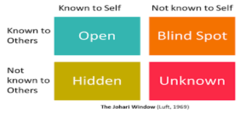
D. Managing Our Image
•Image
•Image management
•Life story- based on our self concept as well as our influence on other people
•Multiple Identities
•Management is complex
We manage three face needs:
•Fellowship face-the need to have others like and accept us
•Autonomy face-to avoid being imposed on by others
•Competence face-our need to be respected
•
Face-threatening acts-rejection of your application
What is a Small Group?
•Distinguished by size (3 - 15/20)
•Interdependent-rely on other to get jobs
•Cohesive-positive feelings towards each other
•Task- everyone working towards same objective (group project)
•Social-regard you have for the people in your group
•Enforces rules and norms- we will meet every Thursday before class (rule)/ come to class dressed (norm)
•Individual roles
•Formal
•Informal- (caretaker in the group)
•Distinctive communication practices
•Problem solving- what is the problem your group seeks to solve
•Role communication- communication that occurs in group between different roles
•Consciousness raising- the moral of a group
•Encounter communication- me and you interactions with each other (interpersonal communication 2 people)
Functions of Small Groups
•Discrete tasks- job to do and that job will come to an end
•Evaluate and advise-advisory boards
•Create art and ideas- coldplay
•Provides service and support- community service
•Promote social networking- relationships lasting even after group ends
•Compete- teams
•Helps in the learning process- study groups
Types of Small Groups*
•Types:
•Task-oriented (secondary)- classroom groups
•Problem solving and decision making
•Information sharing
•Teaching, sharing news and information
•Relationship-oriented/Social (primary)- family because they provide safety and support
leaders:
•Emergent- more organic- 7 of us sitting tg and were in a group what are we going to do- that person is new leader and just happened
•Assigned- assigned leader
Joining Small Groups
•Reasons to join
•Need to belong
•Protection
•Improve effectiveness- workout group
•Pressure- join for a school project
•Socialized into Small Groups
•Antecedent phase- before you join phase- haven't joined yet- based on past experiences
•Anticipatory phase- when we start to make judgment about what we expect from the group and members/ can come from previous experiences
•Encounter phase- first time we meet face to face. roles assigned
•Assimilation phase- we know what our groups culture is
•Exit phase- discrete group means we have an end. but not all relationships have to end
Stages of Group Development*
•Forming- meet group for first time/ best foot forward
•Storming- conflict difference of opinion- after the first exam-
•Norming - after we address the conflict in storming
•Performing- up doing presentation
•Adjourning- leaving the group/ some bonding
Group Dynamics
"Multiple heads are better than one"
Synergy
"A group whose individual efforts result in a performance that is greater than the sum of the individual inputs"
Advantages and Challenges of Small Group Communication
Advantages:
•Provision of resources
•Synergy
•Exposure to diversity
Challenges:
•Sacrifice- seeing them instead of family
•Conflict
•Difficult to coordinate
Groups Generate Ideas Through Various Methods
•Brainstorm- making a list- call out
•Nominal Group Technique- individuals write down ideas silently then share
•"Ideawrite"- top 3 colors and write why and all get put into basket and some facilitator chooses. long process of reviewing
Groups Make Decisions In Many Ways
•Unanimous Consensus- everyone agrees the room should be purple- takes the longest
•Stalemate- even number of people in group/ half say yellow and half say orange- can't reach unanimous consensus
•False consensus- say they support the decision even though they do not
•Majority Rule-more people go to one side then the other. The slogan receiving the fewest votes will be discarded, and each member will then vote for one of the remaining two. The slogan that now receives more votes has been chosen by majority rule.
•Minority Rule- small group goes to head/ quick
•Expert opinion- someone with masters degree makes choice
•Authority Rule- leader of group makes decision
•Finding the Best Decision-Making Method
•How important is the decision?
•Does decision require expert opinion?
•How quickly must decision be made?
Cultural Context Affects Decision Making
•Individualism-Responsible to yourself/ one vote one person
•Power Distance-Power difference
•High-authority rule
•Low-majority rule- low-power-distance cultures are more likely to prefer majority rule as a decision-making method, given that majority rule treats everyone's vote as equal to everyone else's.
•Time Orientation-time efficient- time is money- quickest voting possible
Leadership
•Leadership skills are enacted through communication and persuasion in order to get the task accomplished
•Physical Traits- masculine- tall
•Psychosocial Traits
•Extroversion
•Introversion
•Communication Apprehension- cannot even think about standing up and presenting in the class
Leading the Group
§Delegating responsibility- not over burdening some while others don't have something
§Encouraging social interaction
§Sharing a vision
§Seeking consensus
Leaders Enact Different Styles
•Traditional
•Democratic-one person one vote
•Laissez-faire- step in and then step out
•Autocratic- dictatorship
•Functional Leadership*- different members of the group become the leader based on the task at hand
•Shared Leadership*- everyone is the leader
•Situational Leadership*-when autocratic you can be and other times u don't
Leaders Exercise Power Differently
•Reward- persuade people to do things based on reward system
•Punishment/Coercive- if you don't do what I ask there will be negative consequences
•Referent- a person has a certain aspect ab them that's a good thing/ power of attraction, the idea being that we tend to comply with requests made by people we like, admire, or find attractive in some way.
•Expert- persuade people bc u have expert power
•Legitimate- dr. z she is the chair of the department
•Informational Power- notes/ government controlling media
Leaders Manage Conflict Constructively*
•Accommodating- a person sacrifices themselves for the benefit of another
•Avoiding- some believe avoiding conflict is the way to go
•Collaborating-your ideas and my ideas and we come up with something new
• Competing represents a high concern for our own needs and desires and a low concern for those of the other party.
•Compromising- moderate concern for everyone
Conflict is....
Any situation in which your concerns or desires differ from those of another person
An expressed struggle between at least two parties who perceive incompatible goals, scarce resources, and interference from others in achieving their goals
•Conflict is a natural part of life
•Yet most of us have negative associations with conflict
•We tend think of conflict in terms of anger, stress and fear
•Individuals react to conflict in a variety of ways based on their prior experiences
Causes of Conflict in Groups
◦individual stresses
◦past experiences in group affect expectations
◦individual personality
◦stereotypes
◦individual biases
◦culture
◦competing priorities
•Structure
•Organizational demands
•Decision-making
•Values
•Differences in perceptions or actual incompatible belief systems
•Relationships
•Personal differences
§Procedure
§Power
§Work distribution*- some people get into groups and do most of work by themselves
§Role conflict**
Conflict Management
•Conflict Positive Groups = try to solve the problem
•Conflict Negative Groups = people try to win
•Substantive conflict occurs when people have different reactions to an idea.
•Conflict can be constructive and valuable.
•Conflict is Good for the Group
When managed appropriately . . .
Quality decisions
Satisfying interpersonal relationships
1.Identify conflict
2.Identify Conflict Management Style*
3.Assess Atmosphere
4.Conflict Resolution*
Destructive Conflict Management
•Diverts energy from more important issues and tasks
•Causes resentment and hostility
•Makes rational discussion difficult or impossible
•Causes stress and resulting hardships
Assess the Atmosphere
•Defensive?
•Judgmental evaluation
•Controlling
•Hidden Agenda
•Indifference
•Superiority
•Rigidity
•Supportive Climate?
•Descriptive
•Task oriented
•Spontaneity
•Empathic
•Equality
•Provisional
Conflict Resolution
Establish ground rules:
•One person speaks at a time
•Make every effort to listen with respect
•Seek to understand the other person's point of view
•be flexible about differing perceptions of the issues at hand
•Agree to honor confidentiality issues
Groupthink- " . . . .Occurs when group members seek unanimous decisions despite individual doubts . . ."
•Warning Signs
•Illusion of invulnerability
•Collective rationalization
•Excessive stereotyping
•Pressure for conformity- being forced to conform
•Self-censorship- don't want to go against group
•Illusions of unanimity- appear to be united
•Mind guards- some members of the group actively prevent the group from hearing evidence
•Recognize barriers to effective listening
•Noise-distracts you from listening
•Boredom-mind wanders
•Information overload
•Rebuttal tendency- the act of no matter what a person says you will argue
Choosing a Method of Informing
Informative speeches can define.
•Defining means providing the meaning of a word or concept.
•Identify the denotative meaning-dictionary definition
•Explain the connotative meaning-implied meaning
•Provide the etymology- its origin or history
•Give synonyms or antonyms.
•Define by example.
•Compare and contrast definitions.
Informative speeches can describe.
•Describing means using words to depict or portray a person, place, object, or experience.
•Representation-describe something in terms of its physical or psychological attributes
•Narration-you describe a series of events in sequence
Informative speeches can explain.
•Explaining means revealing why something occurred or how something works.
•Explanations should be clear and concrete.
•Explanations should be as objective as possible, not subjective.
Informative speeches can demonstrate.
•Demonstrating means showing how to do something by doing it as it is explained.
•When demonstrating a process, describe each step as you do it.
•Be certain you can complete the demonstration within the time allotted.
Selecting and Framing the Topic
Select a captivating topic.
•Issues: the economy
•Events: the earthquake in Haiti, Hurricane Ida
•People: The new President of SBU
•Places: Iceland
•Objects: the Denon DJ Prime 4
•Concepts: racial equality
•Processes: how a CAT scan works
•Policies: military interrogation tactics
Relate yourself to your topic.
•Indicate why you are interested in your topic and qualified to speak about it.
•Relating yourself to your topic gives you credibility.
•Relating yourself to your topic helps your listeners care about it.
Relate your topic to your audience.
•Point out any vested interest your audience has in the topic.
•Explain your topic's relevance to listeners.
Honing Your Informative-Speaking Skills
Create information hunger.
•Connect your topic to listeners' needs.
•Physical needs- Teach listeners to cook a meal that is healthy and flavorful.
•Relational needs-Discuss the importance of cooking rituals
•Identity needs-Explain how individuals with an eating disorder view their consumption of food as a central component of their identity.
•Spiritual needs-such as Christian communion
•Instrumental needs-best deals on food staples, such as fresh fruit, vegetables, and milk.
Be organized.
•Introduction
•Generate interest in your topic.
•Present your thesis statement.
•Relate your topic to yourself and your listeners.
•Preview main points.
•Body
•Present main points, with appropriate transitions.
•Make sure you have at least three main points and that they are related to each other.
•Conclusion
•Reinforce your central idea by reviewing your main points.
•Create a memorable moment for your audience.
•Transitions
•Use transitions to review the material you've presented already.
•Use transitions to preview material yet to be presented.
Make it easy to listen.
•Keep it short.
•Keep it simple.
•Start with what's familiar.
•Repeat key points.
•Make it fun.
Involve the audience.
•Invite direct participation.
•Ask for volunteers.
•Poll the audience.
•Pose a hypothetical situation.
•Refer to individual listeners.
•Invite questions.
Be ethical.
•Use information only from reputable sources.
•Understand the information you're reporting.
•Incorporate verbal footnotes.
•Be clear about when you're speculating.
Speaking Persuasively
The Meaning and Art of Persuasion
Persuasion is an attempt to motive others to adopt or maintain a specific manner of thinking or doing.
•Beliefs-true or false, accurate or inaccurate
•Opinions-what's good and bad
•Actions-the behaviors we undertake
Three forms of rhetorical proof
•Ethos appeals to a speaker's respectability, trustworthiness, and moral character.
•Pathos appeals to listeners' emotions.
•Logos appeals to listeners' sense of reason.
•Inductive reasoning-first consider the specific evidence and then draw general conclusions from it
•Deductive reasoning-we start with a general conclusion and then use it to explain specific individual cases. (faulty)
•Syllogism-a three-line argument consisting of a major premise, a minor premise, and a conclusion.
•Enthymeme-a syllogism in which one of the premises is already so widely known and accepted
that it isn't mentioned
creating a persuasive message:
We use various types of persuasive propositions.
•We influence beliefs with propositions of fact.
•Barack Obama was born in Hawaii.
•Flying is the safest mode of transportation.
•Solar power is not capable of meeting the energy demand in the United States.
We use various types of persuasive propositions.
•We influence opinions with propositions of value.
•Fathers are just as important as mothers.
•Animal cloning is immoral.
•Our country is right to do anything it can to protect its citizens.
We use various types of persuasive propositions.
•We influence actions with propositions of policy.
•The federal government should ban the use of human stem cells in medical research.
•Hate crimes against ethnic, religious, and sexual minorities should be capital offenses.
•Everyone should eat only locally grown, organic foods whenever possible.
We organize persuasive messages in various ways.
•Problem-solving pattern
•Establish that a problem exists and is serious.
•Establish that a proposed solution is possible, practical, and effective.
•Refutational approach
•Present the main arguments against your position.
•Immediately refute those arguments.
•State your own position and argue for it.
•Comparative advantage method
•Describe the problem.
•Identify various alternative viewpoints.
•Explain why each alternative viewpoint is deficient.
•Propose your own solution to the problem.
•Monroe's motivated sequence- good at raising money
•Generate attention.
•Identify the need.
•Describe how your solution will satisfy the need.
•Ask listeners to visualize how their situation will improve with your solution.
•Tell listeners what action you want them to take.
Avoiding logical fallacies
•Ad hominem fallacy- if the person has shortcomings we use that against them
•Slippery slope fallacy- unfairly tries to shoot down argument by taking it to extreme. if your children wears a mask they wont be able to breathe and they will die
•Either/or fallacy- offers two possibilities and falsely suggest if we chose one we reject the other
•False-cause fallacy- if an event occurs before an occur it was the event that caused the outcome
•Bandwagon appeal- accept an argument bc other people do
•Hasty generalization-broad claim that's based on insufficient evidence
•Red herring fallacy-an irrelevant detail
•Straw man fallacy- refute a claim that was never made
•Begging the question- premises assume the truth of the conclusion
•Appeal to false authority- not using fake news
Adapt to your audience.
•Identify your audience's disposition.
•Receptive audience-"preaching to the choir"
•Neutral audience-doesn't have strong feelings for or against the topic
•Hostile audience-predisposed to disagree
•Neutralize hostility.
persuasive speaking tips
Build rapport with your listeners.
•Interact with listeners before your speech.
•Maintain eye contact while you speak.
•Open with a story.
•Use humor when appropriate.
Establish your credibility.
•Demonstrate your competence.
•Accent your character.
•Communicate with charisma.
Language
is a structured system of symbols with arbitrary meanings that are governed by rules and used to communicate meaning.

language is
1.Symbolic
2.Arbitrary
3.Governed by Rules
4.Layers of Meaning
5.Varies in Clarity
6.Bound by Context and Culture
Language is Symbolic
•Language is not the object
•Language represents an object, idea
•Different languages have different words for the same object
Language is Arbitrary
•Language is Arbitrary
•Words have no inherent meaning; they only have only the meaning people give to them
•U.S. Title: There's Something About Mary
•Poland: For the Love of a Blond
•France: Mary at All Cost
•Thailand: My True Love Will Stand All Outrageous Events
Governed by Rules
Rules of language
•Contextual
• phonological rules
Rules that deal with the correct pronunciation of a word.
• syntactic rules Rules that govern the order of words within phrases and clauses.
• semantic rules Rules that specify the meanings of individual words.
• pragmatic rules Rules that specify the implications or interpretations of statements.
• denotative meaning
The literal meaning of a word.
• connotative meaning
The ideas or concepts a word suggests in addition to its literal definition
reference, which is the word's connotative meaning. Finally, there's the referent, which is the denotative meaning.
• loaded language
Words with strongly positive or negative connotations.
• ambiguous language
Words that can have more than one meaning.
Layers of Meaning
Language is Symbolic
•Denotative
•Connotative
•Loaded Language
Language Clarity
Language can be Abstract
•Ambiguous language
•Hayakawa's Ladder of Abstraction- words can be arrayed along a "ladder of abstraction" that shows their progression from more abstract to more concrete.
human being- my friend julie
•Abstract
•Concrete
Bound by Context and Culture
• Sapir-Whorf hypothesis
A theory that language shapes a person's views of reality.
•Linguistic determinism- suggests that the structure of language determines how we think. In other words, we can conceive of something only if we have a term for it in our vocabulary
•Linguistic relativity- suggests that because language determines our perceptions of reality, people see the world differently depending on which language they speak.
The Power of Words
1.Language expresses who we are
2.Language connects us to others
3.Language separates us from others
4.Language motivates action
Expresses Who We Are
•Names define and differentiate us
•Important for sense of self
•May suggest characteristic information
•May suggest information about our disposition
Equivocation Another form of language that sometimes influences a speaker's credibility is equivocation
Clichés Clichés are words or phrases that were novel at one time but have lost their effect owing to overuse. When politicians talk about "making a difference" or business leaders refer to "thinking outside the box,
We can also enhance or diminish our credibility by using dialects, language variations shared by people of a certain region or social class. For instance, whether you call a soft drink a "soda," a "pop," a "coke," or something else depends largely on where you grew up
A form of language related to equivocation is weasel words, terms or phrases intended to mislead listeners by implying something they don't actually say.
One specific form of weasel words is an allness statement, a statement implying that a claim is true without exception.
Connects us to others
•Language expresses affection
•Enhances relationships, health and well being
•Language provides comfort
•Language conveys social information
•Gossip
Separation from others
•Criticism
•Destructive criticism
•Constructive Criticism
•Threats
Motivates Action
•Persuasion
•Slogans
•Anchor and Contrast Approach- Firstyou draft a request so ambitious that few people willagree to do it. That sweeping request is the anchor. Afterpeople reject the anchor, you ask for what you actually want, the contrast, which will seem reasonable to most people by comparison to the anchor and thus encourage them to comply.
•Norm of Reciprocity- gift giving
•Social Validation- people will comply with requests if they believe others are as well.
Ways we Use Language
1.Humor
2.Euphemisms- "passed away"
3.Slang- language of culture- keep people in and other people out
4.Defamation- slander (saying it in public) lible (written down)
5.Profanity
6.Hate Speech: Profanity with Hurtful Purpose- ableist language (people living with a disability) to them and about them. Heterosexist- towards people of a different gender then you are. Assumes everyone is heterosexual (mail man). Waiter/ waitress instead of waitstaff. To diminish people. Racist language
Improving your use of language
1.Separate opinions from factual claims
2.Use clearly understandable language
3.Own your thoughts and feelings
The Nature and Functions of Nonverbal Communication
1.Defining Nonverbal Communication
2.Six Characteristics of Nonverbal Communication
Defining Nonverbal Communication
•Behaviors and characteristics that convey meaning without using words
•Nonverbal communication is any type of communication that is not verbal
The process of using non-verbal codes to engender meaning or communicate meaning
Non-verbal is better at expressing emotion
non-verbal communication also validates verbal communication and establishes your relationship with people through proximity
Six Characteristics of Nonverbal Communication
1.Present in most communication
2.Conveys more information than verbal communication
3.More believable than verbal communication
4.Primary means of expressing emotion
5.Metacommunication
6.Serves multiple functions
emoticons, textual representations of facial expressions often used in e-mail messages, and emoji, cartoon depictions of faces
Ten Channels of Nonverbal Communication- nonverbal channels, or behavioral forms of expression. The interpretation of some of those channels, including facial expressions, gestures, and personal appearance, relies on our sense of vision.
1.Facial Displays
2.Eye Behaviors
3.Movement and Gestures
4.Touch behaviors
5.Vocal Behaviors
6.Smell
7.The Use of Space
8.Physical Appearance
9.Use of Time
10.Use of Artifacts
Metacommunication
communication about communica- tion, and we often metacommunicate verbally. When we use statements such as "Let me tell you what I think," "Don't take this the wrong way," and "I'm just kidding,"
Facial Displays
•Principle of facial primacy
•Identity
•Attractiveness
•Symmetry and Proportionality
•Emotion
Eye Behaviors
•The eye communicates more information than other parts of the face
•Eye Contact
•Pupil size
Oculesics: The study of eye behavior
Movement and Gestures
•Kinesics
•The study of movement
•Gesticulation
•The movement of the arm and hand to communicate
Illustrator- give people an idea of what were trying to describe/Gestures that communicate emotion
• emblems Gestures that have a direct verbal translation.
affect displays Gestures that communicate emotion.
• regulators Gestures that control the flow of conversation.
• adaptors Gestures used to satisfy a personal need.
Touch
•Haptics
•The study of the sense of touch
•Types of Touch
•Affection
•Caregiving
•Power and Control- reprimanding a child
•Aggressive Touch
•Ritualistic Touch-shaking hands
Vocal BehaviorsVocalic/Paralinguistic/Paralanguage
other characteristics of the voice are referred to, collectively, as vocalics
them as paralanguage (meaning "beside language") to indicate that they go along with the words we speak to convey meaning
•Pitch-index of how high or deep your voice sounds.
•Inflection-variation in pitch
•Volume
•Rate
•Filler words-"umm" and "er"
•Pronunciation
•Articulation
•Accents
•Silence
The Use of Smell
•Olfactics
•Memory
•Sexual Attraction
The Use of Space- The scientific study of spatial use, known as proxemics,
•Proximics
•Intimate distance- 0-1.5 feet
•Personal distance-1.5-4 feet
•Social distance- 4-12
•Public distance- 12-25
physical appearance
•Somatotypes
•Ectomorph- long lean little fat and muscle
•Mesomorph- high muscle to fat ratio
•Endomorph- higher body fat less muslce
•Halo effect
The Use of Time
•Chronemics
•The study of how we refer to and perceive time
•The urgency or casualness with the starting time of an event could be an indication of our personality or social status
•Different culture have different ways of expressing the value of time
Artifacts
•Objects/Artifacts are features that reflect a person's identity and preferences
•Tattoos
•Piercing
•Hairstyle
•Jewelry
•Car
•Room décor
•Clothing, etc.
Culture, Sex and Nonverbal Communication
1.Cultural Influences on Nonverbal Communication
2.Sex Influences Nonverbal Behavior
Cultural Influence:
•Emblems
•Artifact displays
•Personal distance
•Eye contact
•Facial displays of emotion
•Greeting behavior
•Time orientation
•Touch
•Vocalics
Sex Influences on Nonverbal Communication
•Emotional expressiveness- how verbally or nonverbally express to other people
•Vocalics
•Touch
•Appearance
Improving Nonverbal Communications Skills
1.Interpreting Nonverbal Communication
2.Expressing Nonverbal Messages
Interpretation
•Be sensitive to nonverbal messages
•Decipher the meaning of Nonverbal Messages
•Expectancy Violation Theory-how individuals respond to unanticipated violations of social norms and expectations.
The ambiguity of nonverbal communication occurs for three reasons:
1.One channel communicates a variety of meanings
2.A variety of channels communicate the same meaning
3.Interpretations of intentionality vary- an intentional code can be interpreted as intentional "i raised my hand"
Nonverbal and Verbal codes work together
•Repetition
•Emphasis
•Complementation
•Contradiction
•Substitution
•Regulation
THE CONNECTION
•Nonverbal and Verbal Codes are Distinctive
•Nonverbal and Verbal communication differ in three ways
1.The number of channels available in each differ
2.Type of content for which each is best suited
3.Rule structure
Verbal
•Formal rules
•Taught
•Control
•Begins and ends with words
•Limited in feedback
•One channel
Nonverbal
•No formal rules
•Not Taught
•Limited/No control
•Unending and generally continuous
•Limitless feedback
•Seven channels
Listening Effectively
A.What It Means to Listen
B.Ways of Listening
C.Common Barriers to Effective
Listening
D.Honing Your Listening Skills
What Is Listening?
1.Listening is "the active process of receiving, constructing meaning from, and responding to spoken and/or nonverbal messages. It involves the ability to retain information, as well as to react empathetically and/or appreciatively to spoken and/or nonverbal messages"
Listening involves attending to someone's words or paying attention well enough to understand what that person is trying to communicate.
Hearing
Hearing is the sensory process of receiving and perceiving sounds.
What is Listening?
Listening involves attending to someone's words or paying attention well enough to understand what that person is trying to communicate.
Four Distinct Styles
a.People-oriented style: This style emphasizes concern for other people's emotions and interests.
b.Action-oriented style: This style emphasizes organization and precision. comp sci
c.Content-oriented style: This style emphasizes intellectual challenges. debate
d.Time-oriented style: This style emphasizes efficiency.
The Importance of listening Effectively
1.Students spend more than ½ of communication involves listening
2.Listening in the workplace
3.Listening in interpersonal relationships in families
4.Many people overestimate listening abilities
Misconceptions about listening
•Two misconceptions about listening are common:
1.Hearing is the same as listening.
2.Listening is natural and effortless.