radiation risks from fetal exposure
 Call Kai
 Learn
 Practice Test
 Spaced Repetition
 Match
 Flashcards
 Knowt Play
1/33

There's no tags or description
Looks like no tags are added yet.
34 Terms
medical exposure
the radiation dose to the embryo/fetus from diagnostic procedure should present no…
risk of fetal death, growth retardation, or impairment of mental development
diagnostic procedures (fetal dose less than 1 mGy) the risk of childhood cancer is very low
higher doses, such as those involved in therapeutic procedures can result in significant harm
occupational exposure
a pregnant worker can continue working with radiation as long as there is…
reasonable assurance that the fetal dose can be kept below 1 mGy during the pregnancy
accidental exposure in pregnancy
where pregnancy is discovered after exposure, the dose to the fetus should be estimated by an appropriately qualified medical physicist
the dose estimate is used to inform a discussion between patient and clinician to agree the medical management of the fetus and provision of counselling for the patient
in some jurisdictions, there is a requirement to notify the relevant regulatory authority of significant accidental or unintended exposures in medicine
for planned exposures of the known pregnant patient
patient may require radiological examinations or even radiotherapy while pregnant
the most common reason for justified lifesaving imaging is trauma
other medical issues that occur with increased prevalence during pregnancy include
pulmonary embolism
renal obstruction from stones
acute neurological conditions
CT abdomen/pelvis is used for….
evaluation of acute abdominal pain e.g. suspected appendicitis, stones, ovarian torsion, bowel obstruction
cardiac imaging is used for….
assessment of valve functions, implant screening, or cardiac catheterization
recent literature shows that, in general, fetal doses from interventional procedures to treat complications in pregnancy rarely exceed…
50 mGy
occupational exposures in pregnancy
once pregnancy has been declared:
additional controls have to be considered to protect the unborn child
working conditions
3 options for pregnant staff
1- no change in assigned working duties
2- change to another area where levels of radiation may be lower
3- change to a job that has essentially no radiation exposure
a developing embryo is extremely sensitive to radiation. as post conception time increases…
radiosensitivity decreases
response of the embryo/fetus to radiation depends on…
the dose
dose rate
quality of radiation
stage of fetal development
embryo/fetus is particularly at risk due to:
the rapid division of cells
their developing organs
their long life expectancy
there are 3 kinds of effects from antenatal exposure:
1- lethality
2- congenital anomalies
3- large delay effects (cancer and hereditary effects)
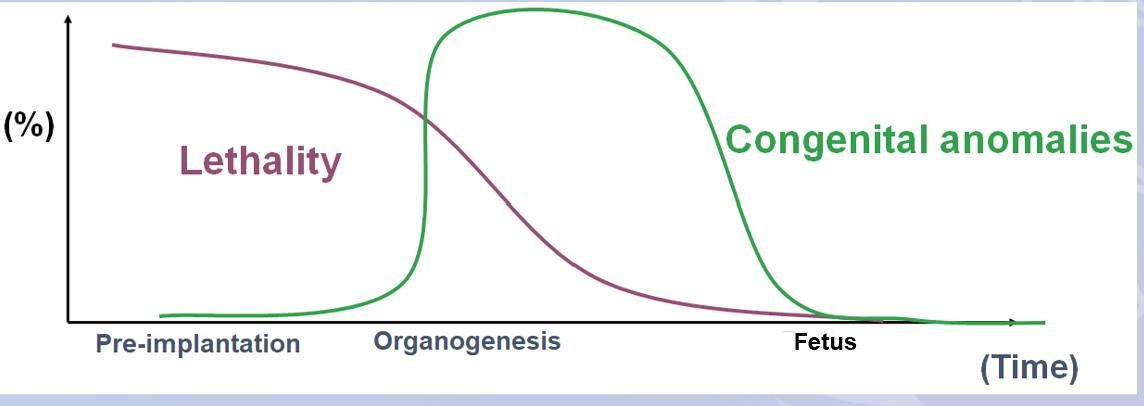
there are radiation related risks throughout pregnancy which are related to:
1- the stage of pregnancy
2- absorbed dose
radiation risks are most significant during…
organogenesis and in early fetal period (somewhat less in 2nd trimester, least in the 3rd trimester)

stages of fetal radiation risk: pre-implant stage
up to 10 days post conception, the embryo contains only a few cells which are not specialized
if too many cells are damaged, the embryo is resorbed (lethal effect)
if only a few cells are killed, the remaining cells replace those lost (within few cell divisions)
the response is considered ‘all or nothing’ i.e. lethality or survival
atomic bomb survivors had a high incidence of both normal birth and spontaneous abortion
stages of fetal radiation risk:
organogenesis
2nd - 8th week post conception
malformations occur more frequently during this period of major organogenesis
each organ system is not at equal risk during this period
risk is greatest at the period of peak differentiation of each system
factors influencing malformations:
radiation quantity and quality
dose rate
oxygen
cell type and its relationship to surrounding tissues
stages of fetal radiation risk:
fetal growth stage (after organogenesis until term)
during the fetal growth stage, the incidence of radiation induced prenatal death and congenital anomalies is, for the most part, negligible
anomalies include those affecting the CNS and the sense organs
damage induced during this fetal growth stage, which are seen in later life and include
- behavioural alterations
- reduced IQ
deterministic effects: central nervous system (CNS)
effects of CNS can occur during weeks 8-25 post-conception
CNS is particularly sensitive to radiation
development of the CNS is over a relatively long period
effects can include a reduction of IQ
a threshold dose is not apparent for these effects however below 100 mGy, effects are undetectable and not of practical significance. the exitance or otherwise of a threshold is currently a matter of debate
experimental & human data is in good agreement
deterministic effects: central nervous system
fetal doses in the region of 300 mGy can result in…
severe mental retardation (SMR)
deterministic effects: central nervous system
fetal doses in the region of 1000 mGy (1 Gy)
increase the risk of SMR to 40%
are associated with a decline in IQ of about 25 points/Gy particularly during 8-15 weeks and to a lesser extent at 16-25 weeks
stochastic effects: increased risk of cancer
radiation has been shown to increase the risk of leukemia and many types of cancer in adults in children. throughout most of the pregnancy, the embryo/fetus is considered to be…
at about the same risk for carcinogenic effects as children (i.e. a few times that of the populations as a whole)
stochastic effects: increased risk of cancer
following a fetal dose of [1], the relative risk may increase by [2] over normal incidence. the normal incidence of childhood cancer [3]
1- 10 mGy
2- 40%
3- 0.2-0.3%
individual risk, however, is small with the risk of cancer at ages 0-15 being about 1 excess cancer death per 1,700 children exposed in utero to 10 mGy
stochastic effects: genetic effects
the present estimate from the ICRP is about [1] than it had been in the past. radiation doses from exposure to diagnostic exams in pregnancy present a [2] of causing radiation induced hereditary disease in the descendants of the unborn child.
1- 5 times lower
2- negligible

risks in a pregnant population NOT exposed to medical radiation

termination of pregnancy for fetal doses of 100 mGy vs for fetal doses more than 100 mGy
less than 100 mGy: termination is not justified based on radiation risk
more than 100 mGy: there can be fetal damage, the magnitude and type of which is a function of dose and stage of pregnancy. high fetal doses (100-1000 mGy) in late pregnancy are not likely to result in malformations or birth defects because all organs have formed
pre-conception irradiation of either parent’s gonads…
has not been shown to result in increased cancer risk or malformations in children
types of fetal doses in radiology: diagnostic procedure
radiation dose to embryo/fetus from diagnostic procedures should present no risk of fetal death, growth retardations or impairment of mental development
for the majority of diagnostic procedures (fetal dose < mGy) the associated risk of childhood cancer is very low
the natural risk of childhood cancer is approximately 1 in 500
types of fetal doses in radiology: therapeutic procedures
higher doses, such as those involved in therapeutic procedures can, however, result in significant fetal harm
typical fetal doses and risks of childhood cancer for some common diagnostic medical exams (from hpa, uk, 2009)

typical fetal doses and risks of childhood cancer for some common diagnostic medical exams (from hpa, uk, 2009)
