Depression & Anxiety
 Call Kai
 Learn
Learn Practice Test
 Spaced Repetition
 Match
Match Flashcards
 Knowt Play
1/11

There's no tags or description
Looks like no tags are added yet.
Name | Mastery | Learn | Test | Matching | Spaced | Call with Kai | Chat |
|---|
No analytics yet
Send a link to your students to track their progress
12 Terms
Reactive and Pathological Depression
Reactive depression state of sadness in response to situations like loss
of a loved one.
Does not constitute mental illness, unless symptoms are disproportionate to the event or significantly prolonged.
Pathological depression resembles an emotional state we have all
experienced but differs significantly in intensity and duration.
Diagnosis of Depression
At least 5 of the following symptoms are present during the same 2-week period (and at least
1 of the symptoms must be depressed mood or anhedonia):
Depressed mood
Anhedonia: diminished interest or loss of pleasure in almost all activities
Significant weight change or appetite disturbance
Sleep disturbance (insomnia or hypersomnia)
Psychomotor agitation or slowness
Fatigue or loss of energy
Feeling of worthlessness
Diminished ability to think or concentrate; indecisiveness
Recurrent thoughts of death, suicide
Comorbidity of Anxiety & Depression
The anxiety disorder, particularly generalized or social anxiety,
usually precedes depression.
There is an extensive overlap of depression with anxiety and alcohol
dependence.
Comorbidity is estimated at almost 60 percent.
Imaging of Depression
PET scans of blood flow in brains of depressed patients show increased activity in the orbitofrontal cortex and amygdala. Imaging studies are not used to diagnose depression! They are only used for research purposes.
The Monoamine (dopamine, norepinephrine, serotonin) Hypothesis
Reserpine (drug prescribed for high blood pressure) reduces monoamine levels and causes
depression
monoamines (Down) → depression
Many antidepressants increase levels of monoamines
monoamines (Up) → antidepressant effect
Supplements that increase monoamine levels

“Stress hypothesis” of depression
45% of adults with depression lasting more than 2 years experienced abuse,
neglect, or parental loss as children
Chronic stress can lead to overproduction of cortisol (=stress hormone), associated with depression
in adulthood
Hippocampus and Stress Response
Hippocampus is involved in turning off the stress response: it signals to hypothalamus to turn off production of stress hormones (submissive monkey and dominant monkey). Research studies showed that hippocampus was shrunk in depression.

Therapies for Depression (approved by the FDA)
Pharmacological Treatments: Antidepressants
Monoamine oxidase inhibitors (MAOIs)
Tricyclic antidepressants
Second-generation antidepressants, which include SSRIs.
2019: Ketamine – blocks NMDA receptors
Electroconvulsive Therapy (ECT)
Using electrical current to produce seizures as a treatment for severe depression. Problems: ECT leads to memory loss
Transcranial Magnetic Stimulation (TMS)
Approved by the FDA in 2018
Fewer side effects than ECT because the magnetic stimulation can be applied narrowly, to a focal area, rather than diffusely, as in ECT
Cognitive-behavioral therapy
Problem-focused, action-oriented, structured treatment for eliminating dysfunctional thoughts and maladaptive behavior
Therapies for Depression (not approved by FDA)
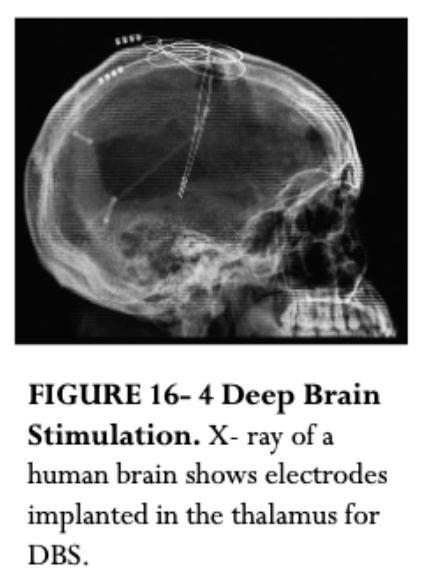
Deep Brain Stimulation (DBS)
Not yet approved by the FDA
Neurosurgery in which an electrodes implanted in the brain stimulate a targeted area with a low-voltage electrical current to facilitate behavior
Hallucinogen psilocybin is in clinical trials for resistant depression. Trial was scheduled to be completed in 2021.
Light therapy
For Seasonal Affective Disorder
Sleep deprivation
MAOIs
MAO inhibitors. The normal function of MAO is to metabolize monoamine neuro-transmitters in presynaptic terminals that are not contained in vesicles. Inhibition of MAO increases the amount of neurotransmitter available for release.

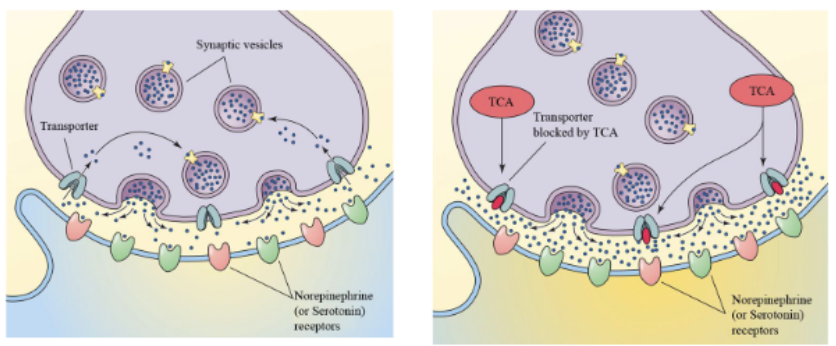
Tricylic antidepressants (TCA)
Bind to the presynaptic monoamine transporters and inhibit reuptake of neurotransmitters → longer duration of transmitter action at the synapse.
Mostly block reuptake of serotonin and norepinephrine, much less dopamine