Museum and Society Midterm
 Call Kai
 Learn
 Practice Test
 Spaced Repetition
 Match
 Flashcards
 Knowt Play
1/23

There's no tags or description
Looks like no tags are added yet.
24 Terms

Interior view, Montagu House
Many collections given to British Museum when first opened, mostly big 3, first collection given by Hans Sloane and his cabinet of curiosities since he was a doctor so he had weird collections and Cottonian and Harleian libraries gave, so started off with interesting books and even illuminated manuscripts
Established first in pre-existing building called the Montagu house, stately family home in Bloomsbury Square, London, area long associated with intellectual and cultural history
Scientific items and various texts, eventually other gifts would include sculptures, prints and drawings but no permanent collection of paintings
Since it was residential architecture the idea of having an exhibition for a while was really awkward and hard to understand where pieces should go, so designed where space was not intention where it would work, very random and illogical, free tours but no sense of how trained, no labels for a while but rather a super long extensive 240 paged book about each object and identify them, Very studious, collection started growing very quickly and greatly, eventually natural history parts moved off to natural history museum so arrangements made
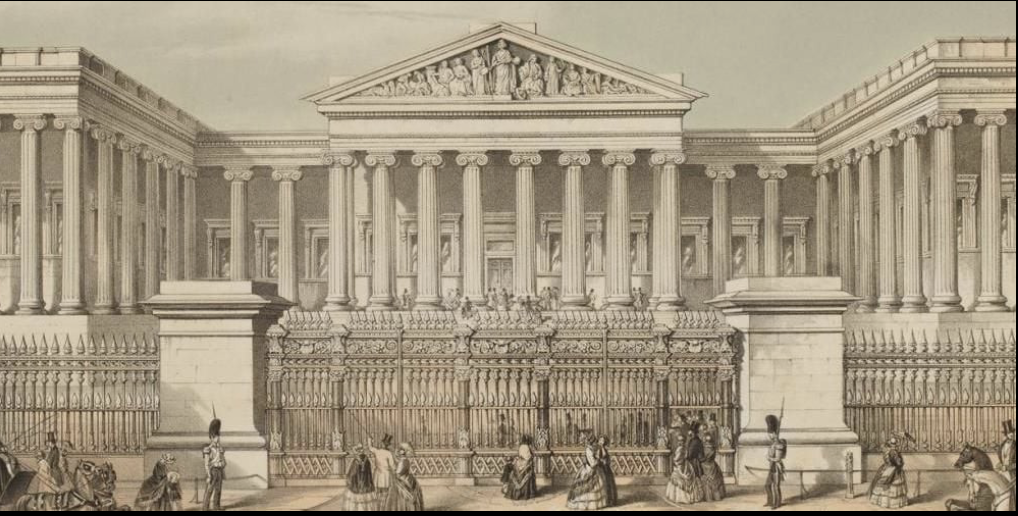
Robert Smirke, British Museum, 1823/1847
Before iron structure and can see into it a little more, still stately approach, built right on site of the previous older building, Still clear sense established in 1800s as this is a dignified structure and commands attention and intellectual respect
replace stately homes with this kind of neoclassical structure mimicking antiquity, building emanates ideas of that time and the thinking of that time, place emphasizing a lot of money and support been put into it

Plan for British Museum
Uplift symbolic elements of different parts
see temple front and then when you go inside there’s a courtyard and segments can go in, reading room in this round center

British Museum reading room
See before covering of the area and then early view of the interior

British Museum interior view of gallery, 1820, water color, anonymous
Two visitors seen dressed in clothes “from abroad” with darker skin possibly from Egypt, see various inscriptions and see the scale concerns and exploits that objects present, also see disk thrower from antiquity again, so early example of mixing different kinds of pieces and arranging without much interference
gallery type space with distribution of objects, older view

Scenes from Hitchcock’s Blackmail: 8 Film Stills, 1929
Blackmailer goes to escape the police in the British museum and this is where you see so many different sections like the Egyptian wing and obviously the large head that is famous from this movie, you see good place to hide since very vast and many things to hide behind and to kind of blend into
National gallery plays a role too
The reading room often pays a large role and is in many movies
Why always an Egyptian gallery? This idea of creepy and like mummies, tiny cramped spaces, but in general ancient Egypt has become synonymous with museum

Ole Worm Collection, 1655 - Museum objects and history of collecting
The 1655 is not organized intentionally vs. something clearly curated in a specific way, on the Met the focus is on one culture vs. just kind of a mishmash or one guys interest
See advancements in recognizing what things are, where they come from and where they should be displayed vs. just the items you want to feature
Not exactly clear what's in Ole Worm’s collection, would take research to actually clarify, this is why scholars have to study these works and see the objects and what they actually are
Wunderkammer, room of wonder
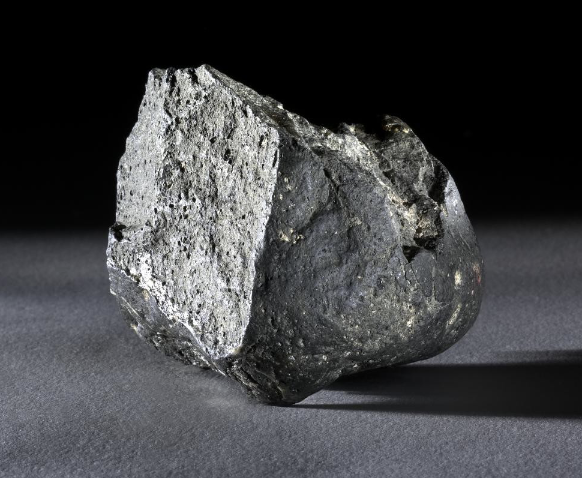
Olduvai stone chopping tool, 1.8-1 mil yo
From Neil MacGregor on 100 objects (2010) from the British Museum
One of the pieces you want to hold clearly, a piece that would fit in your hand well and can test the feel of it, object based approach to museum, not theorizing from writing but examining the object itself, study the object and tease out from observation skills

Basse-Yutz flagons, bronze, c 450 BCE. Northeastern France
From Neil MacGregor on 100 objects from the British Museum
From Northeastern France, considered first artistically made objects in this area ever, falsifies idea of all people in this area being barbarians
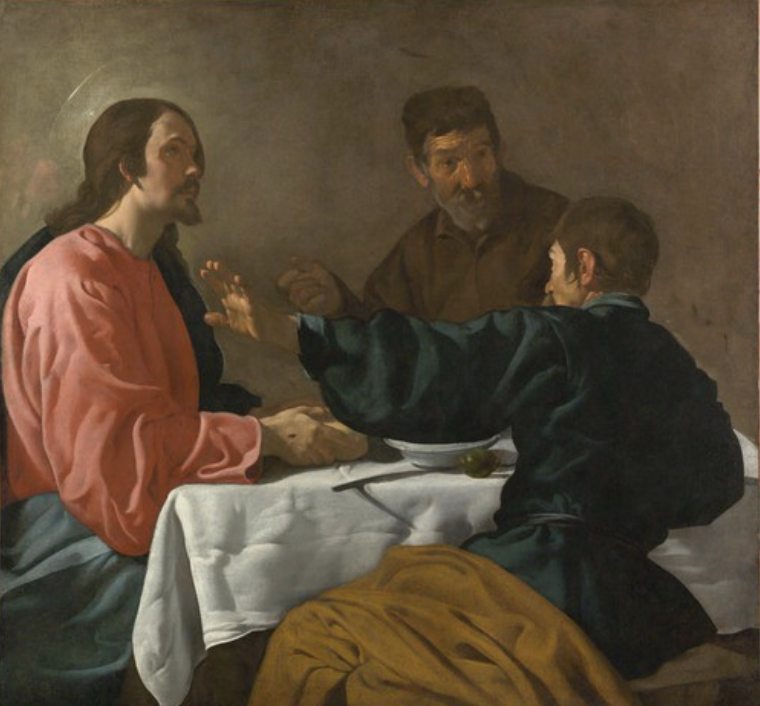
PROVENANCE
Velazquez, Supper at Emmaus, 1622-23
First clear date is 1870, but painting made in 1622-23 so long time to have no location or evidence of where it is, need to know the early provenance
Just summarize where it went not all dates, when it was made when do we next see it


PROVENANCE
Fauteuil á la Reine, 1749
new owner 1818, Met 1913ish

British Galleries, new installation At Met, since 2014
Many cases, pedestals and various kinds of supports, interest in looking beyond something to look at something else, so architectural organizational devices
Various lighting, like this track lighting which allows for dramatic effects like spotlights
Done by Roman and Williams, architectural and interior design company, so this sort of retail design issue and choosing to do a retail orientation, this idea that this would entice viewers more than a typical gallery

Before Yesterday we could Fly, Met “period” room, since 2021
Objects from African American village that was in Central park before park was finalized when property was taken, curatorial staff here want to create this period room of a lost location only known by a few photographs and barely any historical records, so a new modern concept of a period room
Historical objects, also a retail sense, how do you show a lost period of time where we only have remnants, why fake it and make it looks like a room

Talbot, Articles of China, before Jan 1844
Photographed a lot of different objects and took great care to organize for viewers in specific ways
took many images from around this time, show attentiveness in care in positioning objects relates to intention for what you’re capturing and how that can influence how its viewed, takes photos also as proof of what you own, forensic and legal purposes

Studiolo of Franceco de’Medici, 1570-72
Paneling of a studiolo by a Medici, decorated with paintings about personification of objects, so a learned complicated referencing to the objects
Much more clever way of displaying, tricky way of structuring this exhibition where you kind of need a reference to understand, how to make it only accessible to certain people
Elaborateness in the scenes of the paintings and identity of the figures which reference the personifications of mythological stories
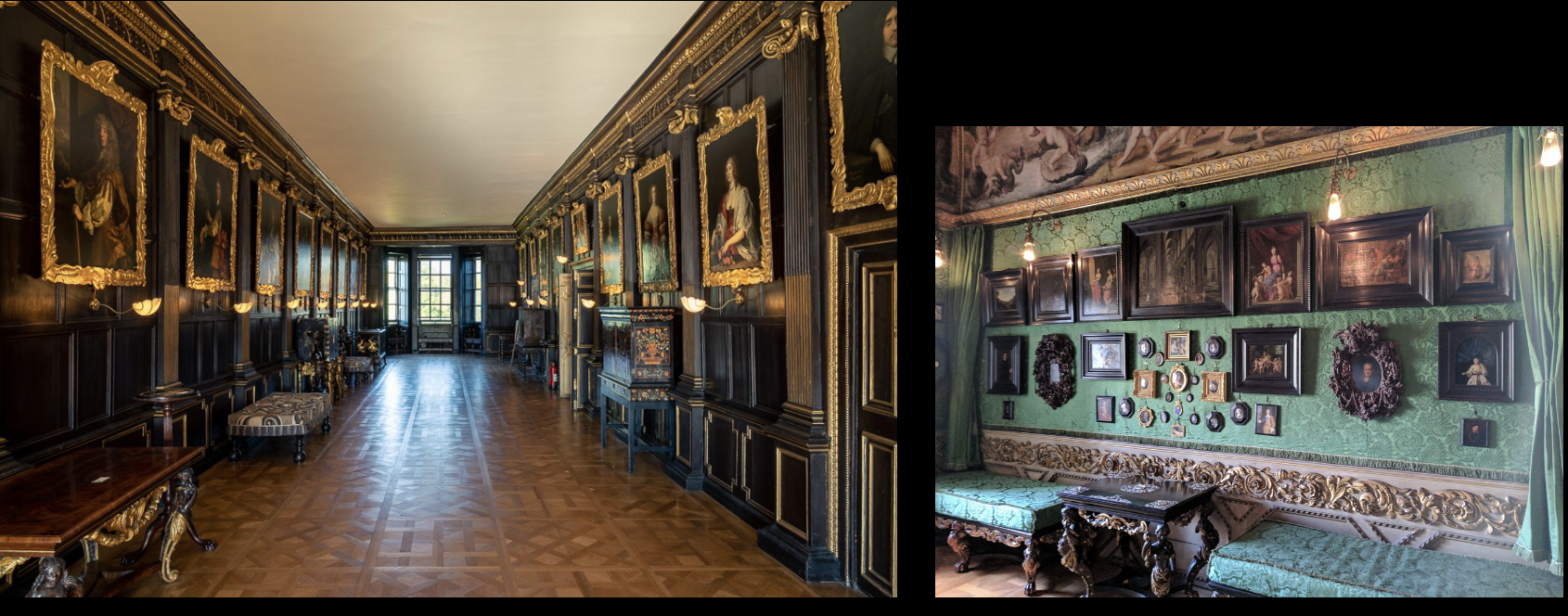
Ham House, Richmond, near London, gallery and closet/cabinet, mid 17th c.
Has gallery but also has closing cabinet
Gallery and “Closet” or cabinet (room), also in Ham House
Have closets or cabinets connected, have multiple small rooms offshooting have these small rooms which often have their own meticulous way of organizing the works
Closet or cabinet room meaning small room, best to look at very small pieces since you can sit down and examine them and such

Robert, Grand Galerie, Louvre, 1805-9
See early painting of 19th century with a specific display category, a salon style after biennial salons that were organized by school of fine arts, Beaux art displays
Paintings hung on this busy background behind them, rooms filled with methods to exercise power and authority, favoritism depending on which image is located
Some spaces always for art exhibition, regular exhibitions held by the royal academy in France, this organization had competitions for exhibitions every two years, this became way to show your skill and ability, similar to a biennial, paintings hung in very crowded way, see installation preferences
Perelly, view of Louvre, 1680
Art becomes part of public property
Only parts of galleries seen visible

St Aubin, Salon of 1765
Not even any breathing space between the paintings, some start designing paintings so its dominated in these scenes and commands more attention
Artists focus on making images of biennial salons, recording specific paintings and also so you can get a sense of what it's like, show how unfair and politically manipulated setting and how artists kind of battle for where their work is displayed

Salon d’Automne, 1905
Paintings larger and rectangular frame, no emphasis in frame to take away from painting, fill wall with large substantial paintings, see this as we move into avant-garde, non traditional event and display not controlled by academy or school of fine arts

Degenerate Art exhibition, 1937
Political manipulation of works, this is the Nazi forced confiscated art work display and replaced their works with Nazi work, people believed these works were degenerate and produced by people with mental problems, so low brow attitude to innovation in art became dominant rule, so these works were stolen and often sold in unethical ways leading to reparation later on
This exhibition traveled to get the word out of don't do this, look at these disgusting works made by disgusting people in general
Wall text and titles all insulting, reversing educational components

RISD museum, school tour, c 1915
School tour, classic set up with everyone dutifully standing from a distance and tour guide standing with raised arm pointing at painting just like in the old catalogue museums, having an organized tour by a person trained and idea of being trained to be a tour guide, in 19th early 20th century is when the term docent is introduced to describe the person giving the museum guide, fairly high up position in German university usage but here represents a volunteer not quite a curator

Louise Connolly, docent class, Newark Museum, 1915
Docents used to not mean much but now they're like trained people, louise connolly comes up with idea of, of course everyone at museum should be educated on the museum and able to tour

Gilman, Museum of Fine Arts, Museum fatigue
Display of objects have to include spectators taste and what they need, hand things for them and understand what they want, comes after John Cotton Dana's critiques
some things just hung too high cant see
John Cotton Dana, Newark Museum, The Gloom of the Museum, 1917
Hired Louse Connoly to travel around country and to different museums and their education, she learned a lot about these visits and did tours herself
She would have a stuffed squirrel “help” with the tours, rather amusing weird little detail, Dana used to be former director of Newark Museum so this new idea ofd actually hiring someone to tour in your museum
Dana was critical of museums and says kind of necessarily weighing people down, want it to be more accessible and available to the public

Children’s Museum, Boston, recent image of a tour
Always have to have some kind of activity to keep children occupied
Many recommendations for museum education emphasize engagement through activities and other forms of participation, it's more like a playground now harder to actually get attention