CLASSICAL GREECE
 Call Kai
 Learn
 Practice Test
 Spaced Repetition
 Match
 Flashcards
 Knowt Play
1/30

There's no tags or description
Looks like no tags are added yet.
31 Terms

Dying warrior 490 bce
archaic smile wasn’t appropriate for this statue. Made him look happy to die. Body was posed and too perfect
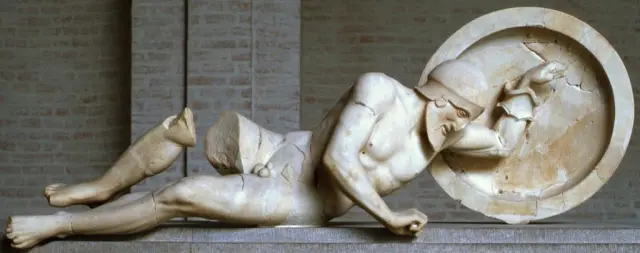
Dying warrior 480
More naturalistic and real than the other. No archaic smile

Kritios Boy from acropolis 480
Portrayed as young with no facial hair. Marble
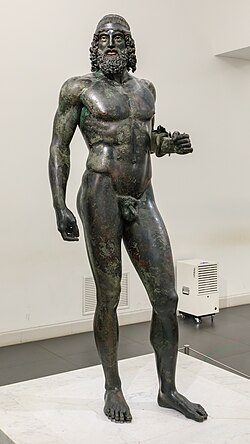
Riace Warrior 460-450
Older with facial hair. Defined muscles. Warrior. Made of bronze
Contraposto
When figures legs are positioned as one bearing weight and the other relaxed bent
“Contraposto, one leg bent the mosto”
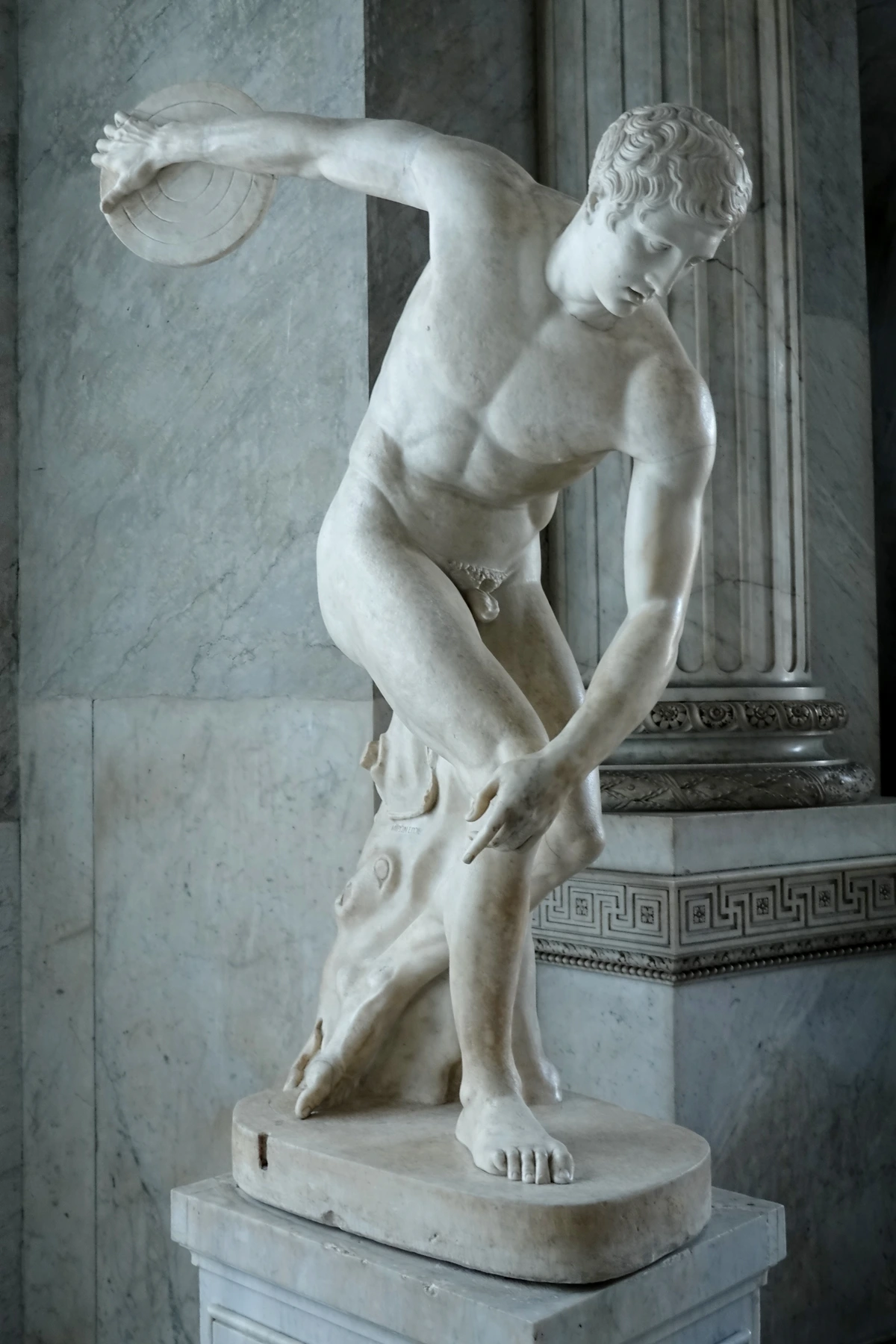
Myron, Diskobolos (disk thrower) 450bce
Roman copied jt and mass produced in marble statues. The og bronze statue did not survive. Built for multiple view points. Dynamic. Communicated Greek ideals of the perfect male body

Delphi Charioteer
Temple of Apollo
Draped instead of nude because it wasn’t appropriate to be naked in a temple for the gods. Young no facial hair.
Bronze statues made with lost wax process

Zeus or Poseidon statue
460-450
powerful, developed physique. Warrior. Features give it power.
Polykleitos
Artist. Wanted to show ideals for the human body are eternal

Dorypharos (spear thrower)
450-444
Original name : the cannon
Ideal body proportions.
Mathematical equations used to create the ideal human body proportions.
Canon: standard or model

Acropolis
City state in Athens Greece
Sacred, defensive site.
Layers of temples built on top of temples.
Built on naturally raised rock.
Has a steep accent because the gods need to be close to the heavens.
Propylaia: gate to acropolis
Parthenon: temple of Athena

Parthenon
447-448 9 years to make
Primary temple. Dedicated to Athena the military deity. Protects Athens.
Associated with Nike —> name of victory goddess.
Parthenos. Temple structure based on math formula 2x = y+1. A Doric temple. Houses cult statue of Athena made of chryselephantine (gold & ivory).
Columns have a swell to them called Entasis.

Battle of lapiths & centaurs.
Part of Parthenon frieze.
Centaur trampling man. Carved to portray motion. Every stone was dressed particularly for a place in the temple.

Three goddesses (Hestia, Dione, Aphrodite)
On Parthenon pediment.
Observation of birth of Athena.
Form hugging drapery. Woman’s bodies underneath clothing start to be revealed.

Helio & his horses & Dionysos.
Tallest point in the pediment.
Statues poses respond to the slope of the pediment.

Horseman from Panthenaic procession.
Frieze of pantheon located in cella.
Increase in movement, naturalism, autonomy.
Panthenaic procession: yearly celebration of Athena.

Propylaia
Gateway to acropolis.
Doric. Strong defensive architecture.
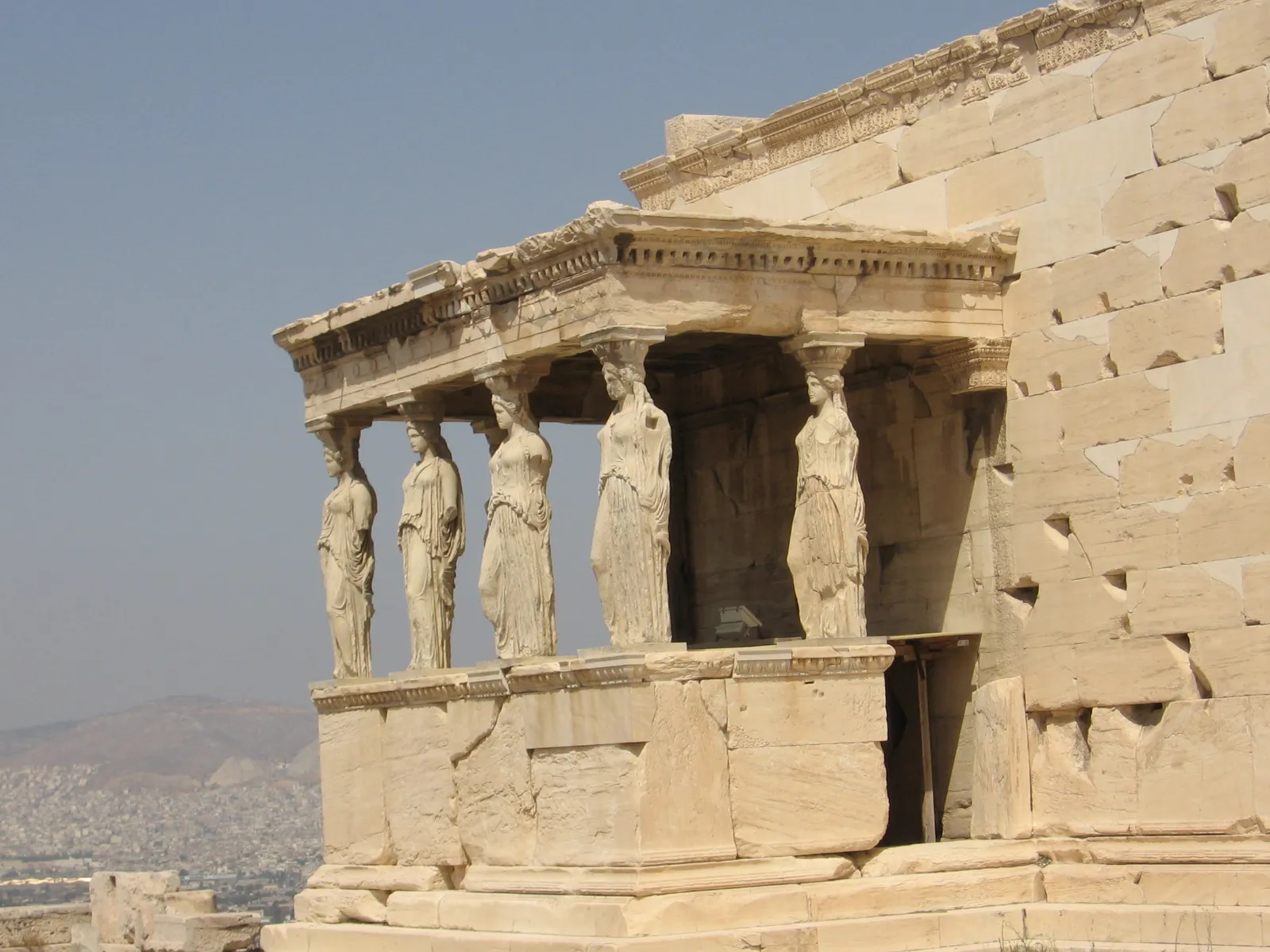
Erechtheion
Picture gallery in acropolis.
Ionic orders, feminine
Slender columns. Porch has caryatids

Aphrodite of Knidos 350-340
Sculptor: Praxiteles
made his sculptures of women naked to celebrate the new female body
Venus pudica type: modest Venus
Revelation of body but also concealment as she is partially covering herself
Human figure proportions are getting elongated

Hermes (messenger god) and Dionysos 340bce
Elongated proportions
Smaller head.
Censual pose that emphasizes curves

Apocyomenos 330bce
Scraping his body.
They oiled their bodies and would scrap off the excess
When is the classical period?
480-400 bce

Hercules resting. 320bce
Made by lysippos
Large muscular build that communicates strength.
He’s resting which communicates tiredness. Oxymoron of being a diety known for strength but being exhausted

Hades abducting Persephone
From tomb 1 fresco
Didn’t see a lot of painting in Greek time bc the frescos didn’t survive.
Communicates emotion and movement
When is the Hellenistic period?
323-330bce

Battle of Issus
Tessera: individual stones/ glass making up a mosaic
Battle between Alexander the Great and Darius of Persia.
Portrays depth of space
What is a theme of the Hellenistic period?
The pieces had dramatic narrative scenes with extreme emotion

Athena Battling Alkyoneas
Frieze on alter of Zeus
Alkyoneas —> giants
Carved in high relief advancing out of wall

Dying Gaul killing himself and wife
Gaul: ethnic group who occupied present France. In conflict w Greeks
Greeks represents Gauls as barbarians
Gaul killed himself honorably to escape becoming a slave by the Greeks
Greeks recognize them as inferior but also recognize their honorability
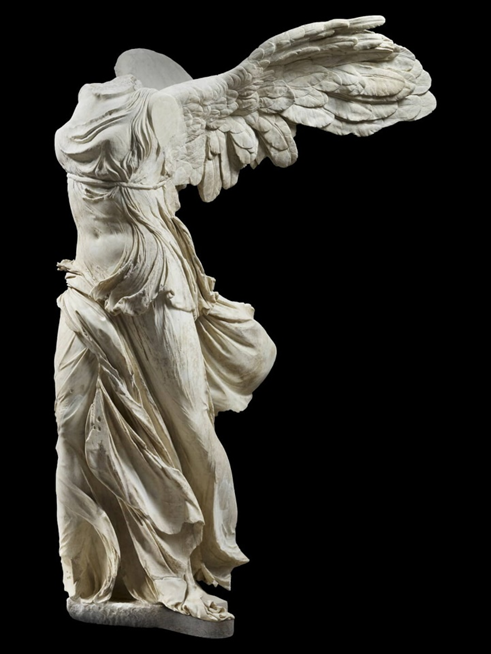
Nike of Samothrace
Goddess of victory
Dramatic movement
Setting on a boat