BSC2010 Exam 2
 Call Kai
 Learn
 Practice Test
 Spaced Repetition
 Match
 Flashcards
 Knowt Play
1/120

There's no tags or description
Looks like no tags are added yet.
121 Terms
gene
unit of heritable information
why do individuals resemble each other
they share genes
they share environments
function of reproduction
transfer of information between parent and daughter cells or between parent and offspring in multicellular organisms
Apportionment of organelles
asexual (clonal) reproduction
daughters genetically identical to parent
ALL prokaryotes, many eukaryotes
binary fission in prokaryotes and mitosis in eukaryotes
sexual reproduction
parents combine genes
leads to recombination = daughters genetically different from parents
ONLY in eukaryotes
binary fission

centromere
region of chromosome where chromatids are held together
kinetochore
protein complex that forms on centromere where spindle microtubules attach
centrosome
microtubule organizing center of the cell
centriole
one of two barrel shaped structures within centrosome
stages of cell cycle
G1 (or G0), S, G2, M
interphase consists of
G1, S, G2
Interphase (G1)
Each chromosome is a single, unreplicated, double strand of DNA
One chromosome from each parent forms a homologous pair
Chromosomes in nucleus surrounded by membrane
Single centrosome

Interphase (S)
After DNA replication, two “sister chromatids” are present for each homolog
Each sister chromatid is the same double stranded DNA molecule
The two sister chromatids are attached by proteins
Centrosomes duplicate

Interphase (G2)
Organelles duplicate
Prepares for mitosis
Mitosis (M) Phase
Prophase, Prometaphase, Metaphase, Anaphase, Telophase
Early Prophase
Chromosomes begin to condense
Mitotic spindle forms from centrosome
Centrosomes begin to migrate to poles of cell
Nucleoli disappear

Mid Prophase
Chromosomes fully condensed
Centrosomes complete migration to the poles
Nuclear envelope begins to degrade
Spindle fibers enter nuclear area from poles
Kinetochores form at centromeres
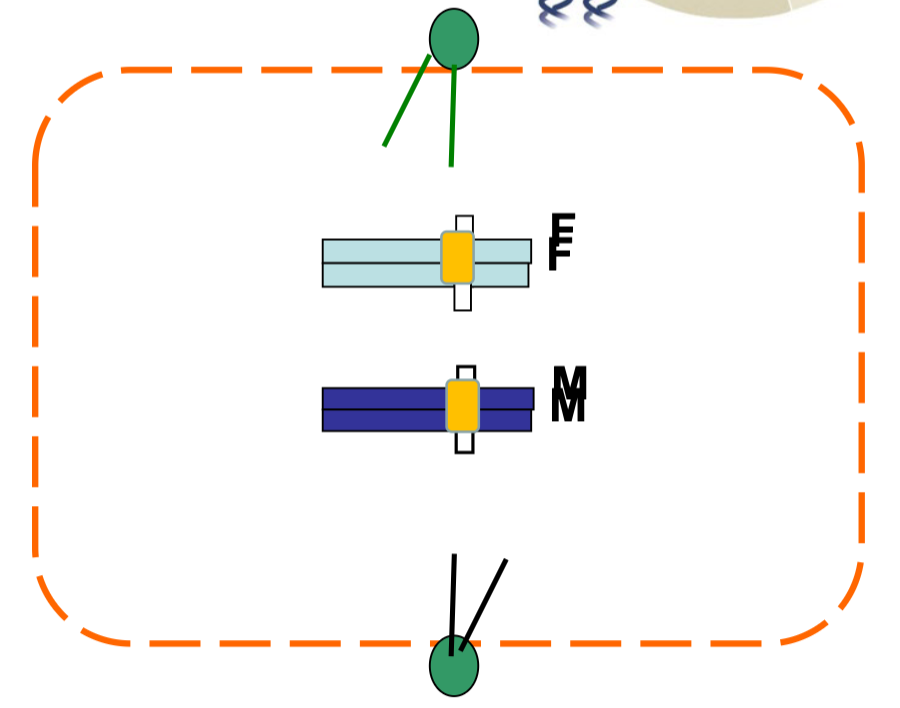
Prometaphase
Nuclear envelope completely degraded
Spindle fibers begin to attach at kinetochores
Sister chromatids attached to opposite poles

Metaphase
Spindle fibers attached to centromere at kinetochore
All sister chromatids attached to opposite poles
Chromosomes migrate to center plane of cell, “metaphase plate”

Anaphase
Protein bond between sister chromatids degrades
Sister chromatids separate, migrate toward opposite poles
Poles move farther apart as non kinetochore spindle fibers (polar microtubules) lengthen

Telophase
Non-kinetochore (polar) spindle fibers continue to elongate cell
Nuclear envelope begins to form at poles
Chromosomes decondense back into chromatin
Nucleoli re-form, cytokinesis begins

Cytokinesis in Animal Cells

Cytokinesis in Plant Cells

Short-term function of meiosis
Create haploid cells from diploid cells
Ultimate function of meiosis
Generate genetic variation through recombination by which natural selection can act
Diplontic Life Cycle

Haplontic Life Cycle
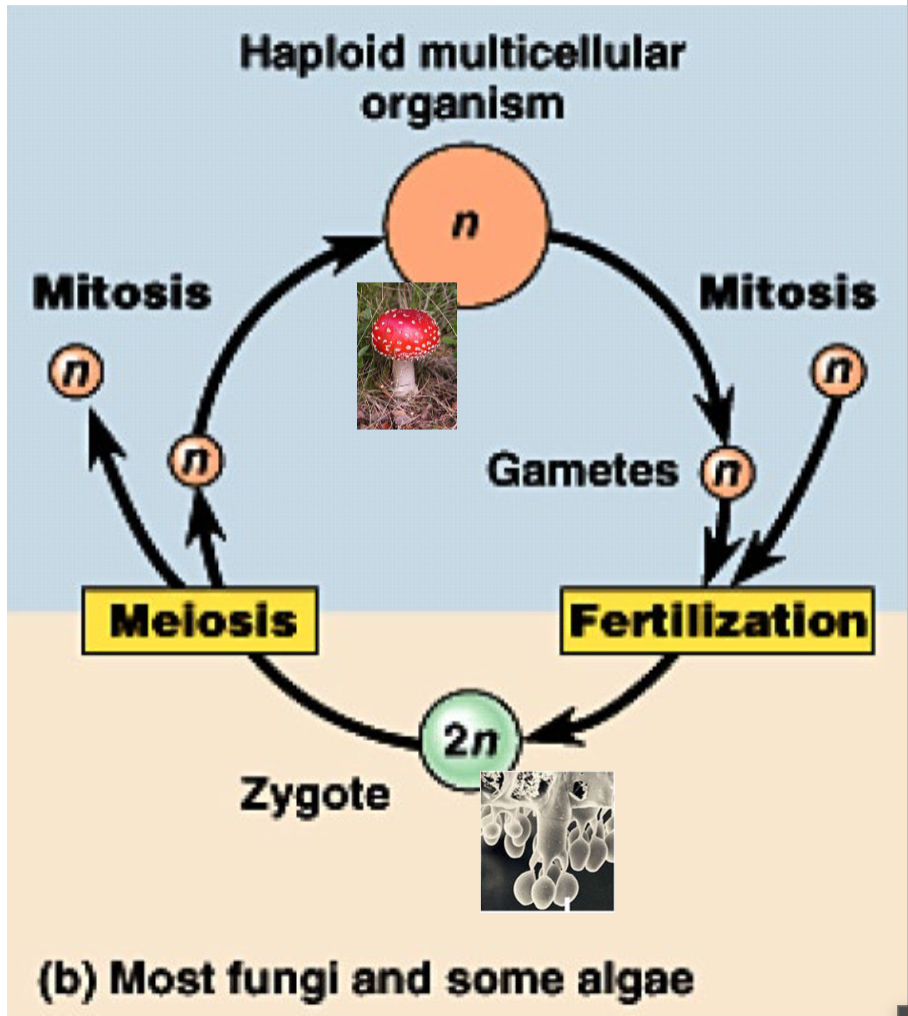
Alteration of Generations (Diplo-Haplontic) Life Cycle

Interphase 1 (G1) Phase
Begin with two homologs chromosomes (n pairs)
DNA content = 2c
Ploidy = 2n (diploid)

Interphase 1 (S) Phase
Chromosomes replicate
DNA content = 4c
Ploidy = 2n

Early Prophase 1
Synapsis occurs as homologs form tetrad
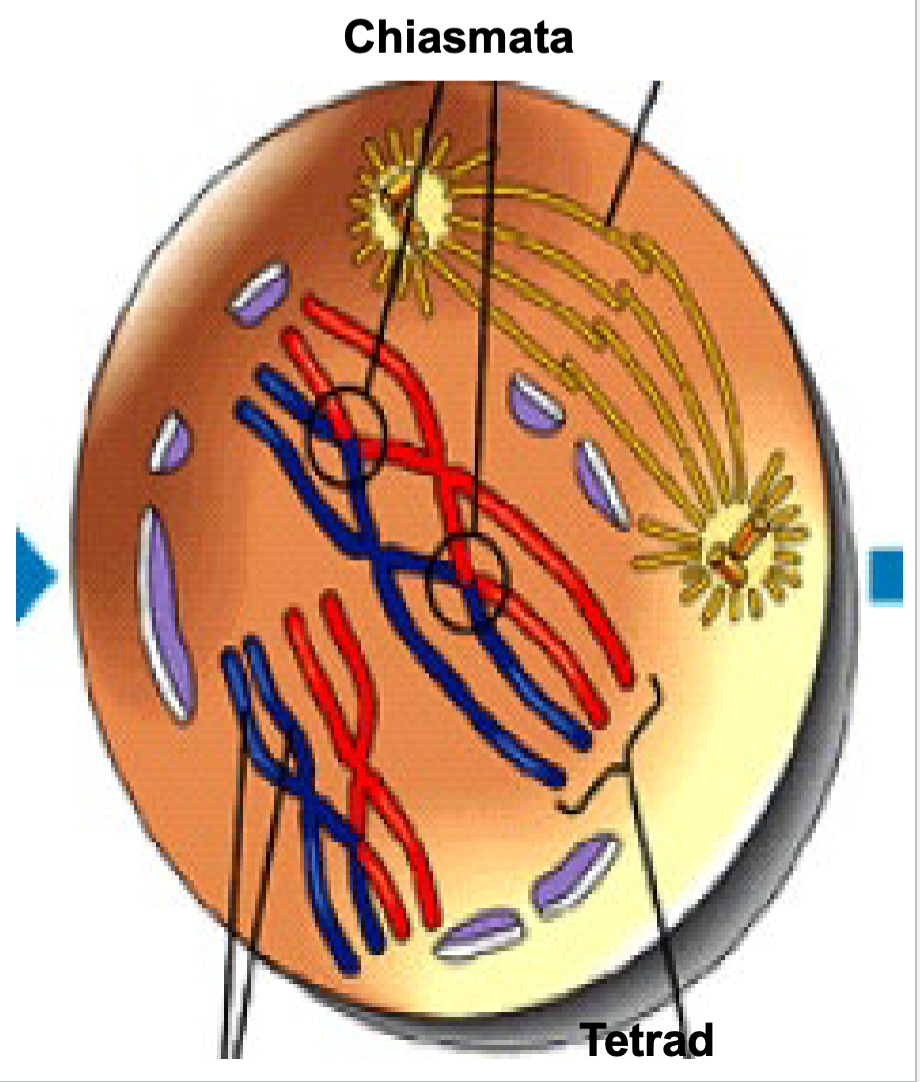
Late Prophase 1
Chromosomes cross over, form chiasmata
Exchange of DNA between homologs occurs at chiasma
Spindles form and attach to kinetochores as in mitosis

Metaphase 1
Chromosomes lined up on metaphase plate in homologous pairs
Spindles from one pole attach to one chromosome of each pair
Spindles from the other pole attach to the other chromosome of the pair

Anaphase 1
Homologous chromosomes separate and move along spindle fibers toward pole
Sister chromatids remain attached at centromeres
RECOMBINATION HAS OCCURRED

Meiosis 1 - Telophase and Cytokinesis
Homologous chromosomes reach opposite poles
Each pole has complete HAPLOID complement of chromosomes
Each chromosome consists of two sister chromatids
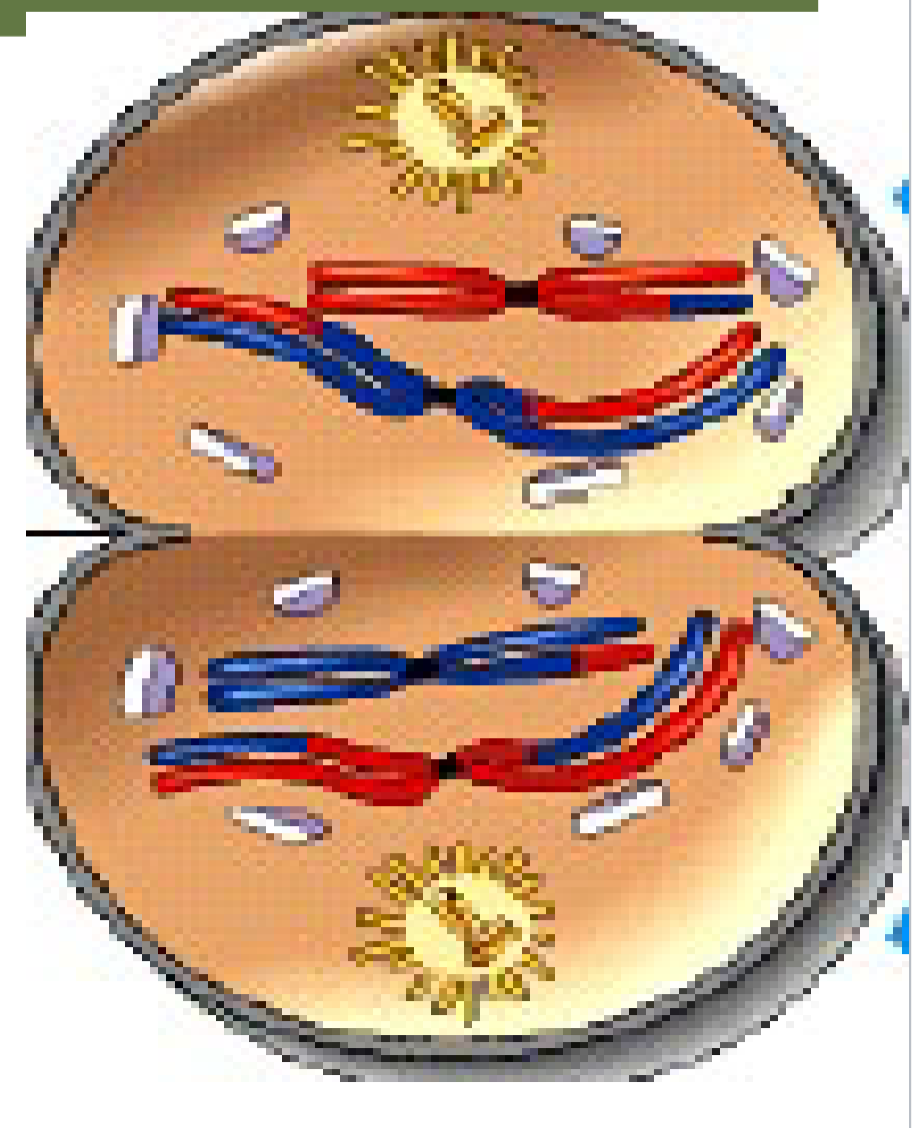
Prophase 2
Spindle forms
Chromosomes move toward metaphase plate

Metaphase 2
Chromosomes reach metaphase plate, as in mitosis
Kinetochores of sister chromatids attach to spindle fibers from opposite poles

Anaphase 2
Centromeres of sister chromatids separate
Sister chromatids move toward opposite poles
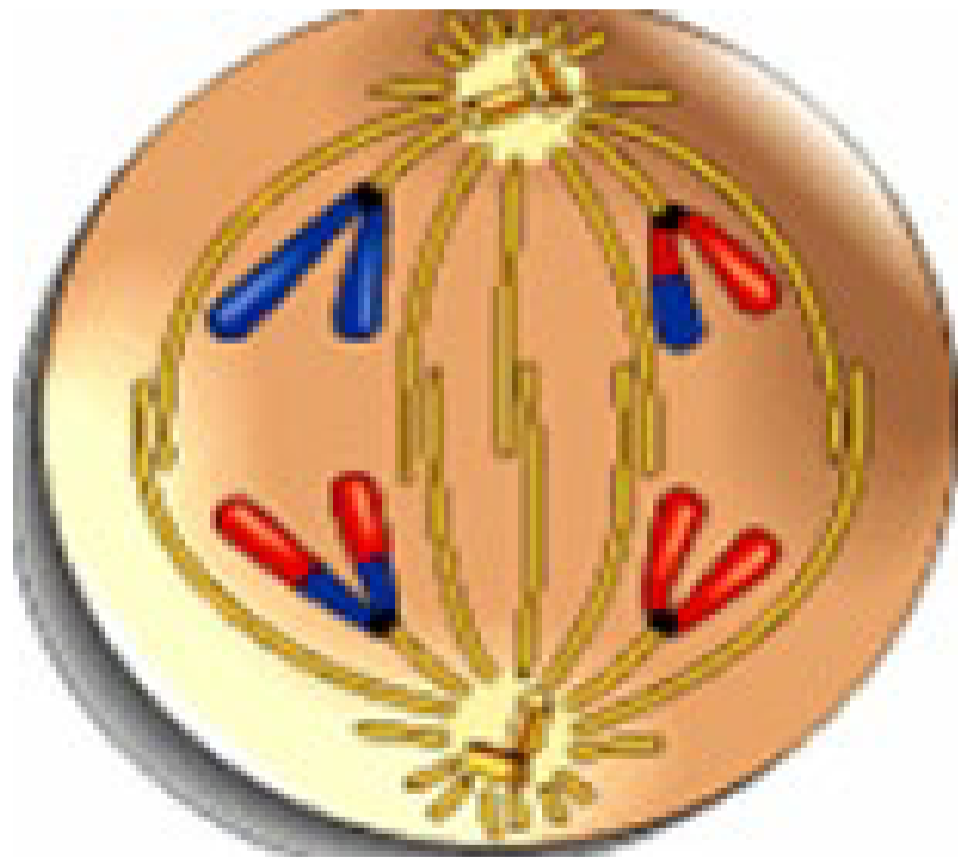
Meiosis 2 - Telophase and Cytokinesis
Same mechanism as Meiosis 1
Four haploid daughter cells from each parent cell
Some chromosomes are recombinant and others are not

Cell Checkpoints
G1-S, S, G2-M, M
How do cyclins and CDKs regulate the cell cycle?
CDKs are ALWAYS expressed
Different cyclins are expressed at certain points in the cell cycle
Binding of cyclin to CDK allows CDK to phosphorylate something by exposing its active site
This phosphorylation can repress things that work to slow the cell cycle or halt it
Mendel’s Law of Segregation
If an individual has identical alleles at a locus, that allele is present in all its gametes. If an individual has two different alleles at a locus, half its gametes receive one allele and half receive the other allele.
Mendel’s Law of Independent Assortment
Alleles at each locus segregate independently of alleles at other loci, except for when genes are very close together on the same chromosome
What is a test cross?
When an individual with unknown genotype is crossed with an individual with a homozygous recessive genotype.
Incomplete Dominance
When heterozygous individuals have a trait that is an intermediate of the dominant and recessive traits. EX: If HH = Red and hh = Blue, Hh = Purple.
Co-Dominance
Heterozygotes have a completely different characteristic compared to homozygous dominant and recessive. Heterozygotes are not an intermediate. Ex: ABO blood types.
Pleiotropy
One gene affects multiple characters
Epistasis
Expression of one gene modifies the expression of another gene. Ex: Coat color in mice.
Polygenic Inheritance
Multiple traits control one phenotype
Transformation
Bacterium takes up free floating extracellular DNA (often from lysed cell) while in a state of competence
Transduction
When bacteriophage interacts with bacteria it can pass DNA in that is incorporated into host genome
Conjugation
Sex pilus between bacteria is used to transfer genetic information
Chargaff’s Rule
A=T and G=C in all DNA
Hershey-Chase Experiment
Put radioactive isotopes of sulfur and phosphorus in bacteriophages then blended and centrifuged them to see where the radioactivity is. Found that DNA is put into the cell, not proteins, and that DNA carries genetic info.
Meselson-Stahl Experiment
Synthesized one strand of DNA with heavier isotope of nitrogen and let bacteria replicate twice with lighter nitrogen and proved that DNA replication is semi-conservative.
Direction of DNA synthesis
5’ to 3’
Topoisomerase Function
Relives strain from super-coiling ahead of DNA replication fork
DNA Helicase Function
Unwinds/ Unzips DNA helix
Single Stranding Binding Proteins (SSBs) Function
Prevents DNA strands from rewinding as DNA is being replicated
DNA (RNA) Primase
Makes short RNA primer for replication to start on
DNA Ligase
Joins Okazaki fragments
DNA Polymerase III
Main replicative enzyme that synthesizes new strands on both leading and lagging strands
DNA Polymerase I
Removes RNA primers and fills the gaps in Okazaki fragments
Telomerase
Catalyzes lengthening of telomeres in germ line and stem cells
Stages of transcription
Initiation, Elongation, Termination
Initiation (Transcription)
RNA Polymerase binds to promoter sequence on template strand
RNA Polymerase unwinds DNA at promoter

Elongation (Transcription)
RNA Polymerase generates strand as bases base-pair with template strand
Creates mRNA from 5’ to 3’ (therefore reading template strand 3’ to 5’)

Termination (Transcription)
Transcription stops when RNA Polymerase reaches terminator sequence
RNA Polymerase disengages with mRNA and DNA

Transcription Factors
Help RNA Polymerase bind to promoter sequence of DNA

How is the primary transcript processed in Eukaryotes
Introns taken out, 5’ GTP cap added, 3’ Poly-A Tail added
Spliceosome Function
Formed from small nuclear ribonucleoproteins (snRNPs) which recognize splice site sequence and excise it. Cuts out introns, joins exons
Ribozymes
RNA molecules with catalytic activity
Enzyme that attaches amino acids to tRNA molecules
Aminoacyl-tRNA synthetase
Initiation (Translation)

Elongation (Translation)
Codon recognition
rRNA ribozyme catalyzes peptide bond formation

Termination (Translation)
Release factor protein binds stop codon and releases mRNA
Release factor cleaves bond between tRNA and amino acid

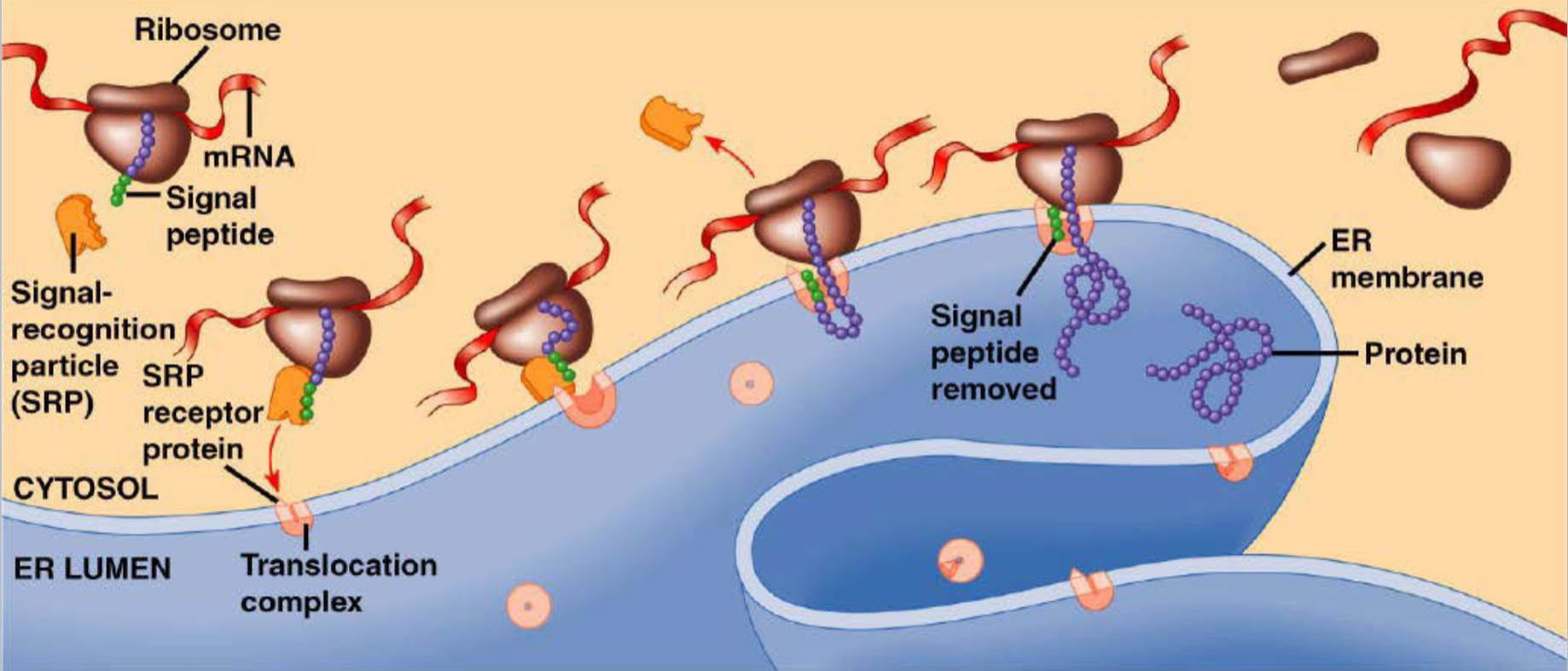
What is a signal peptide
Sequence of 20 amino acids near amino acid of peptide
Binds to receptor protein in rough ER membrane
Growing polypeptide translocated into the ER space through membrane pore
Point Mutation
single base substitution
Silent (Synonymous) Substitution
No effect on polypeptide, mutation results in same amino acid being made
Replacement (Non-Synonymous) Substitution or Missense Mutation
Mutation results in different amino acid being put in
Nonsense mutation
Mutation results in stop codon and premature termination
Frameshift Mutation
Insertions/Deletions which change the reading frame
Tautomerization
The spontaneous, reversible shift of a proton within a DNA nuclease, changing a single bond and an adjacent double bond which changes the base’s hydrogen bonding properties and causes replication errors and point mutations
Spontaneous Deamination
Spontaneous loss of amino group which causes point mutation or replication error
Mismatch Repair vs. Excision Repair
Mismatch repair fixes normal undamaged nucleotides that were mispaired
Excision repair removes damaged or chemically altered bases
Non-Disjunction
Improper number of chromosomes being put into the gametes
Chromosomal Inversion

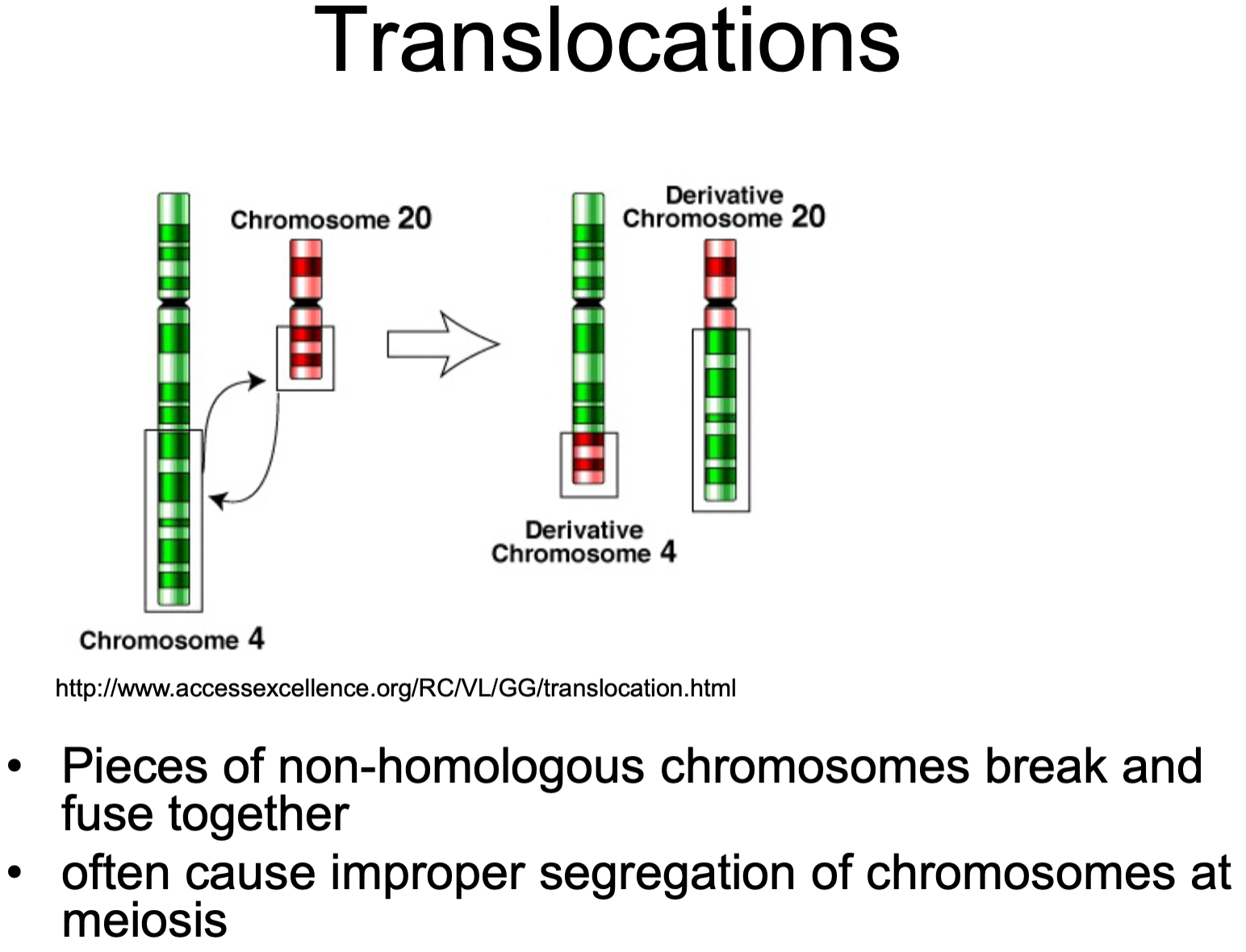
Chromosomal Translocation
Transposable Elements (“Jumping Genes”)
Genetic elements insert into new locations in the genome
Conservative transposition: “cut and paste”
Replicative transposition: “copy and paste”
Counts as non-homologous recombination
Transposase
Catalyzes movement of transposable element to new location in the genome
Reverse Transcriptase
Enzyme that uses an RNA template to create DNA (cDNA)
Retrotransposon Life Cycle

Composite Transposable Elements
Contain additional genetic information besides transposase like antibiotic resistance genes
Parts of an Operon
Promoter, Operator, Structural Genes, Regulatory Gene (Outside Operon)
Trp Operon

Repressible operon (usually function in anabolic reactions)

Lac Operon
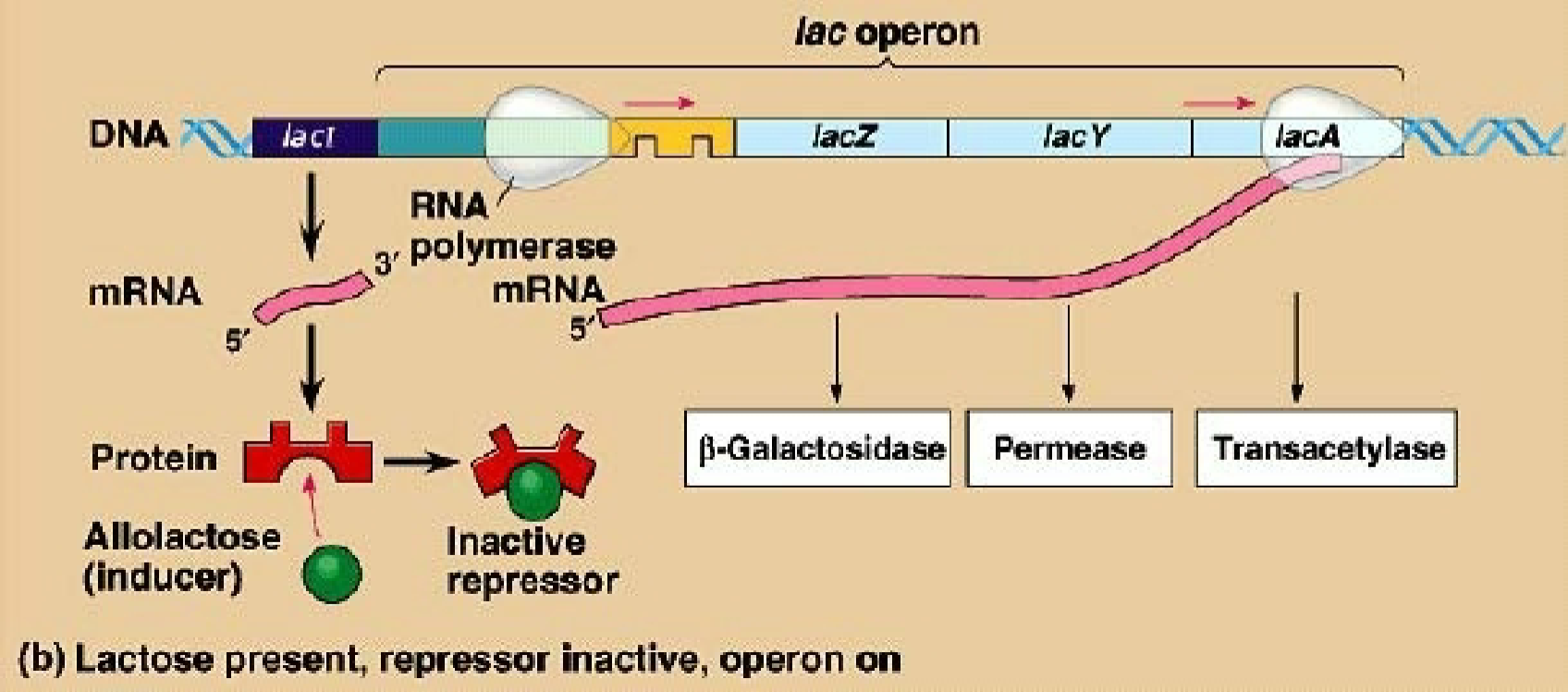
Inducible operon (usually function in catabolic reactions)

Constitutive (Housekeeping) Genes
Genes that are always expressed
Negative Regulation
Transcription switched off by active repressor as in trp and lac operons
Positive Regulation
Transcription switched on by an activator molecule as in the lac operon