Plate Tectonics and Hazard Effects
 Call Kai
 Learn
Learn Practice Test
 Spaced Repetition
 Match
Match Flashcards
 Knowt Play
1/39

There's no tags or description
Looks like no tags are added yet.
40 Terms
What are plate tectonics and what is the evidence for them?
A theory stating that the earth's surface is broken into plates that move.
Evidence:
Jigsaw fit of continents
Same fossils in different locations
Similar layers of rock found on different continents
Plate Margins
The place where tectonic plates meet and the earth is particularly unstable
Crust
The thin and solid outermost layer of the Earth above the mantle

Mantle
The largest layer of the earth between the crust and the core which is made up of semi-molten rock which is constantly moved by convection currents.

Outer Core
A layer of molten iron and nickel that surrounds the inner core of Earth

Inner Core
A dense sphere of solid iron and nickel at the center of Earth

How do Convection Currents contribute to the movement of tectonic plates?
Radioactive decay within the Earth’s core creates heat
This heat causes magma to rise and fall within the mantle
This creates a circular current of molten magma which moves the plates above

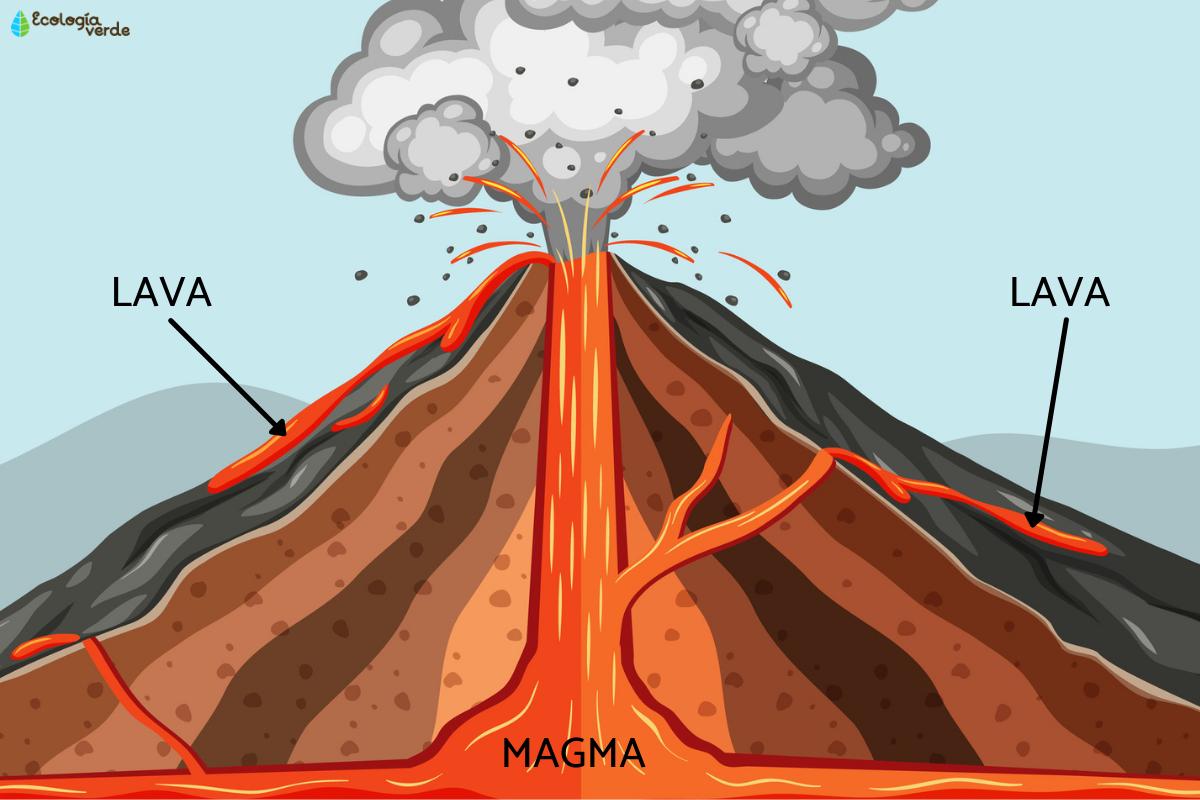
Define Magma
Molten rock beneath the earth's surface

Define Lava
Magma that reaches Earth's surface

What happens at a Constructive Plate Margin?
Two plates move apart due to convection currents
This creates gap into which magma rises and forms new crust
As magma breaks through overlying crust, it causes earthquakes
On the surface, it forms volcanoes. These are often broad and flat, known as shield (or cone) volcanoes
E.g. Mid-Atlantic Ridge

What happens at a Destructive Plate Margin?
Two plates move towards eachother due to convection currents
Denser oceanic plate subducts beneath less dense continental plate
Friction between plates can cause earthquakes
As oceanic plate subducts, it melts within subduction zone
Melting creates magma, which rises to the surface to form steep-sided composite volcanoes
Eruptions are often very violent and explosive
E.g. where Nazca and South-American plates meet

What happens at a Collision Plate Margin?
Two continental plates collide
Neither plate subducts under the other
Both plates are forced upwards and form fold mountains
The process causes earthquakes, but no volcanoes
E.g. The Himalayas

What happens at a Conservative Plate Margin?
Two tectonic plates slide past each other
Friction between plates causes earthquakes
E.g. San Andreas Fault, California
No volcanoes
Describe Continental Crust
Part of the Earth’s crust which forms the large landmasses
Less dense, generally older, and more complex than the oceanic crust

Describe Oceanic Crust
Crust which makes up the ocean floor
Thinner, denser, and younger than continental crust

What are primary effects?
The initial impact of a natural event on people and property, caused directly by it.
What are secondary effects?
The indirect effects of a natural event.

Lava flows
Molten rock that flows over the ground
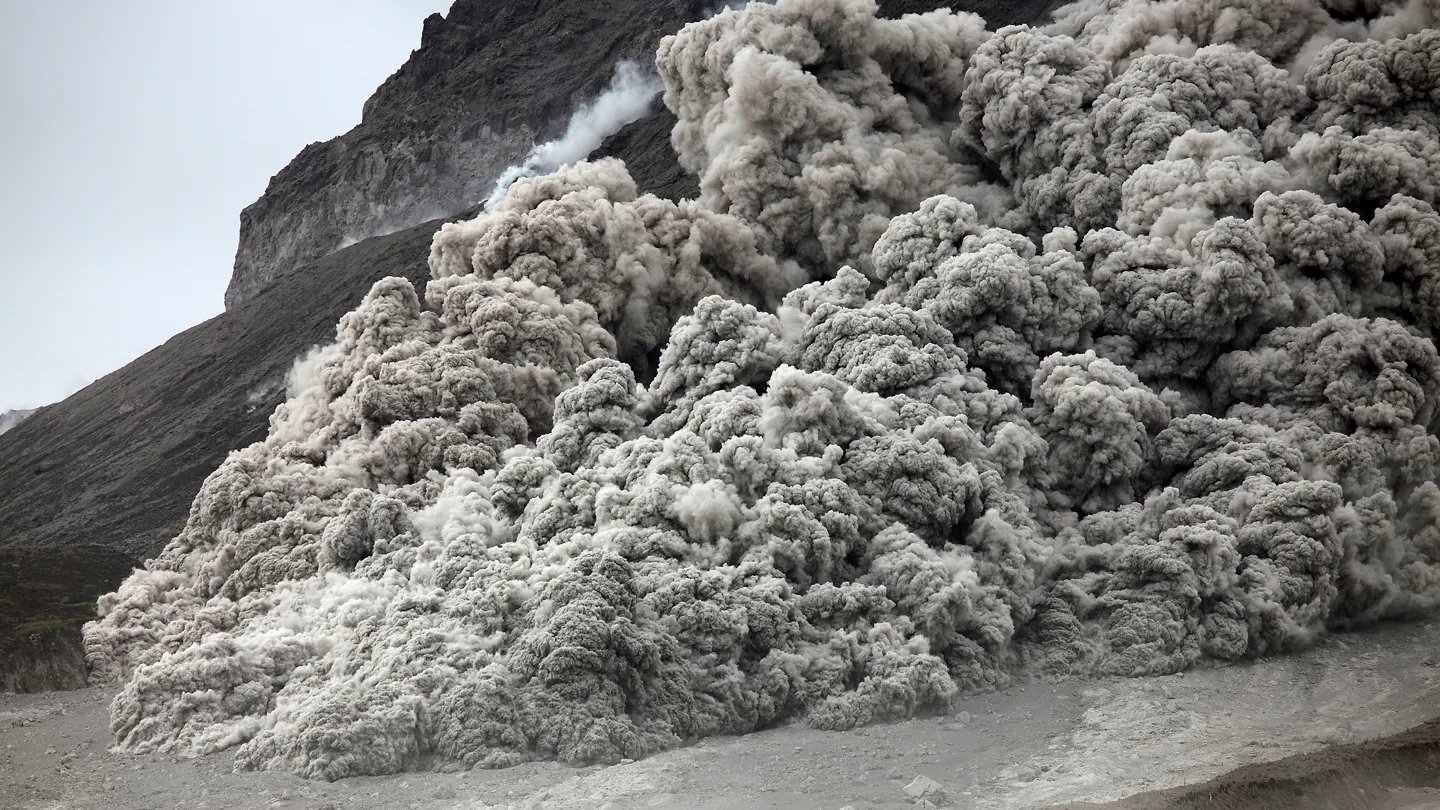
Pyroclastic flows
Scalding avalanche of ash and hot, toxic expanding gas, traveling very fast down the flank of a volcano

Ash fall
The deposition of a layer of fine airborne rock and glass that have been erupted from a volcano

Gas (steam)
Toxic fumes and superheated water emitted from a volcano before and during an eruption

Liquefaction
The process by which an earthquake's violent movement suddenly turns loose soil into liquid mud
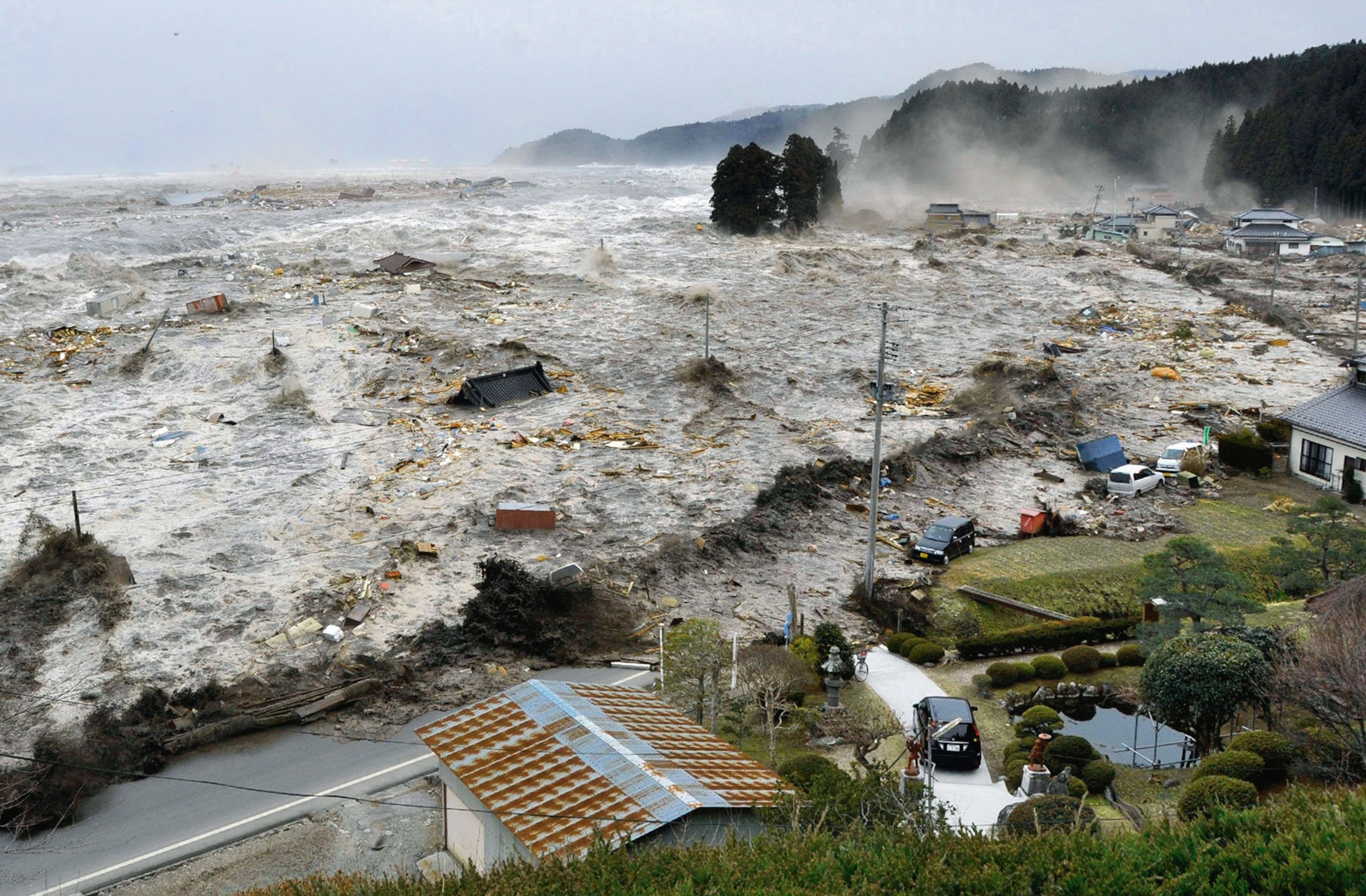
Tsunami
A giant wave usually caused by an earthquake beneath the ocean floor.

Lahars
A destructive mudflow on the slopes of a volcano.

What kind of plate margin does this represent?
Conservative

What kind of plate margin does this represent?
Constructive

What kind of plate margin does this represent?
Destructive

What kind of plate margin does this represent?
Collision
What is the difference between the focus and the epicentre of an earthquake?
The focus is the point in the earths crust where the earthquake happens.
The epicentre is the point directly above this on the earths surface.

How did the immediate responses of Haiti 2010 and Christchurch 2011 compare?
Haiti: Search and rescue and 1,100 squalid camps set up.
NZ: Evacuated city and 30,000 chemical toilets provided.
How did the primary impacts of Haiti 2010 and Christchurch 2011 compare?
Haiti:
230, 000 deaths
5000 schools destroyed
90% of buildings damaged in capital Port-au-Prince
NZ:
181 deaths
50% of buildings had some damage
How did the secondary impacts of Haiti 2010 and Christchurch 2011 compare?
Haiti:
Outbreak of Cholera
Looting and violence
Child prostitution became and issue in camps
NZ:
Damaged businesses resulted in some unemployment
Liquefaction caused disruption to road network
Tourism numbers fell in the run up to Rugby World Cup.
How did the long-term responses of Haiti 2010 and Christchurch 2011 compare?
Haiti:
5000 schools rebuilt with $10 billion in aid from World Bank
However, years later many tent camps still exist
NZ:
All infrastructure was repaired by August
What are the main limitations for LIC’s ability to predict, protect and prepare for tectonic hazards?
Lack of money - cannot afford early warning systems or scientific monitoring equipment (e.g. seismometer)
Weak infrastructure - poorly built buildings meant 90% of buildings damaged in Haiti (LIC), compared to 50% in NZ (HIC). However, Turkey (2023) showed that even richer countries suffer if building rules are ignored.
Poor government support - emergency services underfunded so immediate response less effective, lack of education means people not sure how to respond
Why do people choose to live in tectonically hazardous areas?
Volcanic ash creates fertile land for farming
Tourism means more jobs, e.g. 300,000 tourists in Mt Fuji, Japan
Cannot afford to move, e.g. Mount Nyiragongo, Congo
Geothermal energy, e.g. provides 70% of power in Iceland
Rich in minerals, e.g. sulphur mining in Ijen, Indonesia
How might a country predict an earthquake?
Monitor plate movements
Strange animal behaviour e.g. dogs howling, fish jumping
See tiny cracks develop in rock
Install sensitive seismometer instruments that can measure an increase in earth tremors, pressure, and any release in radon gas
Map epicentres and frequencies of previous earthquakes to notice patterns
How might a country protect itself from the impact of earthquakes?
Strengthen bridges
Design and construct buildings that are safe and provide protection rather than cause danger in an earthquake
Use large rubber shock absorbers in foundations of buildings
Use cross bracing to offer stability to buildings
How might a country plan for an earthquake?
Set up warning and information systems for use on TV and radio.
Train emergency services and have them available
Make an emergency plan for helping the injured
Every 3 months schools practice what to do in an emergency
Put together an emergency kit
How can a country predict a volcanic eruption?
Thermal imaging techniques and satellite cameras can be used to detect heat around a volcano as it gets more active.
Gas samples may be taken and chemical sensors used to measure sulphur levels, which increase as a volcano gets more active.
Seismometers are used to detect earthquakes, which become more frequent before volcanic eruptions.
How might a country prepare for a volcanic eruption?
By creating an exclusion zone around the volcano
By having an evacuation plan in place
By having an emergency supply of basic provisions, such as food
By making sure an emergency fund is available to deal with the emergency and a good communication system is in place