4th lecture - molecular mechanisms of carcinogenesis
 Call Kai
 Learn
 Practice Test
 Spaced Repetition
 Match
 Flashcards
 Knowt Play
1/29

There's no tags or description
Looks like no tags are added yet.
30 Terms
Whar feedback (proteins etc.) controls progression of cell cycle?
The progression of the cell cycle is controlled by positive and negative
feedback signals involving P53, cyclins, cyclin-dependent
kinases (CDKs), RB, E2F, and control over the apoptotic process

What is the Hayflick limit?
The number of times a normal somatic, differentiated human cell population will divide before cell division stops due to telomere shortening


What is the organization of the mammalian DNA damage response (DDR) pathway
The ATM and ATR serine-threonine kinases phosphorylate a variety of key proteins that initiate activation of the DNA damage checkpoint → cell cycle arrest / repair / apoptosis

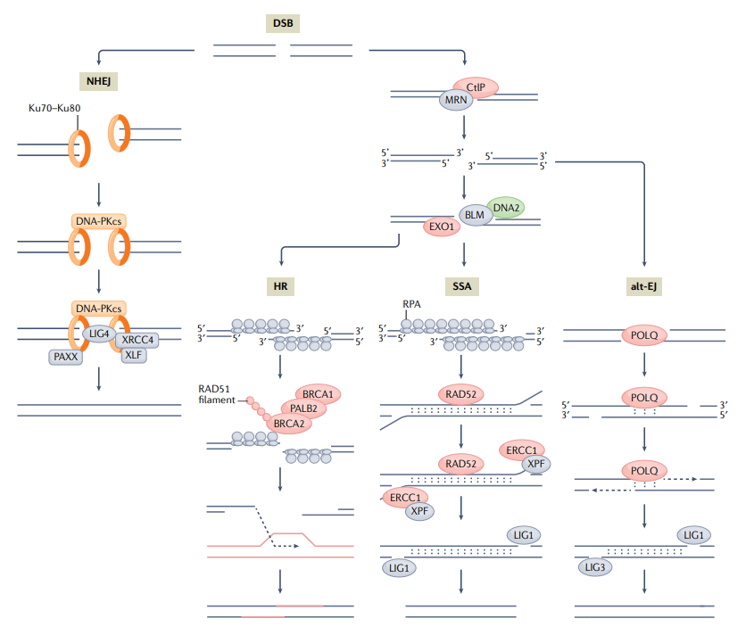
What are 4 types of DNA damage repair
●Non-homologous end joining (NHEJ)
●Homologous recombination (HR)
●Single-strand annealing (SSA)
●Alternative end joining (alt-EJ)
What causes XP gene mutation and Xeroderma pigmentosum?
●Caused by a loss-of-function autosomal recessive mutation in a gene from the XP family, which is involved in the process of nucleotide excision repair (NER)
patient must completely avoid sun
What is the function of E2F family proteins?
E2F family proteins - transcription factors regulating major cell cycle proteins (e.g. cyclins, CDKs)

What is the function of Rb/pRb proteins in cell cycle regulation?
●Tumor suppressor that prevents excessive cell growth by inhibiting cell cycle progression (G1/S transition) until a cell is ready to divide
●Inactivation (e.g. by phosphorylation or mutation) can promote tumorigenesis

what % of human cancers undergo p53 mutation?
~50% of human cancers undergo p53 mutation or epigenetic inactivation
4 ways that cause cell stress?
DNA damage
Hypoxia
Oncogene
Oxidative stress


●Caspases (cysteine-dependent aspartate-directed proteases) are ________ that cleave proteins after an ________ residue
●Caspases cleave and activate other caspases - the ______ _______
●Caspase deficiency can promote _________
●Caspases (cysteine-dependent aspartate-directed proteases) are enzymes that cleave proteins after an aspartate residue
●Caspases cleave and activate other caspases - the caspase cascade
●Caspase deficiency can promote tumorigenesis
●______ and _____ permeabilize the mitochondrial membrane
●Second mitochondria-derived activator of caspases (SMAC/Diablo) also comes out of the mitochondria and activates ______
●BAX and BAK permeabilize the mitochondrial membrane
●Second mitochondria-derived activator of caspases (SMAC/Diablo) also comes out of the mitochondria and activates caspases
What chemical compound does nicotine metabolise into
NNK and NNN
How can smoking lead to smoking-related carcinogenesis?
By:
●Activation of oncogene overexpression
●Inactivation of tumor suppressor genes
!! Chromatin changes under long term nicotine exposure


Name examples of ROS; define what is oxidative stress?
●Include peroxides, superoxide, hydroxyl radical, singlet oxygen and alpha-oxygen.
●Oxidative stress is a physiological condition characterized by an imbalance between the production of ROS and the ability of cells to detoxify them
What does ROS do to cells?
●At low to moderate levels, ROS act as signal transducers to activate cell proliferation, migration, invasion, and angiogenesis
●High levels of ROS cause damage to proteins, nucleic acids, lipids, membranes, and organelles, leading to cell death
Does cancer exhibit high/low levels of ROS?
●Cancer cells exhibit higher basal levels of ROS compared with normal cells as a result of an imbalance between oxidants and antioxidants
What are Yamanka factors
●Yamanaka factors (OCT4, SOX2, KLF4, c-Myc) - embryonic stem cell markers; transcription factors that can reprogram somatic cells into pluripotent stem cells (iPSCs)

What do Yamanka factors do in tumor?
●They are also expressed in cancer cells and associated with stemness (self-renewal) properties that promote tumor progression and treatment resistance
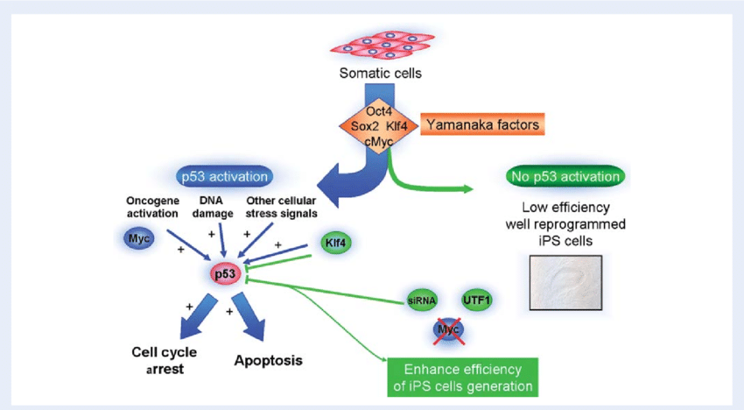
In what conditions is cancer stemness increased?
Cancer stemness is increased in response to stress


Growth factor receptor pathways: EGFR
How is HER2 activated? (breast cancer context)
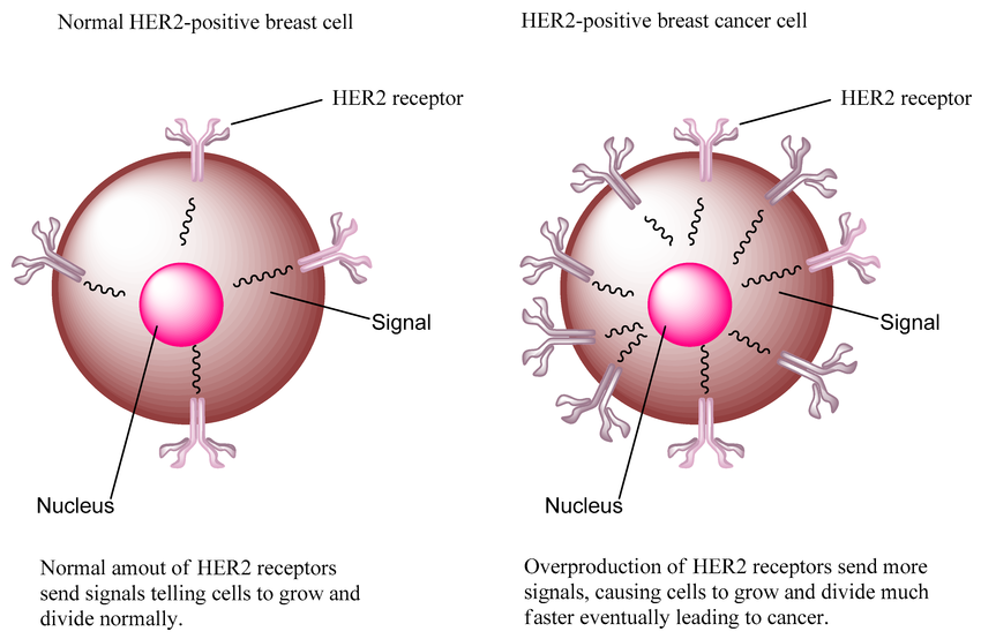
HER2 does not bind a known ligand
It is activated by 1)dimerization with another EGFR family protein or another HER2 molecule
This is target therapy for ~30% BRCA patients
What is MAPK kinase cascade?
●The mitogen-activated protein kinases (MAPKs) regulate diverse cellular programs by relaying extracellular signals to intracellular responses.
regulate proliferation, differintiation, survival
How is MAPK kinase cascade activated (normally and in cancer)?
●Activated by mitogens (e.g. growth factors such as EGF, PDGF, FGF) binding to receptors with tyrosine kinase activity (RTK)
●In cancer, it can be hyperactivated via e.g. ligand overexpression or constitutive activation
What HIPPO pathway regulates?
●Regulates cell proliferation and stem cell self-renewal, prevents apoptosis
●YAP is overexpressed in breast, liver and colon cancer
How does sickness progression occurs when infected with Hepatitis B virus (HBV)
HBV infection → chronic hepatitis → fibrosis/cirrhosis

Viral carcinogenesis: Human papillomavirus


