Biology Lab Practical #2 (Topics 8-12)
 Call Kai
 Learn
 Practice Test
 Spaced Repetition
 Match
 Flashcards
 Knowt Play
1/87

There's no tags or description
Looks like no tags are added yet.
88 Terms

Meiosis
Used for the creation of gametes
Creates 4 haploid cells (1n) → 23 chromosomes for humans
Creates genetic variation and the resulting cells are different from each other and from the starting cell

Mitosis
Used in cell growth and repair
Creates 2 diploid cells (2n) → 46 chromosomes for humans
Cells are identical

Homologous chromosomes
chromosomes with same genes at the same loci but different alleles and same morphology (size and shape); one from each parent (mom and dad)
Meiosis I
Homologous chromosomes separate
Interphase – DNA replication
Prophase I – creation of tetrads (homologous chromosomes), synapsis, and crossing over occurs
Metaphase I – independent assortment, Homologous chromosomes line up at the equator of the cell
Anaphase I – pulls homologous chromosomes apart
Telophase I – homologous chromosomes are completely separated, uncoil, and Cytokinesis I overlaps with the cleavage furrow formation and complete division of the cytoplasm

Meiosis II
sister chromatids of chromosomes separate
NO interphase goes straight to prophase
Prophase II – Chromosomes with sister chromatids are visible
Metaphase II – Chromosomes line up on the equator of the cell
Anaphase II– pulls sister chromatids of chromosomes apart
Telophase II – chromosomes are completely separated
Cytokinesis II – cleavage furrow pinches in, cytoplasm is divided
End result: 4 haploid daughter cells each genetically different
Spermatogenesis (Male meiosis)
Occurs inside each testis; one diploid germ cell makes four haploid sperm cells
Oogenesis (female meiosis)
one diploid cell makes one haploid ovum (female egg cell) with most of it cytoplasm and two or three polar bodies that are smaller and haploid to get rid of extra chromosomes (degenerate)

Tetrad
group of four sister chromatids that form when two homologous chromosomes pairs come together (synapsis) during prophase I of meiosis

Locus
the position where a gene is found on a chromosome

Synapsis
homologous chromosomes pair up (Meiosis I → Prophase I)

Centromere
region where the cell’s spindle fibers attach

Chiasma
where crossing over takes place

When does crossing over occur?
Prophase I of Meiosis I
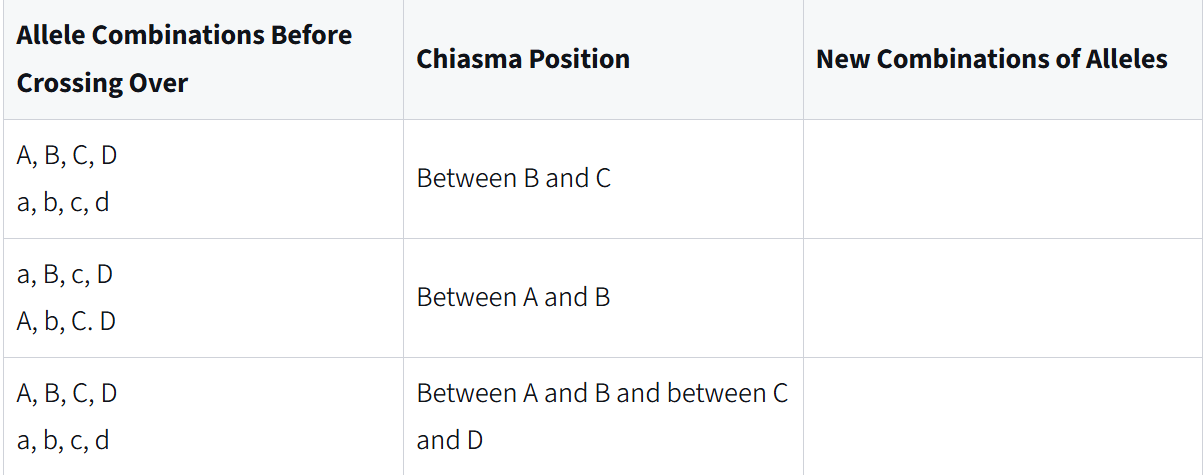
Table 8-1.) Combinations of alleles and chiasma positions
New combination of alleles:
1.) A B c d & a b C D
2.) a b C D & A B c D
3.) A b c D & a B C d
See extra problems in the Folder Materials for Lab Practical II
What kind of genetic variation occurs due to crossing over?
unique combinations of alleles along length of chromosome
What kind of genetic variation occurs due to independent assortment?
different combinations of chromosomes in daughter cells

Homozygous
individual has two identical alleles for a specific gene
ex.) AA or aa
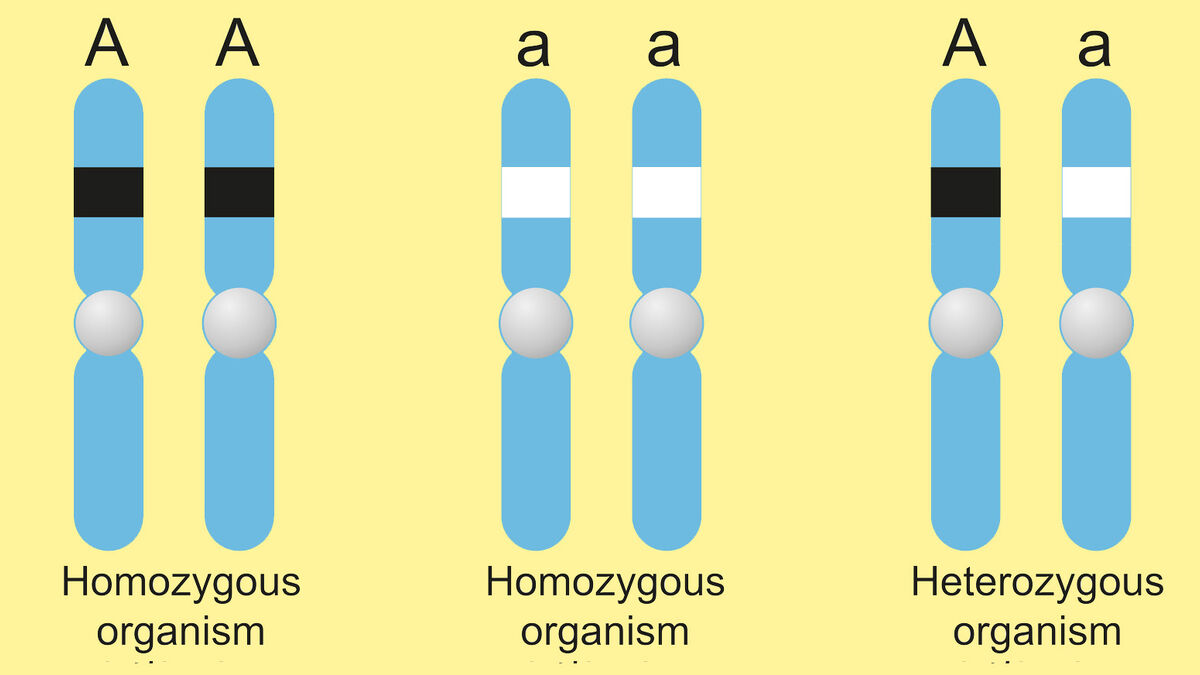
Heterozygous
individual has two different alleles for a specific gene
ex.) Aa

Recognize the phases of Meiosis I and II
Meiosis I looks similar to Mitosis with some differences, Meiosis II starts off with two haploid daughters and split into four haploid daughters
Starting with three pair of homologous chromosomes, how many different combinations of chromosomes can be present in the meiotic cells?
8 different possible chromosome combinations
formula: 2n
n → number of homologous chromosome pairs
n = 3 → 2(3) = 8
In humans, there are 23 pairs of homologues.
How many different combinations of chromosomes are expected to result from independent assortment in humans? Express your answer in exponential form with appropriate base.
Derive a formula that gives the number of different combinations of chromosomes expected from independent assortment per number of homologous chromosome pairs in the starting cell.
223
C = 2n
What type of genetic variation is generated by independent assortment during meiosis?
new combinations of maternal and paternal chromosomes and alleles
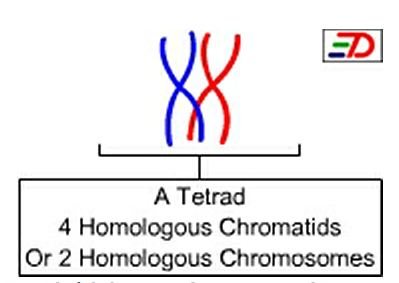
The two homologous chromosomes that come together in Prophase I in Meiosis I are called a(n) _______.
tetrad
Crossing over occurs in _____.
Prophase I of Meiosis I
Homologous chromosomes separate in ______.
Meiosis I
_______ is a type of division that produces genetic variation within the new cells produced.
Meiosis
_________ chromosomes are chromosomes having the same genes at the same loci but different alleles, and one comes from each parent.
Homologous

What stage of Meiosis is this?
Anaphase I
_____ always involves two successive divisions.
Meiosis
Allele Combination Before Crossing Over:
A B C d e F
a b c D E f
Chiasma position between C and D.
What is the new combination of alleles?
Allele 1 recombination/crossing over results: A B C D E f
Allele 2 recombination/crossing over results: a b c d e F
Sister chromatids separate in ____.
Meiosis II
About how many different combinations of chromosomes are expected to result from independent assortment in humans?
223 or 8 million
What is the diploid number of chromosomes for humans?
46
Diploid → 2n
2(23) → 46
Are the cells at the end of Meiosis I haploid or diploid?
Haploid (n)
How many spermatids are formed through spermatogenesis?
Four
How many secondary oocytes are formed through oogenesis?
One ????? and 2-3 polar bodies
Why do spermatogenesis and oogenesis produce a different number of gametes?
Spermatogenesis → equal cytokinesis
Oogenesis → unequal cytokinesis
Describe the relationship between expected and observed outcomes as sample size increases.
As sample size increases, the expected and observed outcome get closer; Observed gets closer to expected, 0.50

What is the expected phenotypic ratio?
3:1
(2 heterozygous parents → 3 express dominant trait, 1 express recessive trait)

What is the expected genotypic ratio?
1:2:1
(1 AA, 2 Aa, 1 aa)

What proportion of the progeny (offspring) is expected to breed true (homozygous) for flower color?
2/4 (PP and pp)

What proportion of the progeny is expected to segregate (heterozygous) for flower color?
2/4 (Pp)
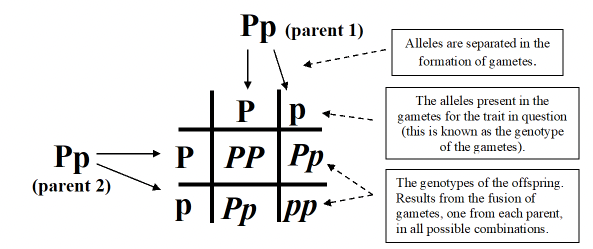
What proportion of the purple flowered progeny is expected to breed true for flower color?
1/3 (homozygous dominant; look only at purple flowers, not all)
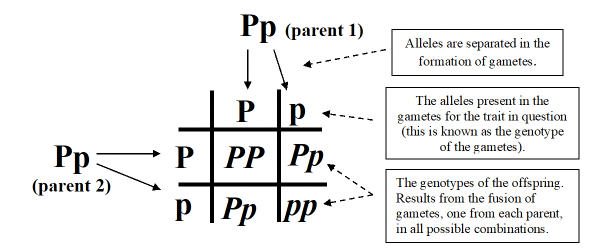
What proportion of the purple flowered progeny is expected to segregate for flower color?
2/3 (Heterozygous; look only at purple, not all)

If two pea plants, one heterozygous for plant height and the other short, are crossed, what is the proportion of the progeny is expected to be tall?
½ or 2/4 → 2 progeny express tall (Tt)

If two pea plants, one heterozygous for plant height and the other short, are crossed, what is the proportion of the progeny is expected to be homozygous dominant for height?
0/4 (none are homozygous dominant or TT)

If two pea plants, one heterozygous for plant height and the other short, are crossed, what is the proportion of the progeny is expected to be breed true for height?
2/4 (homozygous → tt)

If two pea plants, one heterozygous for plant height and the other short, are crossed, what is the proportion of the tall progeny is expected to breed true for plant height?
0/4 (no homozygous tall)
Probability
number of specified events ÷ total number of possible events
-Probability of heads in coin toss:
heads (1 event) ÷ heads or tails (2 events) = ½ or 50% probability
-Probability of being born on Monday:
Monday (1 event) ÷ days (7 events) = 1/7
-Probability of being born in February:
February (1 event) ÷ months (12 events) = 1/12

Phenotype
physical appearance
ex.) purple or white flowers
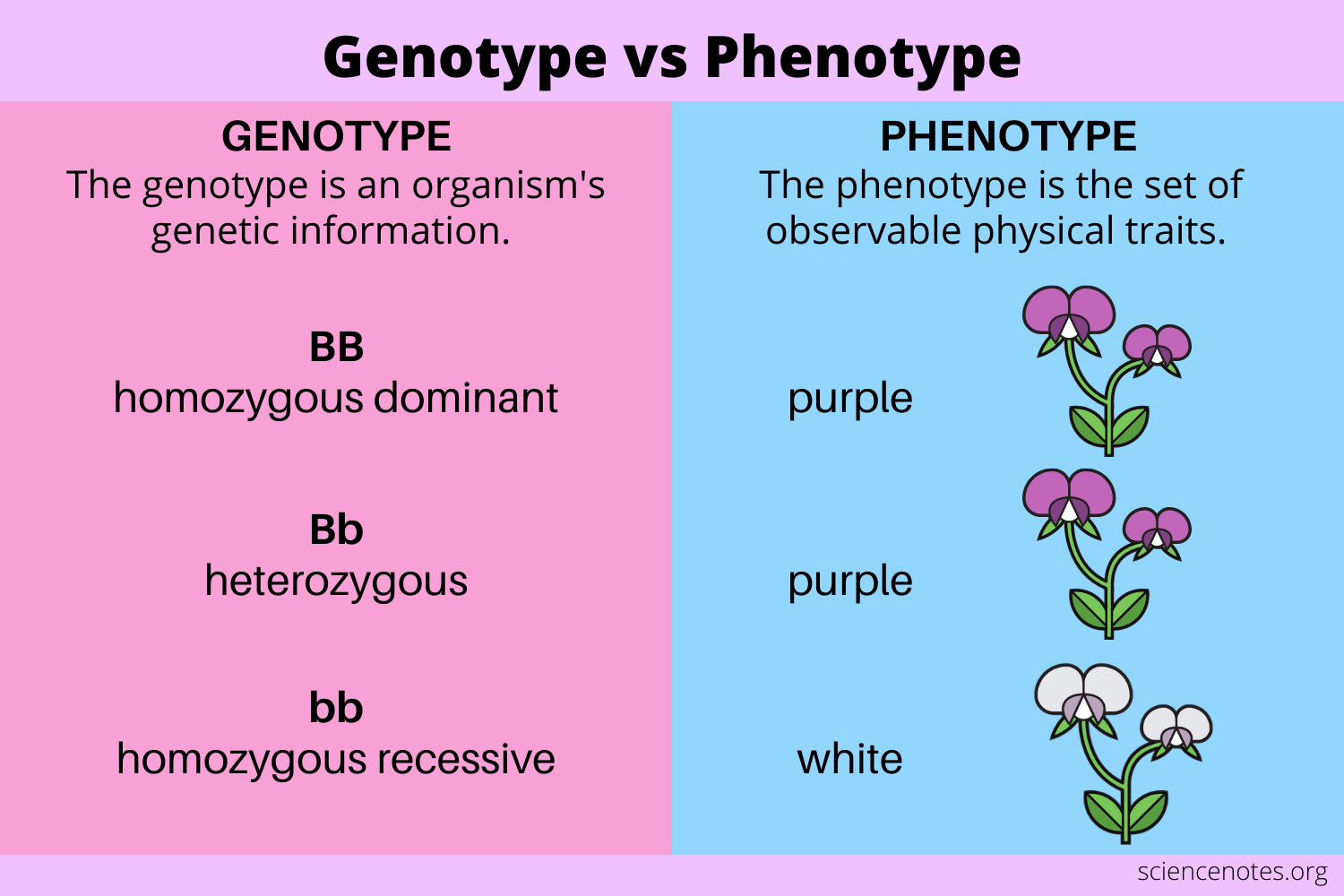
Genotype
actual genes; expressed by 2 letters
ex.) PP or Pp

Gene
section of DNA, code for products (proteins, metabolite)
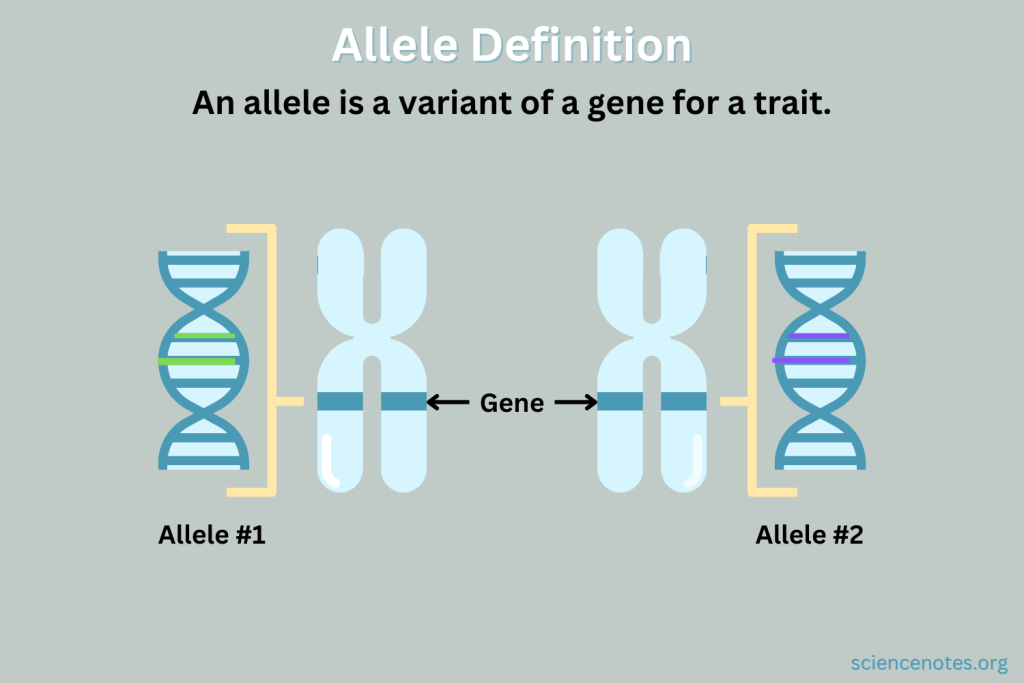
Alleles
alternative versions of a gene
Dominant Allele
expressed by capital letter
ex.) P
Recessive Allele
expressed by lower case letter
ex.) p
What are the 5 reasons we use Drosophila melanogaster (fruit fly)
for genetics experiments?
Easily grown in lab or cultured
They have short generation times (time from birth to reproductively mature, as short as 10 days)
One mating or cross can produce lots of offspring or progeny
Large number of mutations are well-known
True-breeding lines are available to order to understand contrasting traits and genetic crosses

Be able to identify male and female fruit flies
Male: smaller, darker abdomen
Female: larger, lighter abdomen

Autosomes
numbered chromosomes that contain genes for anything that doesn’t relate to sex determinations (somatic or body cells)
humans have 44 (22 pairs)
labeled with numbers (1-22)
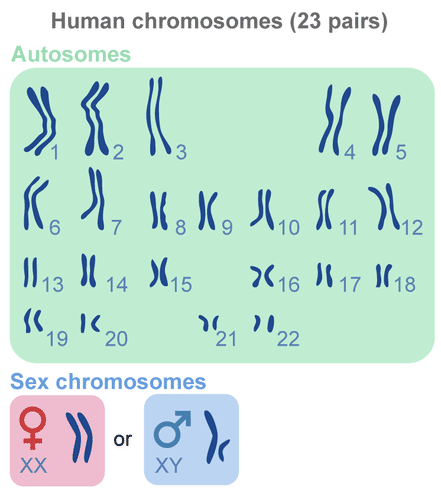
Sex Chromosomes
lettered chromosome that is involved in sex determination
humans have 2 (1 pair)
labeled with letters (X and or Y)

Be able to recognize chromosomes from a male and female fruit fly
Male has a weird hook thingy compared to Female

P generation
Parental generation in genetic cross

F1 generation
First filial generation, offspring of the P generation

F2 generation
Second filial generation, offspring of the F1 generation

Know how to use a chi-square table and determine if the observed and expected frequency are statistically significant.
Steps
Find Degree of Freedom: (Number of choice - 1)
P-value = 0.05
Find value that matches degree of freedom and p-value
If Chi Square value is larger > than the table, the data is signficant; if smaller <, then not significant
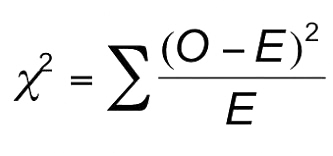
Chi square formula
X2 = ∑ (Observed value - Expected value)2 ÷ (Expected value)
What probability or alpha value do we usually use in science when
using the t-test or Chi Square Table?
0.05 (5%)
If we tested fruit flies and observed number of males, females,
winged, and wingless, what is the Degree of Freedom?
3
Degree of Freedom = # of choices - 1
4 choices (female or male + winged or wingless) - 1
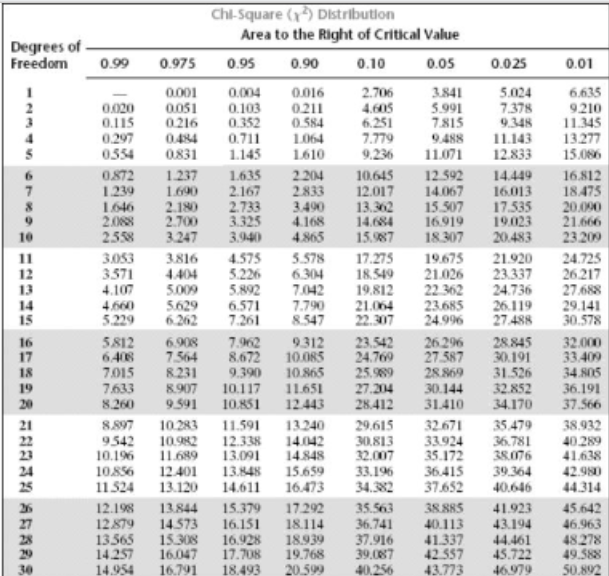
Using the figure, if the Chi Square calculated from your data was 8.03, is this
statistically significant?
8.03 > 3.814; significant
Chi square value greater than table
If an organism's DNA contains 35% adenine, how much guanine does it contain?
15%
What is the final product of translation?
protein

What is the start codon?
AUG (Met)
_____ is a mutation the changes a base pair in DNA but codes for the same amino acid.
A silent mutation
Does mRNA copy the coding strand or the template strand of DNA?
It copies the template strand of DNA.
Describe the orientation of the two DNA strands with respect to one another in a double-stranded DNA molecule.
The orientation is antiparallel.
Where does translation take place in the cell?
Ribosome
Give the standard notation for a strand of DNA that is complementary to: 5' - CGGTA - 3'
5' - TACCG - 3'
What nitrogen base is found in RNA but not DNA?
Uracil
The (template strand / coding strand) is complementary to mRNA? (Pick one choice)
template strand
What is the expected phenotypic ratio when two heterozygous parents are crossed?
3:1
What is the probability of being born on October 1st?
1/365

What gender is the fruit fly on the left?
male
The _________ is the actual genes in an organism, and it normally is represented by two letters.
genotype
If we tested pea plants and observed purple flowers, white flowers, tall plants, and short plants, what is the Degree of Freedom?
3
DF: number of choices - 1
4 choices (purple or white + tall or short) - 1 = 3
The ___________ is the physical appearance of an organism, like red eyed fruit flies.
phenotype
What happens to the observed and expected outcomes as sample size increases?
They should get closer.
When individuals are true breeding, they can be ______.
homozygous recessive or homozygous dominant
If yellow peas are dominant to green peas, and one parent is heterozygous and one parent has green peas, how many of the offspring are true breeding for pea color?
½

Which is the female karyotype?
A