drug use, drug addiction and the brain's reward circuits
 Call Kai
 Learn
 Practice Test
 Spaced Repetition
 Match
 Flashcards
 Knowt Play
1/15

There's no tags or description
Looks like no tags are added yet.
16 Terms
learning in tolerance and withdrawal
conditioned drug tolerance - maximal tolerance effects are seen in the environment in which a drug is usually taken
contingent drug tolerance - tolerance only develops to drug effects that are experienced
tolerance
needing more of a drug to elicit the same effects
sensitisation
opposite of tolerance - need less of a drug to elicit the same effect
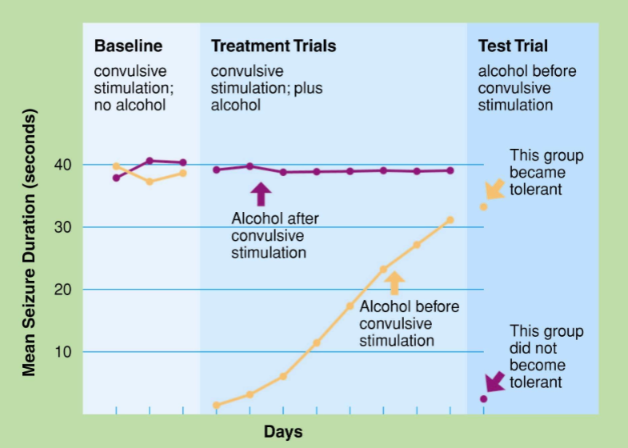
contingent drug tolerance - rat experiment
rats given seizure with direct electrical stimulation of the brain
alcohol stops the seizure
tolerance develops to the alcohol stopping the seizure - it stops stopping
but only if the rats get the alcohol before they are given the seizure, not after
route of drug administration
ingestion - oral route
easy and relatively safe
absorption via digestive tract is unpredictable
injection - bypasses digestive tract
subcutaneously - under the skin
intramuscularly - into large muscles
intravenously - into veins - drug delivered directly to brain
inhalation - tobacco and marijuana
absorbed through capillaries in lungs
absorption though mucous membranes
nose, mouth
synaptic transmission
e.g. cocaine and amphetamine increase dopamine - block reuptake so leave more in the synapse

MDMA and serotonin synapses
ecstasy (MDMA) blocks reuptake and also reverses reuptake transporter so lots of serotonin in synapse
LSD
binds to serotonin receptors
interferes with sleep waking systems
other drugs
caffeine - adenosine receptors
cannabis - primary pschcoactive constituent - although over 80 are present, binds to cannabinoid receptors
alcohol - potentiates action of GABA (inhibitory)
opiates: heroin and morphine
morphine and codeine obtained from the opium poppy
opiates - these drugs and others with similar structures or effects
medicinal uses - analgesics (painkillers), treatment of cough
bind to opioid receptors

other drugs
ketamine - usually an anaesthetic
doesn’t activate GABA but turns down actions of glutamate (via NMDA receptors)
interacts with mu-, delta-, and kappa-opioid receptors, monoaminergic, cholinergic, muscarinic receptors, and voltage-gated calcium/sodium channels
investigating drug use - animal models - behavioural preference tests
shows that the rat ‘prefers’ the drug to a placebo

intra-cranial self stimulation
rat will press the lever to receive direct stimulation of the brain - if rat presses lever for drug instead then perhaps the drugs stimulate the same regions of the brain

self-administration paradigm

dopamine
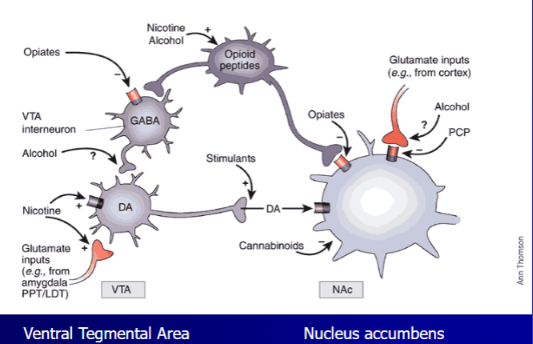
summary - dopamine
caffeine - adenosine receptors are postsympatic to dopamins
cannabis/marijuana - cannabinoid receptors are postsynaptic to dopamine
nicotine receptors on are dopamine neurons
alcohol/opioids - potentiates action of GABA, complex circuits but act to increase dopamine
stimulants - cocaine and amphetamine bind directly to dopamine transporter and increase dopamine in synapse