Herpetology- Integument and Osmoregulation

0.0(0)
Studied by 5 people
call kaiCall Kai
learnLearn
examPractice Test
spaced repetitionSpaced Repetition
heart puzzleMatch
flashcardsFlashcards
GameKnowt Play
Card Sorting

1/48

encourage image

There's no tags or description

Looks like no tags are added yet.

49 Terms

1
New cards

Amphibian Integument

Differ from that of fish in 3 ways

  • Surface layers often cornified

    • Keratinized layer at the outermost layer of skin (outer layer of the epidermis)

    • Protects from desiccation and other environmental factors

    • Mucus- moistens skin, “sunscreen”, waxy substances in some species

  • Poison glands for toxic defense

    • Multicellular glands lie below the epidermis

  • Scales are practically absent

    • Scale make it harder for water/air to move across

    • Some dermal scales in caecilians

    • Osteoderms in Phyllomedusa, Gastrotheca, Megophyrs


<p><span style="background-color: transparent;">Differ from that of fish in 3 ways</span></p><ul><li><p><span>Surface layers often cornified</span></p><ul><li><p><span style="background-color: transparent;">Keratinized layer at the outermost layer of skin (outer layer of the epidermis)</span></p></li><li><p><span style="background-color: transparent;">Protects from desiccation and other environmental factors</span></p></li><li><p><span style="background-color: transparent;">Mucus- moistens skin, “sunscreen”, waxy substances in some species</span></p></li></ul></li><li><p><span>Poison glands for toxic defense</span></p><ul><li><p><span style="background-color: transparent;">Multicellular glands lie below the epidermis</span></p></li></ul></li><li><p><span>Scales are practically absent</span></p><ul><li><p><span style="background-color: transparent;">Scale make it harder for water/air to move across</span></p></li><li><p><span style="background-color: transparent;">Some dermal scales in caecilians</span></p></li><li><p><span style="background-color: transparent;">Osteoderms in <em>Phyllomedusa</em>, <em>Gastrotheca</em>, <em>Megophyrs</em></span></p></li></ul></li></ul><p></p>
2
New cards

Characteristics of the Amphibian Epidermis

  • Stratum corneum is sloughed in all Amphiabia

    • Sloughed in one unit in Bufo

    • Slough is often eaten (=Autophagy)

  • Generally non-vascular, but depends on respiratory mode

    • Epidermis lacks blood vessels passing through, cells get oxygen/nutrients through diffusion from dermis

    • Ex. Hair Frog (Trichobatrachus robustus) with vascular epidermal protuberances

      • Only males grow the “hair”, dermal papillae

      • Males also significantly larger than females

      • Hair increases surface area for better respiration/to get more oxygen in the water

      • Males must spend more time in the water and are larger to guard the eggs (parental care)

    • Ex. Hellbender

      • More skin/folds = higher surface = more gas exchange = more time in water


<ul><li><p><span>Stratum corneum is sloughed in all Amphiabia</span></p><ul><li><p><span style="background-color: transparent;">Sloughed in one unit in <em>Bufo</em></span></p></li><li><p><span style="background-color: transparent;">Slough is often eaten (=Autophagy)</span></p></li></ul></li></ul><ul><li><p><span>Generally non-vascular, but depends on respiratory mode</span></p><ul><li><p><span style="background-color: transparent;">Epidermis lacks blood vessels passing through, cells get oxygen/nutrients through diffusion from dermis</span></p></li><li><p><span>Ex.</span><span style="background-color: transparent;"> Hair Frog (<em>Trichobatrachus robustus</em>) with <strong>vascular</strong> epidermal protuberances</span></p><ul><li><p><span style="background-color: transparent;">Only males grow the “hair”, dermal papillae</span></p></li><li><p><span style="background-color: transparent;">Males also significantly larger than females</span></p></li><li><p><span style="background-color: transparent;">Hair increases surface area for better respiration/to get more oxygen in the water</span></p></li><li><p><span style="background-color: transparent;">Males must spend more time in the water and are larger to guard the eggs (parental care)</span></p></li></ul></li><li><p><span>Ex.</span><span style="background-color: transparent;"> Hellbender</span></p><ul><li><p><span style="background-color: transparent;">More skin/folds = higher surface = more gas exchange = more time in water</span></p></li></ul></li></ul></li></ul><p></p>
3
New cards

Epidermal Modifications in Amphibians

  • Setae

  • Spades

  • Anuran Amphibian “Claws”

  • Anuran Nuptial Pads

  • Anuran Rasping Lips


4
New cards

Amphibian Epidermal Mods: Setae

On toe pads to stick (Hylidae, Eleutherodactylidae)

  • Requires some moisture being present and they can lock on to surfaces (van der Waals forces)

  • Ex. Tree Frog


<p><span style="background-color: transparent;">On toe pads to stick (Hylidae, Eleutherodactylidae)</span></p><ul><li><p><span style="background-color: transparent;">Requires some moisture being present and they can lock on to surfaces (van der Waals forces)</span></p></li><li><p><span style="background-color: transparent;">Ex. Tree Frog</span></p></li></ul><p></p>
5
New cards

Amphibian Epidermal Mods: Spades

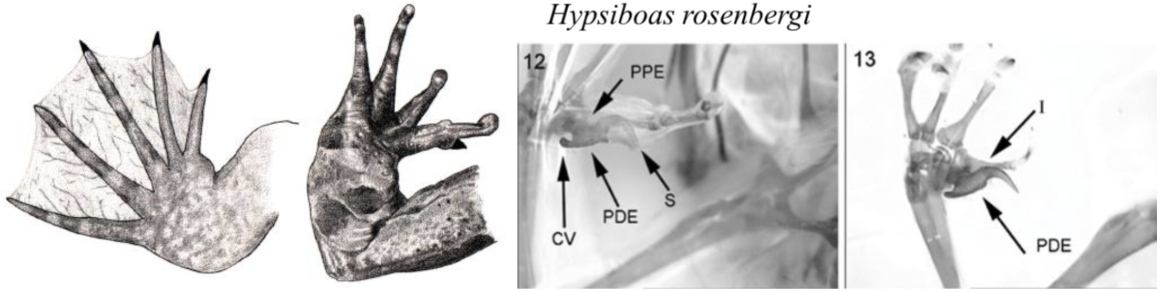
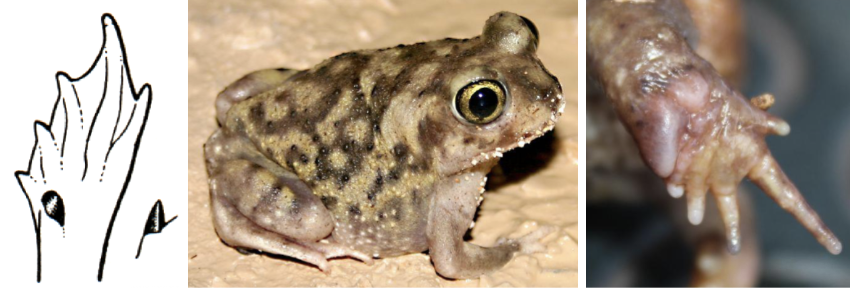
On rear feet for digging (Scaphiopus, Spea)

  • Ex. Spadefoot Toad- not a true toad (doesn’t look like typical toad/missing true toad characteristics)

  • Ex. Rain Frog- South Africa (R)

    • Survives by burrowing underground during day and emerging at night to feed

    • Tubercles help them dig in desert sands

<p><span style="background-color: transparent;">On rear feet for digging (<em>Scaphiopus</em>, <em>Spea</em>)</span></p><ul><li><p><span>Ex.</span><span style="background-color: transparent;"> Spadefoot Toad- not a true toad (doesn’t look like typical toad/missing true toad characteristics)</span></p></li><li><p><span>Ex.</span><span style="background-color: transparent;"> Rain Frog- South Africa (R)</span></p><ul><li><p><span style="background-color: transparent;">Survives by burrowing underground during day and emerging at night to feed</span></p></li><li><p><span style="background-color: transparent;">Tubercles help them dig in desert sands</span></p></li></ul></li></ul><p></p>
6
New cards

Amphibian Epidermal Mods: Anuran Amphibian “Claws”

Can be for defense (Xenopus)

  • Also for breeding based combat

  • Also prepollical spines (R)


<p><span style="background-color: transparent;">Can be for defense (<em>Xenopus</em>)</span></p><ul><li><p><span style="background-color: transparent;">Also for breeding based combat</span></p></li><li><p><span style="background-color: transparent;">Also prepollical spines (R)</span></p></li></ul><p></p>
7
New cards

Amphibian Epidermal Mods: Anuran Nuptial Pads

Breeding season mod that allows for amplexus (stick together) (Ranidae, Bufonidae, Hylidae)

  • Helps males hold on to females during breeding


<p><span style="background-color: transparent;">Breeding season mod that allows for amplexus (stick together) (Ranidae, Bufonidae, Hylidae)</span></p><ul><li><p><span style="background-color: transparent;">Helps males hold on to females during breeding</span></p></li></ul><p></p>
8
New cards

Amphibian Epidermal Mods: Anuran Rasping Lips

Modified mouth in many frog larvae that allow for grazing on algae

  • Elaborate mouth parts


<p><span style="background-color: transparent;">Modified mouth in many frog larvae that allow for grazing on algae</span></p><ul><li><p><span style="background-color: transparent;">Elaborate mouth parts</span></p></li></ul><p></p>
9
New cards

Amphibian Dermis

In addition to structural proteins, nerves, and vascular supply:

  • Chromatophores

  • Glands


10
New cards

Amphibian Dermis: Chromatophores

Coloration (to blend in, advertise toxicity, etc.); usually arranged in a dermal chromatophore unit

  • Extensive dendritic processes

  • All often mediated by MSH (Melanophore Stimulating Hormone)

  • Superficial Chromatophores

    • Xanthophore (pteridine pigments) OR Erythrophores (carotenoid pigments)- yellow, orange, and red pigments

    • Iridophore (=guanophores)- purines, reflect light, blue or green pigments

  • Deep Chromatophores

    • Melanophores (eumelanin pigment)- black and brown pigments


<p><span style="background-color: transparent;">Coloration (to blend in, advertise toxicity, etc.); usually arranged in a dermal chromatophore unit</span></p><ul><li><p><span style="background-color: transparent;">Extensive dendritic processes</span></p></li><li><p><span style="background-color: transparent;">All often mediated by MSH (Melanophore Stimulating Hormone)</span></p></li><li><p><span>Superficial Chromatophores</span></p><ul><li><p><span style="background-color: transparent;">Xanthophore (pteridine pigments) OR Erythrophores (carotenoid pigments)- yellow, orange, and red pigments</span></p></li><li><p><span style="background-color: transparent;">Iridophore (=guanophores)- purines, <strong>reflect</strong> light, blue or green pigments</span></p></li></ul></li><li><p><span>Deep Chromatophores</span></p><ul><li><p><span style="background-color: transparent;">Melanophores (eumelanin pigment)- black and brown pigments</span></p></li></ul></li></ul><p></p>
11
New cards

Amphibian Dermis: Glands

Most are epidermal in origin, all are alveolar (bulbous base and large duct)

  • All Amphibians have Two Types

    • Mucous = moist body surface away from water

    • Granular = poison or serous

  • Modifications

    • “Warts”- concentrations of granular glands

    • Hedonic, Mental- concentrations of pheromonal glands derived from both mucous and granular types

    • Nuptial Excrescences- concentrations of mucous glands on thumbs of Anurans and rear limbs of many salamanders 

  • Poison Glands- produce a wide range of chemical toxins:

    • Biogenic amines (serotonin, epinephrine, dopamine)

    • Bufodienolides

    • Steroidal alkyloids (e.g. Batrachotoxins)

    • Unique polypeptides

  • Spines and Tusks- for defense/combat


<p><span style="background-color: transparent;">Most are epidermal in origin, all are alveolar (bulbous base and large duct)</span></p><ul><li><p>All Amphibians have Two Types</p><ul><li><p><span style="background-color: transparent;">Mucous = moist body surface away from water</span></p></li><li><p><span style="background-color: transparent;">Granular = poison or serous</span></p></li></ul></li><li><p>Modifications</p><ul><li><p>“Warts”<span style="background-color: transparent;">- concentrations of granular glands</span></p></li><li><p>Hedonic, Mental<span style="background-color: transparent;">- concentrations of pheromonal glands derived from both mucous and granular types</span></p></li><li><p>Nuptial Excrescences<span style="background-color: transparent;">- concentrations of mucous glands on thumbs of Anurans and rear limbs of many salamanders&nbsp;</span></p></li></ul></li></ul><ul><li><p>Poison Glands<span style="background-color: transparent;">- produce a wide range of chemical toxins:</span></p><ul><li><p><span style="background-color: transparent;">Biogenic amines (serotonin, epinephrine, dopamine)</span></p></li><li><p><span style="background-color: transparent;">Bufodienolides</span></p></li><li><p><span style="background-color: transparent;">Steroidal alkyloids (e.g. Batrachotoxins)</span></p></li><li><p><span style="background-color: transparent;">Unique polypeptides</span></p></li></ul></li><li><p>Spines and Tusks<span style="background-color: transparent;">- for defense/combat</span></p></li></ul><p></p>
12
New cards

Osmoregulation

Crucial to homeostasis and physiological processes

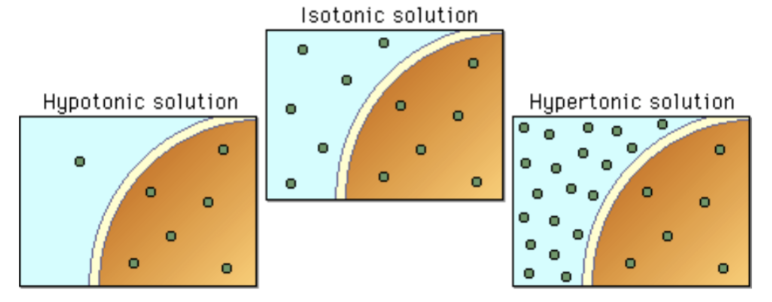
  • Hypotonic Solution- higher ion conc in cell

    • Water moves into cell

  • Isotonic Solution- same ion conc in cell and env

    • Water does not theoretically move

  • Hypertonic Solution- higher ion conc in the env

    • Water move out of cell


<p><span style="background-color: transparent;">Crucial to homeostasis and physiological processes</span></p><ul><li><p><span>Hypotonic Solution</span><span style="background-color: transparent;">- higher ion conc in cell</span></p><ul><li><p><span style="background-color: transparent;">Water moves into cell</span></p></li></ul></li><li><p><span>Isotonic Solution</span><span style="background-color: transparent;">- same ion conc in cell and env</span></p><ul><li><p><span style="background-color: transparent;">Water does not theoretically move</span></p></li></ul></li><li><p><span>Hypertonic Solution</span><span style="background-color: transparent;">- higher ion conc in the env</span></p><ul><li><p><span style="background-color: transparent;">Water move out of cell</span></p></li></ul></li></ul><p></p>
13
New cards

Osmoregulation Application

  • In salt water, water moves out of animal cells

    • Saltwater fish drink water because water is pulled from them

  • In freshwater, water moves into animal cells

    • Freshwater fish don’t drink because they need to hold on to salt they have

    • Produce a lot of diluted urine


<ul><li><p><span style="background-color: transparent;">In salt water, water moves out of animal cells</span></p><ul><li><p><span style="background-color: transparent;">Saltwater fish drink water because water is pulled from them</span></p></li></ul></li><li><p><span style="background-color: transparent;">In freshwater, water moves into animal cells</span></p><ul><li><p><span style="background-color: transparent;">Freshwater fish don’t drink because they need to hold on to salt they have</span></p></li><li><p><span style="background-color: transparent;">Produce a lot of diluted urine</span></p></li></ul></li></ul><p></p>
14
New cards

Water Balance: Water Gained = Water Lost

  • Routes of Gain- drinking water, preformed water, metabolic water

  • Routes of Loss- evaporation, urine, feces, salt glands


15
New cards

General Osmoregulatory Strategies of Various Herps

  • Adaptations to reduce evaporation

  • Use different sources of water

  • Salt glands for excess ion excretion

  • Different nitrogenous waste types


<ul><li><p><span style="background-color: transparent;">Adaptations to reduce evaporation</span></p></li><li><p><span style="background-color: transparent;">Use different sources of water</span></p></li><li><p><span style="background-color: transparent;">Salt glands for excess ion excretion</span></p></li><li><p><span style="background-color: transparent;">Different nitrogenous waste types</span></p></li></ul><p></p>
16
New cards

Amphibian Osmoregulation Generalizations

  • Produce a copious and dilute urine

  • Kidneys can control water loss

  • Tubules can actively move ions (Na+)

  • Thin skin

  • Bladder storage important

    • Ex. Great Plains Toad, Bufo cognatus- can store 30% of body weight in bladder water


17
New cards

Amphibian Water Balance

  • Cutaneous water loss is temperature dependent:

  • How much water can an amphibian lose?


<ul><li><p><span>Cutaneous water loss is temperature dependent:</span></p></li></ul><ul><li><p><span>How much water can an amphibian lose?</span></p></li></ul><p></p>
18
New cards

Amphibian Salt Balance

Similar relationships as water balance

  • Amphibians can excrete Na+ and can actively uptake Na+ from the environment


<p><span style="background-color: transparent;">Similar relationships as water balance</span></p><ul><li><p><span style="background-color: transparent;">Amphibians can excrete Na<sup>+</sup> and can actively uptake Na<sup>+</sup> from the environment</span></p></li></ul><p></p>
19
New cards

Amphibian Water Conservation Adaptations

  • Waxy Skin Secretions

  • “Tanking Up”

  • Postural Adjustments

  • Uricotelism

  • Ureotelism


20
New cards

Amphibian Water Conservation: Waxy Skin Secretions

Moistens skin, “sunscreen”

  • Ex. Body-wiping in Phyllomedusa sauvagii

    • Can stand direct sunshine by spreading waxy secretions all over body


21
New cards

Amphibian Water Conservation: “Tanking Up”

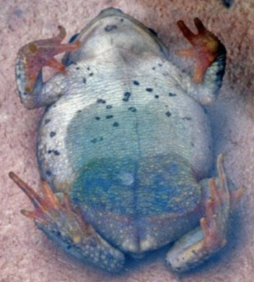
The specialized ‘pelvic patch’ toads use to take up and store water

  • Ex. Bufo punctatus pelvic patch


<p><span style="background-color: transparent;">The specialized ‘pelvic patch’ toads use to take up and store water</span></p><ul><li><p><span style="background-color: transparent;">Ex. <em>Bufo punctatus</em> pelvic patch</span></p></li></ul><p></p>
22
New cards

Amphibian Water Conservation: Postural Adjustments

Reduce surface area

  • Ex. Aestivation in Rhinella marina


23
New cards

Amphibian Water Conservation: Uricotelism

Excreting uric acid (Chriomantis, Phyllomedusa)

  • Takes a lot of energy


<p><span style="background-color: transparent;">Excreting uric acid (<em>Chriomantis, Phyllomedusa</em>)</span></p><ul><li><p><span style="background-color: transparent;">Takes a lot of energy</span></p></li></ul><p></p>
24
New cards

Amphibian Water Conservation: Ureotelism

Excrete urea (Rana tigrina)

<p><span style="background-color: transparent;">Excrete urea (<em>Rana tigrina</em>)</span></p>
25
New cards

Reptilian Integument

Two generalizations:

  • High degree of keratinization (thickening)

    • Thickening and keratinization is manifested in the form of scales

      • AKA plates, scutes, shields, laminae, lamellae, scansors, tubercles

    • These epidermal scales are sandwich-like with an inner and outer generation

    • α and β keratin

  • Generally lacking glands

    • Prior to sloughing (ecdysis), a new generation forms beneath- reduplication


<p><span style="background-color: transparent;">Two generalizations:</span></p><ul><li><p><span>High degree of keratinization (thickening)</span></p><ul><li><p><span style="background-color: transparent;">Thickening and keratinization is manifested in the form of scales</span></p><ul><li><p><span style="background-color: transparent;">AKA plates, scutes, shields, laminae, lamellae, scansors, tubercles</span></p></li></ul></li><li><p><span style="background-color: transparent;">These epidermal scales are sandwich-like with an inner and outer generation</span></p></li><li><p><span style="background-color: transparent;">α and β keratin</span></p></li></ul></li><li><p><span>Generally lacking glands</span></p><ul><li><p><span style="background-color: transparent;">Prior to sloughing (ecdysis), a new generation forms beneath- reduplication</span></p></li></ul></li></ul><p></p>
26
New cards

Epidermal Modifications in Reptilians

  • Spines, “horns”, true claws

  • Scutes

  • Rattlesnake Rattle

  • Setae

  • Fringe Scales

  • Egg Teeth


27
New cards

Reptilian Epidermal Mods: Spines, “horns”, true claws

Raised scale

  • Protection, some desert reptiles use to collect condensation for drinking water


<p><span style="background-color: transparent;">Raised scale</span></p><ul><li><p><span style="background-color: transparent;">Protection, some desert reptiles use to collect condensation for drinking water</span></p></li></ul><p></p>
28
New cards

Reptilian Epidermal Mods: Scutes

Large, plate-like scales usually on ventral side

  • In some (Chrysemys, Pseudemys) outer scutes are periodically shed

  • In others (Terrapene) scutes gradually wear away

  • In turtles:


<p><span style="background-color: transparent;">Large, plate-like scales usually on ventral side</span></p><ul><li><p><span style="background-color: transparent;">In some (<em>Chrysemys, Pseudemys</em>) outer scutes are periodically shed</span></p></li><li><p><span style="background-color: transparent;">In others (<em>Terrapene</em>) scutes gradually wear away</span></p></li><li><p><span style="background-color: transparent;">In turtles:</span></p></li></ul><p></p>
29
New cards

Reptilian Epidermal Mods: Rattlesnake Rattle

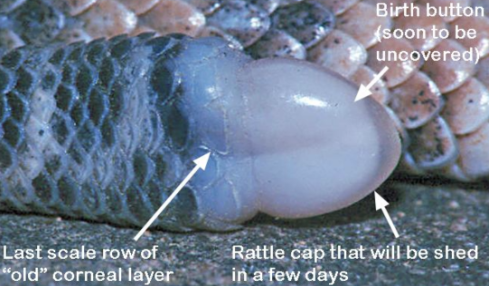
Series of interlocking keratin segments

  • Muscle responsible for shaking it is one of the fastest in all animals

  • Can’t age based on number of segments but is an indicator of age (same as with turtle rings)

<p><span style="background-color: transparent;">Series of interlocking keratin segments</span></p><ul><li><p><span style="background-color: transparent;">Muscle responsible for shaking it is one of the fastest in all animals</span></p></li><li><p><span style="background-color: transparent;">Can’t age based on number of segments but is an indicator of age (same as with turtle rings)</span></p></li></ul><p></p>
30
New cards

Reptilian Epidermal Mods: Setae

On digital pads in lizards

  • Microscopic hairs on digits that form EM attraction


<p><span style="background-color: transparent;">On digital pads in lizards</span></p><ul><li><p><span style="background-color: transparent;">Microscopic hairs on digits that form EM attraction</span></p></li></ul><p></p>
31
New cards

Reptilian Epidermal Mods: Fringe Scales

Scales that flare out, create surface tension with water (Basiliscus)

<p><span style="background-color: transparent;">Scales that flare out, create surface tension with water (<em>Basiliscus</em>)</span></p>
32
New cards

Reptilian Epidermal Mods: Egg Teeth

Keratinized “tooth” in tuatara, turtles, and crocodilians (and birds)

  • Termed a ‘caruncle’


<p><span style="background-color: transparent;">Keratinized “tooth” in tuatara, turtles, and crocodilians (and birds)</span></p><ul><li><p><span style="background-color: transparent;">Termed a ‘caruncle’</span></p></li></ul><p></p>
33
New cards

Reptilian Dermis

A few glands in some

  • Musk Glands

  • Femoral Glands

  • Nuchal Glands

  • Osteoderms

  • Gastralia

  • Plastron/Carapace


34
New cards

Reptilian Dermis: Musk Glands

Crocs, snakes, lizards, and turtles (e.g. Kinosternids)

  • Musk Turtles (Kinosternids)- phenylalkanoic acid


35
New cards

Reptilian Dermis: Femoral Glands

Lizards

  • Release pheromones during breeding season


<p><span style="background-color: transparent;">Lizards</span></p><ul><li><p><span style="background-color: transparent;">Release pheromones during breeding season</span></p></li></ul><p></p>
36
New cards

Reptilian Dermis: Nuchal Glands

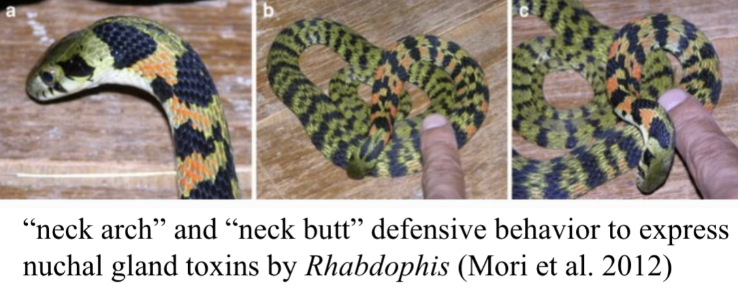
Some poisonous snakes (Rhabdophis, Sinonatrix)

  • Neck arch and neck butt defensive behavior to express nuchal gland toxins 

  • Sequester toxins from prey and store in glands

    • Largely feed on toads

    • Rhabdophis chiwen- substitute diet with firefly larvae (toxin source)

<p><span style="background-color: transparent;">Some poisonous snakes (<em>Rhabdophis, Sinonatrix</em>)</span></p><ul><li><p><span style="background-color: transparent;">Neck arch and neck butt defensive behavior to express nuchal gland toxins&nbsp;</span></p></li><li><p><span style="background-color: transparent;">Sequester toxins from prey and store in glands</span></p><ul><li><p><span style="background-color: transparent;">Largely feed on toads</span></p></li><li><p><span style="background-color: transparent;"><em>Rhabdophis chiwen</em>- substitute diet with firefly larvae (toxin source)</span></p></li></ul></li></ul><p></p>
37
New cards

Reptilian Dermis: Osteoderms

Hard bony plates/scales that often form directly inside the dermis

  • Crocs, some lizards, and some snakes (as of 2023)


<p><span style="background-color: transparent;">Hard bony plates/scales that often form directly inside the dermis</span></p><ul><li><p><span style="background-color: transparent;">Crocs, some lizards, and some snakes (as of 2023)</span></p></li></ul><p></p>
38
New cards

Reptilian Dermis: Gastralia

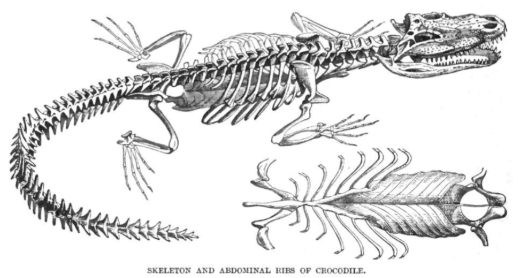
Dermal bones located in the ventral body wall between the sternum and pelvis without any attachment to the vertebral column

  • Crocodilia, tuatara


<p><span style="background-color: transparent;">Dermal bones located in the ventral body wall between the sternum and pelvis without any attachment to the vertebral column</span></p><ul><li><p><span style="background-color: transparent;">Crocodilia, tuatara</span></p></li></ul><p></p>
39
New cards

Reptilian Dermis: Plastron/Carapace

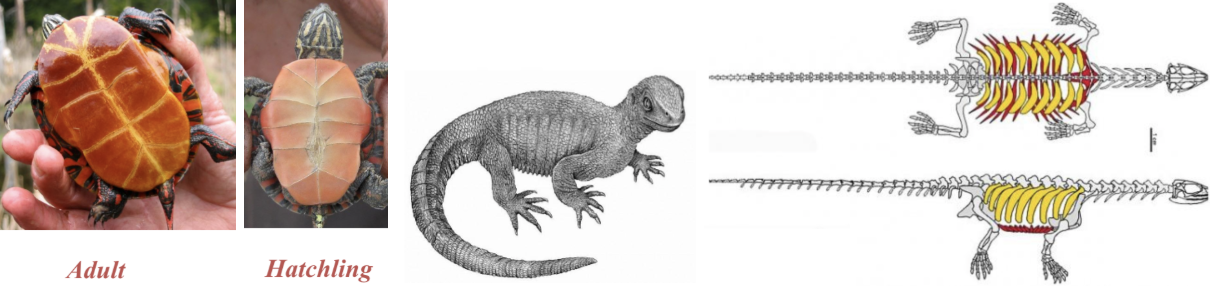
Turtles

  • Plastron- bottom

  • Carapace- flattened ribs, top

  • Pappochelys rosinae- stem turtle with fused gastralia and widened ribs

<p><span style="background-color: transparent;">Turtles</span></p><ul><li><p><span style="background-color: transparent;">Plastron- bottom</span></p></li><li><p><span style="background-color: transparent;">Carapace- flattened ribs, top</span></p></li><li><p><span style="background-color: transparent;"><em>Pappochelys rosinae</em>- stem turtle with fused gastralia and widened ribs</span></p></li></ul><p></p>
40
New cards

Reptilian Osmoregulation Generalizations and Water Balance

  • Reptiles show a significant reduction in cutaneous water loss, generally attributed to epidermal scales

  • But, a scale-less snake was discovered (Pituophis melanoleucus) and it had no greater loss than its scaled counterparts

  • Because of more efficient lungs, pulmonary water loss is greater than in amphibians

  • If scales don’t deter water loss, what does?

    • Landmann et al. have shown that the most significant barrier to water loss (i.e. ‘transcutaneous water flux’) is the presence of lipid lamellar sheets

    • Water loss typically decreases with larger body sizes, both within and across species

    • As in Amphibia, water loss varies with reptile species
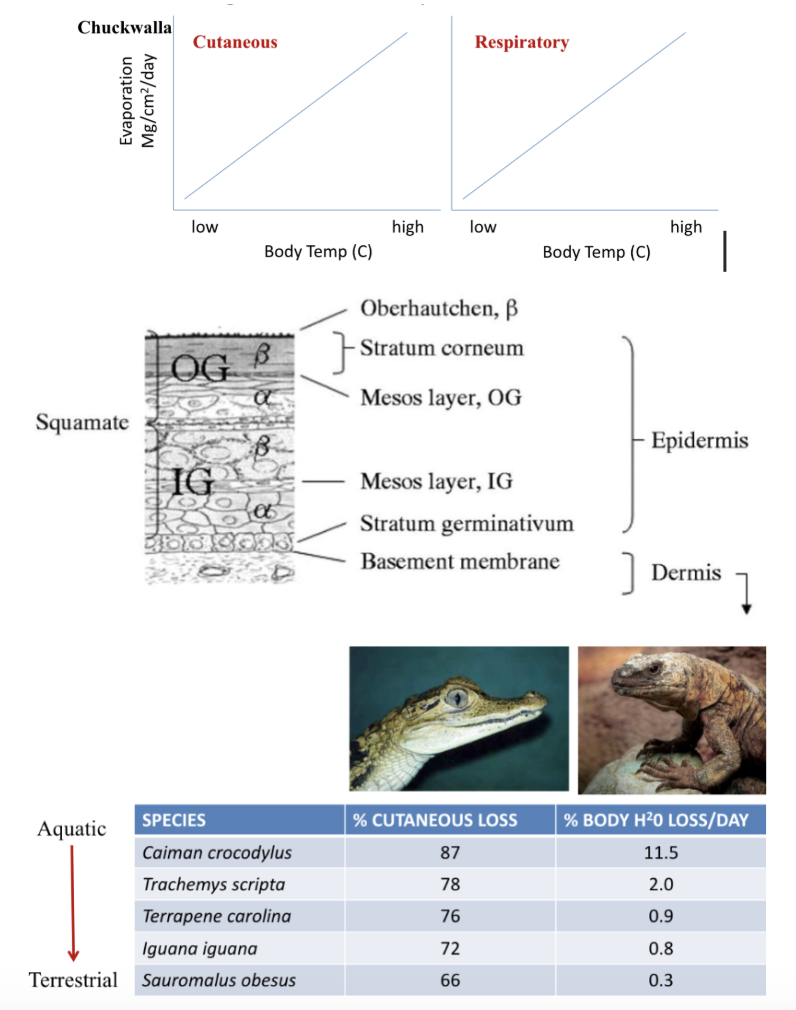

<ul><li><p><span style="background-color: transparent;">Reptiles show a significant reduction in cutaneous water loss, generally attributed to epidermal scales</span></p></li><li><p><span style="background-color: transparent;">But, a scale-less snake was discovered (<em>Pituophis melanoleucus</em>) and it had no greater loss than its scaled counterparts</span></p></li><li><p><span style="background-color: transparent;">Because of more efficient lungs, pulmonary water loss is greater than in amphibians</span></p></li><li><p><span>If scales don’t deter water loss, what does?</span></p><ul><li><p><span style="background-color: transparent;">Landmann et al. have shown that the most significant barrier to water loss (i.e. ‘transcutaneous water flux’) is the presence of <strong>lipid lamellar sheets</strong></span></p></li><li><p><span style="background-color: transparent;">Water loss typically decreases with larger body sizes, both within and across species</span></p></li><li><p><span style="background-color: transparent;">As in Amphibia, water loss varies with reptile species</span></p></li></ul></li></ul><p></p>
41
New cards

Reptilian Salt Balance

  • Most amphibians have not entered a hypertonic medium (=salt water), but many reptiles have

  • In the face of this “ionic load”, some tubular secretions of Na+ occurs within the nephron

  • But in many cases, dietary intake may be too much, hence extrarenal excretion, or “salt glands”

    • Lacrimal, nasal, and sublingual glands


42
New cards

Reptilian Water Conservation Adaptations

  • Uricotelism- excreting uric acid

  • Active Uptake of Na+ in the Cloaca

  • Breath-holding

  • Water Collection

  • Lacrimal Glands

  • Nasal Glands

  • Sublingual Glands


43
New cards

Reptilian Water Conservation: Active Uptake of Na+ in the Cloaca

Can enhance H2O reabsorption in turtles

44
New cards

Reptilian Water Conservation: Breath-holding

Greater extraction/breath

  • Possible because bodies are hypercapnia tolerant- can safely withstand elevated CO2 building in blood without triggering reflex to breathe

  • Every breath expels moisture-saturated air from lungs

  • Cuts down volume of water vapor lost through resp


45
New cards

Reptilian Water Conservation: Water Collection

Behavioral and epidermal

  • Ex. Thorny Devil (Moloch horridus)


<p><span style="background-color: transparent;">Behavioral and epidermal</span></p><ul><li><p><span style="background-color: transparent;">Ex. Thorny Devil (<em>Moloch horridus</em>)</span></p></li></ul><p></p>
46
New cards

Reptilian Water Conservation: Lacrimal Glands

Expel salt by “crying”

  • Sea turtles, Malaclemys terrapin


47
New cards

Reptilian Water Conservation: Nasal Glands

Expel salt by sneezing

  • Dipsosaurus, Iguana, Cyclura, Sauromalus, Uromastyx, Amblyrhynchus, Varanus(some)


48
New cards

Reptilian Water Conservation: Sublingual Glands

Expel salt by mouth/under tongue

  • Acrochordus, Hydrophiinae, Crocodilians


49
New cards

Miscellaneous

  • Diamondback Terrapin (Malaclemys terrapin)- extremely limited range due to brackish (estuary) water dependence

    • Cannot survive long term in long-term in either deep open marine or upper pure-freshwater environments

  • American Crocodile- translocated crocs often to site from which they were removed

    • Crocs experience stress with translocation, suggesting translocation is last resort

  • Sea Snakes- not in Atlantic

    • 2 large land masses in the way

    • Long way to swim around

    • Water too cold to swim around

    • Need fresh rain water on ocean surface or estuary for freshwater