Chapter 6- Sesay emphasized
 Call Kai
 Learn
 Practice Test
 Spaced Repetition
 Match
 Flashcards
 Knowt Play
1/56

There's no tags or description
Looks like no tags are added yet.
57 Terms
integumentary system
for protection- hair, skin, nails,
sweat glands
sebaceous oil glands
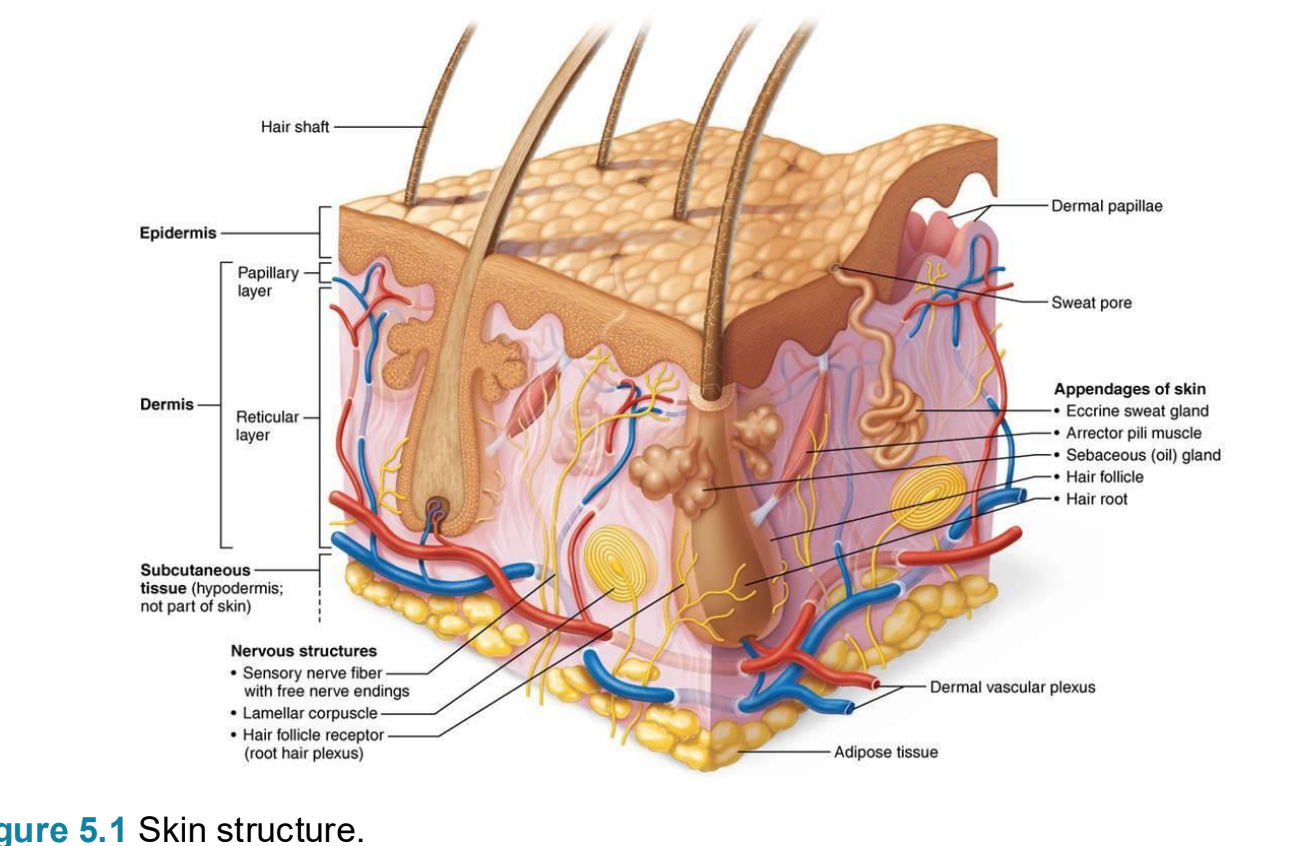
two distinct regions of the skin
Epidermis
Dermis
Epidermis
superficial, avascular region
epithelial tissue
Dermis
underlies dermis, vascular
mostly fibrous connective tissue
hypodermis
superficial fascia
subcutaneous layer deep to skin
mostly adipose tissue that absorbs shock and insulates
anchors skin to underlyin structure (muscle)
reticular layer
largest layer
layers of skin
top- to bottom (superficial to deep)
1- epidermis
2- Dermis
a-papillary layer
b-reticular layer
3- subcutaneous tissue/ hypodermis not part of ski
Epidermis cells
mostly keratinized stratified squamous epithelium
four types of epidermis cells
keratinocytes
melanocytes
dendritic cells
tactile cells
keratinocytes
produce fibrous keratin
tightly packed via desmosomes
Melanocytes
produces pigment melanin packed into melanosomes tat are transferred into keratinocytes where they protect DNA from UV
melanin comes in different shades. we all have apx same amount of melanocytes but different type and amount of melanin.
dendritic cells
langerhans
star shaped macrophages that patrol deep epidermis
key immune system activators
fight infection/immune system
tactile cells
merkel cells
sensory receptors/ touch
principle role of melanin is to
shield nucleus/dna from uv rays
what do dendritic cells do?
activate the immune system
how many layers does thick high abrasion area skin?
5 layers, meaning it has the stratum lucidum
layers from deep to superficial:
1-stratum basale
2-stratum spinosum
3-stratum granulosum
4-stratum lucidum (only in thick skin)
5-stratum corneum
skin structure

layers of the epidermis

Stratum basale/ basal layer
bottom layer of epidermis
AKA Stratum germinativum
keratinocyte, tactile cells, melanocyte made here
firmly attached to dermis
consisits of a single row of stem cells that actively divide (mitotic),
daughter cell jounreys to stratum corneum in 25-45 days
other daughter cell stays in stratum basale as stem cell
where basal cell carcinoma develops
Epidermis layers

Stratum Spinosum
several cell layers thick
kertinocytes in this layer are spikey/prickley
there are also melanosomes and dendritic cells
squamous cell carcinoma develops here
stratum granulosum
also 4 cells thick but cells flatten
cells flatten, nuclei and oranelles disintegrate
keratinization begins
Stratum lucidum
only in thick skin- palm and sole for protection
thin translucent band of dead keratinocytes
stratum corneum (horny layer)
20-30 layers of flat, anucleated, keratinized dead cells
¾ of epidermal thickness!
protection
prevent water loss
barrier against bio, chm, and physical assualt
epidermal cells and layers of the epidermis

Dermis
vasular!!
two layers: Papillary and Reticular (largest)
cells include: fibroblasts, macrophages, occasional mast cells and white blood cells
nerves, blood vessels, and lymphatic vessels
epidermal hair follicles, oil glands, sweat glands

Papillary layer
superficial layer of areolar connective tissue, consisting of loose, interlacing collagen and elastic fibers and blood vessels
Reticular layer
80% of dermal thickness
coarse dense fibrous connective tissue
many elastic fibers provide stretch/recoil
collagen fibers for strength
three pigments contribute to skin color
1-Melanin- 1-made by melanocytes (we all have same amt of melanocytes). 2-we have different type and quantity of melanin. 3-Melanin protects dna/nucleus.
Carotene- yellow/orange pigment. accumulates in corneum and hypodermis. can be converted to vitamin A
Hemoglobin- red in color (protein in red blood cell). Caucasian skin is more transparent so more hemoglobin shows through.
Albinism
they have normal amount of melanocytes
they are missing an enzyme (“ingredient”) to make melanin
what happens when RBC die?
Billirubin (yellow pigment produced in the breakdown of RBCs) goes up.
if too much Billirubin, liver cant process it all, and we turn yellow
Billirubin is normally processed and dumped where?
processed by liver and put into urine/feces
Jaundice
yellow coloration due to liver disorder
Cyanosis
blue skin, low oxygenation of hemoglobin
Pallor
pale skin color
anemia, low BP, fear, anger
Erthema
redness from fever, hypertension, inflammation, allergy
3 barriers of skin
chemical
physical- keratinized stratified squamous epithelium
biological barrier
what are 4 chemicals the body makes for defense on the skin?
Sweat- contains antimicrobial proteins
Sebum and Defensins- which kill bacteria
Cells- secrete the antimicrobial defensin
acid mantle- low skin PH retards bacteria
melanon- uv protection
physical skin barrier
keratinized cells of stratum corneum
Biological bariers
eidermis contains phagocytic cells:
dendtritic cells (macrophage/langerhans) of epidermis engulf foreign antigens and present to white blood cells to activate immune response
How skin synthesizes Vitamin D
skin synthesized vitamin D for caclium absorbtion in intestine
skin makes vitamin D
then goes to liver
then activated in the kidneys
Basal cell Carcinoma (will be on test)
basal layer of epidermis
least malignant and most common
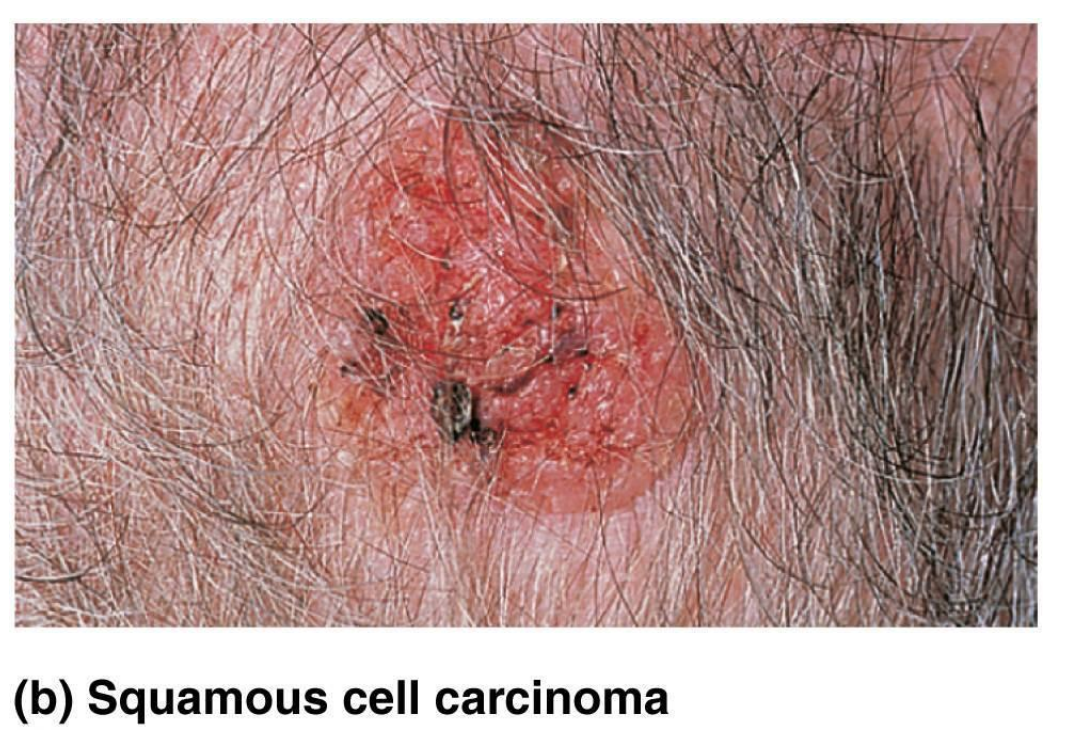
squamous cell carcinoma (on test)
stratum spinosum
second most common
can metastisize
involves keratinocytes of stratum spinsosum
usually looks scly reddened papule on scalp, ear, lip, hands
malanoma (on test)
worst kind of skin cancer. highly metastic and resists chemo
cancer of melanocytes, easily into blood stream
Melanoma ABCD (on test)
A- asymmetry. two sides of the pigmented area dont match
B- border irregularity- indentations
C- color- has several colors (black, brown, tan, red, blue)
D- Diameter- larger than 6mm (size of pencil erasor)

most important thing to give burn victim?
Fluid!
immediate threat to burn victim
dehydration and electrolyte imbalance
leads to renal shutdown and chock
the rule of nines
determines the quantity of fluid needed
body is broken down into 11 sections, each representing 9% body surface (gentials are 1%)

first degree burn
epidermal damage only
localized redness, edema
second degree burns
all epidermis and half of dermis
blisters appear
partial thickness burn
third degree burn
epidermis, dermis, and hypodermis burn
full thickness burn
skin turns gray/white, cherry red, or black
nerve endings are destroyed so there is no pain
no edema
skin grafting needed

burns are considered critical if:
more than 25% of body has second degree burns
more than 10% has 3rd degree burns
face hands or feet bear third degree burns
treatment of burns includes
fluid first!
Debridement (removal of burned skin)
antibiotics
skin grafts
Sebaceous glands
oil glands
relatively inactive until puberty when stimulated by hormones (androgens)
they secrete Sebum):
oily holocrine (whole secretory disintegrates and is released) secretion
bacteria killing properties
softens hair and skin
Acne is infectious inflammation of-
Sebaceous glands are associated with Propionibacterium acnes bacterial infection."
"Whiteheads are blocked sebaceous glands. If the secretion is oxidized, it becomes a blackhead."
as we age cells…
dont regenerate as quickly
ways to delay aging
uv protection
nutrition
fluids
hygiene