Case 5: Ivan Horvath - Primary HTN
 Call Kai
 Learn
 Practice Test
 Spaced Repetition
 Match
 Flashcards
 Knowt Play
1/44

There's no tags or description
Looks like no tags are added yet.
45 Terms
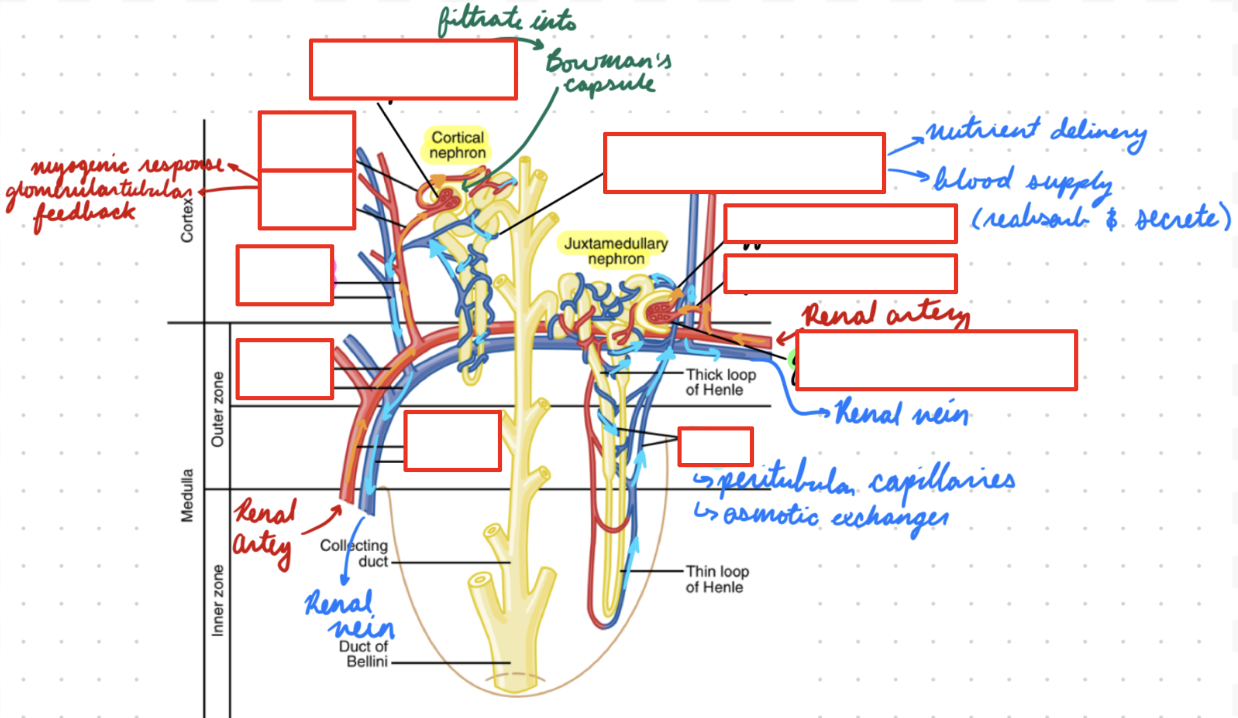
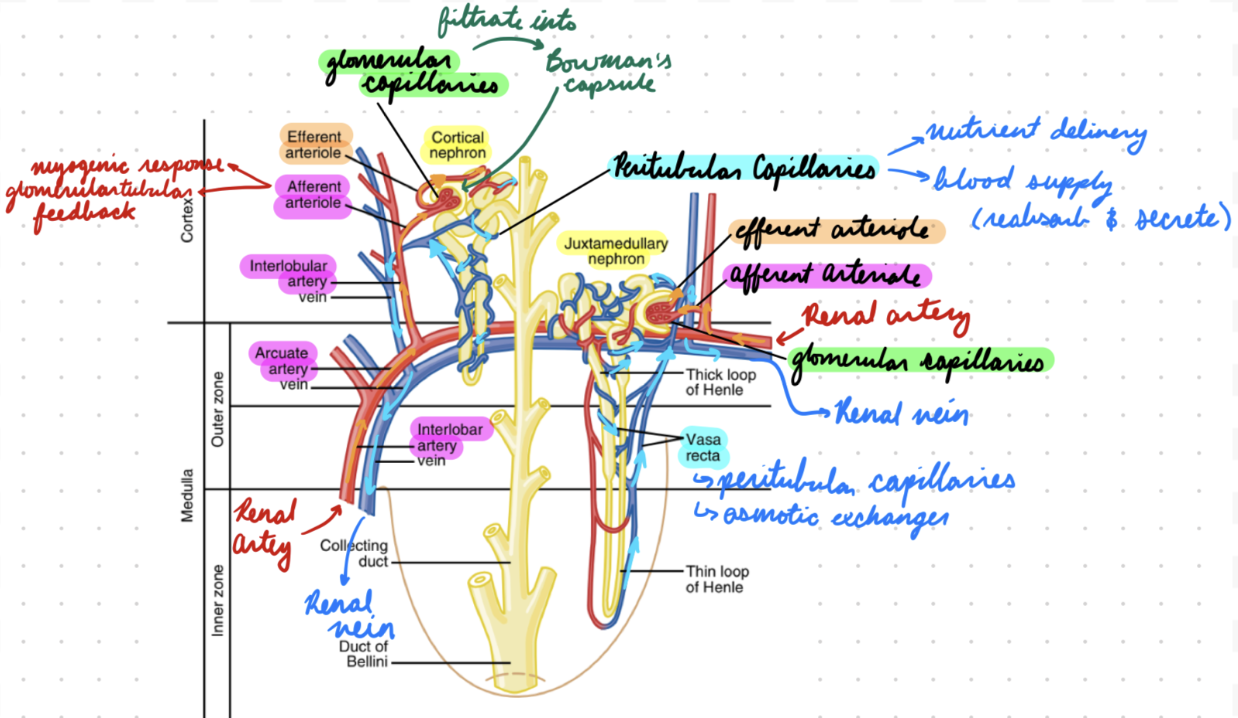
Renal Artery Anatomy
Enter kidney
Divide into interlobar arteries → Arcuate arteries → Cortical radial (interlobular) arteries → Afferent arterioles
Afferent Arterioles Anatomy
Deliver blood to glomerular capillaries (network)
Glomerular Capillaries Anatomy
In Bowman’s capsule
Deliver blood to efferent arterioles
Efferent Arterioles Anatomy
Deliver blood to peritubular capillaries (network)
Peritubular Capillaries Anatomy
Surround nephrons
Converge into small veins → Renal vein
Superficial (Cortical) Nephrons: Branches from efferent arterioles
Juxtamedullary Nephrons: Form vasa recta
Hairpin-shaped blood vessels along loop of Henle
Renal Vein Anatomy
Exit kidney
Carry blood away
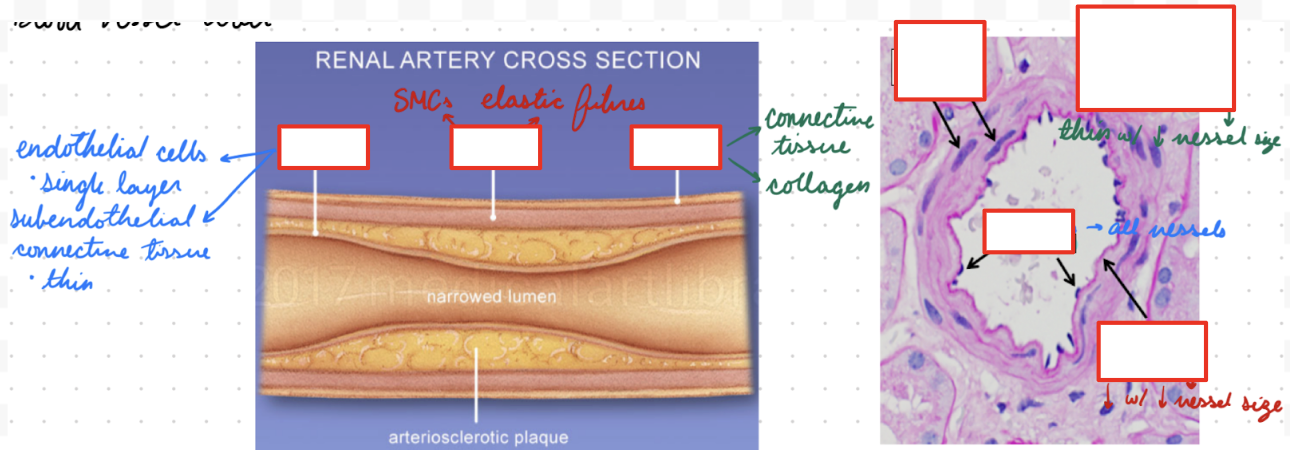
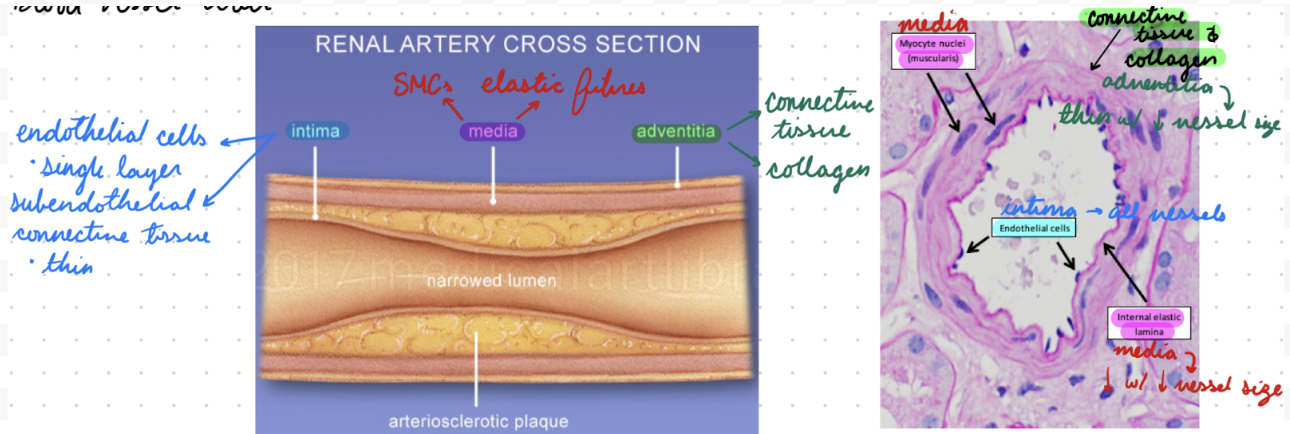
Blood Vessel Anatomy
3 layers
Tunica Intima: Innermost
Single endothelial cell layer + thin subendothelial connective tissue
In all vessels
Tunica Media: Middle layer
Smooth muscle cells (SMCs) + elastic fibres
Decrease with vessel size
Arteries: Largest
Arterioles: Smallest
Capillaries: None
Tunica Adventitia: Outermost
Connective tissue + collagen fibres
Renal Artery Physiology
Deliver blood to kidney
Afferent Arterioles Physiology
Deliver blood to glomerulus for filtration
Maintain GFR
Myogenic response
Tubuloglomerular feedback
Increase GFR:
Decreased blood flow (low GFR) = Myogenic response = Vasodilation
Increase fluid into glomerular capillaries = Increase GFR
Decrease GFR:
High NaCl concentration in DCT (between arterioles) = Macula densa sends tubuloglomerular feedback = Vasoconstriction
Decrease fluid into glomerular capillaries = Decrease GFR
Glomerular Capillaries Physiology
Filtration into Bowman’s space
Efferent Arterioles Physiology
Maintain GFR
Increase GFR:
Low NaCl concentration in DCT = Macula densa sends tubuloglomerular feedback = Vasoconstriction
Increase fluid in glomerular capillaries = Increase GFR
Peritubular Capillaries Physiology
Nephron blood supply
Reabsorption/secretion
Cortical Nephron:
Deliver nutrients to epithelial cells
Blood supply for reabsorption and secretion
Juxtamedullary Nephron: Vasa reacta
Osmotic exchanger (concentrated urine)
Blood Vessel Physiology
Tunica Intima:
Vascular permeability
Regulate blood flow
Tunica Media:
SMC myogenic response regulate lumen diameter
Tunica Adventitia:
Structural support (anchor vessel to tissues)
Renal Hemodynamics Regulation
Myogenic autoregulation (Pressure)
Hormonal effects
Tubulorglomerular feedback
Renin-angiotensin-aldosterone system
SNS
Myogenic Autoregulation (Pressure)
SMCs in afferent arteriole sense pressure changes
Mechanosensitive ion channels detect stretch
Cause intracellular Ca2+ changes
Pressure Increase:
Afferent arteriole membrane depolarization = Vasoconstriction = Decrease blood flow + pressure in glomerulus
Pressure Decrease:
Afferent arteriole membrane hyperpolarization = Vasodilation = Increase blood flow + pressure in glomerulus
Hormonal Effects: Natriuretic Peptides
Volume response
Atrial and Brain Natriuretic Peptide (ANP/BNP)
Increased volume = Atrial/ventricular dilation = ANP/BNP secretion by myocytes
Effects:
**Inhibit ENaC (collecting duct) = Increase Na+/water secretion = Decrease BP
Afferent arteriole dilation = Increase GFR and Na+ secretion
Inhibit RAAS and ADH
Hormonal Effects: Antidiuretic Hormone (ADH)
Vasoconstriction = Increase BP and renal perfusion
Increase water and urea reabsorption in collecting duct = Increase BP
Tubuloglomerular Feedback
Macula densa cells (in juxtaglomerular apparatus) sense NaCl concentration changes in DCT (between arterioles)
NaCl Increase:
Macula densa increase adenosine secretion = Afferent arteriole vasoconstriction = Decrease blood flow + pressure in glomerulus
Decrease GFR
NaCl Decrease:
Macula densa decrease adenosine secretion = Afferent arteriole vasodilation = Increase blood flow + pressure in glomerulus
Increase GFR
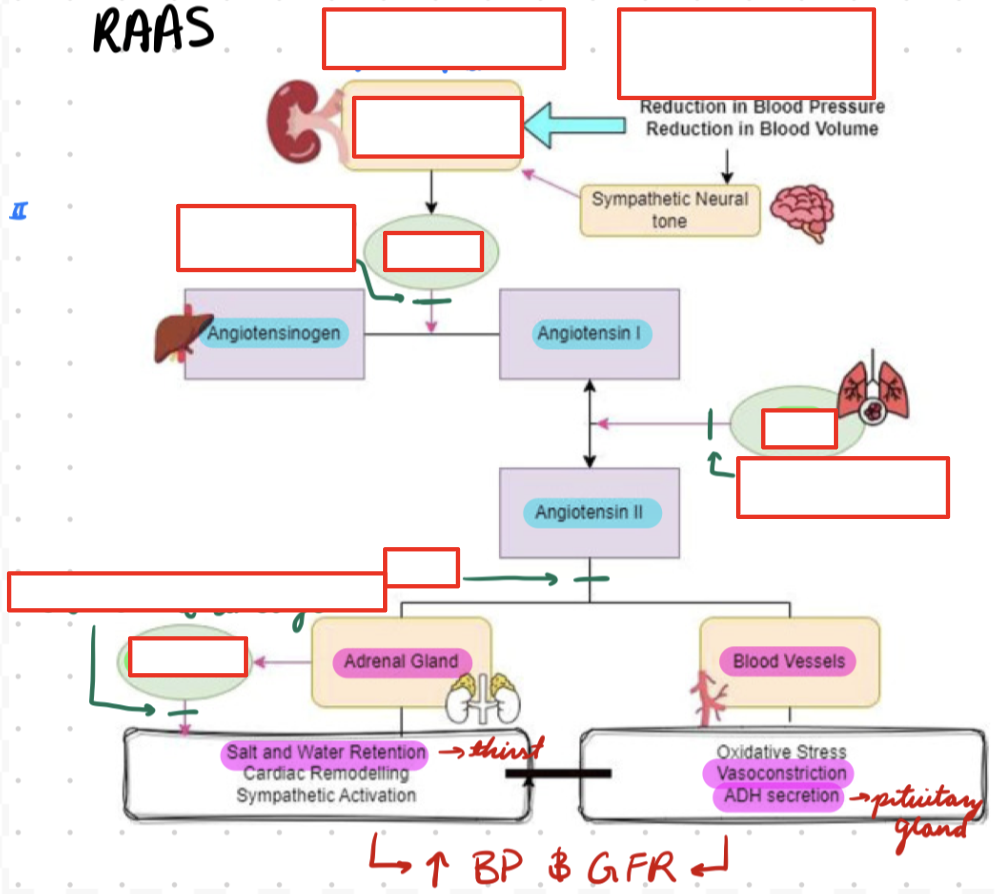
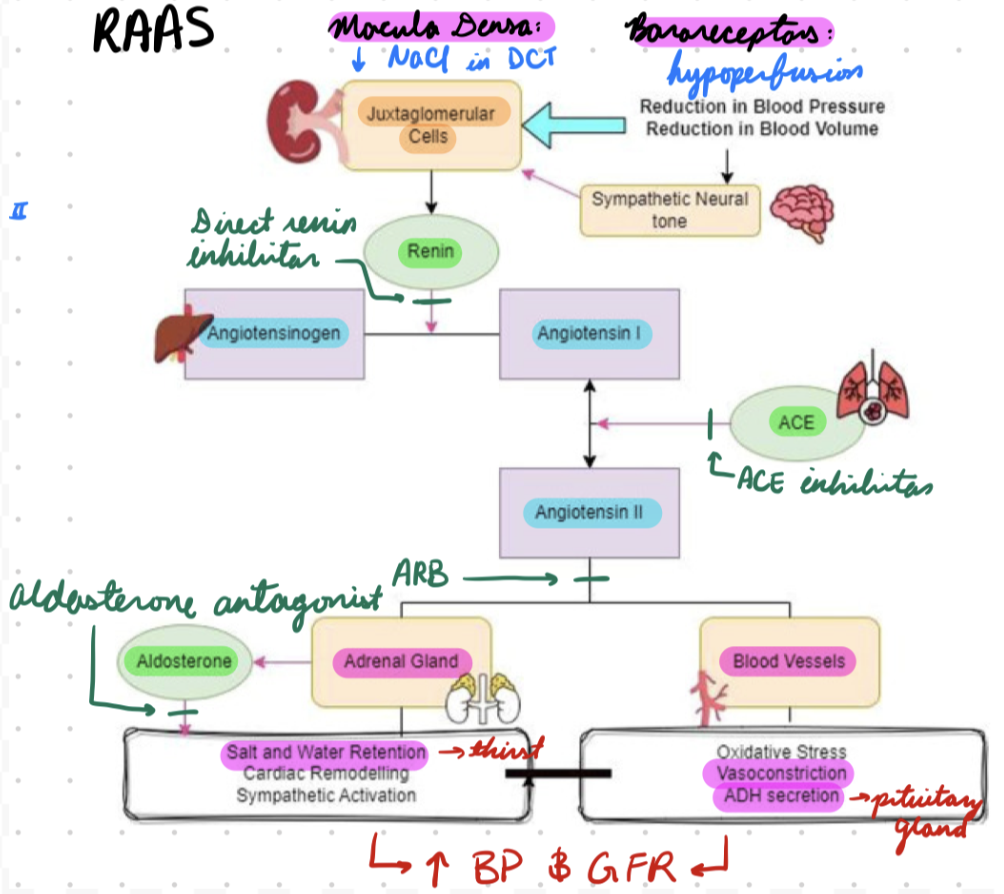
Renin-Angiotensin-Aldosterone System (RAAS)
Sensors:
Baroreceptors in afferent arterioles detect low pressure and flow
Renal hypoperfusion
Sympathetic tone
Macula densa cells detect low Na+ in DCT
Effector:
JG cells (in JG apparatus) release renin
Liver: Angiotensinogen → Angiotensin I
Lungs: Angiotensin-converting enzyme (ACE) convert angiotensin I → Angiotensin II
Angiotensin II causes:
Vasoconstriction
Increased ADH (pituitary gland) and aldosterone (adrenal glands) secretion
Thirst
Effects:
Efferent arteriole vasoconstriction = Increase blood + pressure in glomerulus = Increase GFR and BP
ADH + aldosterone = Increase Na+ and water reabsorption = Increase BP
Thirst = Increase water intake = Increase BP
SNS
Norepinephrine release = Bind alpha-1 receptors = Afferent arteriole vasoconstriction = Decrease blood flow to glomerulus
NSAIDs MOA
Inhibit COX-1 and -2 enzymes = Decrease prostaglandin synthesis = Reduce pain, fever, inflammation
Most: Reversible inhibition
Aspirin: Irreversible inhibition
NSAID Nephrotoxicity
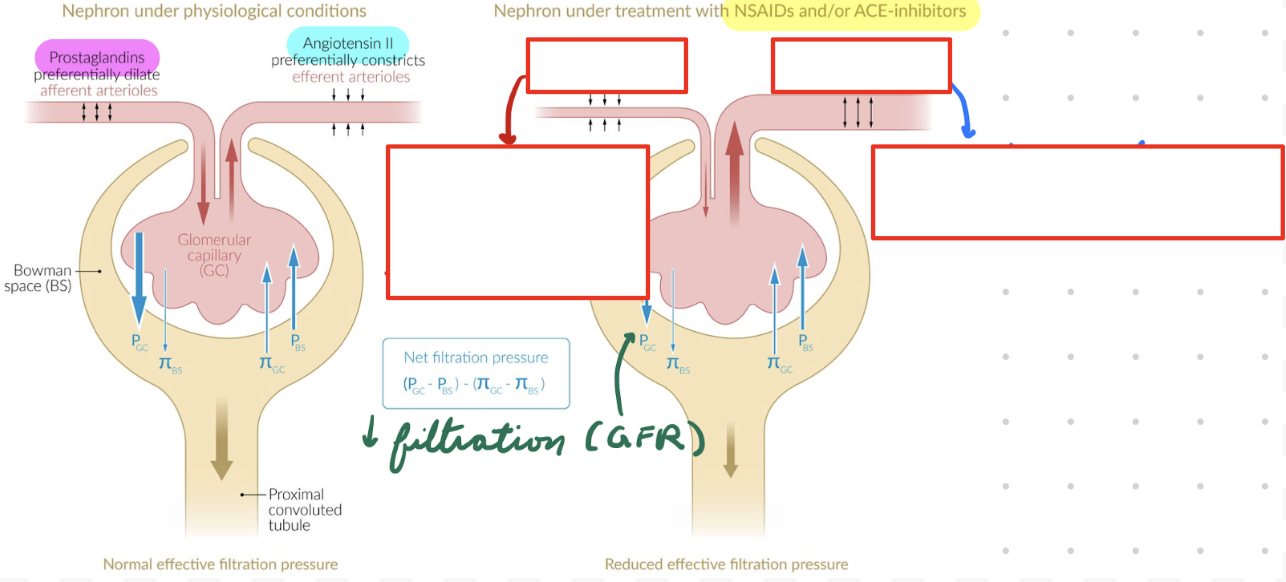
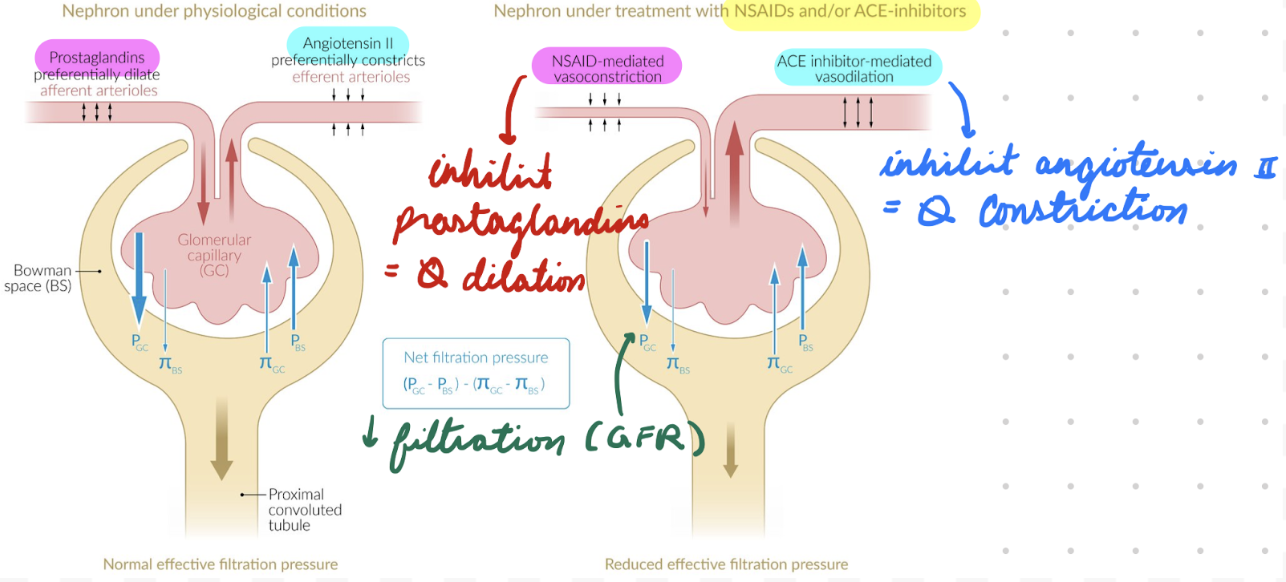
Prostaglandins induce afferent arteriole vasodilation
NSAID inhibiting prostaglandin synthesis = Vasoconstriction = Kidney hypoperfusion + decreased GFR
Cause:
Electrolyte and fluid imbalances
Worsen hypertension
Acute renal failure
NSAID: Analgesic Nephropathy
Prolonged NSAID use causing:
Tubulointerstitial Nephritis: Renal inflammation
Papillary Necrosis: Necrosis of pyramids and papillae
Other Nephrotoxic Drugs
Vasodilators
ACE inhibitors
ARBs
Diuretics
Antibiotics
Aminoglycoside
Vancomycin
Cephalosporin
Antivirals
Acyclovir
Antifungals
Amphotericin B
Platinum-based chemotherapeutic agents
Cisplatin
Carboplatin
Primary Hypertension (HTN)
Sustained BP elevation with no identifiable cause
Systolic ≥ 140 mmHg
Diastolic ≥ 90 mmHg
Primary HTN: Epidemiology
90% of HTN cases
Primary HTN: Etiology
Risk factors:
Nonmodifiable
Family history
Older age
Race
African American
White
Sex:
Men: Below 65
Women: Post-menopause
Modifiable
Overweight/obese
Diabetes
Smoking
High Na+ diet
Physical inactivity
Primary HTN: Pathogenesis
Vasoconstriction + Na+/water retention = Increase ECF (intravascular) = Increase BP
Primary HTN: Clinical Presentation
Usually asymptomatic until…
End-organ damage complications
Acute BP increase (hypertensive crisis)
Nonspecific symptoms
Headaches/dizziness
Tinnitus
Blurred vision
Bounding pulse
Primary HTN: Investigations
BP measurements
Physical exam
Blood test
***Urinalysis
ECG
Primary HTN: BP Measurements
Types:
In-office
Ambulatory: Periodic measurement with portable device
Home
Annual screening for at-risk patients and > 40 years
Primary HTN: Blood Test
Fasting glucose
Serum Na+, K+, Ca2+
Serum creatinine
eGFR
CBC
TSH
Lipid profile
Primary HTN: Urinalysis
Albumin:Creatinine ratio
Primary HTN: Secondary Investigations
Not required when…
No abnormalities in routine testing
No signs of secondary HTN
Primary HTN: Treatment/Management
3-6 month to annual reassessment
Lifestyle changes
Pharmacotherapy
Primary HTN Treatment: Lifestyle Changes
Weight loss
Diet changes
DASH
Decrease Na+ and alcohol
Increase K+ → NOT for CKD patients
Increase exercise
Smoking cessation
Primary HTN Treatment: Pharmacotherapy
Indications:
BP ≥ 140/90
BP ≥ 130/80 with
Atherosclerotic CVD (ASCVD)
CHF
10-year ASCVD risk ≥ 10%
Stage 1 HTN (BP ≥ 130/80): Monotherapy
Stage 2 HTN (BP ≥ 140/90): Combo therapy
Common: ACE inhibitor OR ARB (not together) + Dihydropyridine CCB OR thiazide diuretic
Primary HTN Pharm: First-Line
ACE inhibitor (-pril)
Inhibit angiotensin-converting enzyme = Vasodilation
Decrease aldosterone secretion = Decrease Na+/water reabsorption
ARB (-sartan)
Inhibit angiotensin II receptor = Vasodilation
Decrease aldosterone secretion = Decrease Na+/water reabsorption
Thiazide Diuretic
Inhibit Na+/Cl- cotransporter in DCT = Decrease Na+/water reabsorption
Dihydropyridine CCB (-dipine)
Inhibit voltage-gated Ca2+ channels in arterial SMCs = Vasodilation
Primary HTN Pharm: Second-Line
Beta Blockers (-lol)
Inhibit beta-adrenergic receptors = No sympathetic activation = Vasodilation
Loop Diuretics (-semide)
Inhibit Na+/K+/2Cl- cotransporter in thick ascending loop of Henle = Inhibit Na+/water reabsorption
Aldosterone Antagonist/K+ Sparing Diuretic (-one)
Inhibit aldosterone effects = Decrease Na+/water reabsorption
Alpha-1 Blockers (-zosin)
Inhibit alpha-1 adrenoreceptors = Vasodilation
Direct Arteriolar Vasodilator
Induce smooth muscle relaxation = Vasodilation
Primary HTN: Complications
HTN crises and organ damage
Cardiovascular:
CVD
CHF
MI
Aortic dissection
Brain:
Stroke
Kidneys:
Hypertensive nephrosclerosis (renal vascular injury)
CKD
Eyes:
Hypertensive retinopathy
Copper/silver wiring (vascular occlusion)
Cotton wool spots (deposite)
Retinal hemorrhage
Smoking Cessation
5 As
Ask
Advise
Assess
Assist
Arrange