Gas Chromatography (GC) Fatty Acid Analysis
 Call Kai
 Learn
 Practice Test
 Spaced Repetition
 Match
 Flashcards
 Knowt Play
1/90

There's no tags or description
Looks like no tags are added yet.
91 Terms
separation method
separates a number of components in a mixture based on the degrees to which they interact with 2 separate phases
2 separate phases
in the separate method, it separates a number of components in a mixture based on the degrees to which they interact with ?
nature of the two phases
type of interaction
the ? and the ? can be varied, giving rise to the different types of chromatography
chromatography
determines the number of components in a mixture
gas (gas chromatography) or liquid (liquid chromatography)
types of mobile phases in chromatography
gas-liquid chromatography (GLC)
gas-solid chromatography (GSC)
liquid-liquid chromatography (LLC)
liquid-solid chromatography (LSC)
different types of chromatography
interaction
it is best to classify chromatography according to the nature of the ? of the mixture components with the 2 phases
mobile phase
stationary phase
two phases in chromatography
mobile phase
moving phase
stationary phase
non-moving phase
varying rates
the mixture to be separated is introduced into the mobile phase and moves by ? through the stationary phase, where the mixture becomes separated

gas chromatography (GC)
referred to as an instrumental chromatography configuration
electronic detection and peaks on a computer screen
inert gas (usually helium)
mobile phase is an ? in gas chromatography
regulated pressure
? from a compressed gas cylinder pushes the helium through the column
gas flow
? is controlled by software during gas chromatography
organic liquids
mixtures are usually ? (may separate gases and inorganic substances as well)
liquid mixtures
? are injected with a sharp tipped syringe that pierces a rubber septum
gas phase
mixtures must be in the ? and must be rapidly evaporated immediately upon injection
injection port
column
detector
the ?, ?, and ? must be heated for the mixtures to be in a gas phase and rapidly evaporated immediately upon injection
oven
column is placed in an ? in gas chromatography
capillary
usually the column in gas chromatography is ? (small diameter, 0.1 - 0.25 mm)
stationary phase
bound to the interior wall of the capillary tube (not absorbed on small particles on the surface as with other columns)
capillary columns
can b eup to 300 ft long, coiled to fit inside of the oven
carrier gas (He)
injection syringe
injection port
column oven
detector
data system
components of a gas chromatograph
dissolve
evaporate
separation of components depends on how well the mixture components ? in the liquid stationary phase and the tendency of the mixture components to ? (to be in mobile phase)
solubility and vapor pressure
? and ? dictate the quality of the separation
vapor pressure
a substance’s tendency to be in the gas phase at a given temperature
higher vapor pressure
substances with ? will stay in the gas phase and move through the column faster
high solubility
substances with ? will stay in the stationary phase (dissolve on the column) and move through the column slower
injection port
consists of small-line cylinder equipped with a rubber septum to accommodate a syringe injection
flash-vaporized
a small volume of liquid (0.1 - 3 uL) is ? and immediately carried onto the column with the helium carrier gas
100
the rubber septum should be changed every ? injections
larger
although small, once the sample is injected, it is much ?
analytes
detectors can vary, small concentrations of ? in a small volume of sample
capillary columns
can become overloaded; use a split injection
split injection
capillary columns can become overload, therefore use a ?
column
very long (300 ft)
condensation
column must be kept at an elevated temp to avoid ? of sample
columns
wound into coil in order to fit into oven
columns
can be replaced easily
better resolution
changing the column length can result in ? due to more interaction of sample with stationary phase
stationary phase
changing the column length can result in better resolution due to more interaction of the sample with the ?
capillary (open tubular) columns
most commonly used type of columns
capillary columns
open tubular columns
packed columns
type of column that is still used, but not preferred
open tubular (capillary) columns
allow little resistance to gas flow
packed columns
need higher gas pressure to push sample through due to more resistance
capillary columns
have better resolving power (longer)
packed columns
have lesser resolving power (shorter)
stationary phase selection
important due to the role that it plays in separation of your sample
GC separations
most are partition type, meaning they utilize a liquid stationary phase
partition type (most GC separation)
utilize a liquid stationary phase
liquid phases
bonded to the inside wall of capillary tube
fused silica
most capillary tubes are made of ?
fused silica
what most capillary tubes are made of
fused silica
highly pure synthetic quartz material
polyimide
outside tubing of column in stationary phase are coated with ? material that gives the column an amber tint
polyimide
material that the outside tubing of the stationary phase is coated in to give the column an amber tint
silylation
the inside surface of column in stationary phase is chemically treated using a ? process that activates the surface of the column by exposing silanol groups
silylation process
used to chemical treat the inside surface of the column in the stationary phase to activate the surface of the column by exposing silanol groups
silanol (-Si-OH)
silylation process activates the inside surface of the column in the stationary phase by exposing ? groups
silicon
silanol
silanes
stationary phase is added and a chemical reaction bonds it to the ? of the ? group —> creates ?
silanes
have organic groups attached (methyl and phenol) depending on their nature and give column its polar or non-polar properities
methyl and phenol
organic groups attached in silanes
organic groups contained in silanes bonded to the inside of column in stationary phase
give the columns its polar and non-polar properties
polysilane liquids (polysiloxanes)
formation of silanes results in ? that are fixed via a chemical bond to the surface of the quartz —> binds stationary phase to inside of column
polysilane liquids (polysiloxanes)
fixed via a chemical bond to the surface of the quartz in the column
amount and nature
due the differences in the ? and ? of the organic groups along the polymer chain, the analytical chemist has a wide variety to choose from when selecting a stationary phase
diatomeceous earth (Chromsorb)
in a packed column, the liquid stationary phase is bonded to the surface of a solid substrate (support) called ?
vapor pressure and solubility
controlling the temp of a GC is important because separation depends on ? and ?
isothermal (constant)
for simple separations, ? temperature methods are acceptable
temp program
for complicated separations, a ? is needed
temperature programming
a single linear increase from a low temp to high temp
low to high
in temperature programming, a single linear increase from a ? temp to a ? temp is observed
other programs may consist of more than 1 temperature increase or decrease
too high temp
causes poor resolution of high vapor pressure components

too low temp
causes retention times of low vapor pressures components to be too long

regulated
using temperature programming allows for the temp to be ? at the perfect condition for vapor pressure and solubility
design
sensitivity
selectivity
detectors vary in ?, ?, and ? based on what you wish to detect
sensitivity
ability to detect a small amount of sample
selectivity
sample type
detectors
generates a signal (peak) when gas other than the carrier gas exits the column
there are many types
strength of signal created by detector
proportional to the amount of analyte present
flame ionization detector (FID)
most common and works over a wide variety of substances, but is destructive
flame ionization detector (FID)
sensitive to hydrocarbons and organic compounds
hydrocarbons
organic compounds
flame ionization detector (FID) is sensitive to ? and ?
column effluent (waste)
swept into a H flame and the sample components are burned in flame ionization detector (FID)
fragmented
a small fraction of column effluent (waste) molecules are ?, and these ions are drawn to a (-) electrode while the electrons flow to the (+) charged burner head
(-) electrode
where ions from fragmented column effluent (waste) molecules are drawn to
(+) charged burner head
where electrons from fragmented column effluent (waste) molecules flow
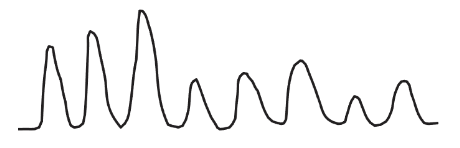
peak on chromatogram
the current change between this electrical circuit (flow of ions to electrode and electrons to charged burner head in flame ionization detector (FID)) is seen as a ?
H gas
needed to fuel flame ionization detector (FID)