Class Notes: CLCV 217 - Exam 2
 Call Kai
 Learn
 Practice Test
 Spaced Repetition
 Match
 Flashcards
 Knowt Play
1/94

There's no tags or description
Looks like no tags are added yet.
95 Terms
Archaic Period
600-500 BC or 6th c.
- Early (600-575), Middle (575-525), Late (525-550/480)
- Emergence of Regional Style
Theme:
1. Black-figure vase painting
2. The brilliance of Exekias
3. Following the development of kouroi and korai

Regions of Archaic Period
- Corinthia : Poleis - Corinth
- Attika: Poleis - Athens/Attic black figure*
- Lakonia: Poleis - Sparta

Black-figure Amphora by Amasis Painter
Amasis Painter
540-530/mid archaic
Athens
1st one: 2 female followers of Dionysus, wearing pelts of wild animals = maenad
2nd one: one on the right Poseidon is talking to Athena on the left w snake breast plates, “Amasis made me” is written side way = artist is identifying himself/signing

Black-figure Neck Amphora - Front - “Dioskouroi (Krator & Polydeuces)”
Exekias
540-530/ mid archaic
Zoomed into/central attention on the main scene of warrior departure, artist added labels, and it is a specific narrative
Incision

Black-figure Neck Amphora - Back: Ajax and Achilles
The back of the amphora has a painting! new! (both about Trojan War)
Exekias
“Ajax and Achilles”
shows the quiet/leisure moment, playing a dice game with each other
“Exekias made it” is written next to Achilles
Both of their words/dialogue is linked up with their swords
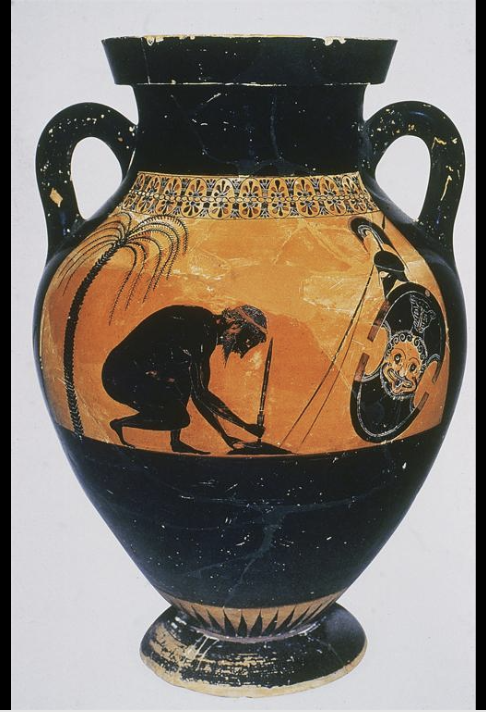
Black-figure Neck Amphora - Suicide of Ajax
Exekias
“Suicide of Ajax”
550-540 / mid-archaic
One of the unique suicide paintings representing 1 person and a palm tree(iconography of Troy) , planting a sword into soil = the land itself is killing him; the helmet is looking at him, another distintive bc slow down and look at the quiet moment (before or after)
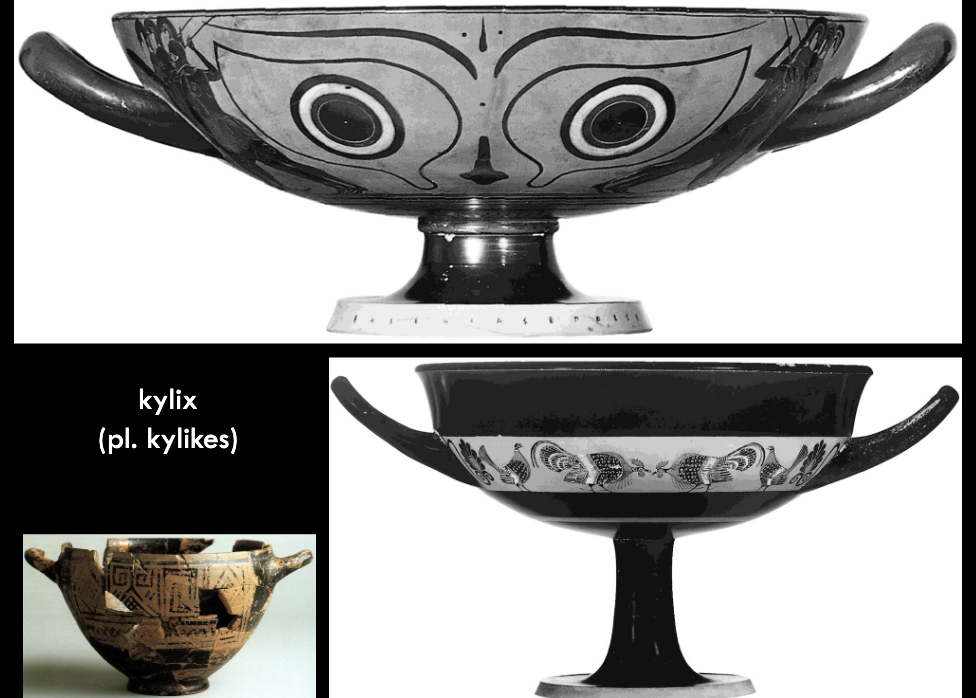
Kylix
male drinking pottery *has stem!
Black-figure kylix - “Dionysos Sailing”
Exekias
540/mid-archaic
The painting is inside circular area = tondo
depicts Dionysos sailing as he turned kidnappers into dolphins
based on its structure of the cup and design, the more you drink you get to see what’s inside the cup, slowly revealing the story
to fully see the image: use handles to see all angles of it → making us involved, as participants!
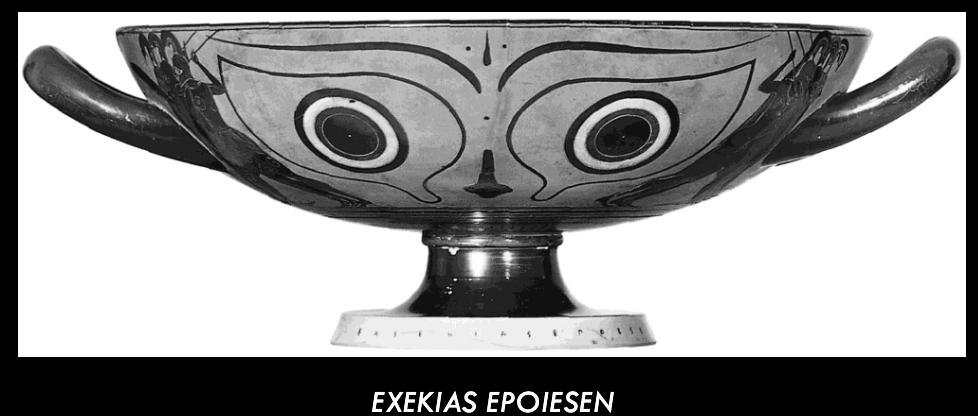
'“Eye - Cup”
Exekias Epoiesen
painted thinking of when people drink and lift the cup up, somewhat acting like a mask - ekstasis (outside of yourself)

Vix Krater
Lankonian (?) manufacture
Bronze (shows greenish)
530-520
MASSIVE! It’s a next step up
Metal Vase = worth more
Passed down/handed down over again, ended up in grave eventually as grave good
reflects big trade network as it’s found in france
On the side handle: gothic? female


Running Girl
Lankonian (?) manufacture
(transported to/as offerings) From Dodona
Bronze
550-540
Short dress indicates it’s a girl
Sparta girls are educated (including athletics like running)
Still, very rigid and frontal
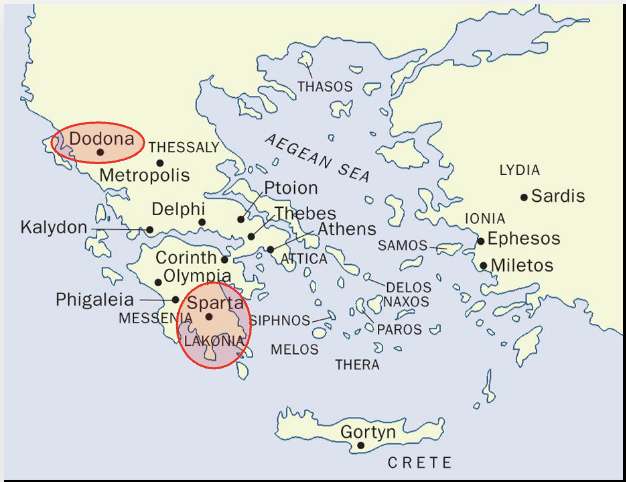
Dodona and Sparta
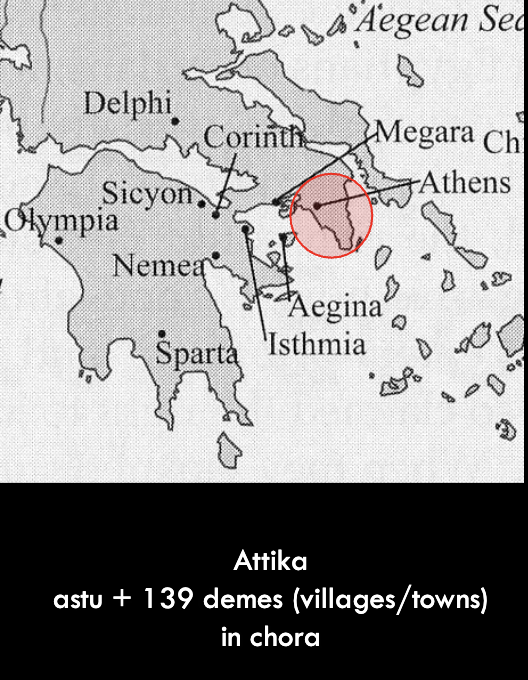
Attika
(Athens)

Naxos

New York Kouros
From Attika
Naxian marble
600-590 (early Archaic)
1.95m! tall as human
the material shows off status, carved out of marble, carved in the round
frontal/rigid/still
nude but have necklace and headband
perfection of male form/ideal
often a grave marker
sanctuary and funerary context —> complicates the meaning “why big marvel carved in the round?
Similar to Egypt!
influence from Naukratis in Egypt = city got greece trading
key difference: clothing, arms/legs not free, elongated/slimmter
Greeks are adopting!


Dipylon Head
From Kerameikos cemetery in (Athens) near Dipylon gate
Marble
600-580 (early Archaic)

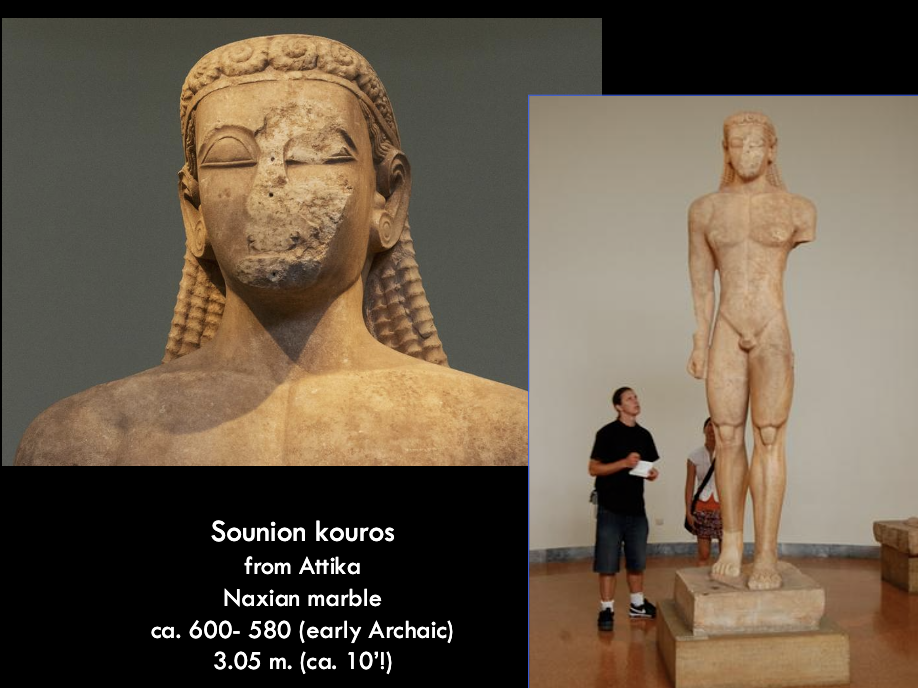
Sounion Kouros
From Attika
Naxian marble
600-580 (early Archaic)
3.05m = Large scale
right arm lost and most of the face is scratched
same stylistic of frontal, rigid,
emphasis on strengths: abs/knee caps indicated
there were several of these in santuary

Anavyssos Kouros “Kroisos”
from Phoinikia (Attika)
Parian? marble (exported)
530 / mid-archaic
1.94m
grave marker
“stay and mourn at the marker of dead Kroisos, whom raging Ares destroyed one day in the front ranks of battle”
eyes are smaller, proportions closer to real life
more “chubby/fats” around facee and body
soften muscular = still realistic
has “archaic smile”
Comparing 3 Kuros/Development of Kouroi
Lots of debates around what they even are
similarity - male nude: youth, beauty, athletic success, military and civic value, all similar pose/hands right next to their body/left food forward
difference: head is getting smaller/more realistic with the proportion/face muscles, etc.

Apollonas Colossus
from Naxos
6th c
10.7m = th most giant/largest
never finished
has beard - so not youth/kuros
has clothes
one hand is sticking out

Moschophoros (Calf-bearer)
from Athenian Akropolis
dedicated by Rhonbos
Hymettian marble
570-560 / mid-Archaic
1.65m
sanctuary dedication
inscription says : gift to Athena
represent Rhonbos: point to a specific person
not fully nude
permanant representation
man + animal

Rampin Rider
from Athenian Akropolic
Marble
550 / mid-Archaic
1.08m
head is turned to the side - breaking frontal!
changes + continuity example
multi fig composition
smiling, has abs
have beard: other than beard he is kuros but debake about it, no solid answer

Auxerre Kore
Eleutherna Crete
Limestone
650-600
75cm
didnt take any note?

Nikande Kore
from Delos ( next to naxos)
Naxian marble
mid - 7th
1.90m
comparable with auxerre kore!

Pomegranate Kore
from Athenian Akropolis
Pentelic? marble
570-560 / mid-Archaic
0.95m
vertial lines
textual freedom with female - more details in their dress
long hair, necklace = fancy
sanctuary representation
pomegranate is a symbol of life and death and agricultural
young, youthful maiden

Peplos Kore (Artemis?)
from Athenian Akropolis
Parian marble
530-520 (mid/late Archaic)
1.18m
hair is responding to the curve of breast
polychromy - addition of various colors
Artemis = goddess of wild animal
white color = most greek sculture use pure marble to support the idea of superior idea, tried to ignore when colored


Phrasikleia
from Myrrhinous (Attika)
signed by Ariston of Paros
Parian marble
550-540 /mid-archaic
1.79 m
unmarried, married, death
necklace of pomegranete/ flowers: youth representation, life & death
married to death

Pireaus Apollo
Possibly from Delos originally
Bronze
530-520 - mid/late Archaic
1.92m
youth, nude male
looks down first “interaction” with us/humans, recognizing us/reaching out to us
steps forward but with RIGHT Foot
sense of weight with rounded and soft butt
centry long development w gradual changes
balanced only w his 2 feet = able to do so bc made out of Bronze

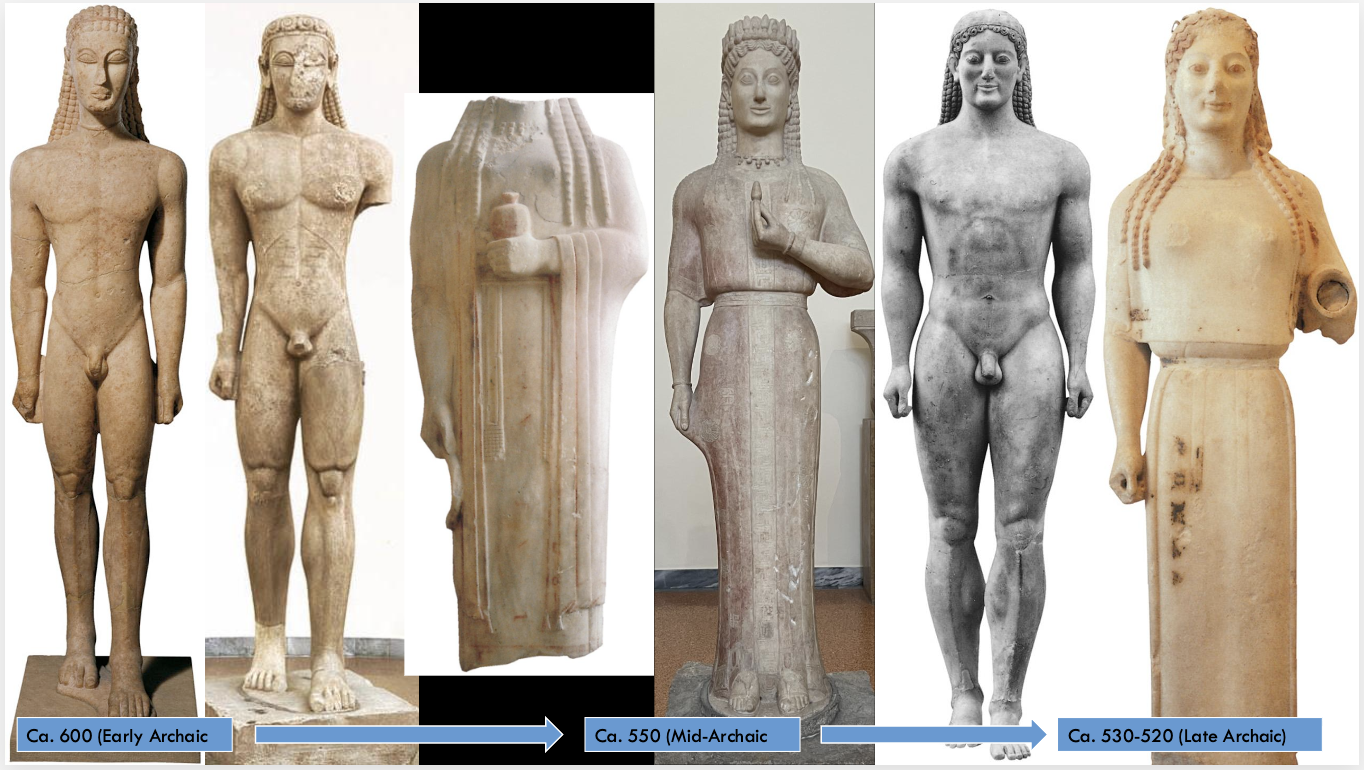
Early Archaic to Late Archaic Marble Sculture Developments
Archaic Architecture - 6th (10/20 missed class)
What is the impact of material?
previous: progression of sculpture-marble, in the round, also black-figure pottery.
previous architecture:
Bronze Age - palatial complexes, power & administration
Iron Age - toumba, domestic wch, funerary arch
then temple of apollo, sacred arch
in Archaic - toumb itselt if not monumentalized, no langs so no palace
domestic ach mostly ephemeral materials - have to look at sacred buildings, temples and Greek religion
greek religious practice does not require a temple = need altaer to make sacrificies
everything else is secondary to altar
temple is a house for the god, has cult statue that needs a home
sanctuary is entire sacred area, temple is one structure within
temple is bigger/flashier than altar - way to express wealth/power of polis ; emphais strenth power of community, come tg to make (?)
also way of ensuring gods protect polis - giant anathema/ type of votive dedication
temples important for competition on polis level
3 main places for temples:
in middle of astu - city/urban temple, for patron deity of polis
on suburban outside - panurban temple, deltics associated w transitions, on edges
rural teritory - for deities devoted to fertility + agneulture, extraurban country side - way to establish edges of territory, common places that are contested
practical uses of temple
house for cult statue
place for anathemla that are valuable(gold) or delicate (textiles, ivory)
urban center temple as place to store polis niches, treasury

Temple of Apollo
in Thermon, famous sanctuary of Apollo
hekatompedon
late 7th c - evidence of temple used for warship
long rectangular plan, columns on outside, in middle
columns around outside: peristyle, peripteral
long cental room w columsn, then small back porch area


Column arrangement Vocab
prostyle - columns only on front
amphiprostyle - columns front and back; amphi = both
peripteral - columns on all 4 sides
count column numbers by entrance
6 in left example - hexistyle peripteral temple
4 in top right - terastyle
8 - octastyle
10 - decastyle
→ usually even number for balance/stability
pronaos - front porch
opsithodomos - back room ; both have two columns that frame entrance in between ends of walls
anta - ends of walls
2 colums - distyle
left ex: pronaos and opisthodomos distyle in antis
cella (naos) - inner chmber
adyton - middle room before rear porch, get to two main cella
→ when describing, work from outside to inside

Doric and Ionic Style
Still have a lot of experimentals in archaic period
Donic - top of column as squishy,curved disc (marshmellow squish out sides)
Ionic - big swirling volutes (cinnamon bun)
mainland grece and next - donic dominent
island of Argean and Ionia - ionic dominic

Standard Doric Temple
start at bottom and work way up
krepis/krepidoma - steps up to temple
stylobate - top step, what columns go on
vertical fluting - gives column scalloped edges
capital - squishy marshmellow part
make column shaft out of multiple columns stacked up
entablature part - top chunck
epistyle (architrave) - horizontal block on top of column
frieze - alternative pattern of triflyph and metope
geison - projects out to protect from rain
pediment - triangle, one of 2 roof ends
sima - water gutter part
how to know it’s doric: look for capital, then look for frieze
metope and pediment = where decorations can be added to temple
capital is included in upper drum, can see where drums are stacked
geison projects out, can see on top


Kerkyra
has famous temple for Artemis, on trade route

Temple of Artemis, Corcyra
early archaic (590)
stone
Corcyra/ Corfu
pedimental sculpture shows medusa holding her son, panthers on either side, and gigantomachy - god vs earth born giants, gods win, common on temples,
on left, giant= dead, on the right is zeus vs giant
octostyle peripteral temple with pronaos and opisthodomos distyle in antis and a cella with a double internal colonnade


Ionoic Order - key distributions
columns have a base
donic order flutes come to a point ←→ ionic shaved down to be flat
capital more decorative, can also decorate base
frieze not alternating like donic - one continuous based, can dd decoration too
distintive birth story - earliest ionic columns are freestanding in sanctuaries
was an anathema, freestanding, not-supporting way thing
naxon sphinx - on top of the column secondary in importance to column part

Elevation of “standard” Ionic Temple

Naxian Sphinx
Delphi
570-560 - mid archaic
2.22m
a capital (sits on top of column); votive dedication

Samos

Heraion (sacntuary of hera)
570-550 - early/mid archaic
samos
architects: Rhoikos and Theodoros
dipteral Ionic Temple
dominated life on island
had some of earliest temples - built 3 times bc burned down - got bigger
so big needed 2 rows oc columns in peristyle to support root
dipteral - two rows of columns all the way around
so famous that we have architect’s name
octostyle dipteral ionic temple w pronaos and cella with double internal colonnade

Temple of Artemis
560 - mid archaic
ephesos
theodoros, khersiphron, metagenes
115 × 46m
size of football field!
ocotostyle dipteral ionic temple
central area - open to sky
one of 7 wonders of ancient world
highly decorated
citiy of ephesos used the temple on its coin
trends in monumentalization: sculptures & temples - egyptian style influence


Ephesos
special cite of temple
Classical Period (500-400 = 5th)
Early (500/480 - 450)
High (450-400)
experimentation/innovation period

Delphi
Panhellenic to Apollo (god od music)
played sets of games ‘Pythian’ = as prestigious as olympic - musician/poetry
ask questions to god (shld we go to war w sparta..)
amphictyony - an ancient religious association of neighboring tribes or city-states in Archaic and Classical Greece formed to protect, maintain, and administer a shared sanctuary or temple

Man consulting the Pythia
Red-figure kylix tondo
Codrus Painter
450-430
pythia = priest

Mt. Parnassos (Delphini)
sanctuary raps around the mountainside
stadium
sanctuary to apollo - upper sanctuary
gymnasium
tholos - lower sanctuary


Sanctuary to Apollo - Upper Sanctuary
have to walk pass treasury - a small, temple-like building erected by a city-state inside a major Panhellenic sanctuary—such as Delphi or Olympia—to store and display its valuable votive offerings, war spoils, and religious dedications
‘some poelis are better”
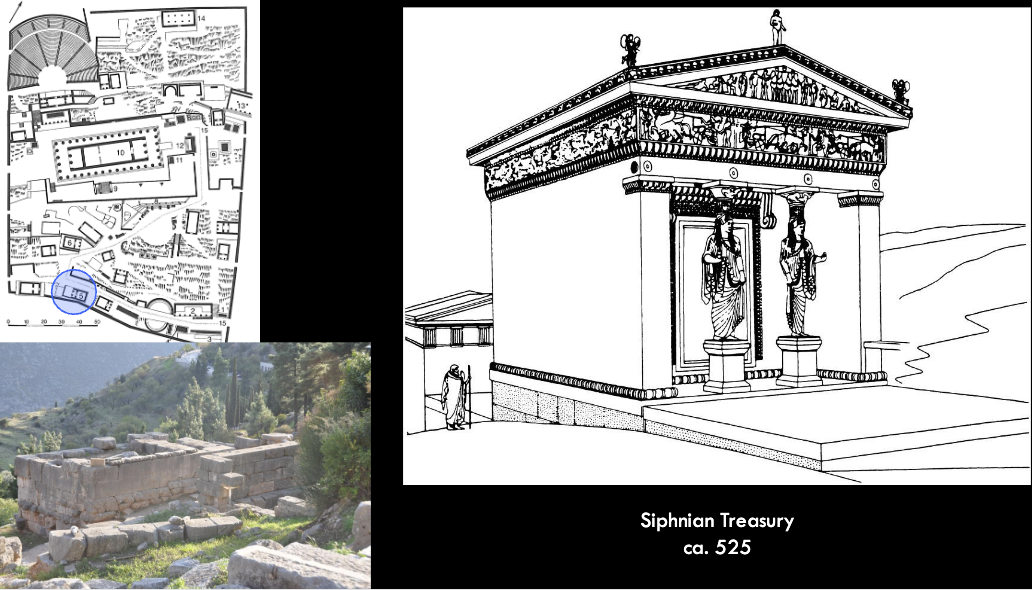
Siphnian Treasury
525
all made out of marble
looks like a temple, but it’s not; it’s a treasure box!
ionic (bc decorative)
2 kores = caryatid = only in ionic order
fancy decrates of female/kore
another visual expression of their wealth
Foundations of Siphnian Treasury (picture on the bottom left)


Siphnos
known for silver & gold
wealthy

caryatid
a sculpted female figure that serves as an architectural support, standing in place of a traditional column, pillar, or pilaster to hold up an entablature, roof, or porch
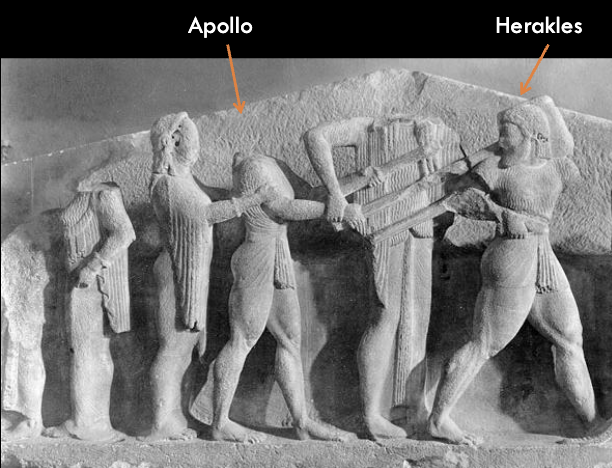
Siphnian Treasury - east pediment
525
apollo and herakles are fighting over tripod
eventhough it’s a victory of apollo, herakles is shown to be bigger

Siphnian Treasury - east frieze
525
zeus is weighing
still stiff
some labels/small that no one can see but impulse to label & identify is to show off “i know how to read & write”

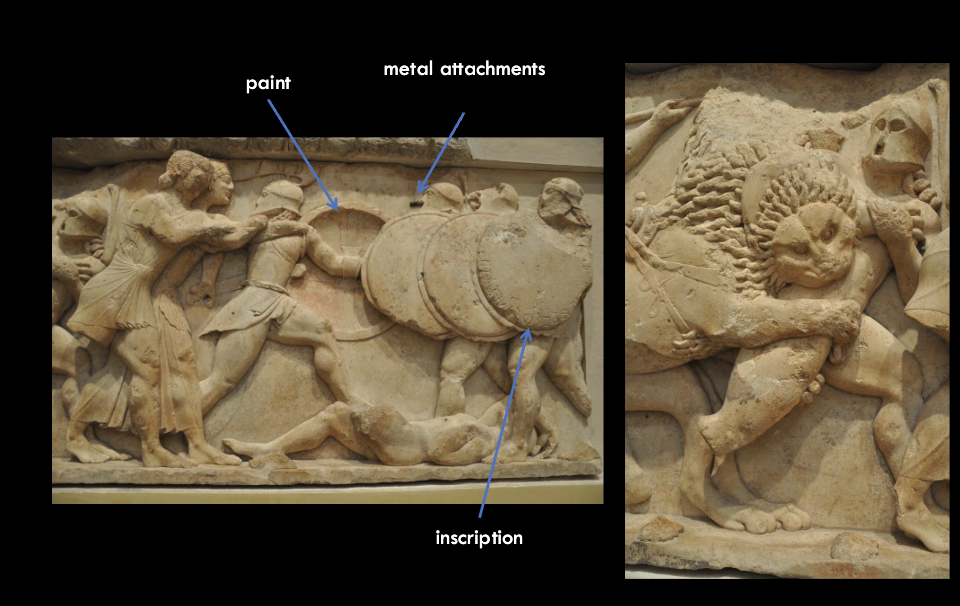
Gigantomachy north - frieze
525
‘Cybele’ : mother goddess, drives chariots
overlapping: give us depths
paint, metal attachments, inscription
comparative to Grave Circle A

Temple of Apollo
3 mythical phases
archaic temple
late 6th temple
4th temple
plan of the temple of apollo
restricted entrance
phytia - delivers oracle
hexastyle peripteral temple w a disty;e in antis pronoas and opisthodomos, a noaos, and a adyton
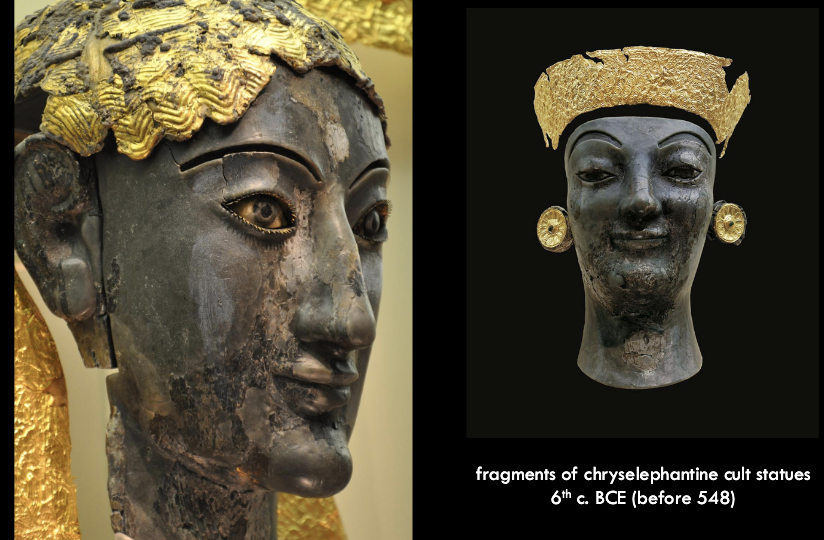
Fragments of Chryselephantine Cult Statues
6th BCE
fired - why it’s black
eyes, smile: same pattern how to depict human
chryselephantine (gold & ivory) = most expensive, degrades quickly, they came from trading Africa
Changes in Archaic Sculptures —> Classical Sculptures

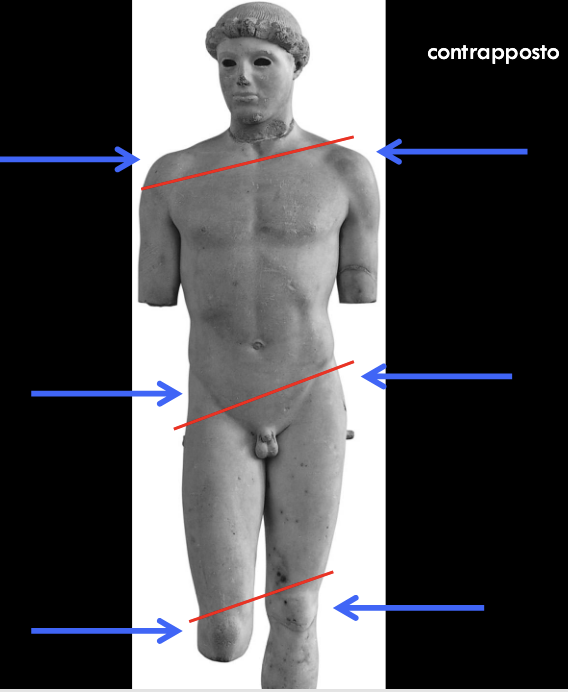
Kritios Boy
marble
from the Akropolis (Athens)
480-460
1.17m - lil bit below life size
lower arms and lower leg missing
anathema = votive dedication
Kritios - people assume based on the style
**Represents changes of archaic → classical period style
new hairstyle: rolled up
breaking frontality/not looking at us: off to the side
right leg forward
doesn’t have the archaic smile
softer muscles
contrapposto - shoulder,hips,knees in diagonal lines: reflects shifts in balance/movement of body→ more realistic to show humans stand
emphasis on movement

Euthydikos Kore
marble
from the Akropolis
490-480
The lady is now starting to move; one leg is stiff, and the other leg is stepping forward
artist signature
lost archaic smile
hair is responding to her breasts/drape of hair and clothing
female = use clothing to show body contour: drape/ripple effect
comparable to peplos kore: better proportion of eyes, volume of face, eyelid, each hair more responsive to the breasts, more details of clothing. = small little changes that are closer to more realistic

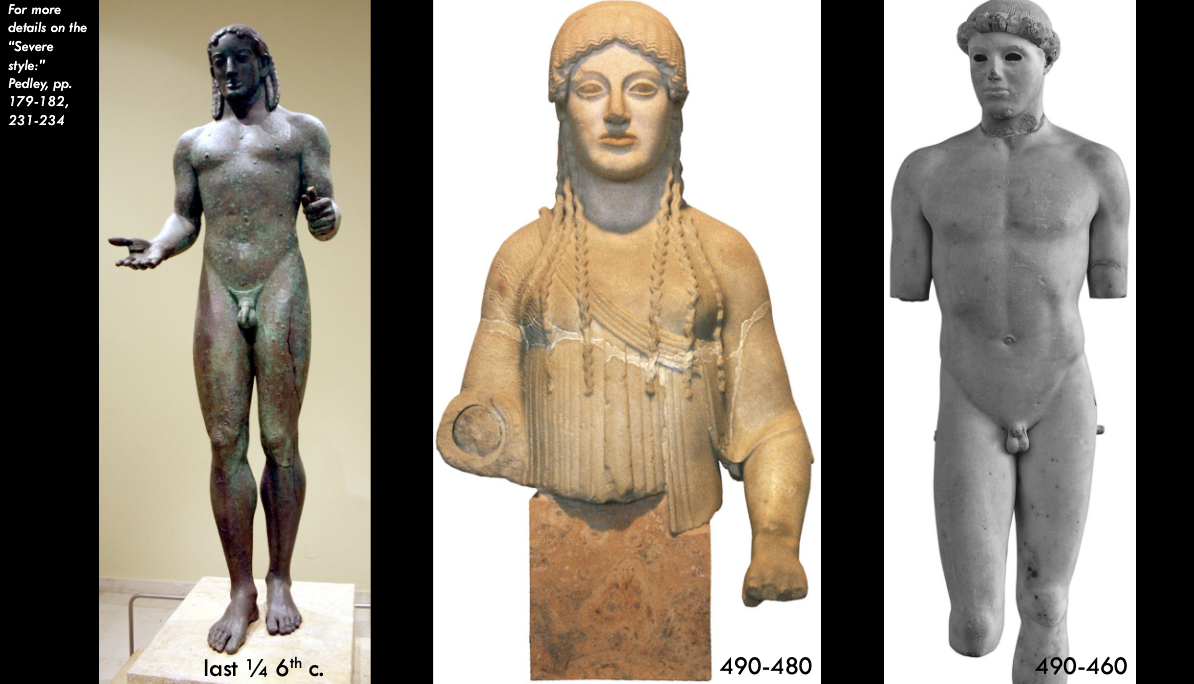
“Severe” Style
Consistent approach to change
Movement
Volume in 3D
more and more in proportions
Marble sculptors and bronze sculptors are different; people are specializing.
480 = end of Persian War → what makes the ideal youth?

Delphi Charioteer
Delphi
Bronze
475-466
1.80m
Dedicated to someone who won Phytian game
he is a part of a MASSIVE votive dedication (prob horse would have been there)
not in the nude because he is a charioteer
long vertical lines; draw our gaze up to him
criss-cross strap at back: folds that are big and some folds that are small
winner - owner of the horses
give us sense of liveness
eyelashes details
fancy headband made out of silver
bronze material - can stretch out arms in all directions without extra support.


Andokides Painter (&Lysippides Painter?) - two painters?
don’t have to use incisions - get a smaller paintbrush, paint in
bilingual pottery - one side is black one side is red figure
transition to red figure!

Bilingual Amphora
Andokides
530-510
Why red? More tools for adding details with paint brushes, more flexibility, more painterly style
Sarpedon Krater *important!
pioneer group - testing out the new way of doing things w red pottery
Euphronis - athenian
520-510
mixing bowl
showcase centerpiece
evidence that they fixed it = very valuable
Trojan War - Sarpedon (trojan side, son of zeus) in the middle dying, zeus sends messengers sleep and death, they pick up the dead body and bring back to his mother to give proper barier, guided by Hermes (messenger), both soldiers looking at the middle, sarpedon is portrayed as HUGE
sold to Etruscans in italy/rome
included artifacts - 1.3M worth from Met had to return back
Athenian object baried in Etruscans
lifeless body - depicted through the painting
significant details in the sleep and death’s wings - possible because red pottery
eyes even of sleep and death shrunk down, better proportions
shading(diluting red) in btwn abs & added red
really attention to details

Western Parts Map
apoikia = colonies
lots of peaceful interactions because of trade
red fig - exception really starts at Athen
lots of things start in west and trickle over


Paestum = Poseidonia
found by Sybaris
600
second-tier colonies
nice even grid system - plan the brand new city from the beginning
have zones for different types of activities


Tomb of the Diver
Cemetery
cist-grave = standard practice (digging and putting body in)
Inserted a stone in it and the interior and lid is painted
removing filler/big open spaces
attention to natural environments
single solitary figure is the emphasis - metaphor for death itself
Inside - etruscan style
at symposium
see kylix
all men 2 to a couch
on the side: bronze krater
playing drinking game with finished kylikes - flick them: kottabos
diff cultures coming into context in the tomb!

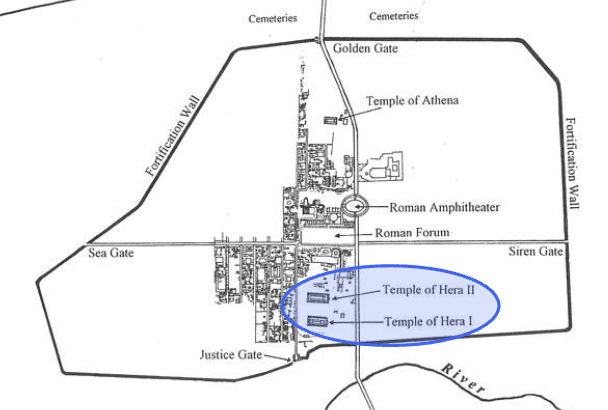

Temple of Hera I “The Basilica”
550-520 (mid Archaic)
Doric
9 columns - Ania style
tristyle
two doors to get into the cella and adyton

Temple of Hera II
450
built 100 yrs later
much more standardized
hexastyle peripteral doric temple
need to step up to enter cella
Poseidonia
(or Zeus or Poseidon)
Capitals are firmer and straighter compared to Hera (I)
moving towards symmetry
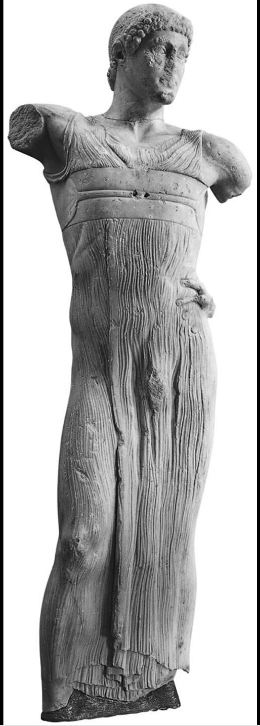
Motya “Charioteer” (Motya Youth”
470-450 (Early Classical)
Parian marble (expensive)
1.81m
Delphi’s charioteer drapery is similar but there is no evidence of horses
maybe an athlete, but no real consensus; do know he is a youth w no beard, muscular body even with the
clear attention to the torsion in the space
rigid frontality gone!
head is twisted, body uses contropposto = no static, in motion
one leg is straight, and the right leg is at rest
real interest in human body
head is rough out - hat/helmet/crown: common procedure of things added on the sculpture
Greek material, Phoenician colonies, athlete, dancer, representation of god?
was this made by Greeks or made for Carthaginians using greek material
bigger theme: interconnection/trade
think of the changes since archaic sculpture
relax, more volume, more mass, twisting in space
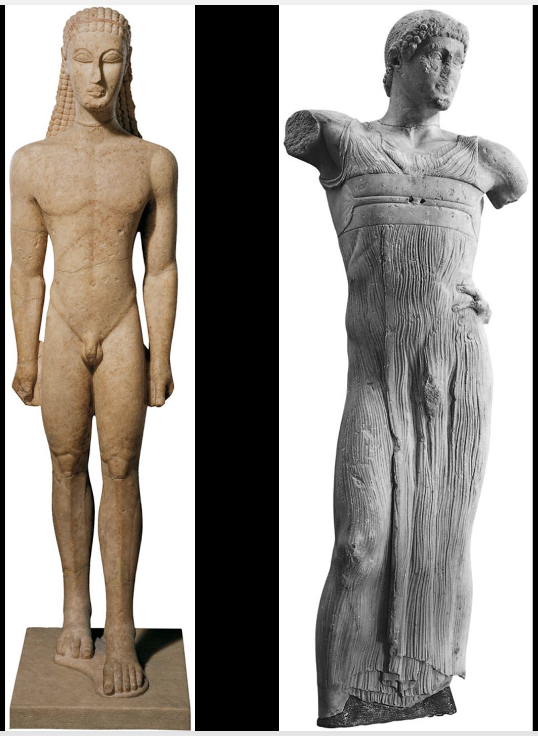

Changes in Sculptures from End Archaic to Early Classical
new proportional system: eyes smaller, no archaic smile
contrapposto: turn head off-center
severe style - what’s causing the change? → Persian War (persian move further and further west: invasion in lands and sea → greeks who are not unified = in big danger)

Persian Wars
Greeks come together after
Wealth enters from the battles/big surge of wealth
bigger cultural event might have impacted long-term military engagement with huge loss of life, athenian underdogs
→ movement towards red figure, traumatic experiences to the youth reflecting on “severe style”

Berlin Painter (in museum berlin) - Amphora - Iyre player
490
Berlin painter painted a lot on an amphora (large canvas)
red-figure style - reverse of exekis
Everything else is gone except a black background; a figure is floating in the middle of a normal, average person playing an instrument
forcing our attention on one thing, not distracted by any other stuff
introspection - looking to the side or into the distance, not interacting with us.
other side: older man - showing juxtaposition of youth and old man!
dilute glaze to add details
difference in paint brush


Berlin Painter - amphora - Hermes and Satyr
500-475
more complex overlap: stacked 3d, half man/dear, sader(vine leaves), hermes
inscriptions
interest in music (common)

Niobid Painter (*def super important)
mid-5th (460-450)
calyx(basket) krater(to mix wine and water)
red fig style in mid-5th century*
Niobid - greek mythology
one side has Niobid
other side has
figures are floating - changing/experimenting with ground levels in one scene, rocky landscape = attention to natural world, one is behind the rock, give us sense of death
gods athena(female w armor)
Heracles is standing on a stepped podium(caryatids/statue/objects) → people think Heracles is a statue → not just a random gathering but Athenians gathering before the marathon, relax, pre-battle, gathered around Heracles = representation of a historic scene*
Details
fine paintbrushes, drapery respond to movement of the body,
gods vs humans : act, look differently → how in pottery?
frontal feet
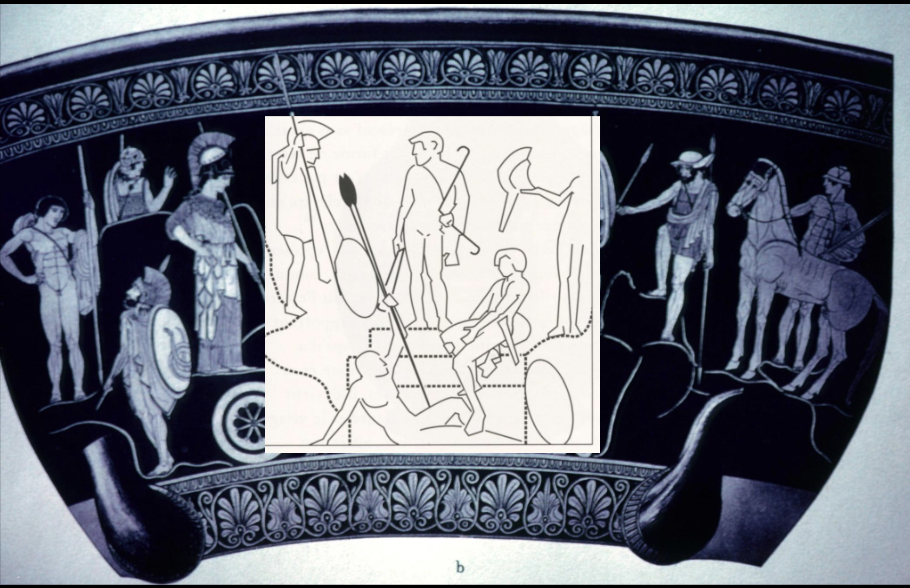
Classical Period 2: Pottery & Sculpture 11/5/26 Thr
Themes:
White ground technique
Bronze tensile strength
Transition into the Classical period

Kylix with white-ground tondo
490
fragile → so not many of them exist
no incision, closer to red figs
maenad (미나드)
snake as a headband
Thyrsus - a sacred wand or staff made from a stalk of giant fennel wrapped in ivy vines and leaves
white background: more ability to add colors, dilute slips
Lekythos
popular type of pottery painted with a white ground
Oil Container (olive oil) - used at grave sites, funerary assemblagerotuals
In graves, in cemeteries, next to graves, in tombs - helps preservation
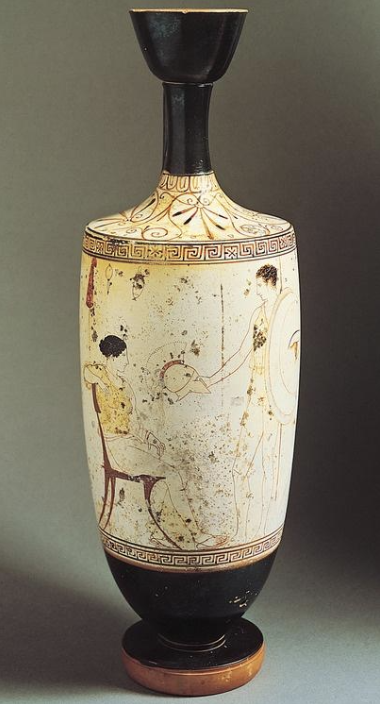
Achilles Painter
440
Lots of White-ground Lekythos
warrior departure, interacting with seated woman
Domestic scenes - seated in a chair + wall details
Shading details possible bc white background
circulation of view points/gazes = man is looking at wife, and she is looking at husband, helmet is looking back at him - intersecting gazes - nothing is looking back at us


(anothera) Achilles Painter Lekythos
440
White ground Lekythos
simple line = gives us a sense of geology
red, yellow, elements in hair, musical instrument
quiet, intimate, introspective approach to the human body; toned down
zoomed into a figure (kind of similar to Exekias)

Achilles Painter
white-ground lekythos
440
depict funerary events in a funerary item
Transition of Lekythos
monumentalized, petrofied (turned into stone)
object → stand for grave itself
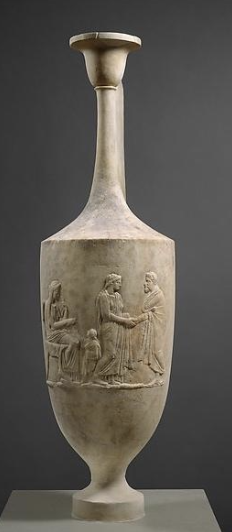
Marble Lekythos
375-350
1.03m
made by sculpture

Aegina
small island next to Attica

Temple of Aphaia
Aegina
500-470
hexastyle peripteral Doric temple with distyle in antis pronaos and opisthodomos, cella with double internal colonnade
door into central area = unusual
ramps - accessability


WEST pediment
dying worrior
smiling/archaic smile
almonds, puffy eyelids - end of 5th c.
fairly frontal, leg is crossed over
scene from trojan war

EAST Pediment
Also Trojan War, Athena in the middle, dying warrior
Difference: facing away, muscular in torsion/whole body twisted, thinking about the positioning(extending out for visibility)
Early Classical period characteristics, no archaic smile, grimaces of pain
BUT both on the same pediment
distinct workshops?
actually made in different time periods?
= why big date range
contradictory sculptures

Artemision Zeus
470
2.90m
Bronze - dynamic in posing bc higher strengths, can stretch out arms wo worrying they will break, one feet can balance
dynamic, lots of movement, torsion, sense of stretching
prb sanctuary
“gifts from Poseidon”
adult, bearded male, long hair breaded headband, mature man, still emphasis on abs/athleticism —> represent male god
Poseidon(trident), Zeus (thunderbolt) would not cover his face, so it’s Zeus
not looking at us/not interacting with us
persian war - most mature man: trend of sculptures depicting mature bearded man than a youthful man


Lost Wax Bronze Casting
how to get a hallow bronze statue

The Riace Warriors
picked up by Romans, ship reck → riace, italy
carrying things, not sure who they are
over life-sized 1.96m
bronze
460
contrapposto,5thc, - weight is shifted
showing musculature
right arm down, left arm up - holding a shield? attachments are missing: spear, weapon
heroic nudity - emphasize invulnerability, athleticism, adult, bearded but still lots of stregnths, powerful legs = idealization
not much info what what they actually (like for grave or)

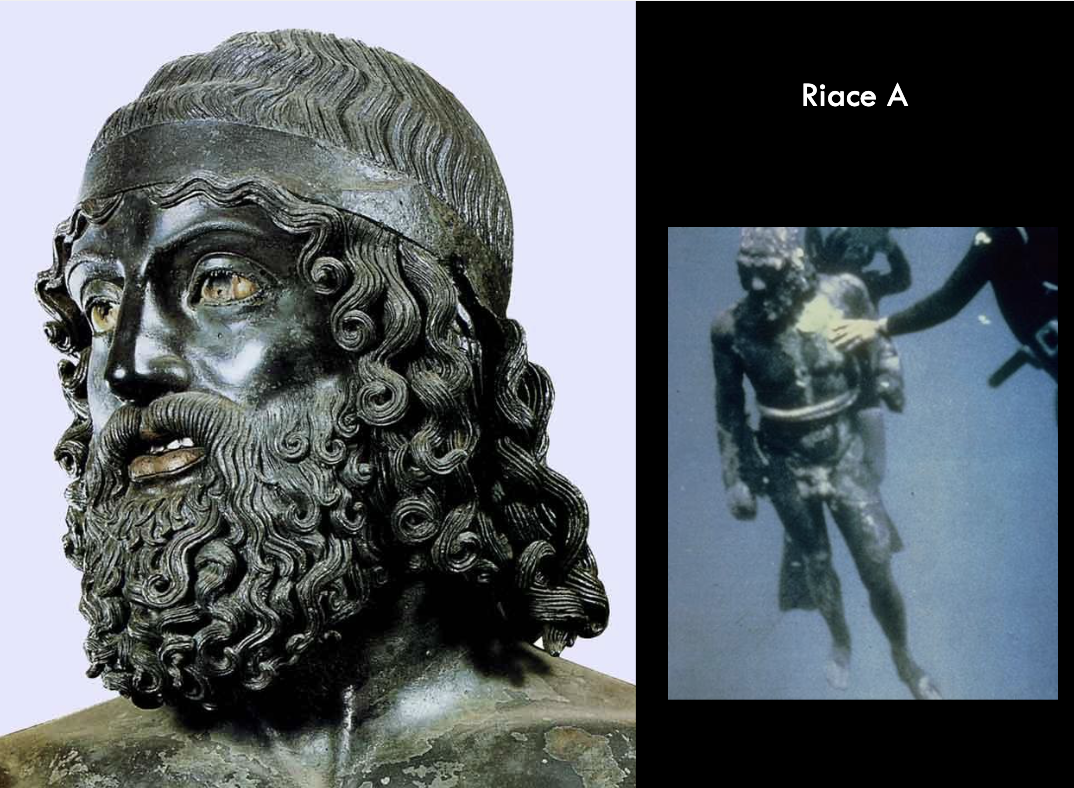
Riace A
Diver found it
individual curls of hair details, but top of his head is smooth → mayb worn helmet, big beard
details of the face: different metal alloys to show diff colors
shoulder blades look diff bc of twist of body
idealized male form


Riace B
Inle(added afterwards) lip, eye shade, different type of helmet, full beard = still def different characteristics/individualization
yet still represent what we have seen

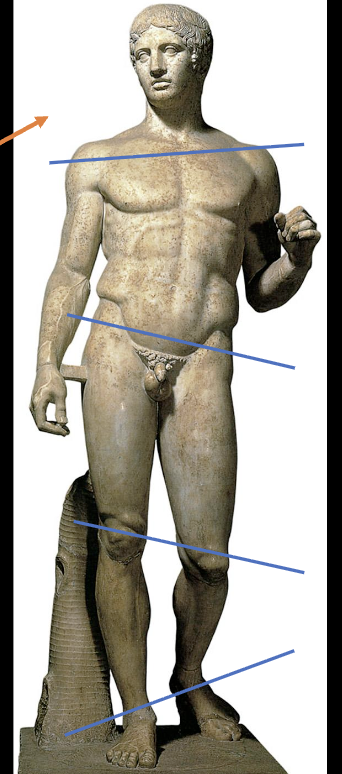
Doryphoros
Classic Classical Piece! but doesn’t exit anymore
Roman marble copy of bronze original by Polykleitos (most important classical sculptures in bronze)
dozens of Roman copies in stones → all follow same patter → can predict what original look like
over life-size
mid 5th century
contrapposto, one arm/leg bearing, one side relaxed, hip to the side
stone sculptures can’t stand alone, so have stones/studs supporting the arm/leg, etc.
early Roman hairstyle - not sure bc up to date style or bc original had that style
restful moment right before action
encourage us to walk around the statue
“Polykleiton Canon”/ style
7:1 proportion system (7등신)
contrapposto - hips, ankles, shoulders, everything at a diagonal angle
chiasmus (X) - x composition (making Xs in the body)