ch6/27 microb
 Call Kai
 Learn
Learn Practice Test
 Spaced Repetition
 Match
Match Flashcards
 Knowt Play
1/33

There's no tags or description
Looks like no tags are added yet.
Name | Mastery | Learn | Test | Matching | Spaced | Call with Kai | Chat |
|---|
No analytics yet
Send a link to your students to track their progress
34 Terms
how is energy captured and what are the two types of ways
phototrophs capture light for energy
chemotrophs use potential energy in chemical energy for energy
chemolitotrophs - inorganic, and chemoorganotrophs - organic compounds
the two types to obtain carbon
autotrophs - make their own carbon copoumds starting with co2
heterotrophs - obtain carbon compounds from other orgs
the carbon cycle

what is nitrogen important for for the cells
important for making amino acids(proteins)and nucleic acids
the nitrogen cycle; what are the three main steps
nitrogen fixation - turning n2 gas into nh4 ammonium
nitrification - turning ammonium to nitrate no3-
denitrification - tunring nitrate to n2 gas

what is assimilation and decomposition in the nitrogen cycle
assimilation - how useeful forms of nitrogen are taken up by other orgs
decomp - how nitrogen is released back into the cycle
what is nitrogenase
nitrogenase is the enzyme that catalyzzes nitrogen fixation and is very sensitive to o2

aerobe vs anaerobes
aerobes like oxygen, anaerobes don’t
the types of anaerobes and aerobes
strict anaerobe - must have no O2
strict aerobe - must have o2
microaerophile - prefers lower o2
facultative anaerobe - perfers o2, but has the option to grow without
aerotolerant anaerobe - doesn’t use o2 but tolerates it

what are ROS, SOD and Catalase gotta do with aerobes vs anaerobes
ROS are reactive oxygen species produced as byproducts of aerobic metabolism - damages dna, proteins, membranes
SOD and Catalase break down ROS

the 5 types summarized
What are the oxygen requirements of different types of microbes?
Obligate anaerobe: Does not use O₂; has anaerobic options; cannot tolerate O₂
Aerotolerant anaerobe: Does not use O₂; uses anaerobic metabolism; can tolerate O₂
Facultative anaerobe: Uses O₂ when available; can also grow anaerobically; tolerates O₂
Obligate aerobe: Requires O₂; no anaerobic option; tolerates/needs O₂
Microaerophile: Uses O₂, but only at low concentrations; cannot tolerate normal atmospheric O₂ levels
what are essential nutrients and auxotrophy
essential nutrients are must needs that gathers from immediate environment
auxotrophy is when a microbe cannot synthesize a essential nutrient - it must be added to help them aka growth factors

differ xomplex media and chemically defined media
compex media is often dead things(yeast, plant, tissue extract)
chemically defined media is when all of it is known completely
the typical physiological conditions for microbes are what
room temp to body temp
water ph
salt conc of 1%
ample nutrients
what are the temperature curves for microbes and why aren’t they symmetrical?
physcrophile - 0 to 20
mesophile - 12 - 45
thermophile - 40 - 70
hyperthermophile - 65 - 100+

what are the barophiles, and how do they survive
microorgs that can survive at very high pressures
they survive from adapted membranes and amino acid sequences in proteins
what are halophiles and how did they adapt
microorgs that require high conc of salt, they adapted to have additional dodium ion pumps to maintain osmotic balance and avoid plasmolysis
how does acdidity work with classification
0-5 ph acidophile
9-14 are alkaliphiles
6-8 are neutralophiles
how did the acid/base extremophiles adapt
have pump protons into or out of cell to maintain a neutral internap pH

what is bacterial growth and how do they do it
bac growth - is measured as increasing no of cells in a pop
most reproduce by binary fission - one parents becomes two daughters
eukarytotic cells divide by mitosis usually

how quick does binary fission grow
is exp growth - 2^n, and doubling time is the time it takes for the pop to double or for a cell to complete a round of division
what is the bavterial growth curve
primary metatboites - lag phase
secondary metabolites - stat phase

what is an example of log phase in our bods
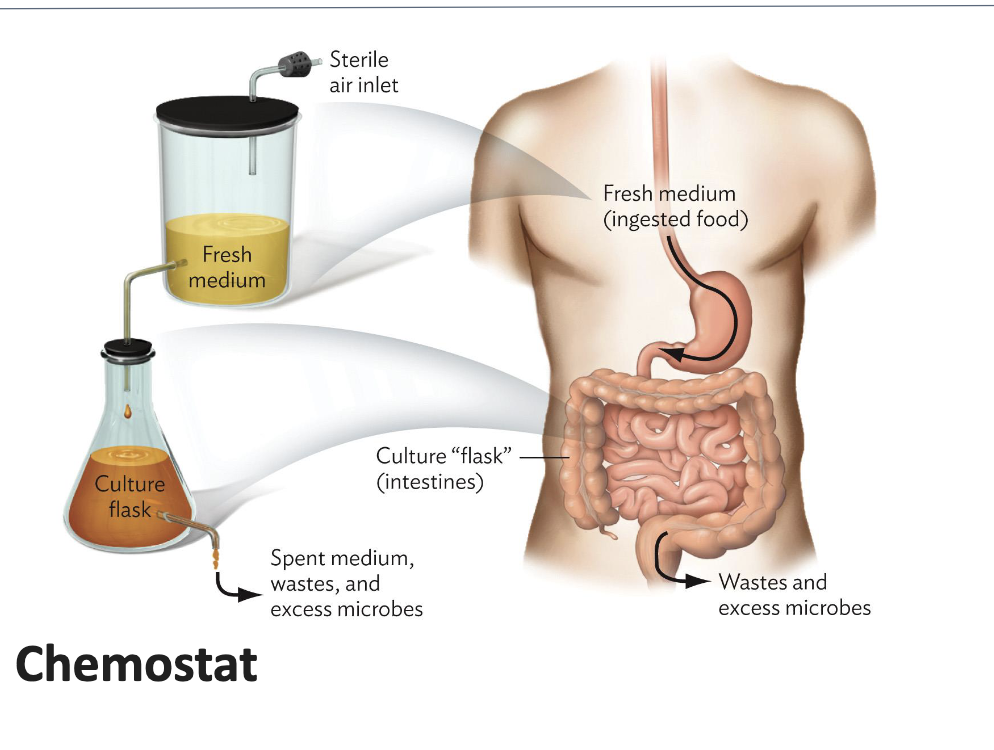
how do we measure growth in the lab
can measure the biomass (indirect) or directly count cells with instruments
or plate counts - cfu with serial dilution and filtration
what are biofilms
Biofilms are polymer-encased communities of microbes attached to a surface.
Start with initial attachment/adherence
Cells secrete EPS (extracellular polymeric substances) such as polysaccharides and DNA
EPS production is regulated by quorum sensing, especially at high cell density/late log phase
Matrix protects cells from antibiotics, host immunity, and physical flow
Channels allow movement of nutrients and wastes
Can contain multiple species or even different domains
Pieces can detach and spread
Different from planktonic cells, which are free-living in suspension
Example: dental plaque
examples of biofilms
abundant on basically everything, in humans can be tissue, teeoth, medical implants/devices - many of infections are from it
what are the time capsules for bacteria
an endospore - which are super resistant to many things
called the cells resting state - formed via sporulation - process cued by environmental cond usually starvation
and germination where the the endospore returns to vegetative normal growth
sporulation and germination cycle
Sporulation = a vegetative bacterial cell forms an endospore when conditions become unfavorable, such as nutrient depletion.
Germination = the endospore returns to a vegetative cell when conditions become favorable again.

differ food spoilage vs food contam
food spoilage is when microbial changes and metabolism affect hte foood chem - can’t be eaten
food contamination is the presence of pathogens or harmful microbes in a food - leading to food borne illness
different ways to fight the microbes
bactericidal - lethal effect - killing the microbe
bacterialstatic - agents that slow or stop the metabolism
preservation - delays spoilage og foods or perishable products
ways to preserve the things
organic acids - lowering the ph
using other organic compounds - like alcohol - cinnamon,cloves, plant compounds
inorganic compounds - can have harmful effects on humans
bacteriostatic way or water limitation
desiccation (dehydration)
-removal of water prevents growth
-can be combined with sugar or salt, causes cells to plasmolyze
controlled or modified atmosphere - food packed in low o2, or high n2 or co2 limits aerobic growth and prevents abiotic oxidation
bacteriostatic ways of cold temps
refreigeration - 4-8c - most pathogens are mesophilic - but some still grow
freezing - inhibits growth
freezedrying - food is quickly frozen at low temp in a vacuum
controlling growth via physical methods
pasteurization - goal is to kill spoilage bacteria - bactericidal - kills/destroys microbes - but doesn’t steriilze fully
canning - uses high pressure and heat - bactericidal -