4.11 Biodiversity
 Call Kai
 Learn
 Practice Test
 Spaced Repetition
 Match
 Flashcards
 Knowt Play
1/83

There's no tags or description
Looks like no tags are added yet.
84 Terms
what is meaning of biodiversity?
variety of living organisms present in an area
what is meaning of community?
all the populations of different species that live and interact in the same habitat at the same time
what is meaning of a species?
a group of organisms that can interbreed to give fertile offspring
what is meaning of a habitat?
an area inhibited bu species, including all biotic and abiotic factors
what is meaning of habitat diversity?
the number of different habitats within an area
more habitats usually mean more species are supported
what is meaning of species diversity?
variety of species within an area
what is meaning of species richness?
number of different species living in a habitat
what is meaning of species evenness?
a comparison of the number of individuals of each species living in a community
what is genetic diversity?
genetic variation within a species
why is measuring biodiversity important in conservation?
It tells scientists which species are present
before any project is started the Environmental Impact Assessment (EIA) is completes to assess the positives and negatives effects of the project on biodiversity
what are the 3 levels of biodiversity?
habitat diversity/ ecosystem diversity
species biodiversity (inc species richness ans species evenness)
genetic biodiversity
how can species diversity be measured?
looking at numbers of species
taxonomic diversity where levels of relationships are considered
do all individuals that have same genes have it on same place on chromosome or not? If so what is it called?
yes
‘locus’
what is a gene pool of a species?
alleles of all the genes within a species
what is sampling?
where a limited number of organisms are measured in a particular area
what is sampling used for?
to estimate the number of organisms in an area (abundance) rather than counting them all
what are preparations for sampling a habitat?
keys to identify the different samples
camera to record specimens and locations
suitable clothing and footwear
apparatus for sampling e.g. pooter, quadrate, sweep net
somewhere to record observations
what is random sampling?
each individual has an equal chance of being picked
mark out a grid at right angles, then use a random number generator to pick the x co-ordinate, then the y co-ordinate
take a sample form that place
what is advantage of random sampling?
data not biased by selective sampling
what is disadvantage of random sampling?
may not cover all areas equally
species with low presence may be missed
what are the 3 types of non-random sampling?
systematic
stratified
opportunistic
what is systematic sampling
samples taken from fixed intervals across the habitat
what are examples of systematic sampling?
line transect
belt transect
what is advantage of systematic sampling?
useful when habitat shows a clear gradient in environmental factors (abiotic)
what is disadvantage of systematic sampling?
only species on the. line/ belt are recorded leading to an underestimate
how does a line transect work?
line/tape measure is placed across a habitat
start point is random
move along the line and every certain distance record what touches the line
this gives clear idea of how communities change as habitats change
what is belt transect?
tape measure is placed along a habitat
for short distances a continuous belt transect is competed where the quadrants are placed continuously and percentage cover is recorded
for longer distances an interrupted transect can be done
how does stratified sampling work?
divide habitat into areas which appear to be different
samples each section separately
do this proportionally, so if 60% of an ecosystem is one type of habitat, 60% of the samples should be taken there
what are advantages of stratified sampling?
ensures all areas of habitat are sampled
species not under represented
what are disadvantages of stratified sampling?
may lead to over representation
could have a disproportionate number of samples taken in smaller areas that look different
what is opportunistic sampling?
researcher takes samples based on prior knowledge or during the process of collecting data
may sample an area that they know contains a particular species
what is an advantage of opportunistic sampling?
easier and faster than random sampling
what is disadvantage of opportunistic sampling?
data may be biased
overestimate of biodiversity
how can you sample plants?
using point quadrat
using frame quadrat
what is a point quadrat?
thin frame with holes in the top
pin is passed into hole
whatever plant the pin touches is recorded
what is frame quadrant?
at least 0.5m x 0.5m
type and number of organisms in each off the divisions is recorded
what can frame quadrate be used to measure?
species frequency
species density
percentage cover
how can you make sampling data more reliable?
take samples from different points
what is species density?
number of particular species within a quadrat
would usually be number of 1 species/area(m2)
this can be averaged
what is percentage cover?
takes into account the size of the organisms
can simply work out by eye how much of the quadrant area is covered by a species and record it as a percentage
what are ways to sample animals?
pitfall traps
pooter
beating trap
sweep net
pond net
how does capture mark and recapture work?
capture as many animals as you can in a defined period of time
count them and mark them in a way that causes no harm
release them to mix in the population
after a dew days capture the same species over the same time period
count how many are marked and how many are not marked
population size = (number in 1st sample x number in 2nd sample) / (number in 2nd sample previously marked)
what are limitation of capture, mark and recapture?
assumptions are made that there is no death, immigration or emigration
identical sampling methods
marking doesn’t affect the survival rate of animals
what is abundance scale
A bunant
C ommon
F requent
O ccasional
R are
how do you measure abiotic factors and what is units?
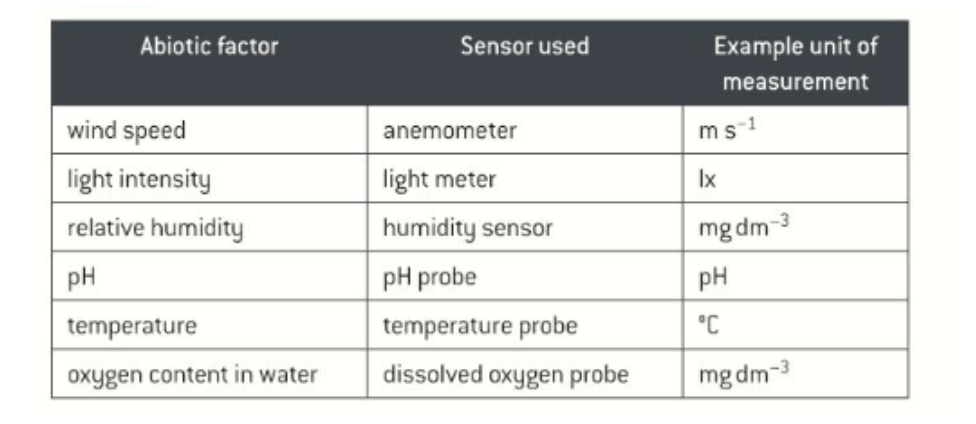
how do u work out species evenness?
work out the range
smaller range means higher species evenness
what is Simpson’s species of diversity equation?
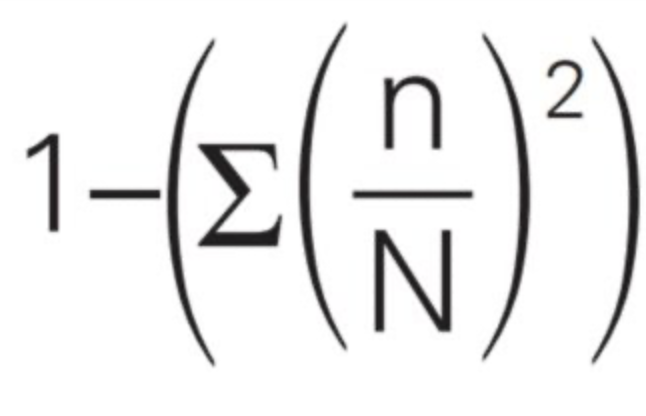
what does everything stand for in Simpson’s species of diversity equation?
n=total number of organisms in 1 species
N=total number of all organisms
the weird E symbol = sum of (add together)
what is the possible answer range for Simpson’s Index of diversity?
0-1
what does a higher Simpson’s index of diversity mean?
more diverse, species ricer and can withstand some environmental impact
what does a lower Simpson’s index of diversity mean?
lower in specs, small change to environment would have serious impact
why is genetic diversity important?
If it’s low then species may be more susceptible to changes in the environment
the whole population may suffer from problems associated with inbreeding
what is polymorphism?
when a gene has more than one allele
what is monomorphism?
when a gene has only one allele
are most genes monomorphism or polymorphism?
most are monomorphism
what is locus?
where on chromosome the alleles are
how do you calculate genetic diversity?
proportion of polymorphic loci = number of polymorphic gene loci / total number of loci
what are factors increasing genetic diversity?
mutations
interbreeding between population (gene flow)
what are factors that decrease genetic population?
artificially cloning plants
selective breeding
natural selective
captive breeding programmes
genetic bottleneck events
founder effect
genetic drift
what is genetic bottleneck event?
population decreases in size due to disease or hunting, reducing the number of alleles in population
the population breeds and number of increase but fewer alleles

what is the founder effect?
small number of members of a population is separated and start a new geographically, isolated colony, the gene pool is smaller
what is genetic drift?
the frequency with which an allele is passed on from parents to offspring can vary
sometimes this may mean that a particular allele may completely disappear
what are human factors that affect genetic diversity?
over-exploitation
urbanisation
pollution
loss of traditional species
monoculture
herbicides and pesticides
habitat loss
what is the problem with deforestation?
caused by forest fires, land clearing, acid rain
if only one type of tree is peeled then species diversity is decreased
habitats destroyed for other species
animals forced to migrate
what is the problem with agriculture?
clearing land and hedgerows for space to grow more crops and or large machinery to fit through, reduces plant and animal species number
chemicals-herbicides and pesticides
monoculture, when farms usually specialise in one crop, reduces overall in the area
what is the problems with climate change?
some places will get warmer, some colder
most species need a particular climate to survive
some areas will become habitable and some will become uninhabitable
places may increase or decrease in biodiversity
some species may migrate, causing a shift in biodiversity
those unable to migrate may become extinct
what are the reasons for maintaining biodiversity?
ecological
economic
aesthetic
what are aesthetic reasons we maintain biodiviersity?
protecting beautiful landscaped for us to enjoy
tourism-economic advantages
what are economic reasons we maintain biodiversity?
reducing soil depletion, because monoculture depletes soil of nutrients and reduces yield, so more is then spent on fertilisers
what are ecological reasons to maintain biodiversity?
minimise disruption to food chains
minimise disruption to nutrient cycles
protect keystone species
genetic resource - plants an animals are source of virtually everything
what are keystone species?
small population which has huge impact on the ecosystem- often predators
what are methods of maintaining biodiversity?
In situ conservation
Ex situ conservation
what are In situ conservation?
inside an organisms natural habitat
maintains genetic diversity of species
maintains evolutionary adaptations
preserved interdependent relationships
what are 2 types of in situ conservation?
wildlife reserves
marine conservation zones
what is ex situ conservation?
removes organisms from their natural habitat
usually done alongside in situ methods
what are 3 types of ex situ conservation methods?
botanic gardens
seed banks
captive breeding programmes
what are botanic gardens?
plants species grown successfully with the right conditions and care
there are 1500 botanic gardens worldwide with 35000 plant species
what are seed banks?
seeds are stored under tight conditions so that plants may be grown in the future (Dry and -20 degrees)
this slow rate they lose their ability to germinate and keeps them ‘viable’
provides a back up in case of extinction
what are captive breeding programmes?
offspring are produced in a human controlled environment
often managed by zoos / aquatic centres
provide animals with shelter, food, no predators, vets, breeding partners / semen!
what are problems with captive breeding?
maintaining genetic diversity -small umber of breeding partners to choose form
loss of resistance to disease / new diseases in the wild
behaviour -not knowing how to hunt
genetic differences to wild population may mean they cannot interbreed
natural habitat may be lost
what are the 3 types of conservation agreements?
Convention on International Trade in Endangered Species (CITES)
The Rio Convention on Biological Diversity (CBD)
The countryside stewardship scheme (CSS)
what is the Convention On international trade in Endangered Species (CITES)?
Member countries agreed:
not to kill endangered species
limit trade by licensing
illegal to trade products form endangered species
raise awareness of threats to biodiversity
what is the Rio Convention on Biological Diversity (CBD)?
Aims:
develop international strategies on the conservation of biodiversity
using plant and animal products in a sustainable way
international law- biodiversity is everyone’s responsibility
provide guidance to governments on how to conserve biodiversity
what is Countryside Stewardship Scheme (CSS)?
Aims to:
conserve wildlife
improve and extend wildlife habitats
promote land management techniques to land owners
government grants to landowners for doing them (improve hedgerows, grassy margins etc)