Med Chem Exam 2 Slop
 Call Kai
 Learn
 Practice Test
 Spaced Repetition
 Match
 Flashcards
 Knowt Play
1/67

There's no tags or description
Looks like no tags are added yet.
68 Terms

nifedipine (vasoselective CCB, dihydropyridine)
used alone or in combo with other agents
ER, t1/2 of conventional is 2 hr, ER t1/2 is 6 hrs (has ER formulation bc of rapid onset of action)
-hypertension, stable angina
hypotension, reflex tachycardia, dizziness, flushing, worsening of angina → risk lessened by using XL formulation; no protection from rapid beta blocking withdrawal
AEs: no mutagenicity or carcinogenicity, can impact male fertility
extensively metabolized by CYP3A4
matching ester groups

verapamil (nonselective CCB, phenylalkylamine)
hypertension, chronic stable angina, Prinzmetal’s angina, treatment of AV node-dependent supraventricular tachyarrhythmias (ex. PVST)
SR oral, conventional dose is BID-TID, ER formulation delays time to peak plasma con from 2 → 7 hrs
CI: CHF, mild left ventricular dysfunction being treated with beta blockers, avoid use in severe left ventricular dysfunction
can worsen cardiac hypertrophy, HF, and/or pulmonary edema, neg affect cardiac conduction, induce hypotension, cause acute liver injury
AE: pts with liver dysfunction should be monitored for signs of overdosage
DDI (more significant than diltiazem): exposure inc with CYP3A4 inhibitors, verapamil is a strong inhibitor of CYP3A
active metabolite: significant CYP3A4 first pass metabolism to norverapamil
triple bonded nitrogen


diltiazem (non-selective CCB, benzothiazepine)
hypertension, chronic stable angina, Prinzmetal’s angina, AV node dependent supraventricular tachyarrhythmias (ex. PSVT)
SR, conventional formulation BID-TID
CI: CHF or with agents that slow cardiac conduction (ex. beta blockers), avoid in pts following acute MI with pulmonary congestion
can adversely affect cardiac conduction, induce hypotension, cause liver injury
AEs: generally well tolerated, rare serious AEs, most frequent are headache, nausea, edema, dizziness, rash, asthenia
DDIs (less sig than verapamil): exposure inc with CYP3A4 inhibitors, diltiazem is a moderate CYP3A inhibitor
active metabolite: sig first pass (CYP3A4) to des acetyl diltiazem
ER delays time to peak plasma con (2 → 11-18 hrs)
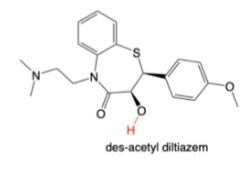

amlodipine (vasoselective CCB), contains 2-aminomethoxy group
-hypertension, stable angina
half life of 30-50 hrs, diminished Cmax effects, slow onset and long duration of action follow from properties of based 2-(aminoethylmethoxy) side chain
hypotension, worsening of angina, no protection from rapid beta blocking withdrawal
no mutagenicity or carcinogenicity, no impact on fertility
oral, used alone or in combo with other agents; bc of basic side chain, has slow onset of action and doesn’t need ER formulation
metabolized by CYP3A4
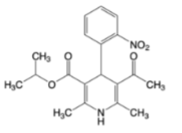
nisoldipine (CCB)
has ER formulation bc of rapid onset of action
-hypertension, stable angina
isopropyl group on one of the esters

felodipine (CCB)
has ER formulation bc of rapid onset of action
2 chlorines on phenyl group

nicardipine (CCB)
bc of basic side chain and moderate onset of action, does not need an ER formulation
long C4 chain with phenyl
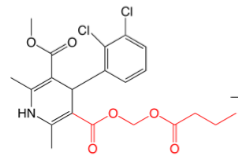
clevidipine (CCB)
-hypertensive emergencies
two chlorines on phenyl AND long double ester group

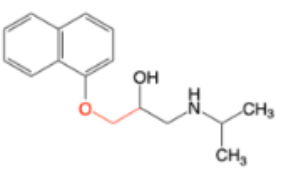
propranolol (nonselective beta blocker)
SAR evolution (epinephrine→ isoproterenol → dichloroisoproterenol → pronethanol → propranolol)
-hypertension, ventricular rate control in atrial fibrillation (first line) (preferred over digoxin or CCBs in pts post-MI or HF)
specialized use: catecholamine driven arrythmia, hyperthyroid tachycardia, congenital long QT syndrome
shortcomings that stimulated search for “better” beta blockers: lock of selectivity against B2 (induce bronchoconstriction, mask hypoglycemia, reduce exercise tolerance), short duration of action (requires LA formulation for QD dosing), lipophilicity (CNS side effects like fatigue, sleep disturbance, vivid dreams)


S-timolol (first generation, nonselective beta blocker)
not as lipophilic as propranolol → less CNS adverse effects, longer duration of action
-sulfur and 2 nitrogens on 5 membered ring
-hypertension

nadolol (first generation, nonselective beta blocker)
not as lipophilic as propranolol → less CNS adverse effects, longer duration of action
-two OH’s on phenyl
-hypertension
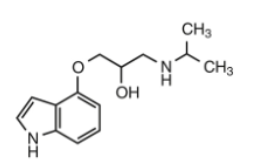
pindolol (first generation, nonselective beta blocker)
-pyrrole attached to phenyl
ISA (partial agonist) → diminished bradycardia compared to propranolol
-hypertension

metoprolol succinate (selective beta 1 antagonist)
CI: acute MI and mod-severe heart failure
-hypertension, stable angina (reduces number of attacks and increases exercise tolerance), treatment post-myocardial infarction (reduces 3-month mortality); pts with LVEF<40% (HFrEF); arrythmias (supraventricular tachycardia suppression, AF control, sinus tachycardia, post MI ventricular ectopy); preferred over digoxin or CCBs in pts post MI or with HF
ER formulation of succinate salt, QD; metabolize eliminated in kidney
metabolized by CYP2D6, genetic differences afford high and low metabolizers (high t1/2=2.8 hrs, low t1/2=7.5 hrs)
caution when used in pts with bronchospastic disease (bc of moderate B1 vs B2 selectivity), may mask tachycardia due to some metabolic disorder (hypoglycemia, hyperthyroidism), abrupt cessation of therapy may exacerbate angina pectoris, no major concerns of carcinogenicity, mutagenicity, impairment of fertility
AEs: generally well tolerated, AEs that occur in 5% of pop include fatigue, dizziness, diarrhea, skin hypersensitivity
DDIs: CYP2D6 inhibitors, caution when given with antihypertensives of drugs that alter cardiac function
diminished CNS adverse effects vs propranolol bc lower logP, most prescribed in the US
ether tail

atenolol (selective beta 1 antagonist)
-hypertension; chronic AF rate control or symptomatic SVT/ectopy (bc longer acting), preferred over CCBs or digoxin for pts with past MI or HF
low lipophilicity, low incidence of CNS adverse effects, renally excreted as parent drug → low metabolic drug interaction potential
-a for amide
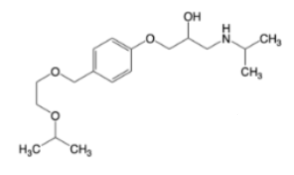
bisoprolol (selective beta 1 antagonist)
-hypertension, patients with LVEF <35% (HFrEF), chronic AF control esp when B1 selectivity is desirable (longer acting), preferred over dixogin or CCBs for pts post MI or with HF
longer acting, so no special formulation for QD dosing; diminished CNS adverse effects compared to propranolol
double ether with isopropyl group at the end

nebivolol (selective beta 1 antagonist)
-hypertension
increases NO production (added vasodilation), longer acting → no special formulation for QD dosing
symmetrical, N in the middle (N for nebivolol), fluorines at the end

prazosin (alpha 1 blocker)
hypertension
BID-TID bc t1/2= 2-3 hrs
furan

terazosin (alpha 1 blocker)
-hypertension, BPH
t1/2=12 hrs (so QD dosing)
saturated furan

doxazosin (alpha 1 blocker)
-hypertension, BPH
t1/2=12 hrs (so QD dosing)
2 oxygen in 6 membered ring + phenyl

carvedilol (mixed alpha 1 and beta antagonist, also has alpha 1 antagonist and CCV activities and antioxidant properties [scavenges ROS])
hypertension; patient with LVEF<25% (HFrEF); useful when ventricular arrythmias coexist with HFrEF or ischemic cardiomyopathy, preferred over digoxin or CCBs in pts post MI or with HF
carbamole group
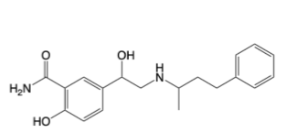
labetalol (mixed alpha 1 and beta antagonist)
hypertension
diminished CNS adverse effects compared to propranolol and metoprolol; may be preferred when rapid BP reduction is needed
amide group, long chain with phenyl on the right

clonidine (alpha 2 receptor agonist, imidazoline receptor agonist); attenuates release of NE, neuropeptide Y and ATP → acts centrally to SNS activity in the brainstem, leading to peripheral vasodilation, lowered HR, and ultimately BP reduction
AEs: dry mouth, sedation, bradycardia, withdrawal reaction with long-term use
hypertension (2nd line); off label uses: narcotic, alcoholic, tobacco withdrawal, and multiple nervous system disorders (ex. ADHD)
CI: can potentiate CNS-sedating actions of alcohol and barbiturates, avoid use with CCBs and beta blockers
imidazole ring, two chlorines on phenyl

methyldopa (alpha 2 agonist)
PRODRUG (converted to alpha methyl norepinephrine in CNS); alpha methyl NE (alpha 2 receptor agonist) attenuates NE release and acts centrally and results in diminished vasoconstriction
AEs: hypotension with overdosage, transient sedation, reduced libido, Parkinsonian symptoms, positive Coombs test, hemolytic anemia, liver disorders; establish safety profile for mom+fetus
CI: taking with MAO inhibitors, avoid in pts with acute liver disease
hypertension WHEN PREGNANT

nitroglycerin (organic nitrate), reduced to 1,2-glyceryl dinitrate and nitrate in the mitochondria by ALDH-2, NO2 requires further bioactivation by either reduction by the respiratory chain or by acidic disproportionation to yield NO; GTN is bioactivated in the smooth ER at high doses
PRODRUG to NO
spray, sublingual, buccal, oral (2-4 times per day); reduced to less vasoactive dinitro and mononitro metabolites in the liver, RBCs, and vascular wall
-preferred rapid treatment or acute prophylaxis before exertion/exercise in chronic stable angina
-ER GTN: prophylaxis in patients with more occasional episodes for chronic stable angina, in combo with additional agents for variant/Prinzmetal’s angina
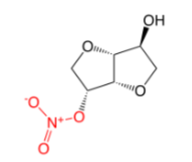
isosorbide mononitrate (ISMN) (organic nitrate); bioactivated by P450 enzymes in the smooth ER directly yielding NO
PRODRUG to NO
oral (q 2-3hrs), oral ER (BID); 100% bioavailability, 100% of dose excreted in kidney in 5 days
prophylaxis in patients with more occasional episodes for chronic stable angina; used in combo with additional agents for Variant/Prinzmetal’s angina

isosorbide dinitrate (ISDN) (organic nitrate); bioactivated by P450 enzymes in the smooth ER directly yielding NO
PRODRUG to NO
oral (BID), oral SR (QD); metabolized and excreted via formation of active mononitrate metabolites
prophylaxis in patients with more occasional episodes for chronic stable angina; used in combo with additional agents for Variant/Prinzmetal’s angina

ivabradine
stable angina in pts in whom beta blockers are not tolerated or not sufficiently efficacious (2nd line); reduce morbidity and mortality risks in HFrEF (2nd line)
active metabolite: des-methyl ivabradine
CI: cardiac conduction syndromes, bradycardia, hypotension, use during pregnancy

ranolazine (maintains Na+ and K+ homeostasis)
stable angina (2nd line)
piperidine ring in the middle with 2 nitrogens

lisinopril (ACE-I)
hypertension in adults and pediatric patients at least 6 years old; adjunct therapy for HF and treatment of acute MI
CI: use with aliskirens or ARBs, angioedema or hx of hereditary or idiopathic angioedema
proline (5 membered nitrogen ring with carboxylic acid)
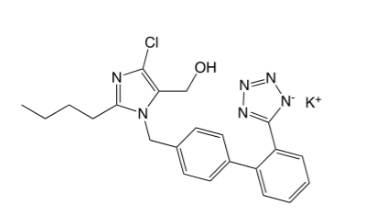
losartan (ARB)
hypertension, HF
biphenyl tetrazole, chlorine

candesartan (ARB)
hypertension, HF
biphenyl tetrazole, double ester

valsartan (ARB)
hypertension, HF
biphenyl tetrazole, amide

sacubitrilat (NEP inhibitor/ARNi)
biphenyl, COOH on each end
R,R most potent

Entresto (sacubitril and valsartan)
sacubitril is a PRODRUG to LBQ657
1st line for reducing risk of morbidity and mortality from HFrEF, hypertension
sacubitril: looks like sacubitrilat but carboxylic acid is an ester
CI: angioedema related to previous ACE-I or ARB therapy, use with ACE-I’s or aliskiren
BBW: fetopathic potential

canagliflozin (SGLT2i)
improve glycemic control in T2D (adjunct to diet and exercise), reduce risk of CV events in adults with T2D and established CVD; CKD, HFrEF, HFpEF
DDI with UGT inducers (rifampin) and digoxin
CI: pts with severe renal impairment or kidney dialysis
glycone ring, phenyl with 1,3,4 substituents, thiene ring, fluorine

empagliflozin (SGLT2i)
improve glycemic control in T2D (adjunct to diet and exercise), reduce risk of CV events in adults with T2D and established CVD; reduce risk of CV death and/or hospitalization in adults with HF and rEF; HFpEF
CI: pts on kidney dialysis, warning for use while pregnant or while breastfeeding
glycone, phenyl ring with 1,3,4 sub, lactone ring

dapagliflozin (SGLT2i)
improve glycemic control in T2D (adjunct to diet and exercise), reduce risk of hospitalization in adults with T2D and HR or CVD, reduce risk of CV death and/or hospitalization due to HF in adults with HF or kidney disease; CKD, HFpEF, HFrEF
warning for use during pregnancy or while breastfeeding
glycone ring, phenyl ring with 1,3,4 sub, looks like ertugliflozin without weird thing on top
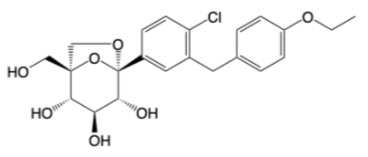
ertugliflozin (SGLT2i)
improve glycemic control in T2D (adjunct to diet and exercise)
CI for patients on kidney dialysis
glycone ring, phenyl ring with 1,3,4 sub, has weird thing on top of glycone
warning for use while pregnant or breastfeeding

eplerenone (MRA)
lactone, ester group, looks like a steroid, epoxide
treatment of HFrEF (primary use), treatment of resistant hypertension, hypertension or edema after hyperaldosteronism; MRAs are drugs of choice for treating edema in pts with hepatic cirrhosis

spironolactone (MRA)
major metabolite: canrenone
lactone, sulfoxide group, looks like a steroid
treatment of HFrEF (primary use), treatment of resistant hypertension, hypertension or edema after hyperaldosteronism; MRAs are drugs of choice for treating edema in pts with hepatic cirrhosis
gynecomastia, dysmenorrhea

finenerone (non-steroidal MRA)
reduce risk of co morbidities (including hospitalization for HF) in adult patients with CKD associated with T2D
CI: strong CYP3A4 inhibitors
triple bonded nitrogen, two pyridines fused together

furosemide
phenyl sulfonamide, furan
edema associated with CHF, cirrhosis of the liver, and renal disease including nephrotic syndrome
CI/DDIs: carboplatin, aminoglycosides, cisplatin, paclitaxel, drugs that promote diuresis, drugs highly dependent on kidney for excretion

hydralazine and isosorbide dinitrate (BiDil) (hydralazine is an arterial vasodilator →decreases afterload, ISDN is a NO prodrug which is a venous vasodilator→ decreases preload)
treatment of heart failure in self-identified black patients (reduce hospitalizations and all-cause mortality)
CI: organic nitrates, sGC activators, PDE5 inhibitors
hydralazine warning: drug-induced lupus-like syndrome and peripheral neuropathy and potential to worsen ischemic heart disease
hydralazine: chain of 4 nitrogens

digoxin (cardiac glycoside, inhibits Na+/K+ ATPase)
oral, IV
mild to moderate HFrEF (2nd line)
often taken with a vasodilator or diuretic
CI: patients with sinus node disease, pre-existing cardiac arrythmia, and HFpEF
sugar, steroid nucleus, lactone

epoprostenol (nonselective prostanoid receptor agonist)
IV
Group I (Class III & IV) PH in pts who don’t respond to conventional therapy, first line in class IV
both PGF1alpha metabolites are magnitudes less effective than epoprostenol
two fused 5-member ring, one with oxygen; no triple bond

iloprost (selective IP receptor agonist)
Group 1 (Class III & IV) PH, added benefit when used with ERAs
nebulizer
modifications: no oxygen in 5-member ring, triple bond at chain

treprostinil (selective IP receptor agonist)
IV, SQ, nebulizer, oral ER
Group 1 (Class II, III, IV) PH
modifications from prostacyclin: triple fused ring (one 5 membered, two 6 membered), remove double bond from left chain, add oxygen and shorten right chain
CI: CYP2C8 inducers or inhibitors

selexipag (selective IP receptor agonist)
Group 1 (Class II, III) PH
CI: CYP2C8 inducers or inhibitors
three rings (one piperazine) not directly fused to each other
PRODRUG to active metabolite ACT-33679 (sulfamide→COOH)

bosentan (nonselective ETA and ETB receptor antagonist, 20:1 selectivity)
Group 1 (Class II, III) PH
oral (tablet, liquid suspension), twice daily dosing
induces its own metabolism (CYP3A4, CYP2C9) → 50% decreased exposure after 2 weeks
major metabolite: hydroxy bosentan (10-20% efficacy of bosentan)
BBW: elevation of liver enzymes (AST, ALT) and liver failure, birth defects during pregnancy
AEs: flushing, constipation, pulmonary edema (low risk), anemia (no risk), decreased sperm count, palpitations, fluid retention, headache, nasal congestion/nasopharyngitis
DDIs: CYP3A4 and CYP2C9 inhibitors, hormonal contraceptives (transdermal, injectable, oral, implantable) may not be as reliable
4 ring groups


macitentan (ETA receptor antagonist, 200:1 selectivity)
Group 1 (Class II, III) PH
designed to have higher pKa and log D vs bosentan → decreases liver toxicity, insurmountable antagonist
lower liver toxicity risk, lower CYP3A4 inhibitor DDI, edema risk, no anemia risk
monitor for fluid retention and enzyme elevation
risk for headache, nasal congestion/nasopharyngitis, flushing
active metabolite ACT-132577 is long lives (t1/2 longer than macitentan)
2 bromines


ambrisentan (ETA receptor antagonist, 4000:1 selectivity)
Group 1 (Class II, III) PH
minimal/no liver toxicity risk
no CYP3A4 inhibitor DDI
low edema risk, anemia risk
risk of headache, nasal congestion/nasopharyngitis, flushing
monitor for fluid retention and liver enzyme elevation
3 rings, no bromine

riocuguat (sGC)
Group 1 (Class II, III) PH, Group IV chronic thromboembolic PH
2-3 times daily dosing, oral, t1/2=12 hours, metabolites excreted in kidney and liver
BBW: birth defects
AEs: hypotension and syncope (severe, from vasodilation mechanism), also dyspepsia, nausea, edema, headache
CI: nitroglycerin, PDE5is (hypotension risk)
4 rings, 8 nitrogens, 1 fluorine

vericiguat (sGC)
reduce morbidity and mortality from HFrEF and HFpEF (post HF hospitalization)
oral, once daily, half-life 30 hrs (longer than riociguat), PK tailored for HF (daily dosing, less pt variability)
BBW: birth defects
AEs: hypotension, anemia
CI: PDE5is, nitroglycerin (hypotension risk)
SAR observations from riociguat: changes in bicyclic core can pos or neg impact sGC activity and blood clearance, terminal O-methyl NH carbamate isn’t only group with good sGC activity but has longest half life
4 rings, 8 nitrogens, 2 FLUORINES


sildenafil (PDE5i)
oral and IV, 5-20 mg TID for PH (50-100 mg QD for ED); ADME optimized for treating ED (once daily)
Group 1 (Class II, III) PH (slows disease progression when combined with epoprostenol), ED
major metabolite: des methyl sildenafil (20% efficacy)
CI: children, organic nitrates
AEs: epistaxis (nose bleeds), headache, flushing, dyspepsia, dyspnea, insomnia, erythema, rhinitis; transient impairment of blue/green color discrimination (from PDE6 inhibition)
DDI: use with CYP3A inducers (ex. bosentan) or CYP3A4 inhibitors, severe hypotension risk with antihypertensives (ex. alpha adrenergic antagonists, CCBs)
pyrazole, pyrimidine, piperidine, sulfonyl


tadalafil (PDE5i, highly selective)
oral, IV for Group 1 (Class II, III) PH, oral for ED and BPH
ADME optimized for PH (once daily dosing, lower dose for ED)
CI: children, organic nitrates
AEs: epistaxis (nose bleeds), headache, flushing, dyspepsia, dyspnea, insomnia, erythema, rhinitis; NO transient impairment of blue/green color discrimination bc of high selectivity for PDE5
DDI: use with CYP3A inducers (ex. bosentan) or CYP3A4 inhibitors, severe hypotension risk with antihypertensives (ex. alpha adrenergic antagonists, CCBs)
4 rings fused together
*sildenafil makes 2 H bonds with PDE6, tadalafil makes 1 H bond → 16 vs 200-fold selectivity for PDE5

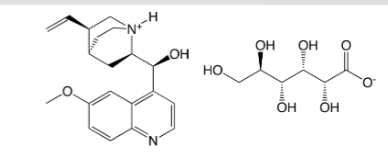
quinidine gluconate (Class 1A Na+ channel blocker → increases APD, ERP, blocks alpha 1, Ca2+ channels, and K+ channels)
only for rare or refractory ventricular arrythmias (used to be used to various arrythmias like maintenance of sinus rhythm in pts with a-fib or flutter, suppression of some congenital ventricular arrythmias)
oral, IR or ER; IR is TID
active metabolite: 3-hydroxy quinidine
clearance decreased in pts with renal or hepatic impairment
negative effect on mortality (especially with non-life threatening arrythmias)
AEs: QTc prolongation → Torsades de pointes, diarrhea (30-50% of pts)→ K+ depletion, hypotension risk from alpha 1 antagonism, immune thrombocytopenia, cinchonism (blurred vision, tinnitus, headache, psychosis)
DDIs: CYP3A4 inhibitors, it’s a potent inhibitor of CYP3A4 and CYP2D6, increased digoxin levels (pgp inhibition)
CI: CCBs (hypotension risk)


procainamide (Class 1A Na+ channel blocker), does NOT block alpha 1 receptors (less hypotension risk than quinidine)
acute cardioversion or suppression of stable ventricular tachycardia
longer acting analogue of novocaine
IV, t1/2=3-4 hrs
major metabolite: N-acetyl procainamide (blocks some K+ channels)
DISCONTINUED bc of Lupus-like syndrome with exposure to parent drug (not metabolite), metabolite accumulation in pts with renal impairment→ QTc prolongation → Torsades de Pointe
aniline, nitrogen crane

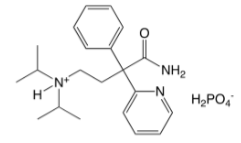
disopyramide phosphate (Class 1A Na+ channel blocker); both enantiomers are M2 receptor antagonists, S enantiomer also blocks K+ channels
symptomatic obstructive hypertrophic cardiomyopathy
oral, CR is once daily, IR is 4x daily
negative effect on mortality (especially with non life-threatening arrythmias)
may cause or worsen CHF or produce severe hypotension
QTC prolongation → Torsades de Pointe
anticholinergic effects (dry eyes/mouth, constipation, urinary retention, increase in HR)
CYP3A4 inducers or inhibitors can change plasma levels
2 isopropyl groups on nitrogen, 2 rings, quaternary ammonium

lidocaine (Class IB Na+ channel blocker → decreases ERP and APD in normal myocardium, increases both in ischemic myocardium)
reduce risk of ventricular arrythmias in suspected MI pts (IV), local anesthetic (SQ)
MUST monitor ECG, but no risk of Torsades de Pointe
overdosage can cause CNS (coma, loss of consciousness, CNS depression, seizure, tremor tinnitus, drowsiness) and CV (CV collapse, resp depression and arrest, hypotension) effects
AEs: can worsen atrial and ventricular arrythmias
DDIs: CYP1A2 inhibitors can increase plasma levels
metabolite: 4-hydroxy-2,6-dimethylaniline
nitrogen crane, amide, phenyl with 2 methyls on it

mexiletine (Class 1B Na+ channel blocker); decreased APD and ERP in normal myocardium, increases both in ischemic myocardium
prevention of chronic ventricular tachycardia refractory to first line treatment, recommended in EU for treatment in Long QT Syndrome 3 (LQT3) patients
considered “oral lidocaine”, R and S enantiomers have same pharmacology, TID
AEs milder than lidocaine- nausea, CNS-based (tremor, slurred speech, vertigo)
looks like lidocaine but without nitrogen crane or amide, has ether

flecainide (Class IC Na+ channel blocker → no effect on ERP/APD), increases ERP/APD in scarred/ischemic myocardium
conversion and maintenance of atrial fibrillation sinus rhythm in pts without structural heart disease (avoided in pts with structural heart disease or prior MI); also treats supraventricular arrythmias including PVSTs, AV nodal reentrant tachycardia (AVNRT), and Wolff-Parkinson syndrome in pts w/o structural heart disease
oral, R/S enantiomers have same pharmacology
low Torsades de Pointe risk, though have risk of other arrythmias
increased mortality risk after MI
better acute tolerability profile compared to Class IA/IB)
ether/fluorine wings on phenyl (para)

propafenone (Class IC Na+ channel blocker → no effect on APD/ERP), increase APD/ERP in ischemic or scarred myocardium
conversion and maintenance of atrial fibrillation sinus rhythm in pts w/o structural heart disease, avoided in pts with prior MI or structural heart disease
oral, TID, t1/2=2-32 (variable), racemate, S enantiomer has nonselective BETA blocking activity
active metabolite via CYP2D6 oxidation: 5 hydroxy propafenone has Na+ channel blocking activity but no beta 1 blocking activity, R enantiomer of metabolite created 5x faster than S enantiomer
increased mortality in asymptomatic non-life-threatening ventricular arrythmias in pts with past MI and increased risk of inducing severe arrythmias in pts with structural heart disease CAST trial → anti arrhythmic agents not generally given unless arrythmia is life threatening
AEs: sustained B1 blocking activity → increased HF risk, induced bronchospasm
DDIs: CYP2D6/CYP3A4 inhibitors increase plasma levels
kind of looks like a 45 degree angle, 2 rings, looks like it could make a third with 2 oxygens in it

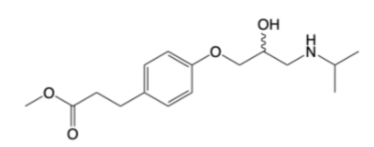
esmolol (selective B1 blocker w/o sympathomimetic or membrane stabilizing activity)
control ventricular rate in a fib, atrial flutter, and control HR in pts with non-compensatory sinus tachycardia
IV, very short half life (9 min) due to cleavage of methyl ester, allows for titration to minimal dose to control arrythmia
risk of bradycardia, hypotension, cardiac failure, worsening bronchospasm
NOT a prodrug
phenyl ethanolamine with methyl ester at the end


sotalol (Class III selective block of K+ [Kv11.1, HERG, IKr) channel blocker) → increases APD and ERP
oral for conversion and maintenance of a fib in pts with structural heart disease without severe systolic dysfunction, IV for life-threatening ventricular arrythmias
racemate, both equipotent K+ channel blockers, BID, S enantiomer has non-selective beta blocking activity
risk of Torsades de Pointes (enhanced when taken with Class IC or II)
risk of bradycardia, hypotension, cardiac failure, worsening bronchospasm
no DDIs

amiodarone
oral and IV for life-threatening ventricular arrythmias in unstable pts or cardiac arrest settings, second line for treating a fib in pts with left ventricular dysfunction or HF where other agents (ex. beta blockers, CCBs) may not be suitable/sufficient
long half life (58 days), metabolized by CYP3A4 to des-ethyl amiodarone (activity and t1/2 similar to amiodarone)
BBW: cardiac, hepatic, and pulmonary toxicity (potentially fatal pulmonary fibrosis, liver injury resembling cirrhosis or alcoholic hepatitis)
risk of Torsades de Pointes (less than other Class III drugs, but can be enhanced when used with Class IC or II)
AEs: skin discoloration, visual impairment, thyroid abnormalities, bradycardia, peripheral neuropathy, photosensitivity)
DDIs: metabolized by CYP3A4 and CYP2C8; amiodarone inhibits pgp, CYP3A4, CYP2C9, CYP1A2, CYP2D6; taking with other antiarrhythmics can prolong QTc interval
two iodines on phenyl, benzylfuran


dronedarone (nonselective delayed outward rectifier and inward rectifier K+ channel blocker → increases ERP, also closed-state block of Na+ channels, blocks beta receptors, blocks Ca2+ receptors, and is a ligand for thyroid receptors)
maintenance of sinus rhythm in pts with a fib without HF or left ventricular dysfunction, not as good as amiodarone in decreasing recurrence of AF but less side effects
CYP2D6 oxidation → des-butyl dronedarone (1/10 of activity, similar half life to dronedarone), half life 13-19 hrs (much shorter than amiodarone)
risks similar to amiodarone but without pulmonary fibrosis and thyroid adverse effects, DDIs similar to amiodarone
looks like amiodarone without the iodines, also has longer nitrogen crane

dofetilide (open state Class III selective block of K+ [Kv11.1, HERG, IKr] channels → increases ERP and APD)
oral, BID
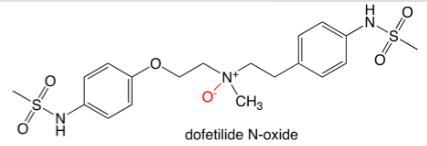
metabolized to dofetilide N-oxide, which has Class I Na+ block activity but doesn’t contribute to efficacy
risk of Torsades de Pointe directly related to drug plasma levels
kidney function assessment and cardiac monitoring required during first days of treatment
DDIs possible with drugs that impair kidney function and/or that inhibit CYP3A4

ibutilide (open state Class III selective block of K+ [Kv11.1, HERG, IKr] channels → increases ERP and APD), activates slow inward Na+ currents
rapid conversion of sinus rhythm in a fib
IV, rapid oxidative metabolism of heptyl side chain to afford inactive metabolites
risk of Torsades de Pointes
heptyl side chain on N