Small Animal Hepatobiliary Disease: Acute
 Call Kai
 Learn
 Practice Test
 Spaced Repetition
 Match
 Flashcards
 Knowt Play
1/105

There's no tags or description
Looks like no tags are added yet.
106 Terms
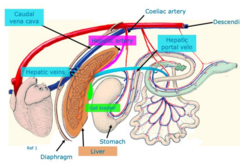
how is blood supply entering the liver arranged
liver is supplied by hepatic artery and hepatic portal vein
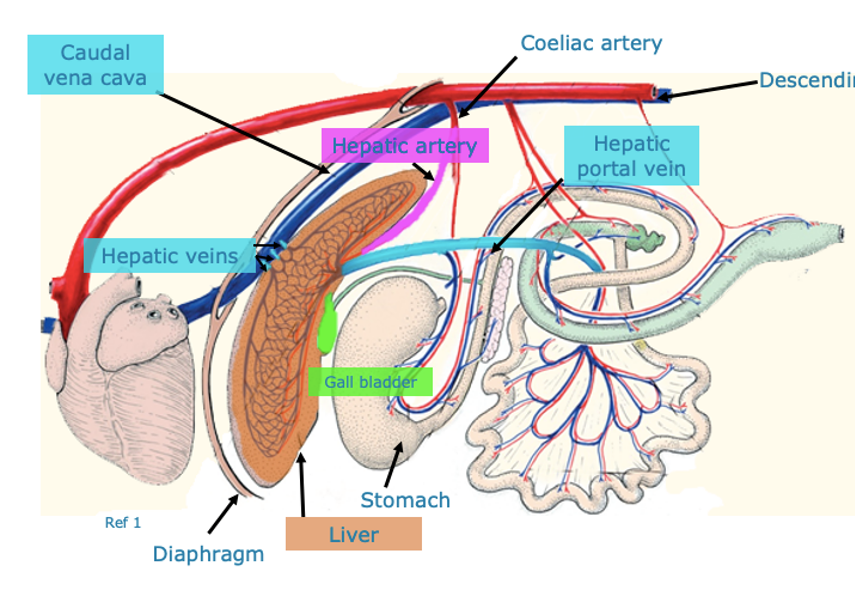
what can the hepatic portal v drain
infectious agents and toxic substances absorbed from the gastrointestinal tract to the liver
so high risk to liver
most specific blood marker for indicating hepatocellular damage in dogs and cats
ALT
presnted with a dog with notable jaundice on his mm and sclera. wha is most appropriate first test to do in order to progress case workup?
PCV
blood supply to liver
abundant and double
-hepatic artery
-hepatic portal vein

hepatic portal vein issue
drain infectious agents and toxic substances absorbed for GIT into liver
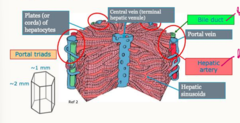
how are hepatocytes organised
in radial cords forming six sided polyhedral prism with portal triads at each of the corners and single central vein

what do portal venule and arteriole of hepatic artery do
take blood in

what is a portal triad
portal venule (from portal veins) and arteriole of hepatic artery (both are blood supply IN) and bile duct taking bile OUT.
what does bile duct dp
take bile out
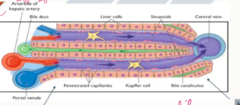
zone 1 for hepatic damage
-very good blood supply so rich in oxygen→ toxins straight from blood
-means most susceptible to metabolic/toxic damage

zone 3 of hepatic damage
-not as rich in blood supply so lacks oxygen
-susceptible to hypoxic damage
why are clinical signs in chronic liver disease not seen
-massive structural and functional reserve
-significant capacity to regenerate
-only clinc signs seen when over 70% loss
how does liver regenerate
-enlarging lobules
-proliferating hepatocytes
why are clinical signs seen earlier in acuute disease
less time for adaptation by surviving hepatocytes
can acute liver disease become chronic
yes
non specific signs of liver disease
-lethargy
-anorexia
-weight loss
-PUPD
-v+/d+
more specific signs of liver disease
-jaundice
-drug intolerances
-hepatic encephalopathy
-ascites
-coagulopathy
-portal hypertension
why we see vom and diarrhoea
-metabolic derrangements trigger CRTZ or portal hypertension
-increased risk of GI ulcers
portal hypertension lead to
-vascular stasis and venous congestion and oedema
-adverse effects on GIT
why PUPD
-decreased urea production means decreased medullary solute gradient causing impaired renal concentrating mechanism so more wate in urine and compensatory polydypsia
-psychogenic linked to hepatic encephalopathy?
-reduced hormone metabolism e.g. cortisol
why ascites
-portal hypertension means activation of RAAS and fluid retention
-hypoalbinaemia

pre hepatic jaundice
-haemolytic anaemia
-bilirubin production exceeds liver capacity to excrete it
hepatic jaundice
-decreased uptake, conjugation and excretion of bilirubin
post hepatic jaundice
-obstruction of biliary tree, prevention of excretion via faeces e.g. pancreatitis, colelith, duodenal or bile duct mass obstructing bile duct
what is portal hypertension
increased intrahepatic resistance/ obstruction to portal blood flow
Tissue changes causing swelling of hepatocytes, compress vessels
-traffic jam of blood
-lack of flow so backs up and swells
what happens when theres increased bp in the portal triad
Intrahepatic portosystemic collateral vessel formation→ allows blood flow but can lead to acquired portosystemic shunts
Extrahepatic vascular stasis and venous congestion through pooling in splanchnic (spleen/gut) circulation>activation of RAAS and fluid retention>ascites
Adverse effect on GIT > increased risk ulceration
portal hypertensions
-splanchnic pooling in spleen or git
-portosystemic collateral vessel formation
splanchnic pooling in spleen and GIT
-reduction if effective circ vol
-activates RAAS
-fluid retention/ascites
-increases ulceration
portosystemic collateral vessel formation lead to
development of acquired PSS
where do encephalopathic toxins originate
GI tract e.g. ammonia
normal situation for encephalopathic toxins
detoxified in liver
hepatic encephalopathy with encephalopathic toxins
detoxification fails for:
Acute liver disease - detoxification processes in the liver are compromised and overwhelmed
Shunts- blood physically bypasses detoxification processes
Congenital portosystemic shunts
Acquired portosystemic shunts can form at any age
congenital PSS
toxins bypass processing plant of liver
acquired portosystemic shunt
-chronic fibrotic/cirrhotic liver disease leads to multiple tortuous anastomotic vessels opening up to divert blood from hepatic portal vein to bypass liver
clinical signs of hepatic encephalopathy
-waxing and waning, non localised on neuro exam
-maybe assoc with feeding as spikes ammonia
-hyperactive and/or depressed/dull/clumsy
-circling, pacing
-central blindness (in brain not eye)
-salivation esp cats
-seizures
-coma
hepatic biochemical markers
-ALT
-AST
-GLDH
-ALP
-GGT
testing of functional parameters
-albumin
-urea
-glucose
-cholesterol
-bilirubin
-coag factors
-bile acid/bile acid stim testing
-ammonia
diagnostic tests for liver disease
blood tests
functional parameters
urinalysis
imaging
sampling cytology/ histopath
hepatocellular biomarkers
-ALT→ most specific
-AST
-GLDH
what makes ALT, AST, GLDH increase
cell damage, necrosis or hypoxia
-membrane becomes inflamed and so leaks them out
hepatobiliary biomarkers
-ALKP
-GGT
what makes ALKP and GGT increase
when there is damage then the liver increases their production
-will increase slower as must be produced
leak out and increased production→ so may rise later
why are serial measurements of hepatic biomarkers important
serial measurements important for progress
liver can deal with them due to regen
or if continuing to increase → know its getting worse
what drug can cause increases in ALKP
phenobarbitone
what diseases can cause increased ALP
DM and hyperthyroid in cats
functional hepatic testign parameters
-albumin
-urea
-ammonia
-glucose, cholesterol, bilirubin
-coag factors
-bile acid stim
purple decase
blue increase
—
albumin in liver disease
-synthesised entirely in liver
-decreases when liver damaged more than 70%
urea when liver damaged
-from deamination of proteins
-decreases
-can be influenced by hydration, recent eating, GI bleeding which can make increase so can show false results as looks normal but isn't
ammonia
needed to detoxify NH4
increases with shunts
coag factors when liver damage
-prolonged clotting time
-risk of bleeding
what clotting facrots does the liver make
liver makes all clot factors →but not 8 and wvf
site of activation of vit k dependant clotting factors
bile acid synthesised from
cholesterol
how to carry out bile acid stim test
-dog fasted 6 hours and sample taken
-given high fat food and 2 hours later another sample taken
if bile acid stim test shows increased post prandial, what does this mean
-hepatic dysfunction
-cholestasis
-PSS
when is bile acid stim test not useful
Can’t be used in hepatic or post hepatic jaundice due to biliary stasis
usg with liver disease
decreased as PUPD
urinalysis of liver disease
-normal to find some bilirubin in dog urine but can be increased
-always abnormal in cat urine
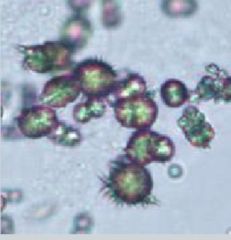
sediment analysis of liver disease
-ammonium biurate crystals with PSS
-identifies dog at risk of urate urolithiasis
radiography of liver disease
-poor sens of detection of liver disease
-liver size
-choleliths
-mineralisation
-neoplasia
what is normal liver size on radiography
-contained within costal arch
-caudal border appears angular
-stomach axis parallel to ribs

why would you consider thoracic radiography in liver neoplasia
metastatic
US liver disease sensitivity
poor unless:
mass lesion
nodular disease
significant change in echotexture
ascites
normal liver on US
-moderately and uniformly echoic
-less echoic than spleen
-coarsely granular parenchyma
-uniform texture (homogenous)
issue with liver US
-normal iis not always normal
-subtle changes easy to miss
-can be over interpreted as abnormal
what can be seen on parenchyma of liver on US
-focal or diffuse
-is margin irregular
-guided biopsies

what be seen on US of biliary tract
-dilation of bile ducts
-abnormal GB wall and/or contents
-guided aspirate?
vasculature of liver on US
-congenital portosystemic shunt
-acquired portosystemic shunt
blood flow going wrong way
CT of liver
-better structural detail
-challenging to diff beniign and malignant changes

positive indicators of malignancy in dogs
-size more than 4.5cm
-postcontrast enhancement pattern
to know if primary or 2ry liver disease, what must be focused on
-signalment, history, physical exam, results of initial diagnostic investigation
-avoid unnecessary testing if 2ry
-assess response to treatment as 2ry disease should resolve with management of underlying disease
2ry hepatopathies
-GI disease
-pancreatitis
-endocrine disease like cushings, DM, hypothyroidism, hyperthyroidism
-right side CHF
-hypoxia
-toxaemia
-sepsis
-drug induced in dogs
cause of raised ALP non hepatic
dental disease
cause of increased AST non hepatic
muscle damsge
acute hepatopathies how long
less than 2 weeks
differentials for acute hepatopathy
-inflam
-toxic injury
-metabolic
-infectious hepatitis
inflam acute hepatopathy ddx
Feline cholangitis/cholangiohepatitis syndrome (CCHS) neutrophilic/suppurative,
Canine cholangiohepatitis - suppurative
toxic injury acute hepatopathies
-drugs like phenobarbitone, carprofen, tetracycline, TMPS, Azathioprine, diazepam, Paracetamol
-xylitol
-environmental toxins e.g. blue green algae, mushrooms
metabolic acute hepatopathy
feline hepatic lipidosis
feline hepatic lipidosis
-deposit lipid in fat cells, swelling of liver, deatg
-do not take obese cat and put on very restrictive diet
non specific infectious cause
asc bacteria from GI tract
specific agents causing acute hepatopathy
-lepto
-canine adenovirus
-canine herpes (in neonates)
-feline calici
-feline ifnectious peritonitis
-felv
-tyzzers disease (clostridium piliformis)
how does feline calicivirus affect hte liver
virulent systemic varient → wipes out the liver
what does canine adenovirus cause
Infectious canine hepatitis (only virus with specific liver tropism)
supprotive management of liver disease
-IVFT (NaCl not LRS as cannot metabolise lactate)
-monitor serum K+ and supplement
-monitor blood glucose and supplement
-control vom with maropitant or CRI metoclopromide
-treat GI ulcers (GI bleeding can be aggravated by coagulopathy)
why use metoclopromide instread of maropitant
maropitant cleared in liver
how to manage coagulopathy
-fresh frozen plasma
-vit k therapy
liver support options
-usodeoxycholic acid (anti inflam/immune modulating)
-anti oxidants like SAMe and silymarin
when can specific treatments for liver disease be applied
Antibiotics for leptospirosis
Stop hepatotoxic drugs if you are sure they are implicated
N-acetylcysteine for paracetamol toxicity, may help with xylitol toxicity too
how can we treat hepatic encephalopathy
lactulose, possibly antibiotics,
protein in diet when have hepatic disease
-need good amount as NEB
-if HE then limit as ammonia production
why an easily digestible diet needed?
-decreased glycogen storage and decreased gluconeogenesis with hepatic disease
-fasting hypoglycaemia
-need easily digestible, complex, soluble carbs
lipids in diet
-augment fat soluble vitamin absorption and make more palatable
-be careful in cholestasis
why vit k supplement
cholestasis or increased clotting times
why b vit supplement
-if anorexic more than 7 days vit b deficiency in cats
signs of vit b deficiency in cats
-neck ventroflexion
-dilated pupils
-slow conscious proprioception
vit b deficiency in dogs signs
-neck ventroflexion
-profound muscular weakness
-vestibular signs
-slow menace
what should be considered to help with feeding
feeding tube as high calories needed
negative prognostic indicators
ascites and splenomegaly
-suggests portal hypertension