9. Nutrition and cancer prevention
 Call Kai
 Learn
Learn Practice Test
 Spaced Repetition
 Match
Match Flashcards
 Knowt Play
1/33

There's no tags or description
Looks like no tags are added yet.
34 Terms
Advantages of in vitro studies in cancer research
Underlying mechanisms
short duration
inexpensive
controlled conditions
toxic concentrations
Disadvantages of in vitro studies in cancer research
not normal cells
limited number of compounds
metabolism lacking
Advantages of animal studies in cancer research
Underlying mechanisms
Tumor development
Controlled conditions
Toxic concentrations
Disadvantages of animal studies in cancer research
Metabolism differs
Not part of rodent diet
No human dietary pattern
Problem in all observational studies
Causality: Causality is the relationship between an event (the cause) and a second event (the effect) where the first event is responsible for producing the second
Sometimes links will be made that are not related (correlation is not causation)
Reverse causation: a logical error where you assume that variable X causes variable Y, when the true causal relationship actually runs in reverse, with Y causing X
Confounding: the observed association between an exposure and outcome is caused by a third factor that is not part of the biological pathway
Two types of observational studies?
Cohort: ask if exposed or not and compare incidence
Case-control: ask diseased/non-diseased their prior exposure

Design of a case-control study
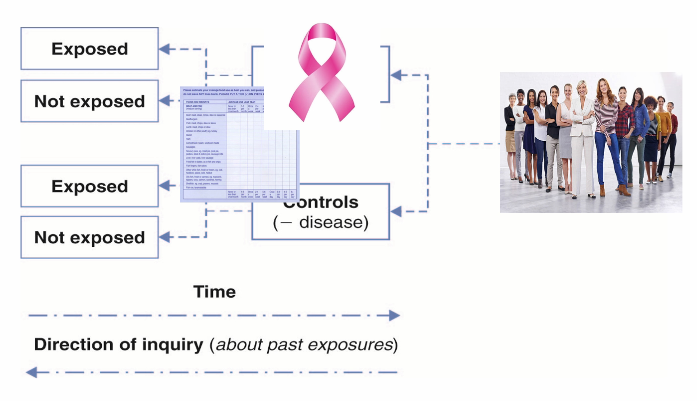
Problem in case-control studies
Recall bias
Not being able to recall correctly or lying
Selection bias, not representative cases & controls
Non-response depending on exposure (if you are smoking you might be less likely to participate)
Reverse causality: chicken or egg
Design of a prospective cohort study

How is relative risk calculated?
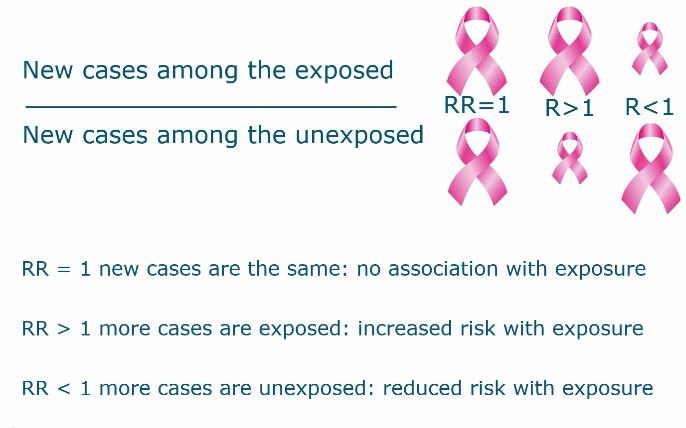
Limitations of cohort studies
Large studies, depending on occurrence of disease
Long follow-up, depending on time to cancer diagnosis, possible loss of participants (selection bias)
Misclassification of intake (information bias)
Within cohort range of intake may be limited: may be hard to detect risks with very high or very low intake levels.
Diets are not constant over time, repeated measurements
Advantages of observational studies
Real life situation
Long duration
Disease endpoints
Specific compounds, foods and diets
Also unhealthy
Design of a randomized controlled trial (intervention study)
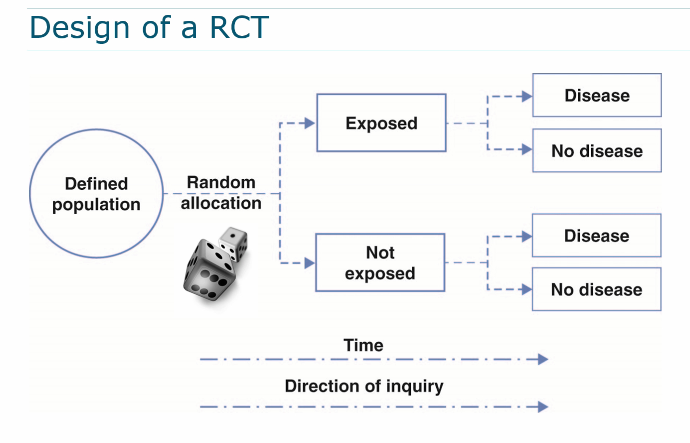
Advantages of RCTs
Controlled conditions
Confounding minimalized
Cause-effect
Specific compounds, foods and diets
Disadvantages of RCTs
Only ‘healthy’ foods due to ethics
Labor intensive, expensive
Intermediate endpoints
Lack of compliance
Short duration
Timing of exposure
Double blinded
The evidence pyramid
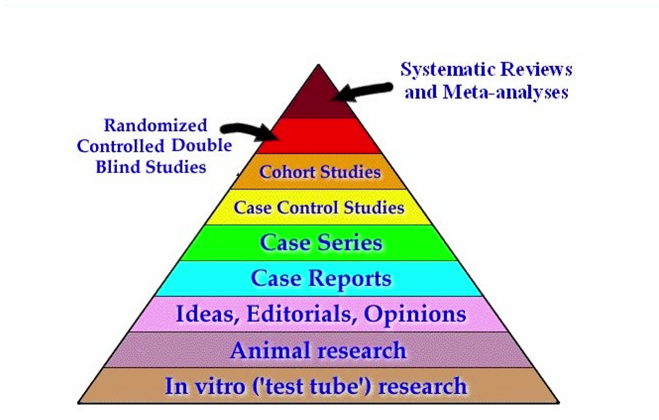
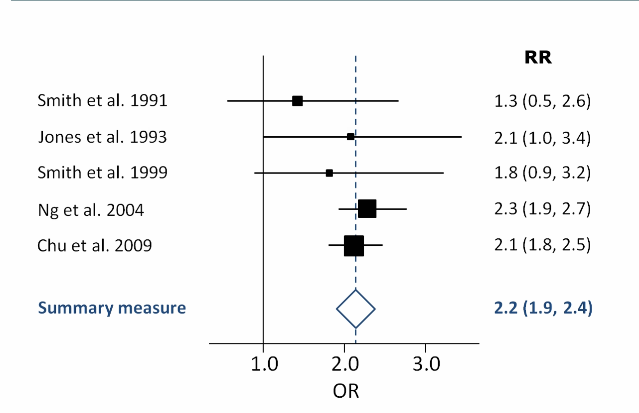
How to understand forest plot in Meta-Analysis

Heterogeneity
the results or methods of the different studies vary significantly more than what you would expect by pure random chance alone
To explain heterogeneity you can attempt to organize studies by country or by types of breast cancer
When is evidence convincing
Strong and unlikely to change in future
no unexplained heterogeneity
At least 2 independent cohort studies
Good quality studies that account for error
Dose response
Robust evidence from laboratory studies
When is evidence probable?
No unexplained heterogeneity
At least 2 independent cohort or 5 case-control studies
Good quality studies that account for error
Dose response
Plausible evidence from laboratory studies
What is the largest risk factor for most types cancer?
Overweight, especially the fat surrounding the organs
For which cancer is diet the most important in decreasing the risk?
For colorectal cancer, large bowel is exposed to everything we eat.
What are the possible mechanisms behind body fatness and cancer?
Metabolic Syndrome and Insulin Resistance: Higher body fatness increases insulin resistance and elevates circulating growth factors, such as insulin-like growth factors, which can promote abnormal cell growth
Chronic Inflammation: Fat accumulation surrounding internal organs induces systemic chronic inflammation, altering key inflammatory cytokines such as TNF, IL-6, and MIF
Adipokine Imbalance: Excess adiposity alters adipokine signaling, specifically leading to an increase in leptin and a decrease in adiponectin levels
Hormonal Changes: Adipose tissue influences hormone production, resulting in increased levels of sex hormones (such as estrogens) as well as growth hormones, which can stimulate cell proliferation in hormone-sensitive tissues
Vitamin D Deficiency: Body fatness is also associated with lower available levels of vitamin D, which is noted as an additional potential mechanism

Effect of increase in physical activity
Reduces the risk of:
Colon cancer
Breast cancer
Endometrium cancer
Consumption of ‘fast foods’ and other processed foods
= high in fat, starches or sugars
Should be limited
To control calorie intake and maintain a healthy weight.
Ultraprocessed foods
Hard to define, not based on calories but on processing
Ultra-processed foods: foods that contain ingredients you wouldn’t normally use at home, with additives like preservatives, sweeteners and artificial colors and stabilizers. Often with long shelf life, e.g. ice cream, sausages, crisps, fizzy drinks and instant soups
However, there are also ultraprocessed foods that are good for you like vegetarian burgers. Therefore not all ultraprocessed food causes cancer.

Is microwaving carcinogenic?
No
However, often foods (like ready to eat meal) that you microwave are high in sugar, fat, salt, etc.
Which IS carcinogenic
What cancer risks are reduced by the consumption of fruits and vegetables?
Mouth
Pharynx
Larynx
Lung (fruits)
The reason why is not clear.
Effect of dietary fibre on… cancer
Decreases the risk of colorectal - strong evidence!
Mechanism of dietary fibre and colorectal cancer
Dietary fibre protects against colorectal cancer through several proposed biological mechanisms[1][2]:
Formation of Short-Chain Fatty Acids (SCFAs): Gut bacteria ferment dietary fibre in the colon to produce short-chain fatty acids, such as butyrate. Butyrate helps reduce cell proliferation and induces apoptosis (programmed cell death) in damaged or abnormal cells.
Reduction of Intestinal Transit Time: Dietary fibre speeds up transit time through the colon, which minimizes the contact time between carcinogenic substances in the intestinal contents and the colonic mucosa
Reduction of Insulin Resistance: Fibre intake is suggested to help lower insulin resistance, which is linked to a reduced risk of cancer development.
Source of Phytoestrogens: Fibre-rich plant foods serve as important sources of protective bioactive compounds, including phytoestrogens.
Can eating be replaced with supplements?
In a study with 30000 heavy smokers, the half who was given beta carotene supplements had a higher risk of cancer
Shows that there is a safe intake, not too much not too little.
Therefore it is important to consider dosage, combination of compounds and timing.
Therefore, do not use supplements for cancer prevention!
Consumers vs nutritions on what increases the risk of cancer

In the future
There should be guidelines on dairy products, coffee, ultra-processed foods, vegetarian diets
Future research
Low/middle income countries really need to be researched as the incidences of breast, prostate and colorectum cancer is increasing in Africa
