Human Nutrition Chapter 2: Cells, Digestion, Body Systems, and BMI
 Call Kai
 Learn
 Practice Test
 Spaced Repetition
 Match
 Flashcards
 Knowt Play
1/51

There's no tags or description
Looks like no tags are added yet.
52 Terms
What are the two main types of metabolism?
Anabolic and catabolic metabolism.
What is the primary function of the cell membrane?
To hold cellular contents together and regulate the entry and exit of substances.

What is the role of mitochondria in a cell?
To produce energy through cellular respiration.

What does the rough endoplasmic reticulum (ER) contain?
Ribosomes, and it is involved in protein synthesis.
What is the function of lysosomes?
To digest waste materials and cellular debris.
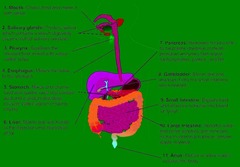
What is the process of digestion?
The mechanical and chemical breakdown of large molecules into basic nutrients.
What are the four steps in digestion?
Ingestion, mechanical and chemical digestion, absorption, and elimination.
What is the function of the gallbladder?
To store and concentrate bile produced by the liver.
What is chyme?
A mixture of stomach secretions and partially digested food.
What is the function of the pancreas in digestion?
To produce digestive enzymes and bicarbonate to neutralize stomach acid.

What role does the liver play in digestion?
It produces bile, which helps in the digestion and absorption of fats.
What is the primary function of the small intestine?
To absorb nutrients from digested food.

What is the significance of the lower esophageal sphincter?
It relaxes to allow food to pass from the esophagus into the stomach.

What is the role of salivary amylase?
To break down starch into glucose in the mouth.
What is the definition of absorption in the context of digestion?
The process by which substances are taken up from the GI tract into the bloodstream or lymph.
What is the gastrointestinal (GI) tract?
The organ system responsible for digestion and absorption, including the mouth, esophagus, stomach, small intestine, large intestine, rectum, and anus.
What is the function of the epiglottis during swallowing?
To prevent food from entering the trachea.
What is the role of intrinsic factor produced by the stomach?
To enhance vitamin B-12 absorption in the small intestine.
What is the significance of peristaltic contractions?
They propel food through the esophagus and into the stomach.
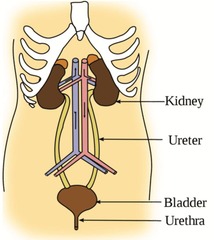
What is the primary function of the urinary system?
To remove waste products from the body and regulate water and electrolyte balance.
What are the basic characteristics of the nervous system?
It controls and coordinates body activities through electrical signals.
What is the role of the endocrine system?
To regulate bodily functions through hormones.
What is the function of the immune system?
To protect the body against pathogens and disease.
What is the cardiovascular system responsible for?
Transporting blood, nutrients, gases, and waste products throughout the body.

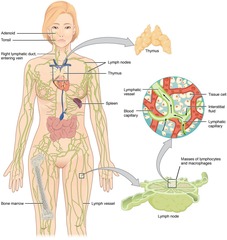
What is the lymphatic system's primary role?
To support the immune system and maintain fluid balance in the body.
What is the first region of the small intestine that receives chyme from the stomach?
Duodenum
What aids in chemical digestion in the duodenum?
Digestive juices from the pancreas and gallbladder
What process involves the mixing of digestive juices with chyme in the small intestine?
Segmentation
What structures increase the surface area for absorption in the small intestine?
Circular folds, villi, and microvilli
What remains in the large intestine after digestion and absorption?
Indigestible fiber and water
What is the primary function of the large intestine?
Absorption of water, some minerals, and vitamins
What is the microbiome's role in the large intestine?
It contains bacteria that further digest fiber, releasing key nutrients.
What is feces composed of?
Indigestible fiber, tough connective tissues, bacteria, and dead intestinal cells.
What are the two types of sphincters in the rectum?
Internal (involuntary control) and external (voluntary control)
What is the process of expelling feces called?
Defecation
What does the pancreas produce?
Pancreatic juice, a mixture of water, bicarbonate, and digestive enzymes.
What is the function of bile?
Emulsifies fats for digestion and absorption.
What system transports water-soluble nutrients from the small intestine?
The Cardiovascular System
What system transports fats and hydrophobic vitamins from the small intestine?
The Lymphatic System
What is the role of the hepatic portal circulation?
Carries nutrient-rich blood from the intestines to the liver.
What is the primary function of the nervous system?
Control and communication within the body.

What is the major cell type in the nervous system?
Neuron
What nutrient is the preferred fuel for the brain?
Glucose

What is the role of hormones in the endocrine system?
Chemical messengers that regulate various body functions.

What do the kidneys do in the urinary system?
Filter wastes from blood and regulate chemical balance.
What is the difference between nonspecific and specific immunity?
Nonspecific immunity does not require previous exposure to pathogens, while specific immunity targets specific antigens.
What is the skeletal system's role?
Protects organs, facilitates movement, and stores minerals.
What is the ideal body weight influenced by?
Frame size, sex, muscle mass, bone density, age, and height.
How is Body Mass Index (BMI) calculated?
BMI = [weight (lb) x 703] ÷ height (in)²
What are the limitations of BMI?
Does not account for fat mass or distribution, and may misrepresent health in muscular individuals.
What is visceral fat?
Fat around the abdominal cavity linked to inflammation.
What is the waist-to-hip ratio used for?
To assess abdominal obesity and its correlation with heart attack risk.