Learn: heart labeling
 Call Kai
 Learn
Learn Practice Test
 Spaced Repetition
 Match
Match Flashcards
 Knowt Play
1/13

There's no tags or description
Looks like no tags are added yet.
Name | Mastery | Learn | Test | Matching | Spaced | Call with Kai | Chat |
|---|
No analytics yet
Send a link to your students to track their progress
14 Terms
superior vena cava
a large vein carrying deoxygenated blood into the heart

aorta
the main artery of the body, supplying oxygenated blood to the circulatory system

right pulmonary veins
responsible for carrying oxygenated blood from the lungs back to the left atrium of the heart

right atrium
receiving chambers

tricuspid valve
prevent back flow of blood into the right atrium

right ventricle
responsible for pumping oxygen-poor blood to the lungs

inferior vena cava
a large vein carrying deoxygenated blood into the heart

pulmonary artery
the artery carrying blood from the right ventricle of the heart to the lungs for oxygenation

left pulmonary veins
large blood vessels that receive oxygenated blood from the lungs and drain into the left atrium of the heart

left atrium
ts primary roles are to act as a holding chamber for blood returning from the lungs and to act as a pump to transport blood to other areas of the heart.
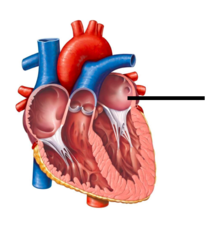
bicuspid valve
regulates blood flow from the upper left chamber (left atrium) into the lower left chamber (left ventricle), the heart's main pumping chamber

aortic valve
revent the regurgitation of blood from the aorta into the left ventricle during ventricular diastole and to allow the appropriate flow of blood—the cardiac output —from the left ventricle into the aorta during ventricular systole

pulmonary valve
the valve is opened by the increased blood pressure of the ventricular systole (contraction of the muscular tissue), pushing blood out of the heart and into the artery. It closes when the pressure drops inside the heart.

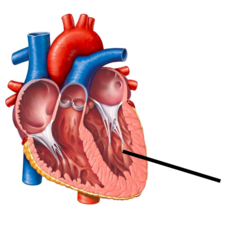
left ventricle
during diastole, the ventricles relax and fill with blood again. The left ventricle receives oxygenated blood from the left atrium via the mitral valve and pumps it through the aorta via the aortic valve, into the systemic circulation.