plant a+p test 1
 Call Kai
 Learn
Learn Practice Test
 Spaced Repetition
 Match
Match Flashcards
 Knowt Play
1/161

Earn XP
Description and Tags
this may not go so good
Name | Mastery | Learn | Test | Matching | Spaced | Call with Kai | Chat |
|---|
No analytics yet
Send a link to your students to track their progress
162 Terms
protoplast
the _ is everything inside the cell wall- plasma membrane, all cell organelles and molecules
cytoplasm, cytosol
the _ is gel-like fluid along with the organelles- everything outside the nucleus. The _ is the fluid itself
shape, turgor
the primary functions of the cell wall is to give cells _ and support, and resist _ pressure
cellulose fibers
__ are the main component of the primary cell wall. They’re composed of alternating alpha- and beta-glucose that humans cannot make into sugars
cellulose
the yellow areas in the cell wall diagram are the _

hemicellulose
the branched, red fibers in the cell wall diagram are the _
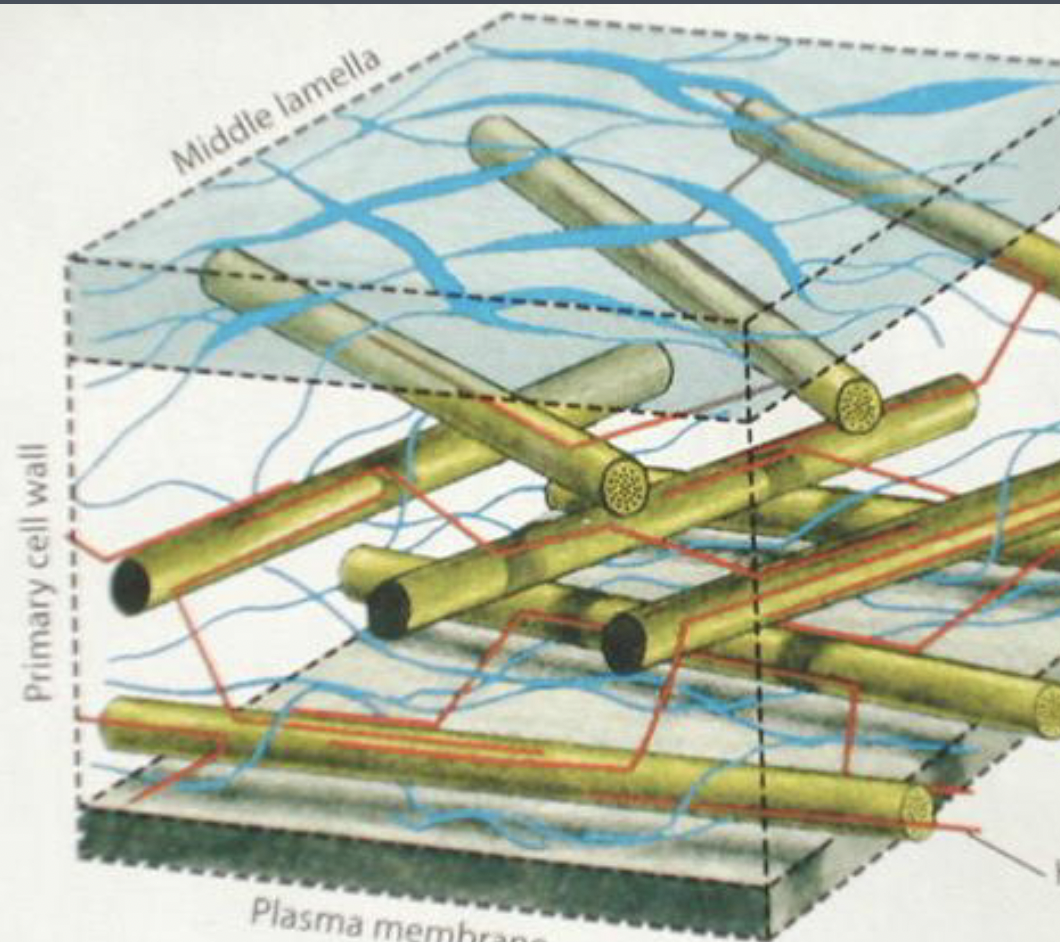
pectin
the blue strings in the cell wall diagram are the _

lignin
the 3-layered Secondary cell wall laid down inside the primary cell wall includes cellulose and _, which gives rigidity

plasma membrane
the __ transports materials in+out of cells and Senses the local environment
phospholipid bilayer, fatty acid
the plasma membrane is partially composed of a __ with __ tails.
integral, peripheral
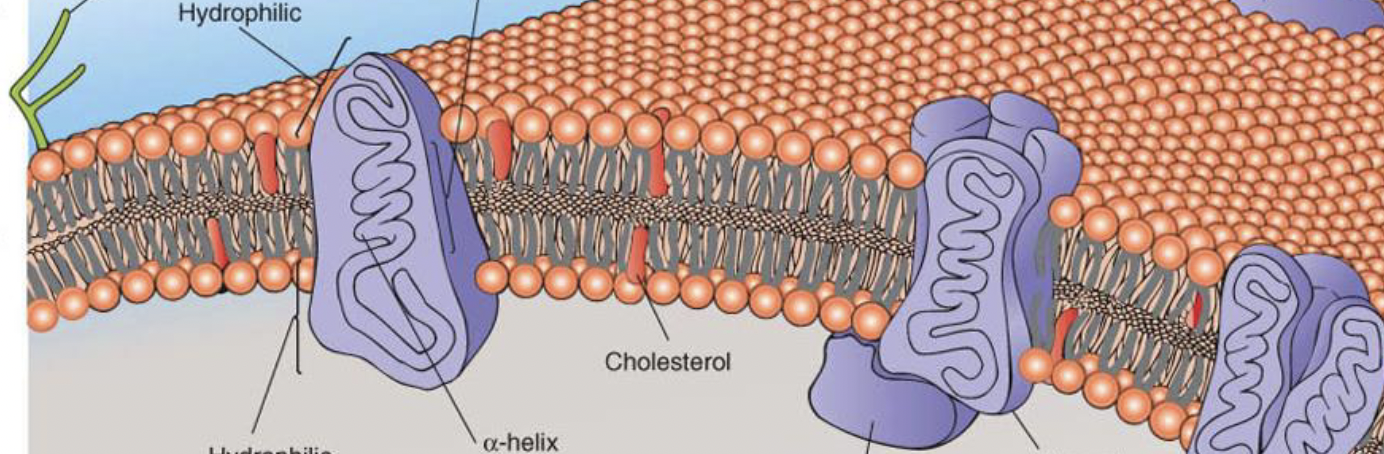
Proteins make up 50% of the plasma membrane: _ proteins span the membrane and are often transport channels. _ proteins only occur partway through
plasmodesmata
_ are protoplasm connections between cells.
symplast, apoplast
The continuous cytoplasm throughout the plant are _, and everything outside them are _
integral, peripheral
This is an image of the plasma membrane: the channel that spans the phospholipid bilayer is the _ protein, while the darker one that only spans part of it is the _ protein.
DNA, communication
the plant cell nucleus contains _ in chromosomes and is in constant _ with the rest of the cell
pores, nucleoli
the nucleus is a double membrane bound organelle w/large _. It contains _ that make ribosomes
vacuole, organelles, sac
the function of the large _ in plant cells are creating turgor pressure, storage, and recycling old _. It is single membrane bound _
golgi, endoplasmic reticulum
the endomembrane system has two main elements: the _ complex and the __
surface area, ribosomes
the endoplasmic reticulum functions as a membrane system to provide __, while also organizing _ (which convert mRNA into proteins)
rough, smooth
The endoplasmic reticulum is the first type of membrane produced in the cell. there are 2 types: _, which has ribosomes, and _, which does not
sacs, molecules, organelles
the golgi complex is comprised of a series of membrane _, and its function is in secretion and packaging large _, as well as adding membrane to _
anthocyanin
an _ is a water soluble pigment that exists in the vacuole
aerobic, ATP
the mitochondria functions in _ respiration and generating _
smooth, cristae, matrix
the mitochondria’s structure includes the outer _ membrane, the inner folded membrane with individual folds known as _, and an inner gel known as the _
outer mitochondrial, inner mitochondrial, matrix, christae
This is the mitochondria. The top-left line points to the __ membrane, the top-center and right lines point to __ membrane , the bottom left line points to the _, and the bottom-center and right lines point to _.

ribosomes, rough ER, golgi complex
this is the endomembrane system. The top 2 lines point to _, the line immediately under points to the __, and the blue pigment represents the __

chromoplasts
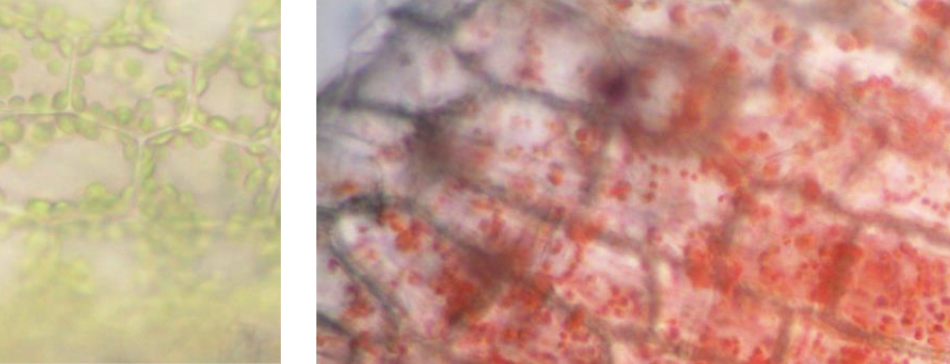
plastid function varies with the plant cell type. They can hold chloroplasts as well as _, amyloplasts, and others
stroma, thykaloids
plastids are composed of an outer smooth membrane, with an inner membrane that has sets of sacs, an inner gel known as _, and stacks of _
chloroplasts, chromoplasts
these two plastids contain different elements: the one on the left contains _, and the one on the right contains _
cyanobacterium
a possible explanation for primary endosymbiosis of chloroplasts is that a _ joined a eukaryotic cell with mitochondria and a nucleus.
red alga
a possible explanation for secondary endosymbiosis of chloroplasts is that a eukaryotic cell with mitochondria joined a __ cell with mitochondria and chloroplasts
shape, cell
the cytoskeleton occurs right behind the plasma membrane, and its functions include structure, _, and _ organization
protein tubules
the structure of the cytoskeleton includes __
meristems, apical meristem
plant cell division is located in _. Primary growth is in the shoot and root tips, also known as the __
axil
a leaf _ is the upper angle or point of attachment where the leaf meets the supporting stem or branch
axillary
On the plant stem are _ buds at the leaf axils
protoderm, procambium, ground
The apical meristem gives rise to 3 primary meristems. The _ is actively dividing cells that become epidermis, the _ is actively dividing cells that become vascular tissue- the xylem and phloem, and the _ meristem is actively dividing cells that become ground tissue/bulk tissue that fills the stems, leaves, and roots
epidermis
the _ is the outermost, single-layered cell covering that protects roots, stems, leaves, flowers, fruits, and seeds
protoderm, procambium, ground meristem
this image shows the 3 primary meristems. The upper two lines indicate the _, the middle two lines indicate the _, and the bottom two lines indicate the _

flowers
Axillary buds form branch shoots or sometimes _ on stems
intercalary
Grasses have special _ meristems at the base of their leaf blades and in their stems to regrow in length after damage.
diameter
secondary meristems add bulk and _
lateral
The vascular cambium is a _ meristem responsible for secondary growth
ground
The three primary meristems give rise to 3 tissue types in the leaves, roots, and stems: the first is _ tissue, which fills up space and is used for storage and photosynthesis
dermal
The three primary meristems give rise to 3 tissue types in the leaves, roots, and stems: the _ tissue covers the surface of plants
vascular
The three primary meristems give rise to 3 tissue types in the leaves, roots, and stems: the _ tissue includes xylem and phloem
dicot
In _ stems, the ground tissue can be divided into pith and cortex regions

monocot
in _ stems, there is no pith or cortex, just the ground tissue as a whole

living, primary, wound
there are 3 basic cell types in ground tissue: parenchyma are _ at maturity, generally only have _ cell walls, are capable of cell division and elongation, and used for _ healing, photosynthesis, storage, etc. They are the ‘basic’ plant cell

living, thickenings, flexibility
there are 3 basic cell types in ground tissue: collenchyma are _ at maturity, have primary cell walls with _, are capable of cell division and elongation, and are primarily for support with _

dead, lignin, sclerids
there are 3 basic cell types in ground tissue: sclerenchyma are _ at maturity, have primary and thick secondary cell walls with _, and feature short/blocky _ as well as long and slender fibers

nutshells
sclerids are what make _ woody and rigid
parenchyma
In herbaceous plants, dermal tissue is composed mostly of _ cells
guard
there are multiple types of dermal tissue: _ cells and subsidiary cells are epidermal cells associated with stomata

prickles
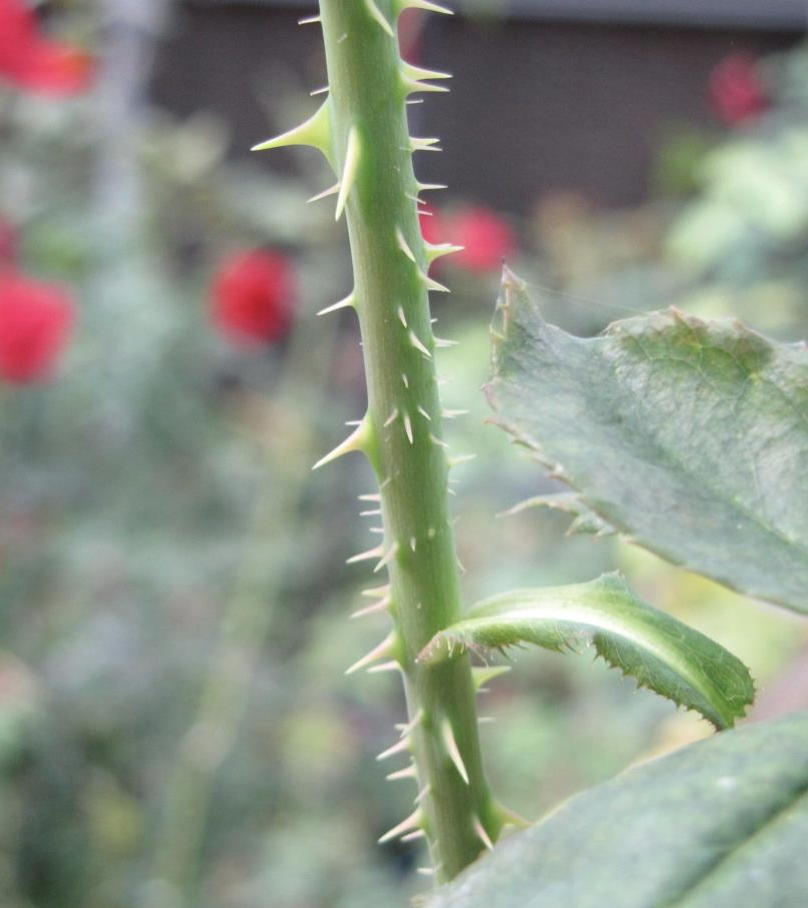
there are multiple types of dermal tissue: _ are modified stems that are outgrowths for protection
trichomes
there are multiple types of dermal tissue: _ are hair like growths that protect against environmental stress, deter pests, and secrete helpful chemical compounds. root hairs are a form of epidermal (first blank)

periderm
there are multiple types of dermal tissue: In woody plants the single cell layered epidermis is replaced by _, or bark
bulliform
Some leaves have _ cells on the upper epidermis that help monocots and grasses control water loss through the reversible rolling and unrolling of leaves

xylem
vascular tissue has two main types: the _conducts water and minerals, and is dead and hallow

vessel elements
there are 2 types of xylem fluid conducting cells: __ occur in angiosperm flowering plants, they are hollow and open at ends, and very efficient.

tracheids
there are 2 types of xylem fluid conducting cells: _ occur in gymnosperms, are long and tapered, and less efficient

procambium, helical
Primary and secondary xylem are different- primary comes from the _. It has only _ thickenings of secondary cell wall inside the primary cell walls.
vascular cambium
Primary and seconday xylem are different- secondary comes from the __, has a full secondary cell well in the cells, but still has pits and perforations in the wall.
parenchyma
Xylem also contains fibers, sclerids, and _ cells

phloem
_ Conducts sugars around the plant
sieve cells, sieve tube
There are two types of fluid conducting phloem cells: __ are found in seedless vascular plants and gymnosperms (conifers and cycads), while __ elements are found in flowering plants
plates
Sieve tube members in flowering plants have sieve _ at the end (indicated by the top line), but sieve cells in gymnosperms and seedless vascular plants do not

living
Fluid conducting phloem cells lack vacuoles or a nucleus, have an outer membrane, and are _ at maturity
albuminous
Sieve cells in gymnosperms have adjacent parenchyma cells called _ cells (with nuclei) that maintain and repair the sieve cells
companion
Sieve tube elements in flowerin plants have adjacent _ cells (with nuclei) that maintain the sieve tube elements
companion cell, tube element
the circled area is phloem tissue in a monocot flowering plant: the top right area points to __, and the bottom right points to the sieve __

primary, secondary
_ growth makes plants longer and taller at the apical meristems, while _ growth makes them wider and thicker at the lateral meristems
sugars, starch, minerals
the major functions of roots include anchorage, storage (_ can be sent down from the top of the plant, to be turned into _) and absorption of water and _
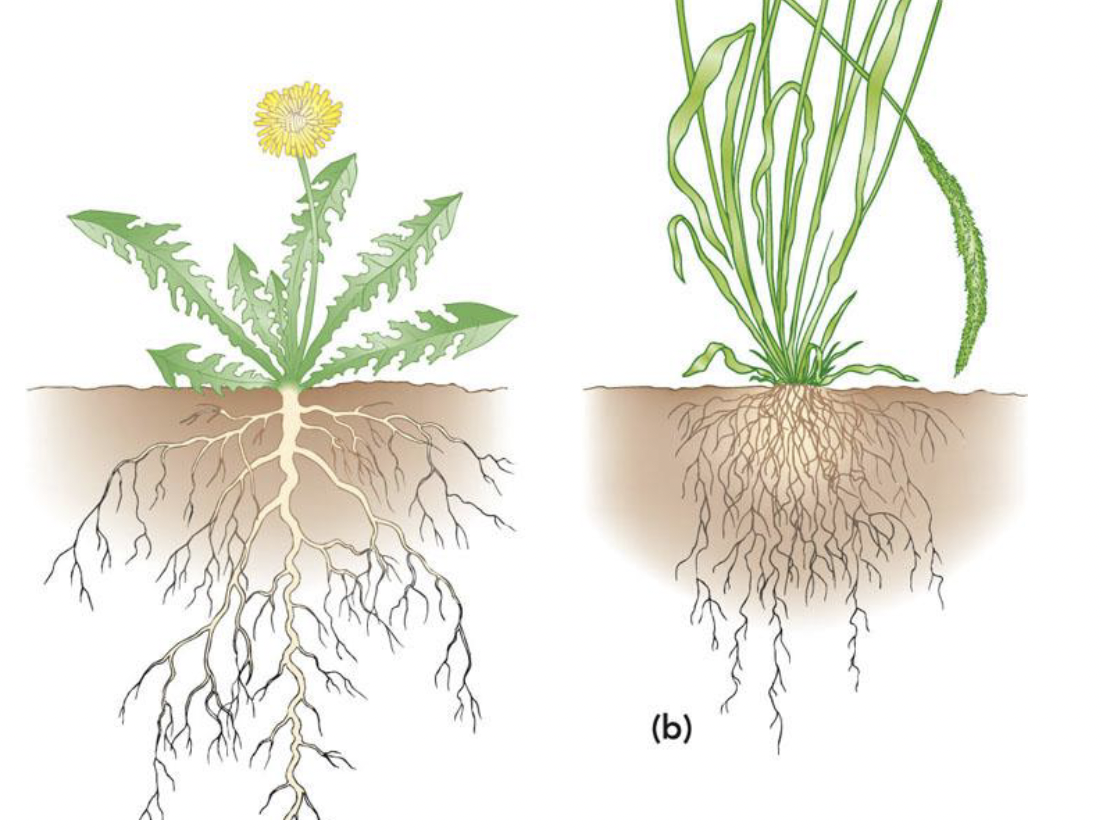
taproot, fibrous
there are 2 major types of root systems: dicots have a _ system, which consists of a primary root with the other main roots branching off of it. Monocots have a _ root system, where the roots are highly branched-all the main roots arise from the base of the stem
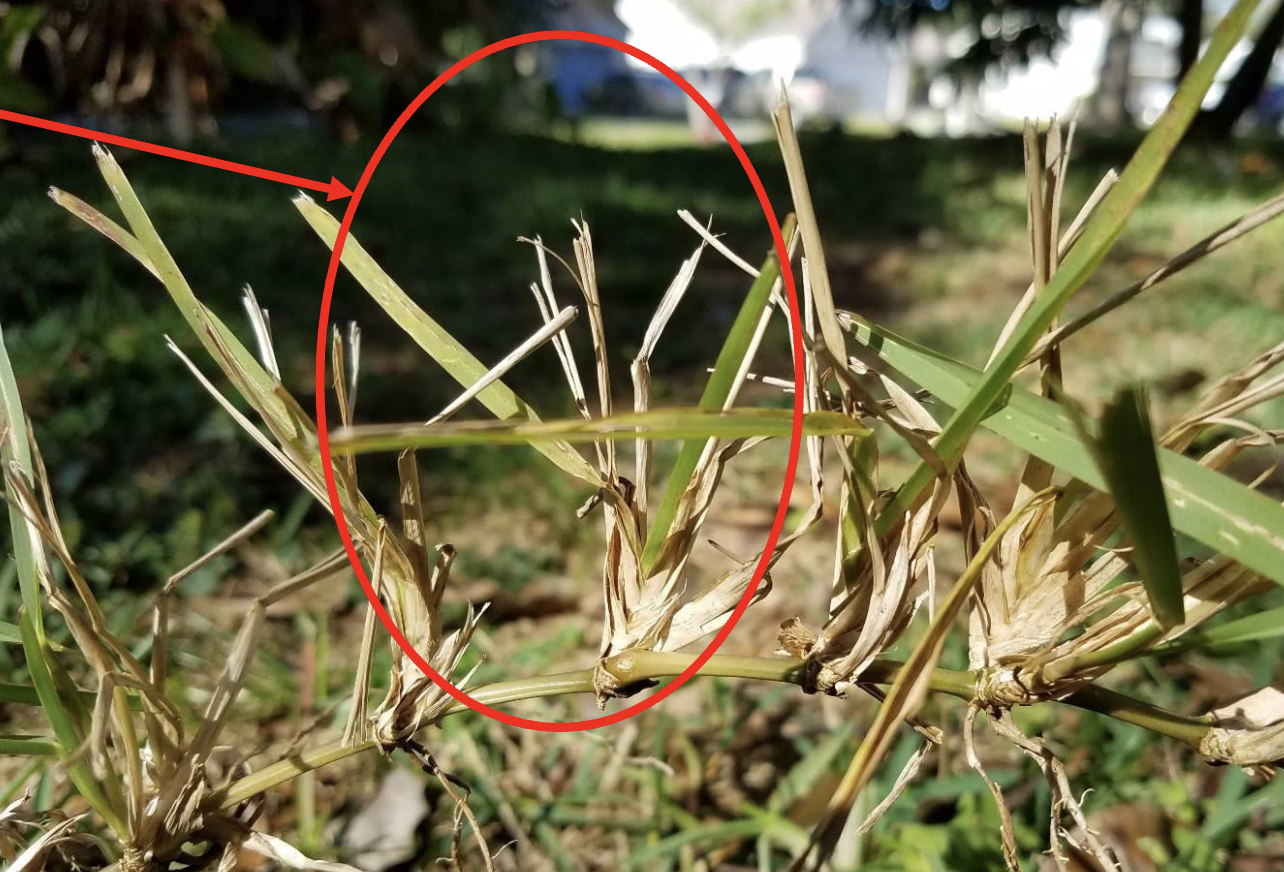
phytomers
Grasses with rhizomes create _ along the stem- stems will grow horizontally, and a new unit can come from an axillary bud that will root itself
contractile
Plants with bulbs ( a set of modified leaves) and some legume plants have _ roots. The plant wants the bulb underground so it is not targeted, so roots will slowly shrink, pulling the bulb down
root cap
there are 4 main root growth zones: the __ covers the delicate apical meristem and protects it from hitting the soil as the root drives further down.
mucilage, sloughs
The root cap secretes a _ that helps the root tip move through the soil. It also _ off loose root cells as it grows.
gravity perception
The root cap is the site of __. If it is removed, roots will not bend toward gravity.
apical meristem
there are 4 main root growth zones: the __ is the site of cell division
cell elongation
there are 4 main root growth zones: in the zone of __, the cells stretch out to assist in driving the root
maturation, absorbing
there are 4 main root growth zones: in the zone of _, cells mature and specialize, root hairs emerge; which increase the _ surface of the root tip
root cap, apical meristem, cell elongation, maturation
this photo shows the 4 main root growth zones: the bottom left region shows the __, the bottom right shows the __, the middle right shows the zone of __, and the top right shows the zone of _

procambium, ground meristem, protoderm
this photo shows the root cap, apical meristem, and the 3 primary meristems in a root: the bottom line is the _, the middle line is the __, and the top line is the _

epidermis
in a root cross section, we see the outer surface covered by _. the root (first blank) is covered in root hairs.
cortex
in a root cross section, there is a middle layer known as the _, which has many gaps and spaces for water to seep through, with 3 layers
exodermis, parenchyma
the root cortex has 3 layers, the _, the storage _, and the 3rd main layer of the root cross section, the endodermis
endodermis, stele
in a root cross section, the 3rd innermost layer is the _: it filters water, and controls flow into the vascular cylinder or _
xylem, phloem
In a dicot root, there is _ in the center+ _ around the (first blank)
pith
in a monocot root cross section, the Epidermis, cortex+ endodermis are very similar. However, the vascular cylinder has parenchyma around tissue and _ in the center, which is then surrounded by bundles of xylem+phloem
epidermis, cortex, endodermis
this photo shows a root cross section. the middle left line indicates the _, the blacked out term represents the _, and the top let line indicates the _

pericycle
in a root cross section, just under the endodermis is a layer of cells called the _, which is a layer of the vascular cylinder
pericycle
Lateral branch roots arise from inside the root at the _
guttation
Mineral dissolved in the vascular cylinder can absorb water and create root pressure in small plants, resulting in _ from the leaves
vascular cylinder
the __ in a root (also known as the stele) contains the pericycle, as well as xylem and phloem
monocot, dicot
these are root cross section diagrams, the one on the left is a _, and on the right is a _

starchy, seeds
Plants like carrots spend their first year creating a _, large taproot, and used the stored energy in the second year to produce above-ground growth and a larger amount of _ than an annual (known as biennials)
prop roots
Some tall, slender monocots like corn stabilize their stems by growing __ from the stem above-ground for added stability

roots
Tree ferns thicken and stiffen their stem with a layer of _

buttress, wind
In tropical soils that are highly weathered and difficult to penetrate, _ roots are common on trees, which give it a broader base and better _ resistance
