psych chapter 8: cognition + intelligence
 Call Kai
 Learn
 Practice Test
 Spaced Repetition
 Match
 Flashcards
 Knowt Play
1/27

There's no tags or description
Looks like no tags are added yet.
28 Terms
3 main characteristics of intelligence
1) Capacity to acquire knowledge, 2) abstract thinking and reasoning abilities, 3) problem-solving abilities that are adaptive for survival
Cattell's Theory
Proposes more than one type of intelligence: fluid and crystallized
fluid intelligence
Innate, inherited reasoning abilities; not influenced by experience, education, or environment (mostly non-verbal)
fluid intelligence example
ability to control attention
crystallized intelligence
Acquired (learned) abilities; heavily influenced by experience, education, and environment (mostly verbal)
crystalized intelligence example
taking tests (vocab + math)
binet - simon test
A 30-item test of age-graded intellectual tasks given to students who were candidates for special classes
what did the Binet - simon test measure?
a child’s mental age
mental age (MA)
A child's intellectual level as shown by test performance, compared to chronological age
chronological age (CA)
A child's actual age in years
Binet’s belief about MA + CA
mental age should EQUAL chronological age
Binet's difference score for special classes
MA - CA = -2 years or more indicated a candidate for special classes
terman
Challenged the psychometrics of the Binet test; looked at intelligence as a ratio of mental age to chronological age
Intelligence Quotient (IQ) formula
IQ = MA / CA x 100
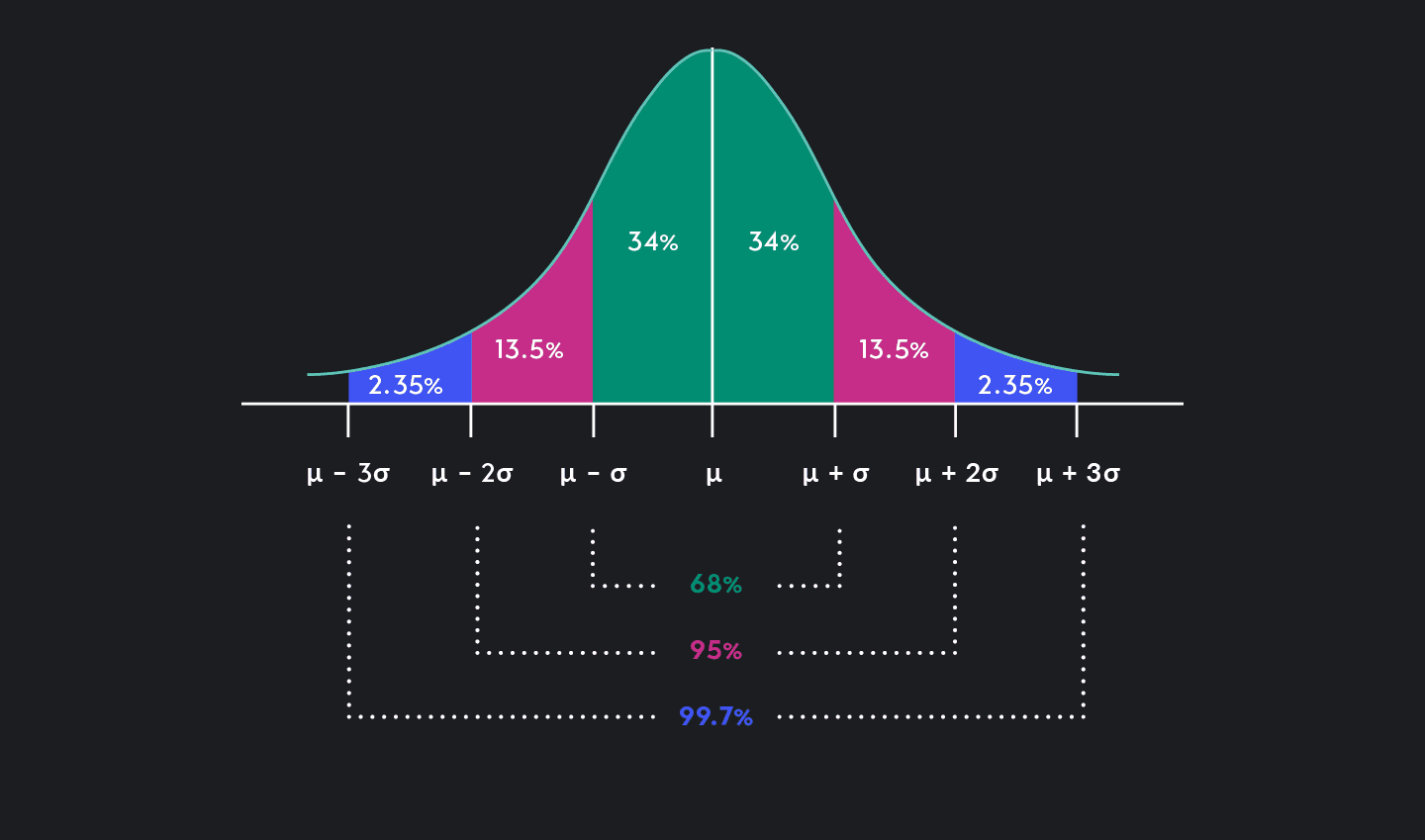
average iq
100

standard deviation of iq
15 or 16
Two most widely used individual IQ tests
Stanford-Binet and the Wechsler tests
David Wechsler's criticism of the Stanford-Binet
It relied too greatly on verbal skills
Wechsler tests
Measure both verbal and nonverbal abilities
WPPSI
Wechsler Preschool and Primary Scale of Intelligence (ages 3-7)
WISC
Wechsler Intelligence Scale for Children (ages 6-17)
WAIS
Wechsler Adult Intelligence Scale (age 16 through late adulthood)
Reliability
The consistency of a measurement; consistently yielding the same results
Test-retest reliability
Similar results are found when the same test is given on two different occasions
Parallel-forms reliability
Two different (alternate/equivalent) forms of the test are given and results are compared
Validity
Whether a test measures what it says it measures or was designed to measure; the accuracy of the test
Three types of validity
Content validity, criterion-related validity (predictive vs. concurrent), and construct validity
Two criteria for a good IQ test
high reliability and high validity