AQA GCSE: Physics - Forces Triple NA
 Call Kai
 Learn
Learn Practice Test
 Spaced Repetition
 Match
Match Flashcards
 Knowt Play
1/57

There's no tags or description
Looks like no tags are added yet.
Name | Mastery | Learn | Test | Matching | Spaced | Call with Kai | Chat |
|---|
No analytics yet
Send a link to your students to track their progress
58 Terms
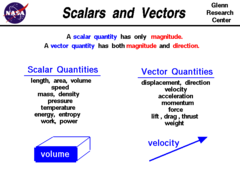
Vector
A quantity that has magnitude and direction

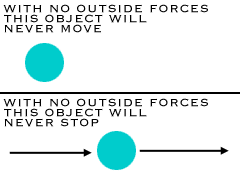
Newton's First Law of Motion
An object in motion will remain in motion unless acted upon by another force
Newton's Second Law of Motion
The acceleration of an object depends on the mass of the object and the amount of force applied.

Newton's Third Law of Motion
For every action there is an equal and opposite reaction

Speed
The distance an object travels per unit of time

Velocity
The distance an object travels per unit of time in a given direction

Equilibrium
A state where all the forces acting on an object are in balance

Friction
A force that opposes motion between two surfaces that are in contact

Terminal Velocity
The velocity at which the forces of friction and weight are equal

Tension
The force in a stretched object

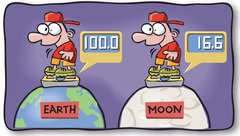
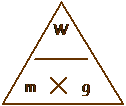
Weight
The force of gravity on an object
Displacement
The distance traveled in a given direction
Distance
The length of a path between two points
Scalar
A physical quantity that has magnitude only.
Magnitude
The size of a quantity
Scale Diagram

Driving Force
The force that makes an object move
Resultant Force
The overall effect of all the forces on an object.
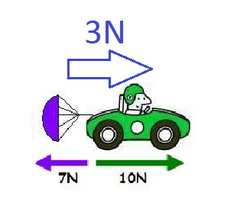
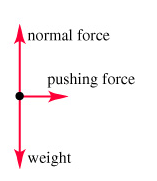
Free-Body Force Diagram
A diagram showing all the forces acting on an object
Moment
The turning effect of a force

Effort
The force applied to the load
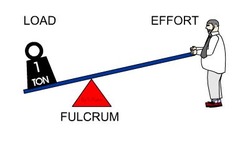
Force Multiplier
A lever where the load is bigger than the effort.

Pivot
The point of rotation
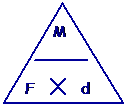
Moment Equation
= Force × Perpendicular Distance
=Fd
Gear
A rotating wheel with teeth that transfers motion and forces
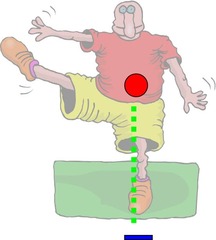
Centre Of Mass
a point representing the mean position of the matter in a body or system.
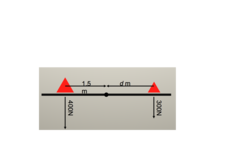
Principle Of Moments
For an object that is not turning:
The sum of all clockwise moments = The sum of all anti-clockwise moments
Parallelogram of Forces (Triple Topic)
A geometrical method of finding the resultant force of two forces that are not parallel
Resolution of Forces (Triple Topic)
Splitting a resultant force into two forces that act perpendicular to each other
Gradient
The rate of inclination
Acceleration
The rate at which velocity changes

Distance-Time Graph

Deceleration
The rate at which an object slows down

Velocity-Time Graph
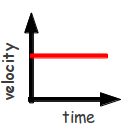
Distance Traveled (Triple Topic)
The area beneath the line on a Velocity-Time graph
Tangent (Triple Topic)
A straight line that touches a curve at one point.
Inertia (Triple Topic)
The tendency of an object to resist a change in motion
Gravitational Field Strength
The force on a 1 kg object due to gravity
Stopping Distance
The shortest distance a car can safely stop in
= Thinking Distance + Braking Distance

Thinking Distance
The distance travelled by the vehicle in the time it takes the driver to react

Braking Distance
The distance travelled by a vehicle during the time that its brakes act.

Acceleration Equation (Triple Topic)
v²=u²+2as
Final Speed² = Initial Speed² + 2×acceleration×distance
Momentum (Triple Topic)
The product of an object's mass and velocity
Momentum Equation (Triple Topic)
=mass×velocity
=mv
Conservation of Momentum (Triple Topic)
In a closed system, the total momentum before an event is equal to the total momentum after the event
Closed System
A system in which no matter is allowed to enter or leave
Impact Force (Triple Topic)
The force that occurs between two objects colliding with each other
Crumple Zones (Triple Topic)
Areas at the front and back of car which crumple upon impact increasing impact time
Safety Helmets (Triple Topic)
A Helmet designed to increase the impact time of a collision
Elastic
An object that returns to its original shape after being deformed

Directly Proportional
When a graph of two variables is a straight line passing through the origin

Limit of Propertionality
The smallest force stretches a spring more than predicted by Hooke's Law
Hooke's Law
The law stating that the stress of a solid is directly proportional to the strain applied to it.

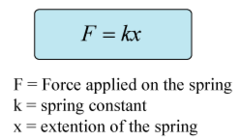
Hooke's Law Equation
Force = Spring Constant×Extension
F=ke
Pressure
Force per unit area.

Fluid Pressure Equation (Triple Topic)
=Height × Density × Gravitational Field Strength
=hρg
Atmospheric Pressure
The pressure caused by the weight of the atmosphere

Upthrust (Triple Topic)
The upward force water exerts on an object