11. structure and function of digestive system
 Call Kai
 Learn
 Practice Test
 Spaced Repetition
 Match
 Flashcards
 Knowt Play
1/34

There's no tags or description
Looks like no tags are added yet.
35 Terms
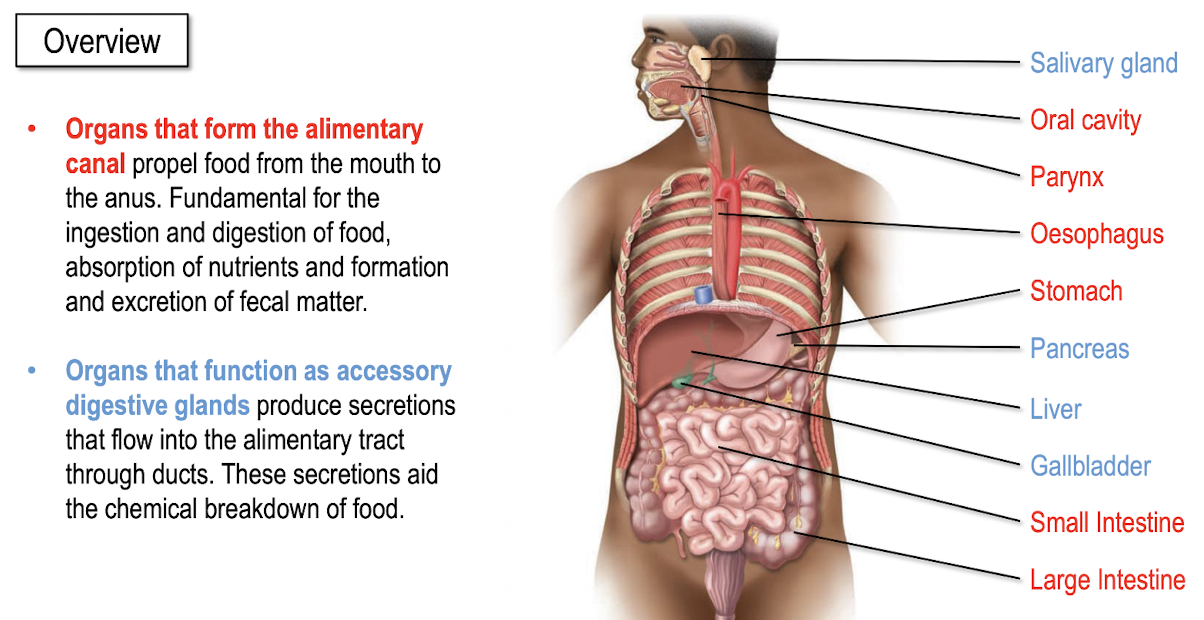
organs that form alimentary canal/ tract
propel food from mouth to anus
fundamental for ingestion and digestion of food
absorption of nutrients
formation and excretion of fecal matter

organs that function as accessory digestion glands
produce secretions that flow into alimentary tract thru ducts
these secretions aid chemical breakdown of food
oral cavity
mouth = mucosal lined cavity that contains teeth, tongue, salivary glands and ducts
functions of oral cavity
ingestion, mastication, salivation, physical and chemical breakdown of food to form bolus, deglutition (swallowing)
ventilation, speech
regions of oral cavity

openings of oral cavity
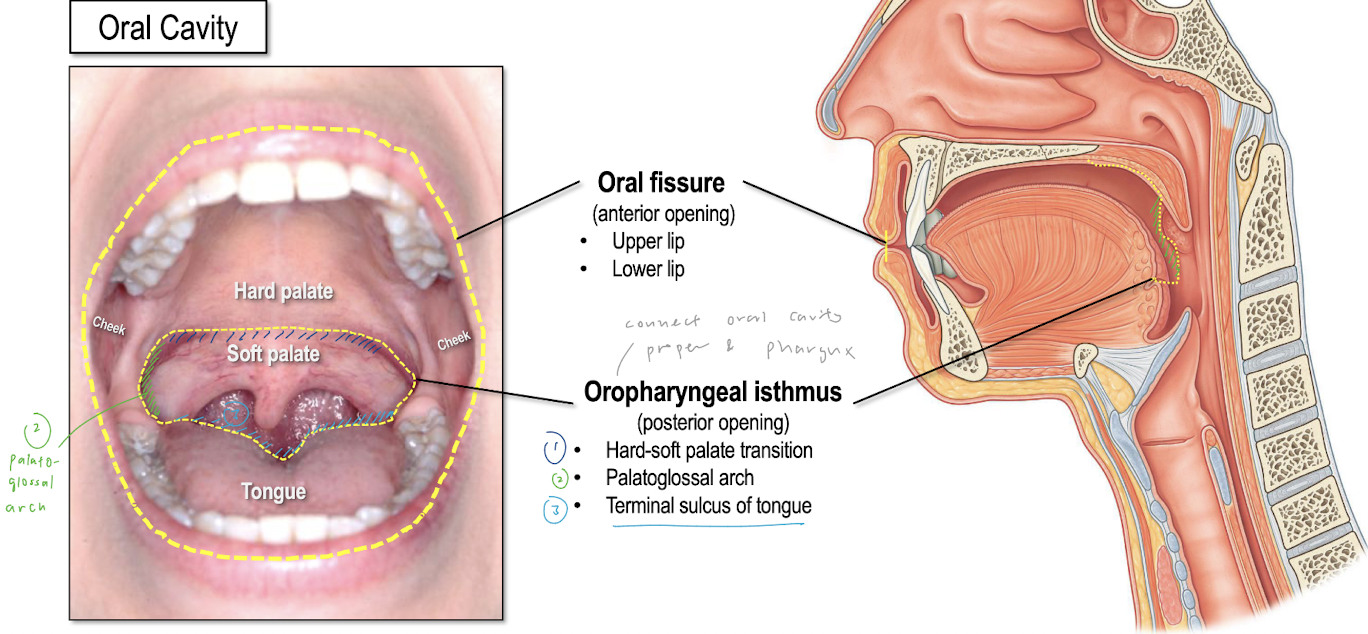
walls of oral cavity

pharynx - auditory/ Eustachian tube
osteocartilaginous canal that links nasopharynx (/upper throat) to middle ear
equalises air p on both sides of tympanic membrane (eardrum)

pharynx - soft palate
highly mobile and mucosal lined musculoponeurotic structure that extends from hard palate into pharynx
distal tip = uvula
moves whenever we speak, swallow, cough, sneeze, gag

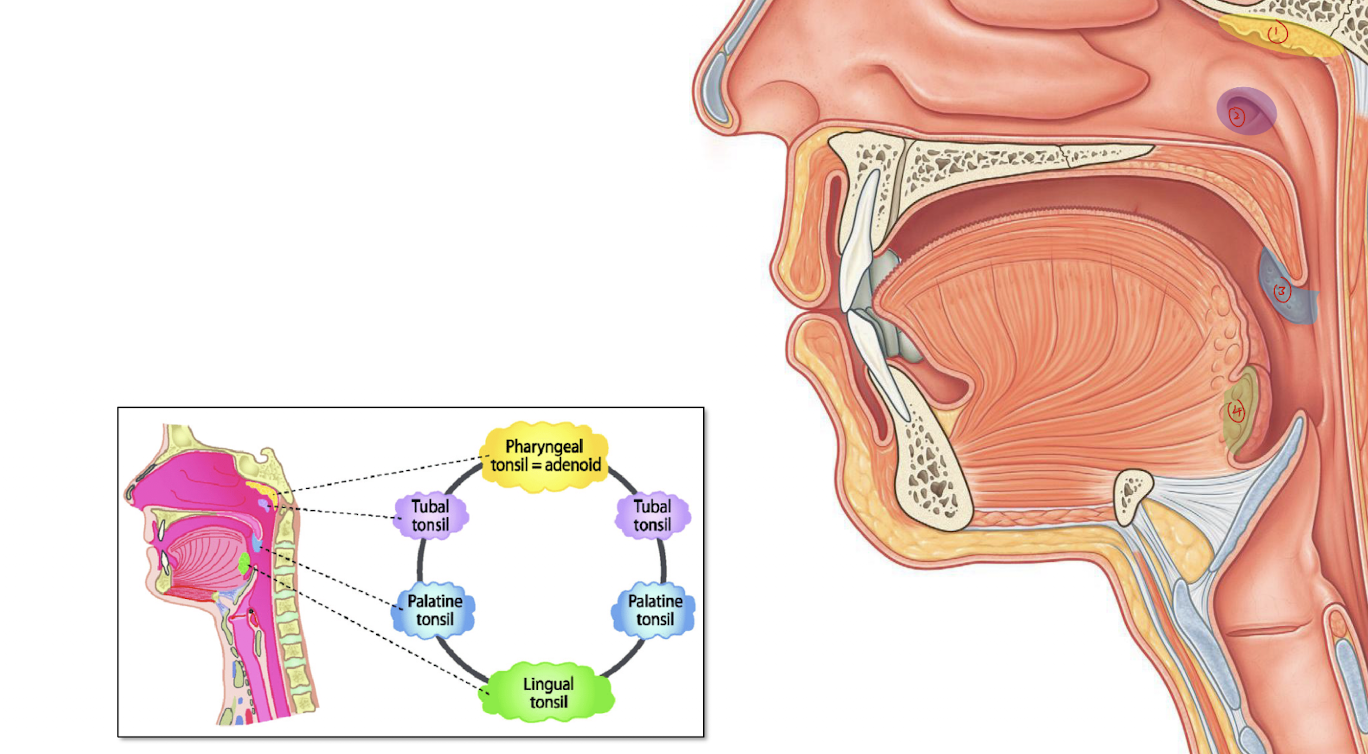
pharynx - tonsils
collections of lymphatic tissue (pharyngeal, tubal, palatine, lingual) in mucosa of pharynx that protects organism against ingested/ inhaled pathogens
together, tonsils form Waldeyer’s ring
pharynx - fauces
small space (between arches) in anterior oropharynx
immediately behind oral cavity

muscles of pharynx
constrictor muscles of pharynx
longitudinal muscles
muscles of soft palate

esophagus
25cm long mucosal lined tube
walls of smooth muscle that traverses neck, mediastinum and diaphragm (at oesophageal hiatus) to reach abdominal cavity
(oesophageal hiatus = openning in diaphragm)

function of oesophagus
transports bolus to stomach thru peristaltic contractions
stomach
mucosal lined sac with walls of smooth muscle in upper L quadrant of abdomen

small intestine
6m long mucosal lined tube with walls of smooth muscle

functions of small intestine
mixes chyme with intestinal juices, pancreatic juices and bile from liver/ gallbladder
physical and chemical breakdown of chyme
absorbs 90% of nutrients and water
propels chyme to large intestine
large intestine (colon)
1.5m long mucosal lined tube with walls of smooth muscle
ends in anal canal that crosses pelvic diaphragm to open onto anus
(hepatic → liver)

functions of large intestine
houses most of gut microbial flora
absorbs water, ions and vit
forms and stores fecal matter in rectum prior to evacuation
layers of walls of gastrointestinal tract

endoscopies

walls of GI tract

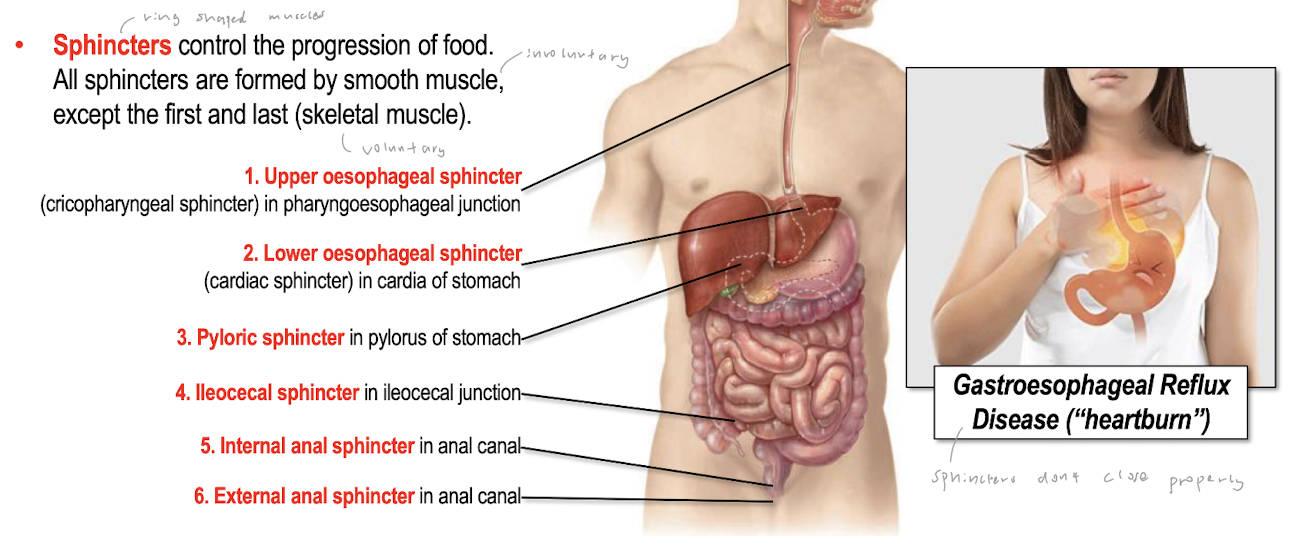
sphincters in walls of GI tract
control progression of food
formed by smooth muscle (involuntary) except for 1st and last (skeletal (vol) muscle)
peritoneum
continuous double layered serous membrane that surrounds many abdominal organs
encloses peritoneal cavity

arteries of GI tract

veins of GI tract

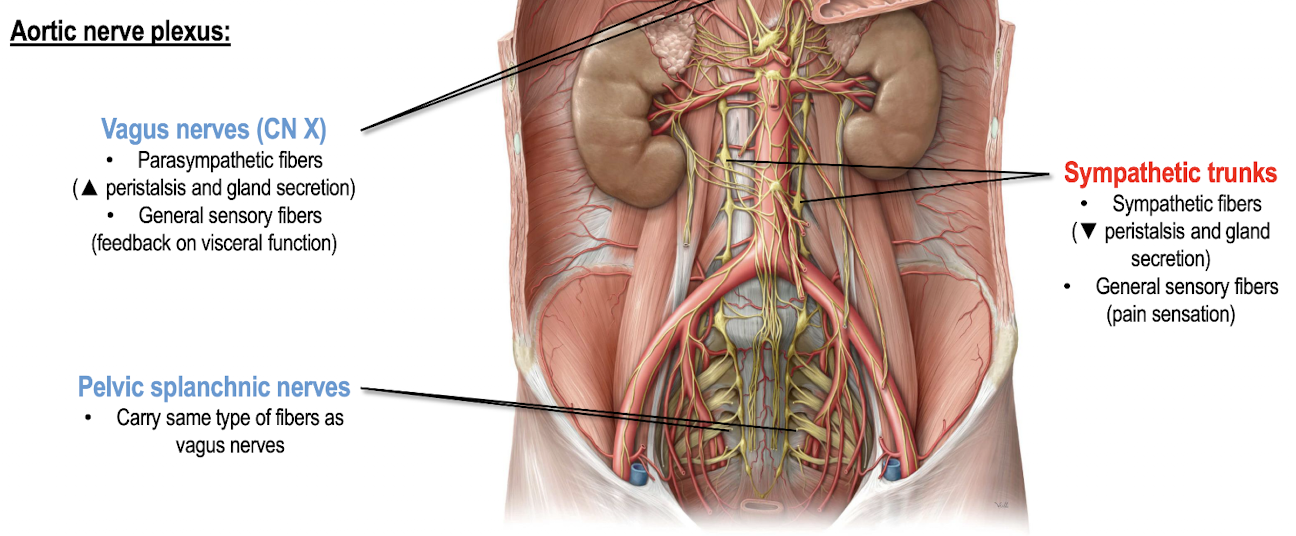
aortic nerve plexus of GI tract
salivary glands
include 3 pairs of major salivary glands + minor salivary glands in oral mucosa
(parotid = beside ear)

liver
largest internal organ of body
located in upper R quadrant in abdomen

functions of liver
metabolises/ stores macronutrients (carbohydrates, proteins, lipids)
removes/ inactivates/ destroys toxins, drugs, metabolites, hormones, pathogens, aged cells from bloodstream
synthesises molecules and compounds
prod and secretes bile into duodenum
bile = excretory product which contains bile salts that emulsify lipids
gallbladder
stores bile continuously produced by liver

porta hepatis

pancreas and pancreaticobiliary tree
pancreas = mixed endocrine and exocrine gland
functions of pancreas
prod and secretes pancreatic juices (with digestive enzymes) to duodenum
produces and secretes hormones (e.g. insulin and glucagon) to bloodstream

pancreaticobiliary tree
