Claude MCQs
 Call Kai
 Learn
 Practice Test
 Spaced Repetition
 Match
 Flashcards
 Knowt Play
1/11

Earn XP
Description and Tags
Not the best Qs Maybe ask claude to make new ones based solely on the info in the slides
12 Terms
A 58-year-old heavy smoker develops rapidly progressive proximal weakness, new hypertension and skin darkening over 8 weeks. Examination shows facial plethora and bruising. Potassium is 2.6 mmol/L. Plasma ACTH is markedly raised, and serum cortisol is not suppressed by high-dose dexamethasone. Which is the most likely cause of his Cushing’s syndrome?
A. Pituitary corticotroph microadenoma
B. Ectopic ACTH secretion by a tumour
C. Adrenal cortical adenoma
D. Adrenal cortical carcinoma
E. Exogenous glucocorticoid use
B. A rapid onset, marked hypokalaemia and pigmentation, very high ACTH and no suppression on high-dose dexamethasone point to ectopic ACTH, typically from small cell lung cancer in a smoker. A pituitary adenoma usually suppresses, and an adrenal cause would give low ACTH.

A 66-year-old man with a known squamous cell carcinoma of the lung presents with confusion, constipation and polyuria. Corrected calcium is 3.4 mmol/L and serum PTH is suppressed. What is the most likely mechanism of his hypercalcaemia?
A. Tumour production of PTH-related protein
B. Ectopic secretion of PTH by the tumour
C. Chief cell adenoma of a parathyroid gland
D. Excess calcitonin secretion
E. Failure of renal 1,25-(OH)₂D₃ clearance
A. Malignancy is the most common cause of symptomatic hypercalcaemia, via PTHrP or osteolysis. Suppressed PTH excludes primary hyperparathyroidism and ectopic PTH.

A 41-year-old woman presents 2 weeks after a viral upper respiratory tract infection with fever, malaise, palpitations and an exquisitely tender anterior neck. ESR is 78 mm/hr, TSH is suppressed, and T4 and T3 are raised. Radioisotope uptake is markedly reduced. Which statement best describes her condition?
A. Thyroid-stimulating immunoglobulins are driving hormone synthesis, and she will need long-term antithyroid therapy
B. An autonomous toxic adenoma is present, and she will need ablation
C. There is a lymphocytic infiltrate with germinal centres, and permanent hypothyroidism is expected
D. Thyroid hormone is being produced by an ovarian teratoma, and she needs surgical resection
E. There is granulomatous inflammation with multinucleated giant cells, and the course is self-limiting
E. This is De Quervain’s (granulomatous) thyroiditis: fever, tender neck, raised ESR, low uptake and a self-limiting course. Struma ovarii (D) also gives low neck uptake, but it would not be tender or febrile.

A 3-week-old girl is brought in with vomiting, poor feeding and lethargy. She has ambiguous external genitalia. BP is low, sodium is 121 mmol/L and potassium is 6.9 mmol/L. Which is the most likely enzyme defect and biochemical pattern?
A. 11-hydroxylase deficiency; raised 11-deoxycortisol; hypertension
B. 21-hydroxylase deficiency; raised 17-hydroxyprogesterone; low cortisol and aldosterone; raised ACTH and androgens
C. 21-hydroxylase deficiency; raised 11-deoxycortisol; raised aldosterone
D. 17α-hydroxylase deficiency; low androgens; raised mineralocorticoids
E. 21-hydroxylase deficiency; low ACTH; low 17-hydroxyprogesterone
B. 21-hydroxylase deficiency accounts for about 90% of CAH. 17-hydroxyprogesterone accumulates, cortisol and aldosterone fall (hence the salt wasting and hyperkalaemia), ACTH rises and androgens are increased, virilising the female.

A 52-year-old man with chronic kidney disease has bone pain and a PTH level well above normal. Which pattern of biochemistry and gland pathology is most likely?
A. High calcium, low phosphate, high PTH; a solitary adenoma
B. Low calcium, low phosphate, high PTH; a solitary adenoma
C. Low calcium, high phosphate, high PTH; hyperplasia of chief cells involving all four glands
D. Low calcium, high phosphate, low PTH; congenital absence of glands
E. High calcium, high phosphate, low PTH; atrophy of all four glands
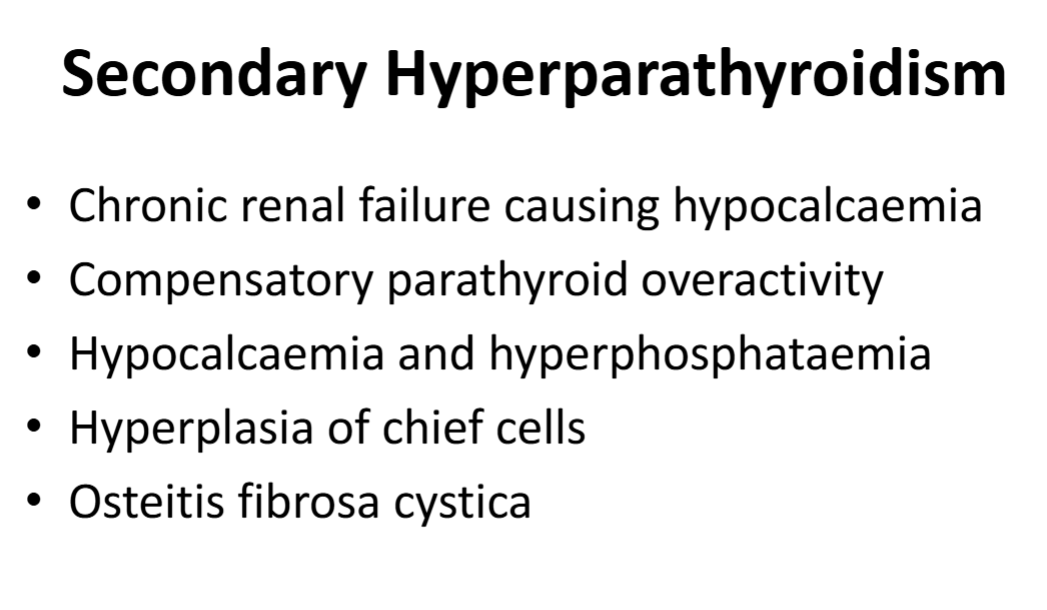
C. Secondary hyperparathyroidism: chronic renal failure causes hypocalcaemia and hyperphosphataemia, and all four glands become hyperplastic with chief cells.
A 31-year-old woman, 10 weeks postpartum, has palpitations, tremor and weight loss. She has a small, painless, firm goitre, no eye signs, a normal ESR, suppressed TSH, raised T4 and positive anti-TPO antibodies. Which statement is most accurate?
A. Uptake is diffusely increased; the cause is TSH-receptor stimulating antibodies
B. Uptake is increased in a single hot nodule; the cause is an autonomous adenoma
C. Uptake is decreased; histology shows granulomas with multinucleated giant cells
D. Uptake is decreased; histology shows a lymphocytic infiltrate; thyrotoxicosis is likely to be transient
E. Uptake is increased in multiple discrete areas; histology shows fibrosis with variable follicle size

D. Postpartum thyroiditis: lymphocytic infiltrate, low uptake and transient thyrotoxicosis. There is no tenderness or giant cells, which argues against De Quervain’s (C), and no eye signs, which argues against Graves’.

A 61-year-old woman has recurrent renal stones, constipation and low mood. A single enlarged parathyroid gland is removed. Histology shows a circumscribed lesion of chief cells in sheets with some nuclear pleomorphism and occasional mitoses. There is no capsular or vascular invasion and no metastases. What is the most appropriate interpretation?
A. Adenoma, because local invasion and metastasis are the only reliable criteria of malignancy
B. Carcinoma, because nuclear pleomorphism and mitoses are reliable criteria
C. Hyperplasia, because chief cells predominate
D. Carcinoma, because sheets of chief cells indicate malignancy
E. Adenoma, because oxyphil cells predominate
A. In parathyroid carcinoma, local invasion and metastasis are the only reliable criteria, so pleomorphism and mitoses alone do not make a diagnosis of carcinoma.

A 19-year-old student presents with fever, headache, neck stiffness and non-blanching purpura. BP is 70/40 and does not respond to fluids. Sodium is 127 mmol/L, potassium 6.1 mmol/L and glucose 2.4 mmol/L. Which best explains his refractory shock?
A. Autoimmune destruction of the adrenal cortex
B. Acute bilateral adrenal haemorrhage causing acute adrenocortical insufficiency
C. Adrenal tuberculosis
D. Pituitary apoplexy with ACTH deficiency
E. A catecholamine-secreting tumour
B. Waterhouse-Friderichsen syndrome: meningococcal septicaemia with DIC and massive bilateral adrenal haemorrhage. The hyperkalaemia argues against pituitary apoplexy (D), and the acute course argues against chronic adrenal disease (A, C).

A 44-year-old woman had a total thyroidectomy 6 years ago and has since been lost to follow-up. She presents with a generalised seizure. Chvostek’s and Trousseau’s signs are positive. Which set of findings is most likely?
A. High calcium, low phosphate, high PTH, short QT
B. Low calcium, low phosphate, high PTH, osteitis fibrosa cystica
C. Low calcium, high phosphate, high PTH, short QT
D. Low calcium, high phosphate, low PTH, prolonged QT, basal ganglia calcification, cataracts
E. Low calcium, high phosphate, low PTH, short QT, osteitis fibrosa cystica
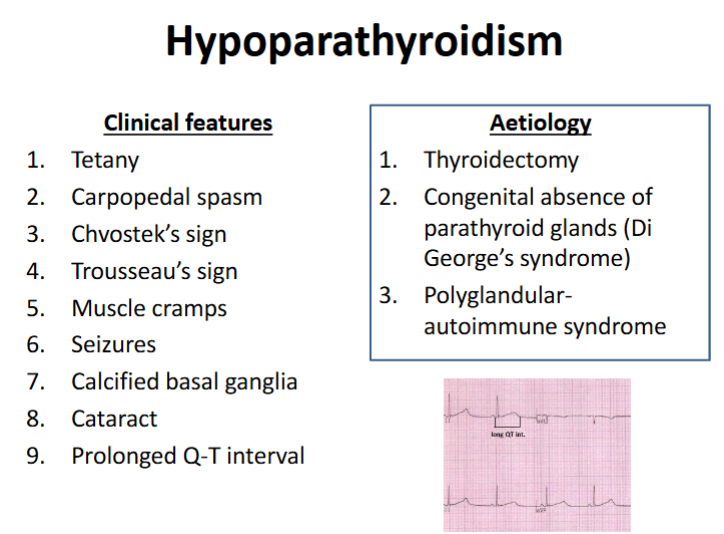
D. Chronic hypoparathyroidism gives low calcium, high phosphate and low PTH, with prolonged QT, basal ganglia calcification and cataracts. Osteitis fibrosa and a short QT do not fit.
A 36-year-old woman has Cushing’s syndrome with an undetectable plasma ACTH and a 3 cm left adrenal mass. Which finding is most likely in the rest of the adrenal tissue?
A. Bilateral nodular cortical hyperplasia
B. A corticotroph adenoma on pituitary MRI
C. Raised CRH levels
D. Raised ACTH that is not suppressed by dexamethasone
E. Atrophy of the uninvolved cortex and the contralateral adrenal
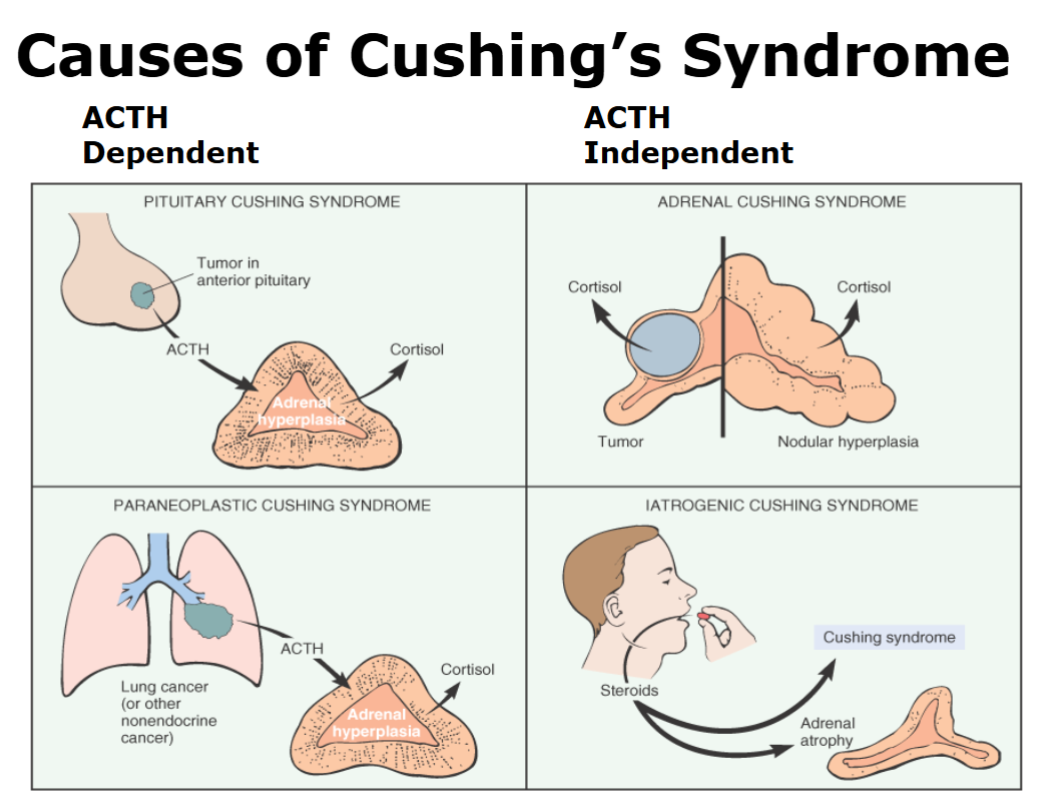
E. An autonomous adrenal tumour suppresses ACTH, so the uninvolved cortex and the contralateral gland atrophy.
A 19-year-old tall, thin man with long limbs and bumpy lips and tongue presents with a hypertensive crisis with headache, sweating and palpitations. He has a thyroid mass with raised calcitonin. Serum calcium and PTH are normal. Which is the most likely diagnosis?
A. MEN 1
B. MEN 2A
C. Von Hippel-Lindau disease
D. MEN 2B
E. Neurofibromatosis type 1
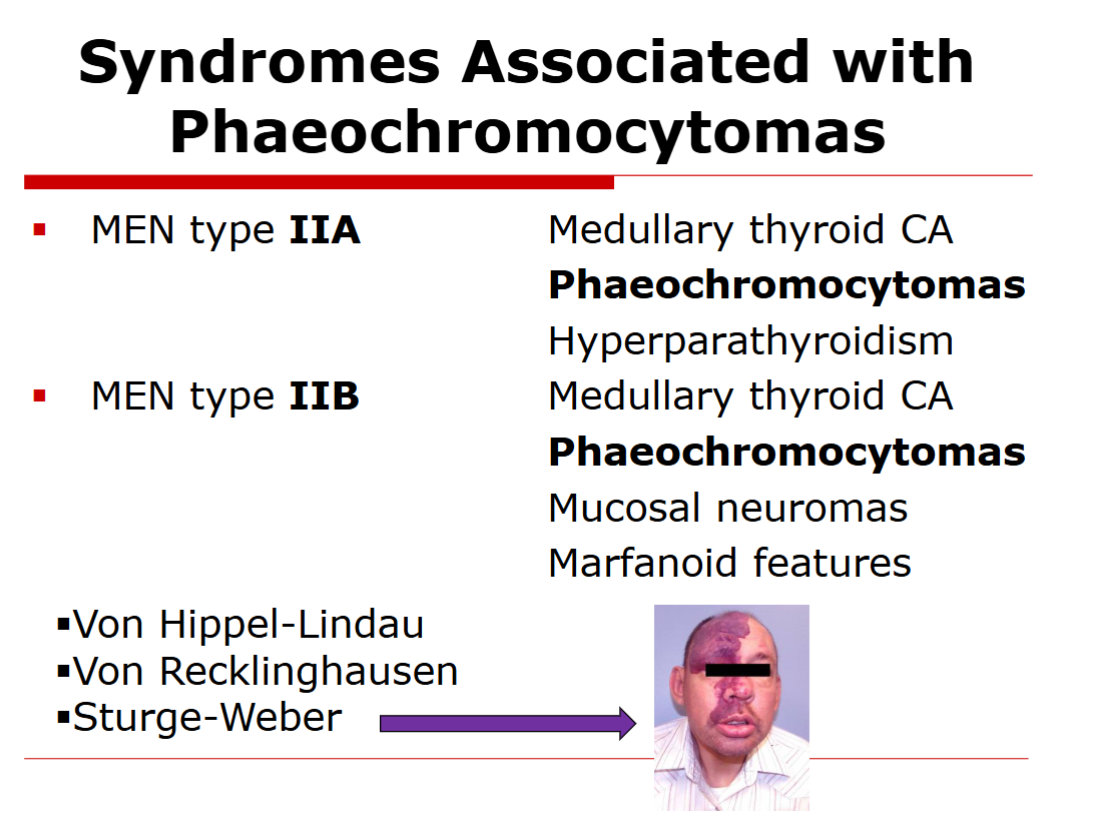
D. MEN 2B: medullary thyroid carcinoma, phaeochromocytoma, mucosal neuromas and marfanoid habitus (tall, thin), with no hyperparathyroidism. MEN 2A has hyperparathyroidism but no neuromas or marfanoid habitus.
A 34-year-old woman had a severe postpartum haemorrhage 4 months ago. She now has failed lactation, amenorrhoea, fatigue, cold intolerance, hypotension and hypoglycaemia. Her skin is pale. Sodium is 128 mmol/L and potassium is 4.0 mmol/L. Which set of findings is most likely?
A. High TSH, low T4; high ACTH; hyperpigmentation; hyperkalaemia
B. High TSH, low T4; low ACTH; no pigmentation
C. Low TSH, low T4; high ACTH; hyperpigmentation
D. Low or inappropriately normal TSH with low T4; low ACTH and low cortisol; no hyperpigmentation; normal potassium
E. Low TSH, high T4; high ACTH; hyperpigmentation

D. Hypopituitarism gives secondary hypothyroidism and secondary adrenal insufficiency. Low ACTH means no hyperpigmentation (POMC is low), and potassium stays normal because the renin-angiotensin-aldosterone axis is largely preserved. Hyponatraemia and hypoglycaemia still occur from cortisol deficiency.
