Prelim 2
 Call Kai
 Learn
Learn Practice Test
 Spaced Repetition
 Match
Match Flashcards
 Knowt Play
1/20

There's no tags or description
Looks like no tags are added yet.
Name | Mastery | Learn | Test | Matching | Spaced | Call with Kai | Chat |
|---|
No analytics yet
Send a link to your students to track their progress
21 Terms
L9 - Case for Health Equity & Quadruple Aim
L10 - Primary Care & Prev
What are 2 definitions for primary care?
interlinked set of functions delivered for communities in partnership addressing contact access, continuity, coordination, comprehensiveness, & person-centeredness
generalist team @ front door

What are the 5 Cs (core functions) of primary care?
First contact: care/access from drs, PAs, NPs
Coordinated: care from other providers for referrals/tests/procedures
Continuous: care over large proportion of patient’s health (longitudinal)
Comprehensive: care accounts for EBM & patient/family needs/culture
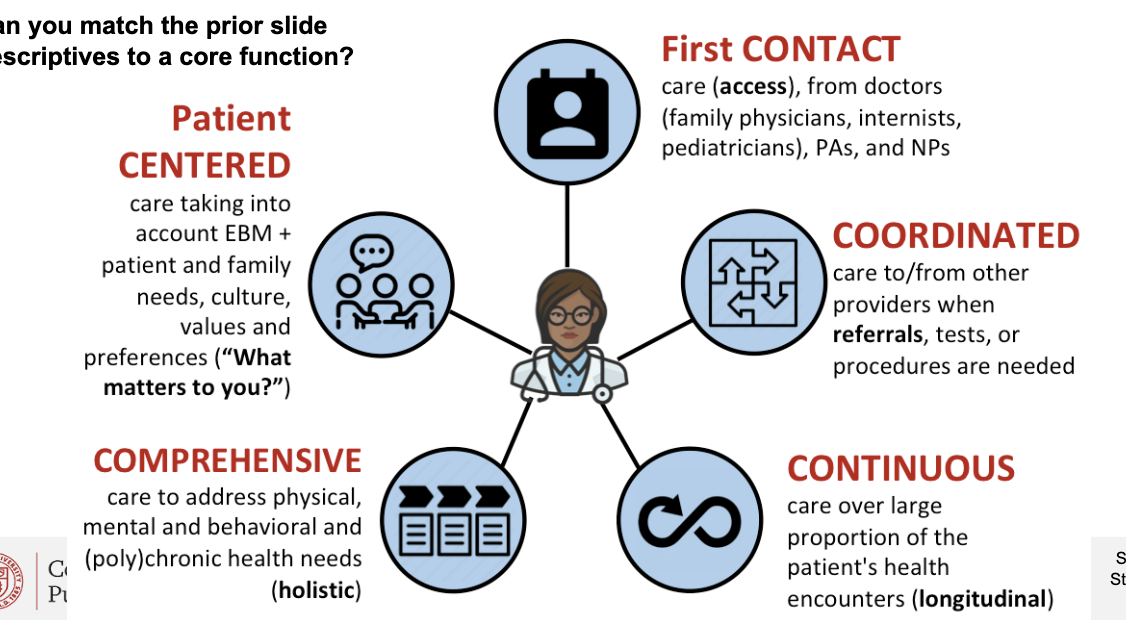

What does each reduce/improve?
first contact access reduces unnecessary ED & improve health outcomes
long-term care red ED + costs & improve chronic disease management + care quality
comprehensive care red costs, speciality visits & improve immunization, prev screening, counseling
coordinated care red costs/hosp. & improve referals
*good primary care fit triple aim
States w/higher ratios of PCPs to pop have better health outcomes including _, & more likely to report _. PCP supply positively associated w/increase in _ (inc just 1 PCP = 1.44 fewer premature deaths per 10,000).
dec cancer/heart disease/stroke mortality ; good health ; aggregate life exp
What is prevention 1.0?
downstream strat to provide clinical care & medical interventions

What are USPSTF Recommendation Grades?
*ex: high certainty that net benefit is substantial when women 21-65 screened from cervical cancer

How does prevention 1.0 (USPSTF A & B screenings) deliver real value?
improve health outcomes: detect disease early, prev progression, extend healthy life exp
improve patient exp: avoid late diagnosis, proactive plan care, build trust
red long-term costs: screening less exp (i.e. treating late stage color cancer cost >10x more), shift spending to lower-cost upstream care
Even though we know prev is good, only _ of adults receive rec prevented care
54.9% / half

Why only ~50% good preventive care?
42% report not having enough time w/their patients
spend 13% of day on care coordination & half for activities using med knowledge

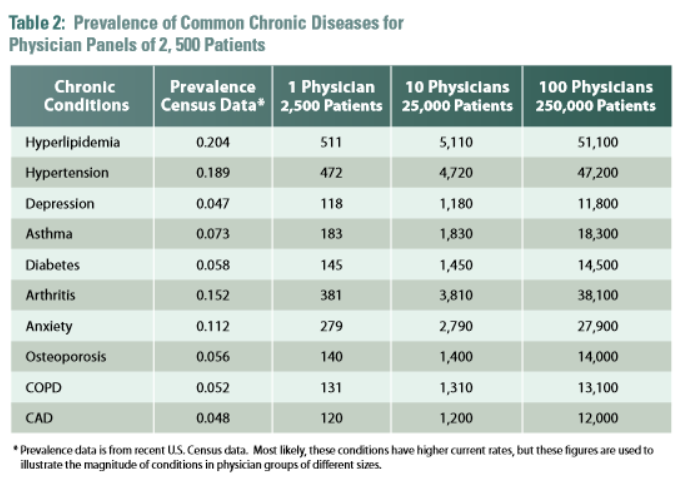
What does this show?
show need for team-based care b/c have not enough physicians per # of patients

How might you redisgn workflow to max care team?
If PC works, why is it struggling?

Primary Care Paradox (5 points)
PC is foundational but structurally underinvested in US…
50% of visits but <6% of total heath spending
declining PC workforce
patients receive only 50% of rec care = quality gaps
access challenges
inc workload & admin = physician burnout
How is FFS (how we pay) one explanation for paradox?
providers rewarded for doing more not necessarily better outcomes = burnout (reward vol not value)
How is idea that PC is not OSFA another explanation for paradox?
L13 - Prevention 2.0 Screening